Women at ‘house of horror’ Fort Worth prison say they face COVID, rotten food, abuse
Inmates incarcerated at the only federally-run medical prison for women in the country say they have been subjected to a “house of horror” over the past few months.
As of Tuesday, 73 women have signed onto a potential class-action suit against Federal Medical Center Carswell, its warden and several officials and officers.
In more than 200 pages of handwritten testimony, women describe meals of rotten food, negligent medical care and malicious treatment as COVID-19 ran through the prison.
“While the public only hears one side of the major business (BOP and FMC Carswell), the forgotten lives of mothers, daughters, grandmas, granddaughters, sisters all live against every CDC guideline,” the lawsuit says.
In response to allegations of mistreatment at FMC Carswell, the Bureau of Prisons sent a statement on its general policies for handling COVID-19. In part of the statement, the BOP said its care and treatment of inmates follows CDC guidelines “with regard to quarantine and isolation procedures, along with providing appropriate treatment.”
The statement also said the majority of inmates who tested positive for COVID-19 are asymptomatic.
Prison lockdown
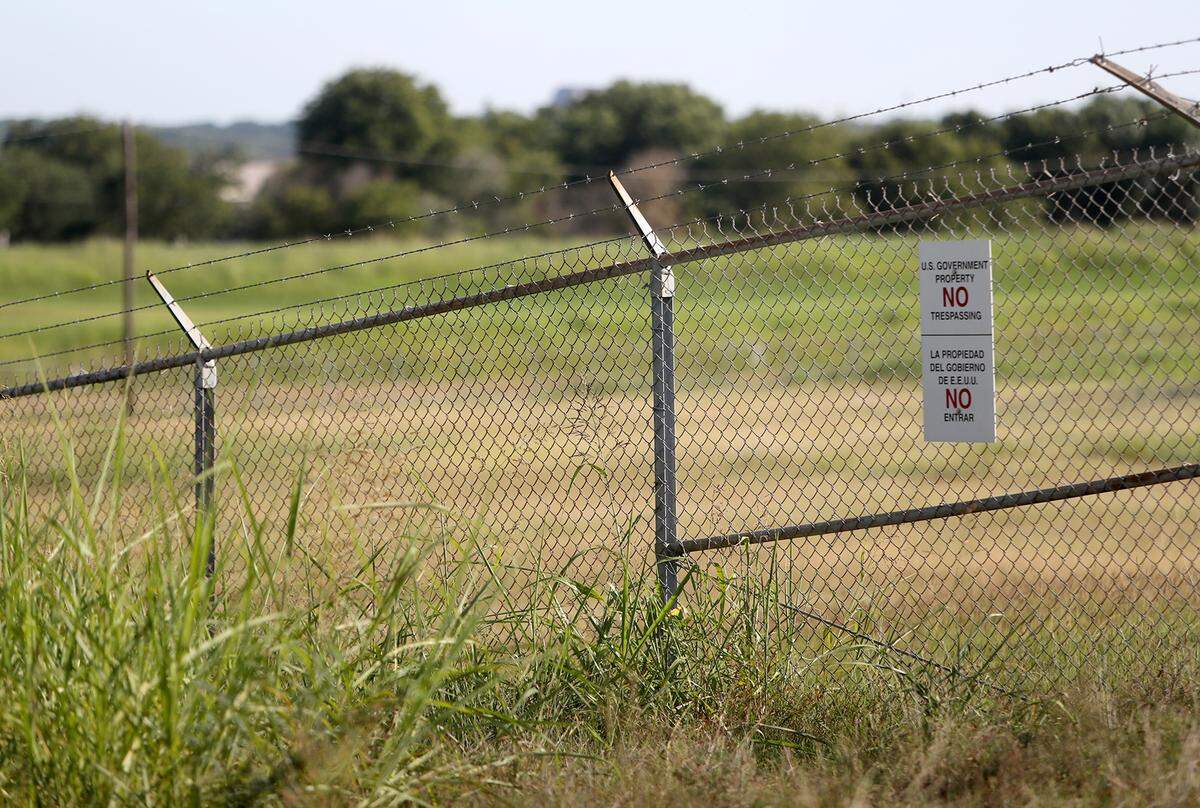
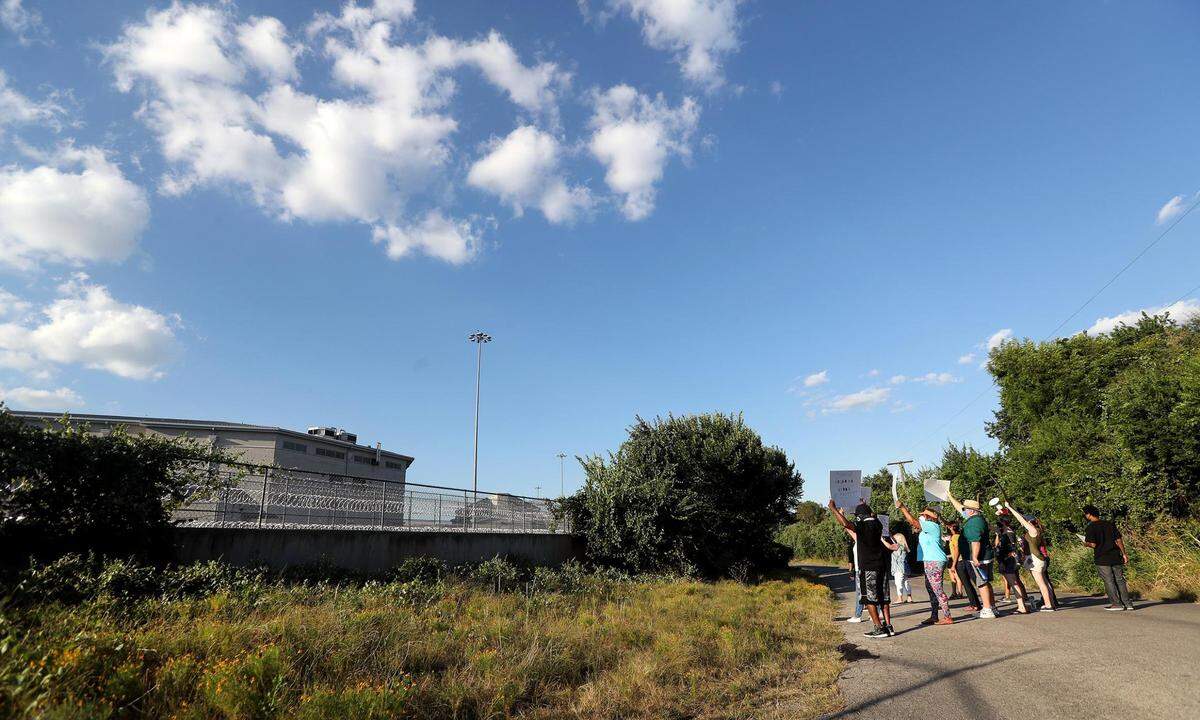
FMC Carswell, located in northwest Fort Worth, has been a medical women’s prison since 1994. The facility, which currently houses about 1,300 inmates, has a checkered history of accusations of sexual assault and medical neglect. Most women are serving sentences for drug or white-collar crimes and have medical issues.
In April, a woman incarcerated at Carswell gave birth via cesarean section while on a ventilator at a hospital. Andrea Circle Bear died on April 28. She was the first woman in BOP custody to die from coronavirus — she would not be the last.
The description of what women at FMC Carswell have gone through for the past two months is based on interviews and the more than 200 pages of written testimony from women in Unit 2 North, the first unit to be hit with COVID-19.
On June 30, the first cases of community spread began at Carswell, according to the lawsuit and adjoining testimony. Inmates say a member of staff on the hospital floor was the first person to bring the virus into the prison.
Most of the units in Carswell, such as 2 North, are set up inside a four-story high rise. Cells, which hold four women in a 7-foot-by-10-foot space, are set on the perimeter of a square with a TV room in the center.
While the facility had already been on lockdown — not allowing visitors or daily outdoor time — Carswell shut down the commissary and all activities. For three days, women said, they did not have contact with their families. The TVs were turned off; officers told the women news stations were airing “fake news” about the prison.
For the next four weeks, many of the women would not be able to go outside. Since the commissary was shut down, inmates said, they also went three weeks without being able to buy items such as soap, aspirin or tampons.
The prison stopped serving hot meals. For 19 days, the women said, they received one sack of food a day — inmates called them “bag nasties” — which served as lunch and dinner.
The bag usually consisted of “eight pieces of bread, two slices of lunch meat, an apple or orange, half an onion, half a tomato and a bag of chips,” one woman who asked to be identified by her initials M.S., wrote in her testimony. “The vegetables were always brown and soft. My bunkie’s bag once contained a fly in the bag.”
The prison removed women from the unit who worked in sanitation or food service so they would still be able to work. Women received cloth masks that are washed once a week, and staff put up plastic shower curtains in the open doorway of the women’s cells, inmates said.
Threatened by officers
The night COVID-19 fully hit the prison, women in 2 North said they were subjected to malicious treatment from two officers.
On June 30, women were kept in their cells for three hours, and many had to use the bathroom. Some have medical paperwork that allows them to go to the bathroom without permission, and a group started to line up to use the restroom. A staff member hit the panic button and said there was a riot.
Two officers, identified in the suit as Lt. Anthony and Lt. Butler, rushed to the unit. Anthony had a riot gun and Butler carried pepper spray. Anthony waved the gun in the air and said inmates “need to stop testing him,” one woman, Ruqayya Abdul-hakim, wrote. Another woman asked Butler what they had done wrong, and he said that “they were breathing, and that was enough.”
Adbul-hakim wrote that the men terrified her, triggering her PTSD from a past abusive relationship.
“I refused to move even though there was blood trickling down my legs. My clothes and linen were both blood stained. I was so humiliated,” she wrote.
The lawsuit specifically names Butler and Anthony as defendants.
When asked about this incident and others specifically named in the lawsuit, the BOP said it does not comment on pending litigation.
‘Nightmarish conditions’ in quarantine
As tensions rose at the prison, COVID-19 cases did, too.
The prison started mass testing in early July. On July 6, 51 women and two staff members were positive. By July 21, 510 women in the prison tested positive for the virus.
According to the lawsuit, women who tested positive were pulled from their cells and sent to a quarantine unit called M2. They had to leave most of their items behind, which were transferred to an unlocked room where possessions were quickly stolen.
Faith Blake, the primary plaintiff of the lawsuit, said those women who were quarantined were “treated absolutely horribly.”
A woman described her time in M2 in a letter to the Star-Telegram. The Star-Telegram is not using her name because she said she feared retaliation for talking to the media.
The woman said she started showing symptoms of COVID-19 on July 10. She had a cough, shortness of breath, could not taste or smell, and she had nasal discharge. She asked her unit manager to see a doctor, but had to wait 16 hours to be seen by medical staff or be tested.
When she tested positive, she was put in a room with six other women in M2. For six days, the woman stayed in the same clothes. Some women in M2 had been in the same clothes for 19 days, she said. She said two officers at M2 were “wonderful” and “kept the women calm,” and someone checked their temperature and pulse oximetry twice a day.
But other women reported “nightmarish conditions” in their rooms. One woman, Windy Panzo, said she was placed in a room with 10 women and “our food is thrown in and kicked in by their feet like we’re dogs.”
Several women described difficulty getting medical care. A group of inmates had to beat on a door for 15 minutes when a woman’s tongue swelled inside her mouth, Panzo wrote.
M.S. wrote that a woman with COVID-19 had a high fever and “staff refused to help her, so she slit her wrists claiming she was going to die in here anyway.”
In a letter to the Star-Telegram, Joyce Godwin, a woman incarcerated at FMC Carswell,, expressed succinctly the fear that has taken over the prison: “They call this place a hospital, but it is a house of horror.”
Deaths at Carswell
Those who tested negative remained in the unit, according to the women in 2 North, which was declared a “positive unit” in July. Women who tested negative “were left in there to become positive,” Tara Childress told the Star-Telegram. She, like many women, tested negative multiple times before eventually catching the virus from other inmates.
Veronica Carrera-Perez, 40, was transferred into a cell with a woman who had already tested positive for COVID-19. Within three days, Perez started to complain that her head hurt, she couldn’t taste anything and she was throwing up, a woman who was recently released from Carswell told the Star-Telegram. The woman, who was released after she completed her prison sentence, asked that her name not be used out of fear of retaliation from the BOP.
On Aug. 3, Perez died from COVID-19, four months after she applied for and was denied home confinement. In her motion for release, she said her medical conditions consisted of shortness of breath and possibly breast cancer.
Not including Circle Bear and Perez, four other women have died from COVID-19-related causes at Carswell.
Sandra Kincaid, 69, was the second woman to die on July 14.
On July 20, 51-year-old Teresa Ely died while on a ventilator.
Wendy Campbell, 56, died on Aug. 15
Marie Neba died on Aug. 25
The BOP said in a statement that symptomatic inmates whose condition “rises to the level of acute medical care will be transferred to a hospital setting; either at a local hospital, or at an institution’s hospital care unit, if they have one.”
Carswell is not accredited as a hospital, so inmates are sent to a local hospital.
Carswell is not the only prison to struggle with containing the virus. Across the country, 117 people incarcerated in federal prisons have died from COVID-19, according to the BOP’s website. FMC Fort Worth, a men’s prison, at one point had the most cases in the country, and FCI Seagoville took that spot in July.
Kevin Ring, executive director of the criminal justice reform group FAMM, said the BOP initially treated prisons like cruise ships — isolated from the world and COVID-19. But prisons are not islands; officers and staff come and go, bringing and taking home the germs of the community.
“Now we’ve had a domino effect where it hits a state and it hits the prison, and once it gets into the prison, it’s wildfire,” Ring said. “There’s no slowing it down.”
Recovered?
On Aug. 8, the Carswell warden declared the unit “recovered” and said no one else would be tested for the virus. The last week of July, the commissary re-opened, women started going outside once a week and hot meals were served again.
But women say the virus is not over. On Aug. 25, Blake said women are still showing symptoms of COVID-19, but they are not being tested anymore. Sandra Shoulders, who is an inmate in Unit 1 South, said 34 people were transferred into her unit on Aug. 25 and they had not been tested.
In a statement, the BOP said the number of positive inmates at Carswell has dropped “as staff have diligently and safely carried out their responsibilities in accordance with CDC guidelines.” The BOP said the prison follows CDC guidelines on when inmates should be removed from isolation.
Women also say they still struggle with the emotional toll of the lockdown and how they were treated. Childress, who has anxiety, has not been able to see a counselor for three months.
“They’ll have people walk through the units, but that doesn’t help,” she said. “There is no psychological help or sitting down one-on-one.”
Childress, and other women in 2 North’s lawsuit, hope to find justice for what they say has been cruel and unusual punishment. She and Blake stressed that they need to find a lawyer who can help them file the suit as a class action.
On Aug. 24, Judge Mark Pittman ordered that the Carswell lawsuit could not be filed as a class action suit, and each woman would need to pay a $400 filing fee and file her own lawsuit separately.
Blake and Childress said that some of them have faced retaliation for signing onto the suit.
“Anytime we try to speak up or get up, we’re yanked out, we’re isolated,” Blake said. “We get put in the SHU. They take our mattresses away from us, so we’re sleeping on metal frames. A lot of the women are scared.”
She said some of the women in the suit are being transferred to other prisons. The BOP said it has limited facility-to-facility transfers, and other inmate movement.
“We cannot prove that it’s retaliation, but it’s odd,” Blake said.
This story was originally published August 31, 2020 at 5:00 AM with the headline "Women at ‘house of horror’ Fort Worth prison say they face COVID, rotten food, abuse."