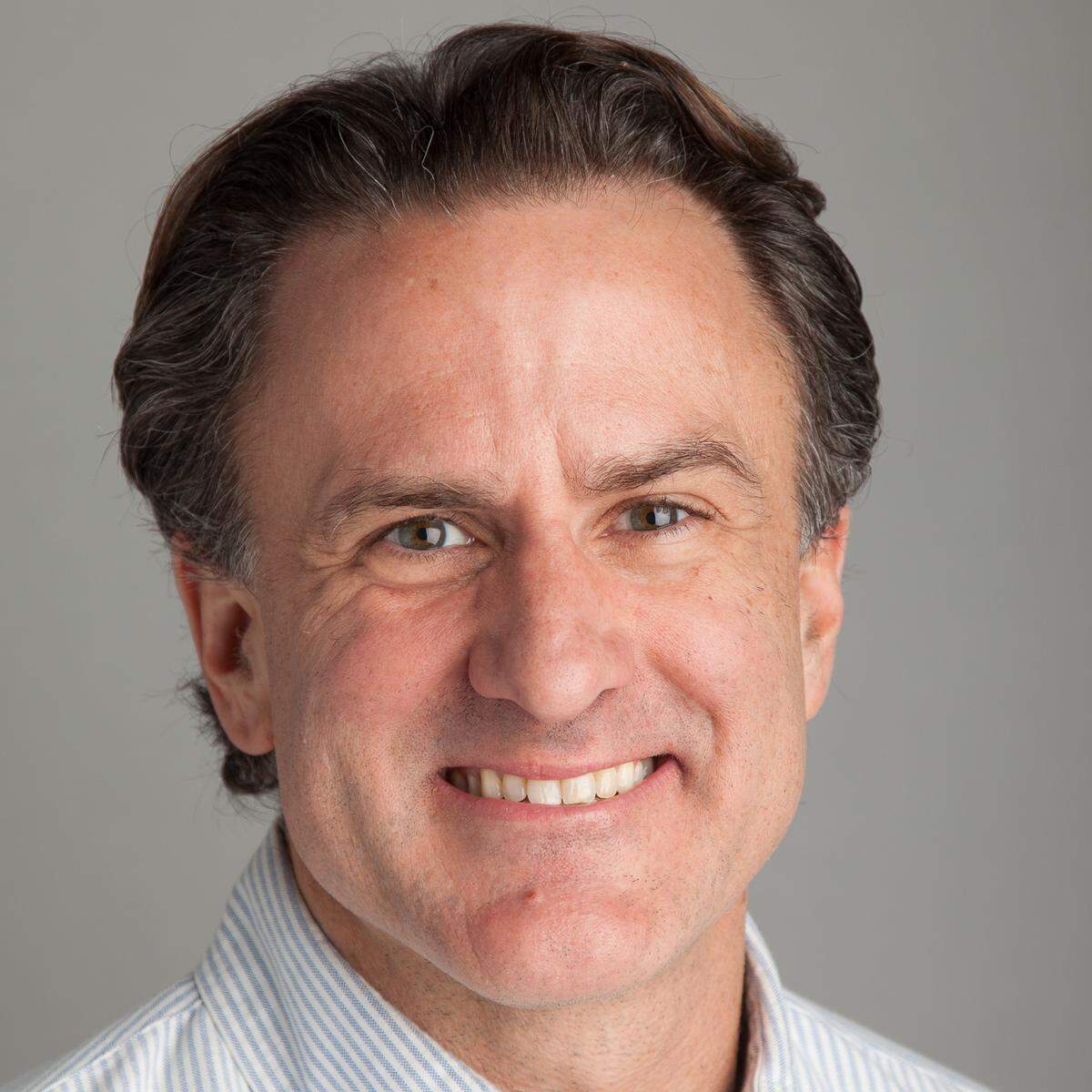
Once imprisoned, Texas tennis coach in college admissions scandal ready to talk
The peace within Michael Center about his role in the infamous college admission scandal aka “Varsity Blues” is a dormant fault line that every so often rumbles and shakes but does not quake.
The former University of Texas men’s tennis coach who was fired and then jailed no longer hides in his closet with his dog, angry at everything from himself to a long list of people.
He is not bitter; rather, he is better.
He’s 61. He screwed up. Huge. Life is different, but not over.
“I don’t know what the punishment should have been,” Center said in an interview with the Fort Worth Star-Telegram, “but being handcuffed at my house by the FBI and going to prison for six months was overly harsh.
“If [the government] is willing to send me to prison, [the University of Texas] needed to be willing to say, ‘We signed off on this,’ and they would never do that. You can’t send me to prison and make me the fall guy when your signature is all over these [national letter of intent] documents.”
More than a decade has passed since the destruction and reconstruction of Center’s life started when he was told in 2012 by UT officials that he had to raise $10 million to build a new tennis facility. That’s how this began.
Center was told the facility was going to be razed in favor of a medical building, and if he wanted tennis courts, to find the money himself. In the process of raising the money, a former tennis coach turned “AAU basketball guy,” Martin Fox, introduced him to a California-based consultant, Rick Singer.
Singer knew a wealthy family whose son wanted to attend Texas to be the men’s basketball manager. They needed him to get into school, and according to Center, asked that he put him on his roster with the understanding he would never be on the team. It was a way to get him into UT.
According to Center, he had a national letter of intent prepared and signed by the appropriate people at Texas, so it was official. In exchange, he accepted a $40,000 gift that he gave to UT’s foundation. This sort of exchange is common practice in higher ed.
Three months later, Center was offered $60,000 as a thank you by Singer. He accepted it, a decision that cost him his job, landed him to prison and derailed his life.
In March 2019, Center was fired. He was a part of a national sting operation that exposed a system of bribes, tax evasion and fraud to help the children of wealthy families gain admittance into pretty-name colleges. The takedown included actresses Lori Loughlin and Felicity Huffman, as well as non-revenue sport coaches at schools like Stanford and USC.
It became a top story on news, sports and entertainment platforms that embarrassed higher ed, the schools named in the case and athletic departments that sell roster spots in exchange for six- and seven-figure gifts. Center was in a system that was going to protect itself, and a non-revenue sports coach is always expendable.
Center said he was essentially threatened by government officials to plead guilty to fraud, a point he still disagrees with, or risk a legal process that could have taken all of his money. He was up against two machines: the University of Texas, and the United States government.
The part that neither he, his attorney or even the prosecutor anticipated was, in February 2020, Center was sentenced to six months in prison. Of the coaches involved in this scandal, Center’s penalty was by far the most severe.
The consuming public moved on to the next story, but the ordeal changed Center’s life.
“I did feel sorry for myself for a long time; my dog and I spent a lot of time in the closet,” he said. “Then I started to think, ‘I’m not at war. I have a wife. A family. Friends. Roof over my head. I’m a pretty lucky guy.’ It’s not easy. I have a great family, and I have my health. That’s all I need.”
It took a while, and a lot of long walks, but Center rebuilt, and remade, his life. He and his wife have two sons, and he coaches tennis on an individual level in Fort Worth.
In an effort to get it all out, he has written a book, “Breaking Serve: From Championship Coach to Prison — and the Journey Back,” which is available now. After speaking a few times to small groups, he found the exercise to be therapeutic and hopes to use his story to help others who know what it’s like to wallow in anger, doubt, fear and defeat.
“I couldn’t get jobs. Accountants fired me. There were so many things that happened to me, and I finally said, ‘Screw it. I’m going to stand up and tell my story.’ I’m not going to be mad at Texas anymore,” he said. “I am going to write this book and teach tennis and be around people I like.”
Two months after he was fired, his team won the national title. Texas has effectively erased any mention of Michael Center from its program, and he did not receive a national title ring.
He retained his home in Austin, but realizing that he would not find much work there, he now works in Fort Worth. He was TCU’s head men’s tennis coach in 1999 and 2000, when he left for UT, where he coached from 2001 to 2018.
He spoke to the Star-Telegram about all of it.
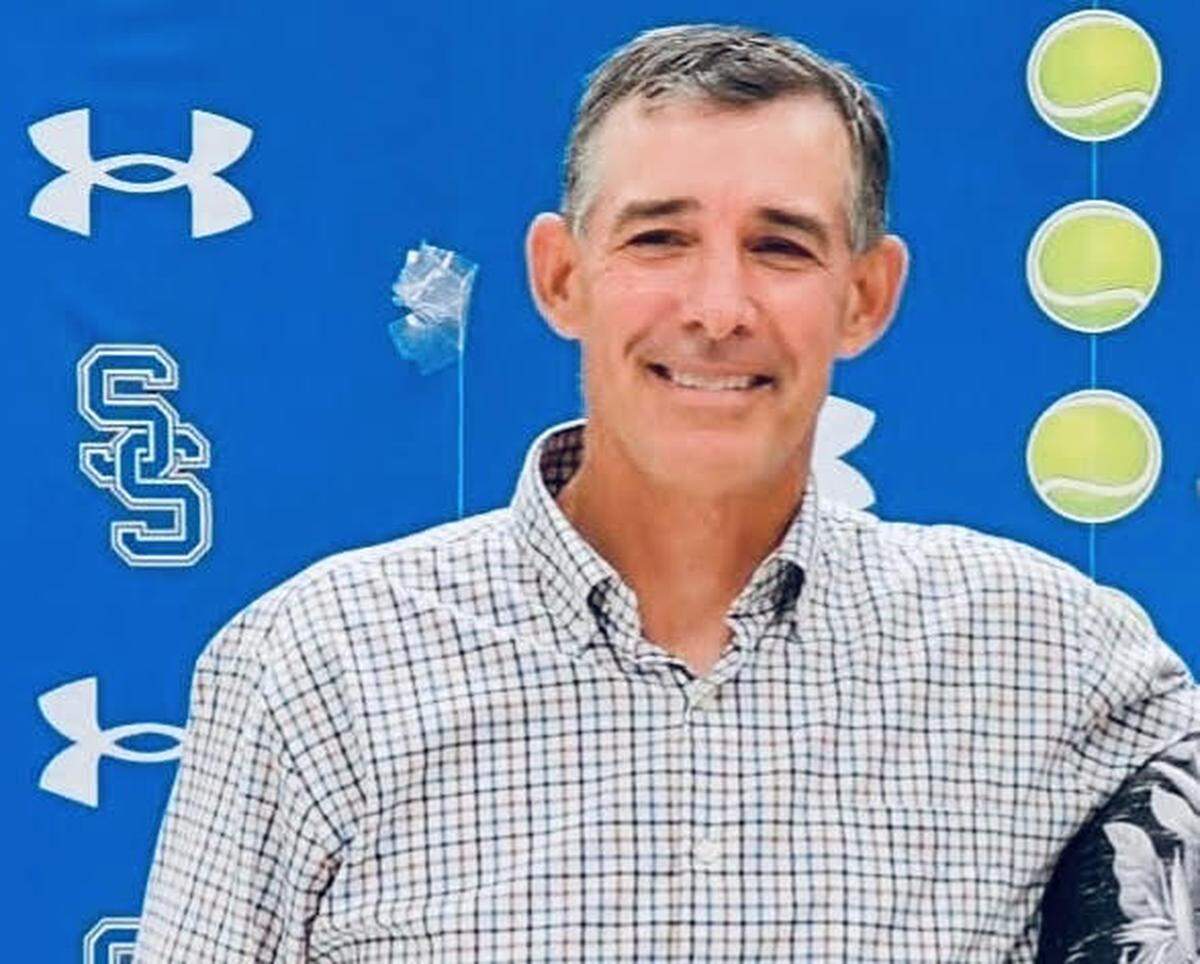
When you were fired, the rumor was that you took the money because you needed it to support your life. True or not?
That’s not true at all. The first $40,000 went straight to the university. I handed it to the person running the foundation. The mistake I made was [Singer] said to me, “I want to take care of you.”
He gave me the money. I take it home; it’s $60,000 in cash. I put it in the garage. I started giving it to a guy who runs a foundation; I was giving it away. I started spending a few bucks here and there. I didn’t need the money. It was never, “I have to do this or that.” It was a mistake. I spent or gave it away over four years.
The way the court made it sound was that I accepted that money to make something happen. That’s not true. I didn’t take anything beforehand.
I did this to help the men’s tennis program. I had to raise money. Then I gave the phone number of the dad [of the student] to the foundation and they raised another $500,000 or $600,000 from the dad in donations. They took in academic money. They took in money that went to the tennis team and the basketball team.
They called me a year later and asked me if I was interested [in a similar scenario for another prospective student] and I said, “No, I just want us to get new tennis courts.” I never thought much of it. The school knew who the kid was and that he was a basketball manager.
Looking back, it was a mistake but not a felony. It was not a jailable offense, in my opinion.
I know a lot of people made careers off this case. The lead prosecutor is now a defense attorney probably making four times as much money. When we called him for this book, he said, “The only thing I remember is that I had 57 people I was trying to convict and I was trying to get them to go down as fast as I could.”
You have said that you will never be a tennis coach again. Do you want to be?
I don’t think anyone will hire me. For a while I really wanted to coach again. This is what I know how to do. It was my way to come back. Now I don’t think I would. Maybe it’s my defense mechanism. Maybe I don’t know if I would be great with NIL [name, image and likeness payments]. I’m old school, and being a student-athlete is now about, “What are you going to give me?”
Are you done from your obligations to complete your “time served?”
I am still paying the [$60,000] fine. The letter of the law says that $60,000 I received was a gift. I had not paid the IRS. I had to pay the federal government $22,000 in taxes. What makes this so hard is that the entire system is designed around money. It’s, “We’re going to destroy you by bleeding you dry. And if you are left with nothing, that’s OK.” That’s what it’s like to go through that system.
At the time of your sentencing, the judge said you are a good man but that you “impugned the system.” Do you agree?
I remember thinking, “Impugn the system? THAT is the system. That’s been going on, and it’s still going on.” At that point I knew I was in trouble.
Were you mad at the student you helped get into UT?
No. The person I was mad at was Martin Fox [a friend and former tennis coach who was Center’s point of entry to the scandal]. I had told him, “Do not get me into anything that could lead to issues. I don’t need any issues.” He said, “This is nothing. You’ll be fine.” I’m mad at myself that I was gullible. It’s on me.
I was not mad at the kid, but these high-net-worth parents, I saw this year after year after year; kids were on teams in exchange for donations. It’s been going on for years and years. I don’t blame schools. It’s a system that has not changed. They made a big deal of it because there were movie stars involved, so they could glorify it.
It sounded like you were originally supposed to go to a “Martha Stewart-like” low-security prison, but you ended up in a higher-security prison. Why?
COVID. They had no place else to put us, so for two weeks I was in a higher-security prison. I ended up in medium security. I don’t recommend it. Most everyone in there was in for drug dealing. I left them alone; I got threatened one time, but it was no big deal.
Because it was during COVID, the cafeteria was closed. They would throw sandwiches into your room.
What were you able to do in prison?
There was one TV. I didn’t watch it. I just read. I read everything I could. I read all of the John Grisham books. I had so many books in my room that if I started it and I didn’t like it, I tried something else.
What was the first thing you did after you were released?
I drank orange juice and went to P. Terry’s [a burger restaurant in Austin]. I craved orange juice because I hadn’t had any in prison. I had two hours to leave prison and to check in the halfway house, so in that time I drank orange juice and ate.
How was your halfway house experience?
Almost worse than prison. They are privately owned; there is no incentive for them to do anything other than keep costs low. They basically serve you dog food. They wake you up at 4 a.m. because you may have to take a bus that’s a two-hour ride for a job.
The only reason I was there was because the government was subsidizing this place for me to be in that bed. They didn’t provide any help for me. What were they going to do?
How did your friends in Austin treat you through all of this?
All of the people who get in situations where you have to ask, “Are they going to be there? Are they going to come through the front door, or run out the back?” A lot of people I thought were my good friends at the University of Texas, people I thought were my family, were not.
I also came to find out I had a lot of really good friends. A lot of people came running to my house, and stood with me. I came to the conclusion that I did get bothered by what people thought of me. It bothered me that people thought I was a bad human being.
It took me a couple of years to decide, “If you don’t like me, that’s OK.”
Do you feel better now that you are talking about your experience?
Yes. The more I talk about it the better I feel. I made a mistake and couldn’t admit it. I was so afraid. I could not admit that I was on the national news. Or that I went to prison. I was so afraid of what people thought.
I’ve got a life. Is it exactly how I drew it up? No. But I’m sitting here and I can order food. When you are in prison and your entire life is in a small locker, that changes you.
How did your life change when you were done with the halfway house?
I was so afraid of how I was going to be able to take care of my family. That was the only thing I was thinking about. A friend was building a pickleball entertainment complex who asked me to help build it, so that’s what I did. People were nice to me. I still struggled, but I didn’t want to be afraid anymore.
When did you stop feeling sick to your stomach?
I don’t know. I still feel sick to my stomach sometimes. Not often. Sometimes I do wake up and think about it. I didn’t sleep for that whole year. I had never taken any medication, and then I started taking antidepressants. Then I developed a ringing in my ears because I was combining medication.
I don’t think I’ll ever be exactly the same person.
Can you be better?
In some ways. I work out a lot. I play a lot of tennis. I try to stay as healthy as I can. I started to walk. At first, I would walk for hours, just alone in my thoughts. I’d walk 10 or 12 miles. I wanted to be out of the house because if I didn’t move I’d feel terrible.
I would retrace what happened over and over and over. Then I would practice, “What if I did this? What if the school did this? Why did I get involved in this? Why didn’t men’s basketball step up?” It’s a slimy game.
I spent my whole life going to games, and I stopped watching sports. The only one I would watch is golf because there is no coach. That part shook me to my core.
What do you want people to know about you?
I went through some difficult things in my life and hit a low spot. I was once too embarrassed to walk my dog outside. I climbed back up, and this is how I did it, and maybe I can help you. If I can get through this, you can get through it.