TCU’s Flying T and Hypnotoad a tale of two creators: A TCU football player, and Disney
READ MORE
TCU in the Fiesta Bowl
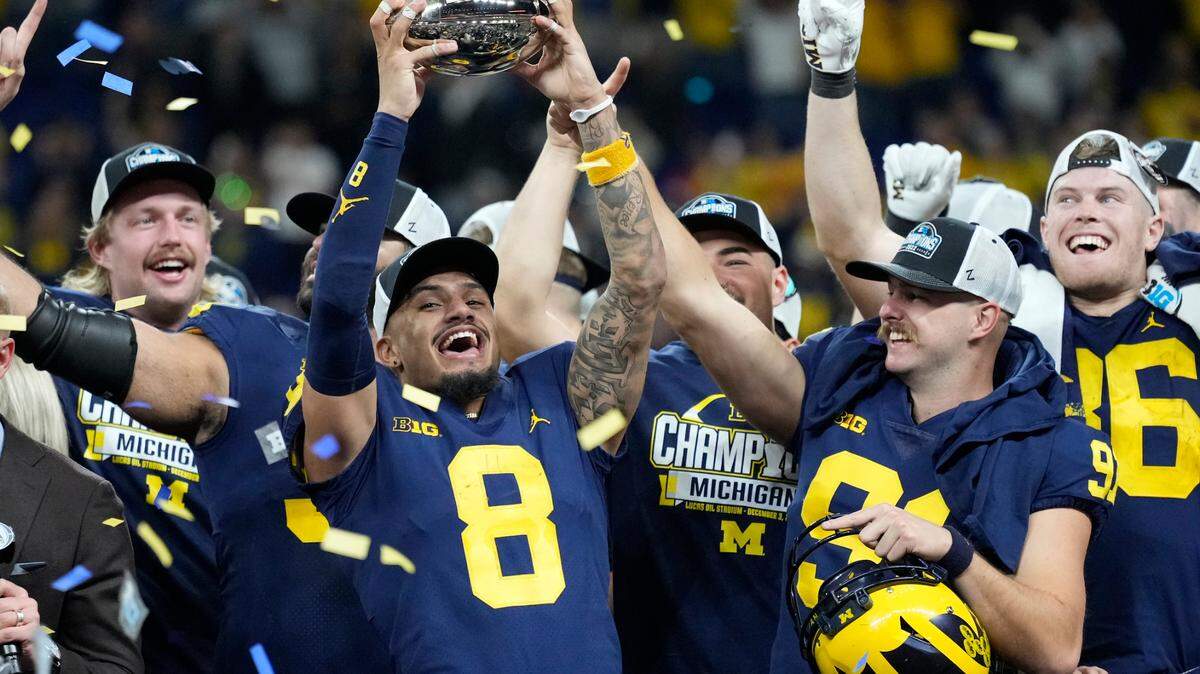
The TCU Horned Frogs take on the Michigan Wolverines at 3 p.m. at State Farm Stadium in Glendale, Arizona. ESPN will broadcast the game on both television and radio. Here’s everything else you need to know for the game.
Expand All
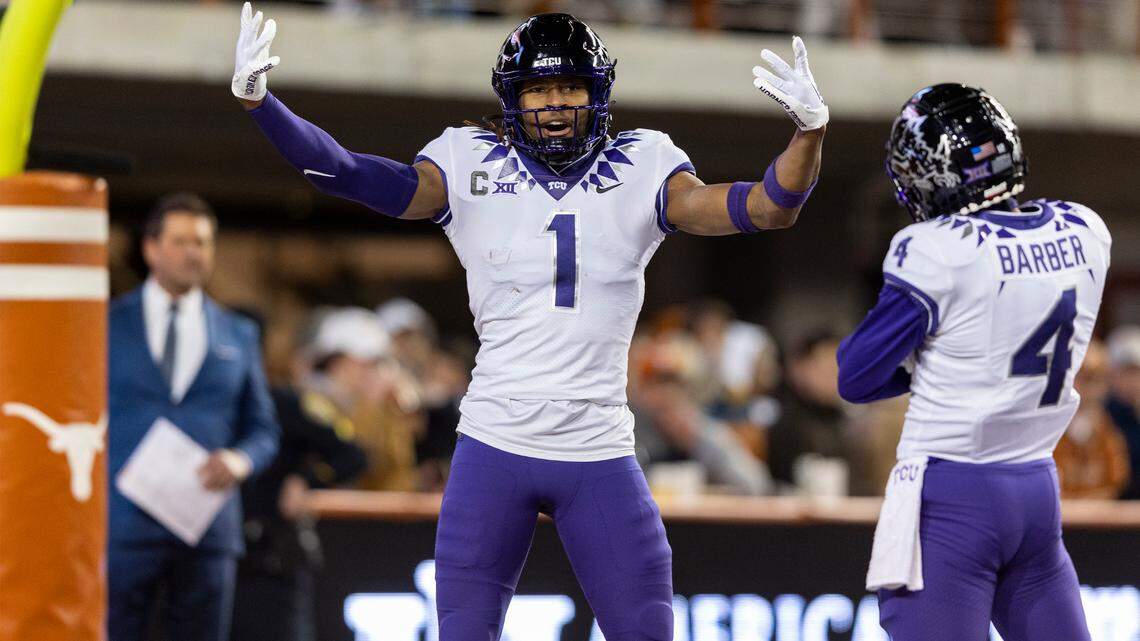
Cartoonist Matt Groening and former TCU football player Marshall Harris are in their late 60s, and they both created logos for the TCU football team that took off in 2022.
It was all quite unintentional.
Of the two, there’s a good chance one has no clue he did it.
Harris created the “Flying T” TCU logo in the late 1970s when he played for the school; although it once was used as the logo on the helmet, it finally became official TCU property this fall.
Groening, who became internationally famous for creating “The Simpsons” TV show that started in 1989, drew “Hypnotoad,” a bit character from his TV cartoon, “Futurama,” which began in 1999.
One of these designs is now officially a part of the TCU family, whereas the other will forever remain unofficial.
Bagging the T versus Begging for Hypnotoad
Walk through the TCU bookstore, or cruise any of its online merchandise outlets, and you will find that TCU gear with the Flying T logo is readily available and a brisk seller.
Harris, who played on the defensive line, attended TCU from 1974 to ‘79.
“I was there during the dark ages, or I like to call, ‘The foundational years,’” he said in a phone interview.
In his time at TCU, the team was a well-intentioned 5-39 under coaches F.A. Dry, and Jim Shofner.
Harris was a graphic design major, and as part of his classes he drew a pair of TCU logos.
One was a scary version of a Horned Frog, which was adopted by the TCU strength and conditioning coach and put on T-shirts for players to wear while they lifted weights.
The other was the “Flying T,” which was adopted by the football team, and university.
One problem: Harris never received a cut.
This all happened in the late ‘70s and 1980s, before the sports world realized the hundreds of millions they were sitting on in terms of licensing and merchandise.
For years, Flying T gear was available, and when TCU became aware of it, a lawyer would send the creator/seller a cease and desist letter. TCU didn’t own the rights to that logo.
About 12 years ago, TCU administrators asked Harris for permission. This was about the time when retro designs and throwback gear became chic.
TCU’s sales pitch was, “Please give it to us.”
Harris, who is an artist and lives in Fort Worth, knew he had an asset. He wasn’t going to give it away for zero.
On the first day of classes in August, TCU director of athletics Jeremiah Donati reached out to Harris, and the two made a deal.
Harris sold his 40-plus-year-old TCU baby to TCU. The university unveiled Flying T merchandise on Homecoming weekend, and it’s been a big hit, behind one item.
Disney’s answer to TCU
In the same bookstore where the Flying T flies off shelves, store managers bemoan the absence of any TCU Hypnotoad merchandise.
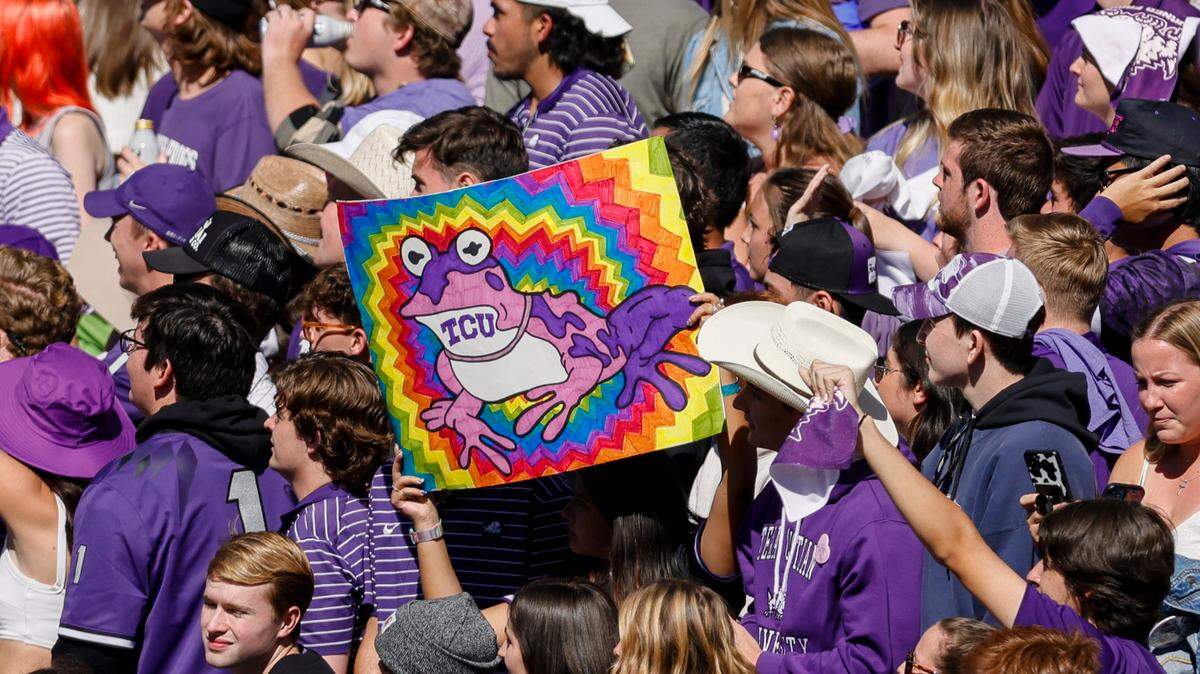
The Hypnotoad has unofficially replaced the Horned Frog as the TCU logo and mascot, and the school can’t touch it.
The irony is that the Hypnotoad has been around TCU since 2015, but he didn’t click until 2022.
In 2015, then-TCU director of athletics marketing Drew Martin had seen the University of Minnesota use an odd version of its Golden Gopher on its video board during football games.
Martin suggested TCU do something similar to TCU’s director of athletics video production, Clayton Regian. Regian was a fan of Futurama; he colored the Hypnotoad purple, and the creation was a part of football games ever since.
The TCU Hypnotoad became in demand when Sonny Dykes was given a sweatshirt with the logo, and the photo of the TCU football coach wearing it during a practice went viral.
Much like the Flying T many moons ago, TCU doesn’t own the rights to Matt Groening’s creation. The Hyponotoad belongs to Disney.
Not long after TCU and Harris reached a deal, school administrators reached out to Disney.
In 2017, Disney bought much of 21st Century Fox’s properties for $52.4 billion; in the sale it included “The Simpsons” and “Futurama,” among a long line of other familiar names.
TCU leaned hard on Disney for Hypnotoad, but the answer was the same. No.
Whatever the “Flying T” cost TCU, the number was considerably higher for Hypnotoad. Not to mention the rules and parameters for such an agreement.
TCU was not going to enjoy the same benefits with Disney as the University of Oregon.
Based on a handshake deal between Walt Disney himself and the University of Oregon athletic director in 1947, for decades Oregon’s duck was Donald Duck.
These days Oregon still uses Donald, but rarely. Disney wants a say of when and where the duck appears, and a share of the profits, too.
Doubtful TCU even got that far with Hypnotoad.
“It’s great for people to know that we really did try because fans got really behind it,” TCU director of branding and licensing Deanna Cardillo said in a phone interview. “We would love to be able to do more with it, but it’s not our intellectual property.”
Should you see any TCU Hypnotoad gear for sale, it’s no different than the TCU Flying T gear that was around for decades before Harris officially sold the property. Some creative entrepreneur type is producing the merchandise out of their house and selling it themselves illegally.
“There are so many threads to this sort of thing that it’s just very hard to stop all of them,” said Harris, who ran into this challenge himself. “You close one, and another one pops up.”
Cardillo only asks those who are going to make a TCU shirt or hat with a Hypnotoad to refrain from using the TCU mark.
This is about all they can do.
The Flying T is an official part of TCU now, whereas the Hypnotoad will remain off the books.
This story was originally published December 29, 2022 at 4:00 AM.

.jpg)