
Cowboys DE Randy Gregory says his suspension issues were more than pot smoking
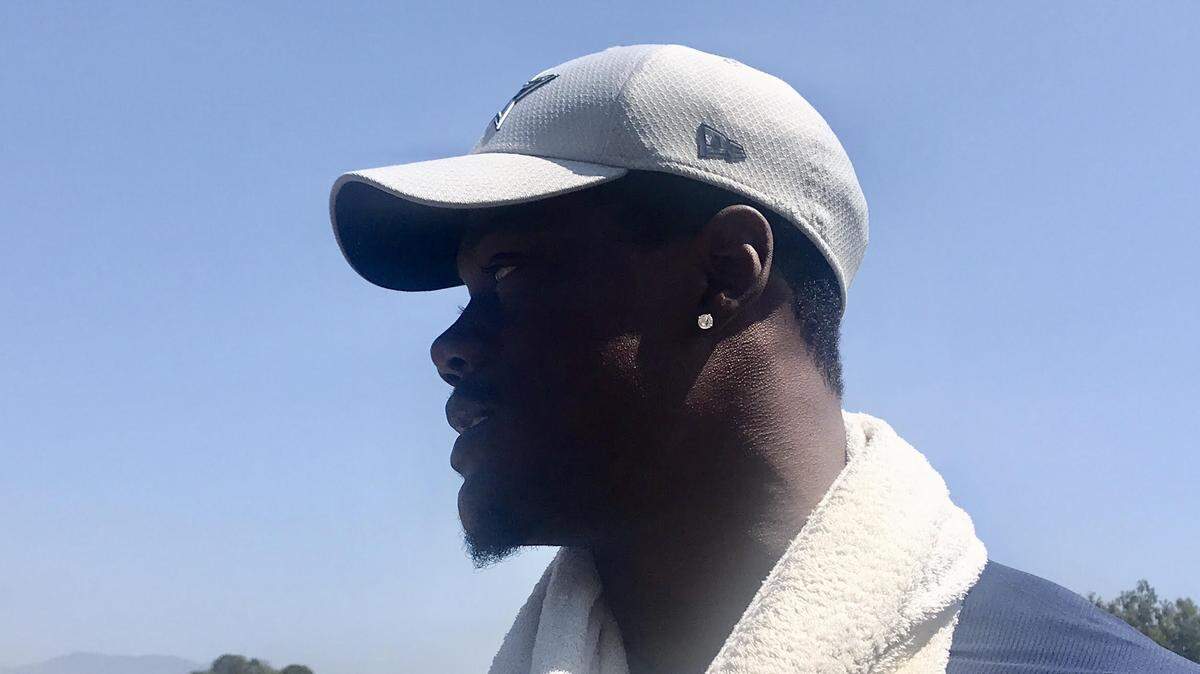
Defensive end Randy Gregory talked to the media Monday for the first time since being reinstated to the Dallas Cowboys at the start of training camp following an indefinite suspension for repeated violations of the league’s substance abuse policy.
The Cowboys had shielded Gregory from the media as part of a deliberate process on and off the field to re-acclimate him to the game as well as the scrutiny that comes with the mental, emotional and addiction issues that almost cost him his career.
The Cowboys drafted Gregory in the second round out of Nebraska in 2015 despite a failed drug test at the NFL Combine because of marijuana in his system.
They knew his issues and took a chance on him anyway because they thought they had a plan in place. After playing in 14 games as a rookie, Gregory subsequently continued to fail more tests, resulting in his missing 30 of the 32 games over the past two years.
Gregory is the picture of happiness now that he is back playing football after thinking it may never happen. But he says it’s an ongoing process that involves more than just the stigma of him being a pothead.
“There is a lot more to it,” Gregory said. “The stigma. Obviously what I have been known to get in trouble for are the marijuana issues and substance abuse. That is what is going to stick in the media and the fans. I would like everybody to realize there is more to it and there is a stigma behind it. And it’s not just somebody walking around carelessly doing what they want. There is obviously a mental aspect to it that plays a big part in it for me that I have tried to figure out. The moment I took a serious approach to that with my therapy and the more people around me understand what I was going through mentally made it a lot easier for me to get right.”
Gregory has seen doctor on top of doctor and countless therapists since coming into the league, initially directed by the Cowboys and then, to the chagrin of everyone involved, by the league.
The team also regrets placing him in an environment as a rookie that included the progress-hijacking influence of defensive end Greg Hardy, who was suspended for domestic violence and is now persona non grata in the NFL.
Gregory has reportedly been diagnosed with bipolar disorder and used marijuana to help cope with that. However, rather than helping him overcome the issues, it masked the pain and only added more problems to his plate.
“I think they have diagnosed me with a lot of things at this point,” Gregory said. “I can’t say what I believe what is right and what is wrong. I do trust a doctor’s opinion over mine. But I also understand there is a lot of different things you can do throughout that process to make life easier for yourself. And a lot of those things I was putting in front of myself, self sabotaging. I had to realize that. And grow up a little bit. I think I have. I can’t address the bipolar thing. Anybody that deals with what I have to deal with and gone through what I have gone through and understands the process what I have been through understands that there is obviously a mental aspect to it along with emotional.”
Gregory seemingly received an NFL death sentence when he was suspended indefinitely following the final game of the 2016 season.
It was not long after that he reached his lowest point where he felt like he may never play again.
“There was a couple of times in the last two years and maybe last year where I had a lot going on in my personal life,” Gregory said. “I had a lot going on back at home with my parents, things with the team obviously, the drug program. Just everything career wise and there was a lot I had going on mentally and physically. Just trying to get myself back to baseline so i can continue on in my path.”
The first step was getting with attorney Daniel Moskowitz who then added Mike Ornstein, known as a ‘Mr. Fix It’ in NFL circles, into the mix.
He was placed in an intense two month rehab program in December of 2017 and then moved to a sober halfway house.
“Really when I met him he was 198 pounds,” Ornstein said. “Now he is 248. He had no self confidence, no anything. Now he is ready to play. I just know he’s come around 100 percent. It’s the most rewarding thing that I’ve been involved in, watching him. He’s just a regular guy now.”
But Ornstein knows the “the tendency to get back into it is there” in Gregory which is why he has a sober living partner living with him.
“He always has somebody with him and he’s going to have somebody with him the whole season,” Ornstein said. “We’ll see how he is in a year from now and if he’s good enough to be on his own, then he will, but right now, I’m not letting this kid fall back.”
Gregory has no intentions on falling back. He said having a routine, being on a good schedule, being around the right people and regular therapy have helped him.
He just has to be consistent with it as well as his medications.
But he does appreciate the support from the Cowboys, from ownership down to a number of teammates who wrote letters to NFL commissioner Roger Goodell to help push through his reinstatement.
Gregory doesn’t want to let them down.
“I think they believe in me,” Gregory said. “I think first and foremost that they like me as not only as a player but a person. I have always tried to do the right thing. I know I always haven’t but I tried. I think they realized I was a person in need. Sticking by me during that tough part and even now has been real important for me to get back and I think it has worked.”
Said Cowboys owner Jerry Jones: “I just know that his attitude, his want to, his genuineness, those are things that I’ve heard players talk about but I would say it’s mirrored all the way through and up through the organization. Everybody here is rooting for him, he doesn’t want any slack but I know he sees the care that everybody has for him.”
As far as football is concerned, the Cowboys are taking it one day at a time, one practice at time. He took part in team drills Sunday for the first time, and they will ramp it up more and more each day after initially holding out of training camp practices to work on his conditioning.
“He just needs to come to work every day and do everything we ask him to do and make sure he takes care of business off the field,” coach Jason Garrett said. “Again, we have a support system in place for him to help him do that. And we’re excited about that.”
Gregory didn’t play in last week’s preseason game against the San Francisco 49ers, and the final decision has not been made about his availability for Saturday’s home preseason opener against the Cincinnati Bengals.
Jones said the focus is to get him ready for the regular season opener against the Carolina Panthers.
Gregory is just happy to play football again.
“I think the last two weeks have been real fun,” Gregory said. “I think the days and weeks and months leading up to this have been pretty emotional. I think I’ve learned to handle my emotions a lot better than I have in the past, lot of ups and downs, things like that. But definitely the last two weeks have been a fun experience, just being able to be back out here with teammates.”
This story was originally published August 13, 2018 at 4:49 PM.