
Put aside grass-turf debate. Will Globe Life Field be another hitter-friendly park?
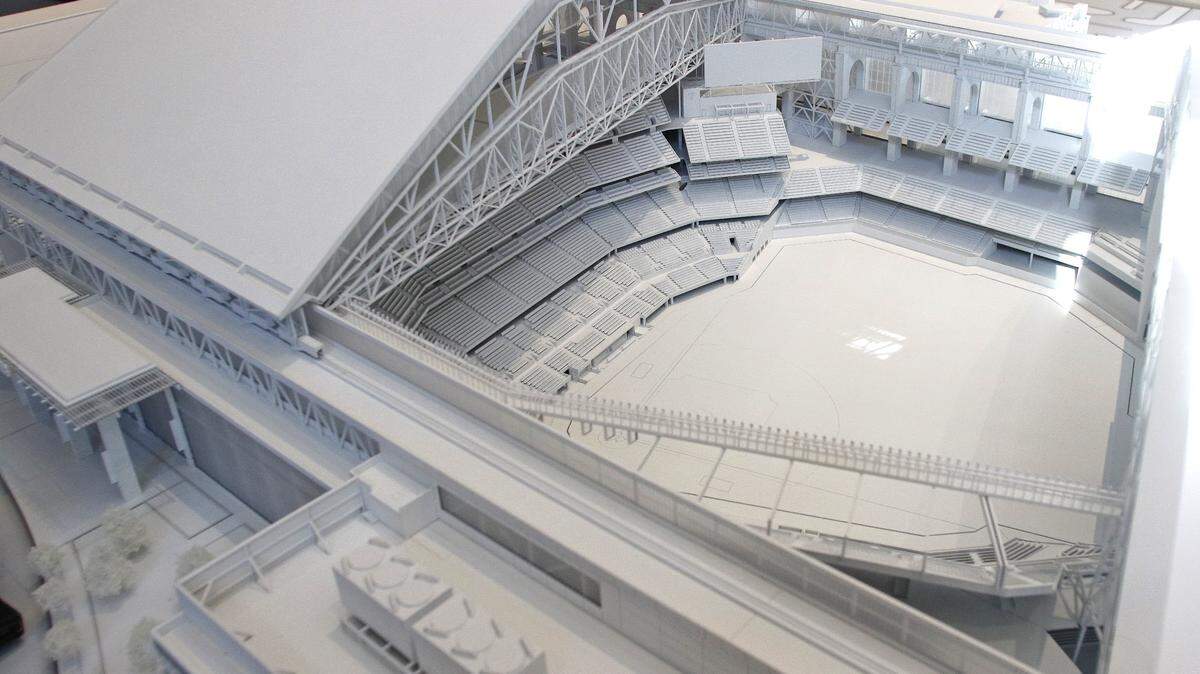
For those who have just moved to the area or have been too occupied to bother with the construction of Globe Life Field, the natural grass vs. turf debate is more than a year old and isn’t going away anytime soon.
It’s not just a media-driven topic, though, admittedly, the topic usually produces a nice chunk of the almighty web clicks. Baseball fans, Texas Rangers fans and season-ticket holders, and Arlington taxpayers have genuine interest in the final decision.
But there is more to the new ballpark than the playing surface, though even that plays into another key question: How will the Globe Life Field play?
Will it be a pitcher’s park or a hitter’s park? Will it be neutral, as the Rangers believed Globe Life Park would be before it opened in 1994?
That didn’t exactly go as planned.
Rangers executive vice president Rob Matwick didn’t give away all the goods Tuesday at the unveiling of the Globe Life Field sales office, but he provided enough information to formulate a forecast for the $1.2-billion retractable-roof stadium.
The Rangers believe that Globe Life Field won’t favor pitchers or hitters when it opens in 2020. They have conducted tunnel tests to judge winds at various levels for days when the roof is open.
The jet stream that turned Globe Life Park into a hitter’s paradise, isn’t going to be an issue, according to wind-tunnel models. The testing also revealed that winds won’t knock down flyballs that appear headed for home runs.
When the roof is closed, which it will be most games, a lack of wind resistance could aide hitters, but a good pitching staff could overcome that.
There are no plans for any quirkiness with the outfield fence, like the Crawford Boxes at Minute Maid Park in Houston, the late Tal’s Hill at Minute Maid Park, or the flower boxes at Target Field in Minnesota.
Globe Life Park has its quirks in the outfield, like the 16 1/2-foot fence in left field, the 407-foot mark just to the right of straightaway center, and that odd angle at the 377-foot sign in right-center.
The outfield dimensions are expected to be similar to what they are at Globe Life Park – 332 feet down the left-field line, 390 to left-center, 404 to straightaway center field, 377 to right-center and 325 down the right-field line.
The Rangers aren’t ready to announces the exact distances, though they seem to have a really good idea.
If the Rangers don’t like the way the new dimensions are treating their pitchers or hitters, the club has some flexibility. Fence heights could be manipulated. The walls could move back, though only marginally, and in as has been done at, most notably for the Rangers, the former Safeco Field in Seattle.
One thing pitchers like is natural grass. Generally speaking, ground balls are slower on natural grass, and outfielders don’t have to worry about balls bounding over their heads when a shallow flyball they can’t get to hits off grass.
But pitchers in Arlington would also rather have a roof to keep them cool in the summertime. Though analytical trends have starting pitchers spending fewer innings on the mound, starters won’t see their energy depleted as quickly on 100-degree days when it’s 70-something under the roof.
Add it all up and Globe Life Field, in theory, is going to be more of a pitcher’s park than the current ballpark, but hitters aren’t going to be handicapped as they are at some ballparks on the West Coast.
In other words, the Rangers believe they are building a neutral ballpark.
This story was originally published November 29, 2018 at 8:04 AM.