Five things we’ve learned about TCU football four games into the 2025 season
TCU football has completed a third of its schedule after Friday night’s bitter 27-24 loss to Arizona State on the road in its Big 12 opener.
We’ve learned a lot about the Horned Frogs so far. TCU has played on the road at a College Football Playoff contender, faced one of the best quarterbacks in the country against rival SMU and opened the season against one of the greatest coaches of all-time, Bill Belichick.
All of these scenarios have revealed a lot about TCU, but there are still a number of questions that remain unanswered as the Horned Frogs dive deeper into Big 12 play.
Here’s what we have — and haven’t learned — about TCU so far:
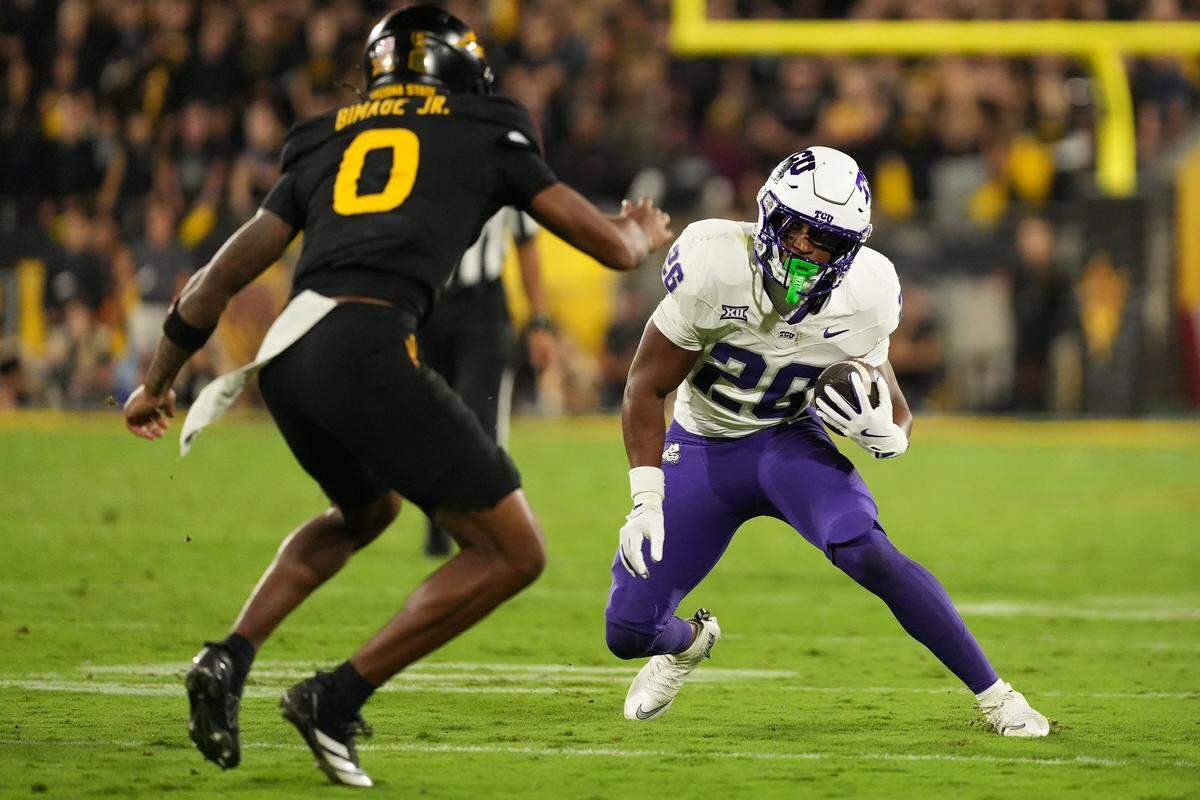
Run game remains a question mark
Before Friday’s disappointing showing, TCU had appeared to show improvement with its rushing game after having one of the worst run games in the country last season.
Kevorian Barnes ran for more than 100 yards against North Carolina, and Trent Battle and Jeremy Payne combined for over 100 yards against SMU after Barnes was injured in the win over Abilene Christian.
However, Arizona State exposed that TCU’s rushing attack hasn’t fixed all of its issues. Payne and Battle combined for just 50 yards on 15 carries. The Horned Frogs finished with only 10 total rushing yards after Josh Hoover was sacked six times by the Sun Devils. Even if Barnes were healthy, it wouldn’t have made a difference, as Arizona State lived in the backfield of TCU, especially in the second half.
The Sun Devils have a good defense, but so do BYU and Iowa State. TCU must find balance going forward, or the Horned Frogs will be very beatable.
QB Josh Hoover was underrated
TCU quarterback Josh Hoover didn’t get a lot of preseason accolades despite setting a program single-season record for passing yards in his first true season as the starter and leading the Horned Frogs to nine wins. Four games into the season, Hoover has outplayed household names like Clemson’s Cade Klubnik, Florida’s DJ Lagway and Texas quarterback Arch Manning.
Hoover has thrown for 1,242 yards, 11 touchdowns and four interceptions while also adding a touchdown on the ground. Hoover’s biggest growth this season has been his accuracy outside of the pocket and his willingness to use his legs to extend plays. Despite losing three receivers to the NFL, Hoover is still averaging more than 300 yards passing per game.
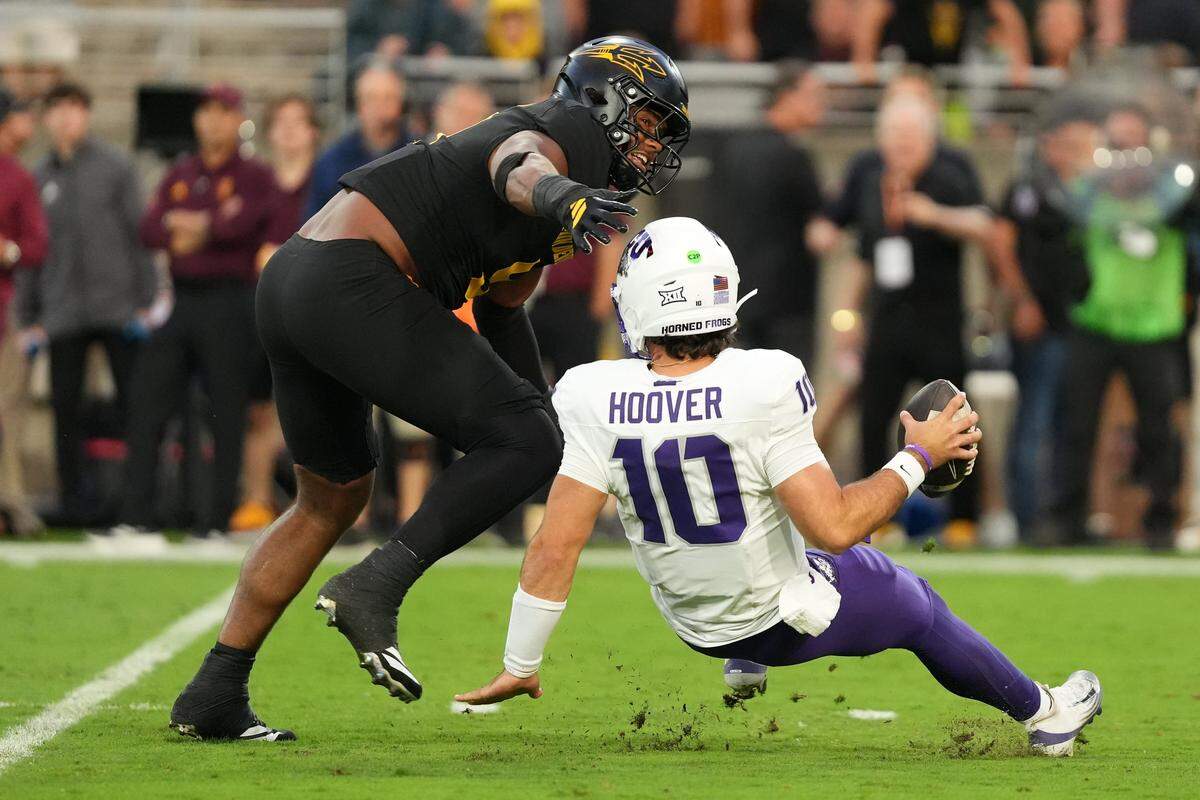
With that being said, the biggest weakness in Hoover’s game has been turnovers, and he has five on the season after throwing two interceptions and fumbling against the Sun Devils, which head coach Sonny Dykes said was the difference in the game.
Some of the turnovers have been bad luck, like when SMU ripped a would-be touchdown away from Eric McAlister in the end zone or when Jordan Dwyer bobbled a pass only for it to be intercepted by the Sun Devils.
Regardless, Hoover must keep his turnovers down going forward, especially if TCU’s run game struggles continue.
TCU’s defense has improved
The numbers may not completely show it, but the Horned Frogs’ defense has taken a step forward and continues to build off of its strong close to the 2024 season. TCU’s defense shut down North Carolina and forced multiple turnovers in the fourth quarter when SMU was threatening to take the lead.
Despite the offense’s ineffectiveness Friday, TCU’s defense kept the Horned Frogs afloat with countless stops deep in their own territory — like when linebacker Kaleb Elarms-Orr broke up a would-be touchdown in the second half. He is beginning to emerge as TCU’s most impactful defender with 21 tackles and three sacks in the past two games against elite quarterbacks in SMU’s Kevin Jennings and Arizona State’s Sam Leavitt.
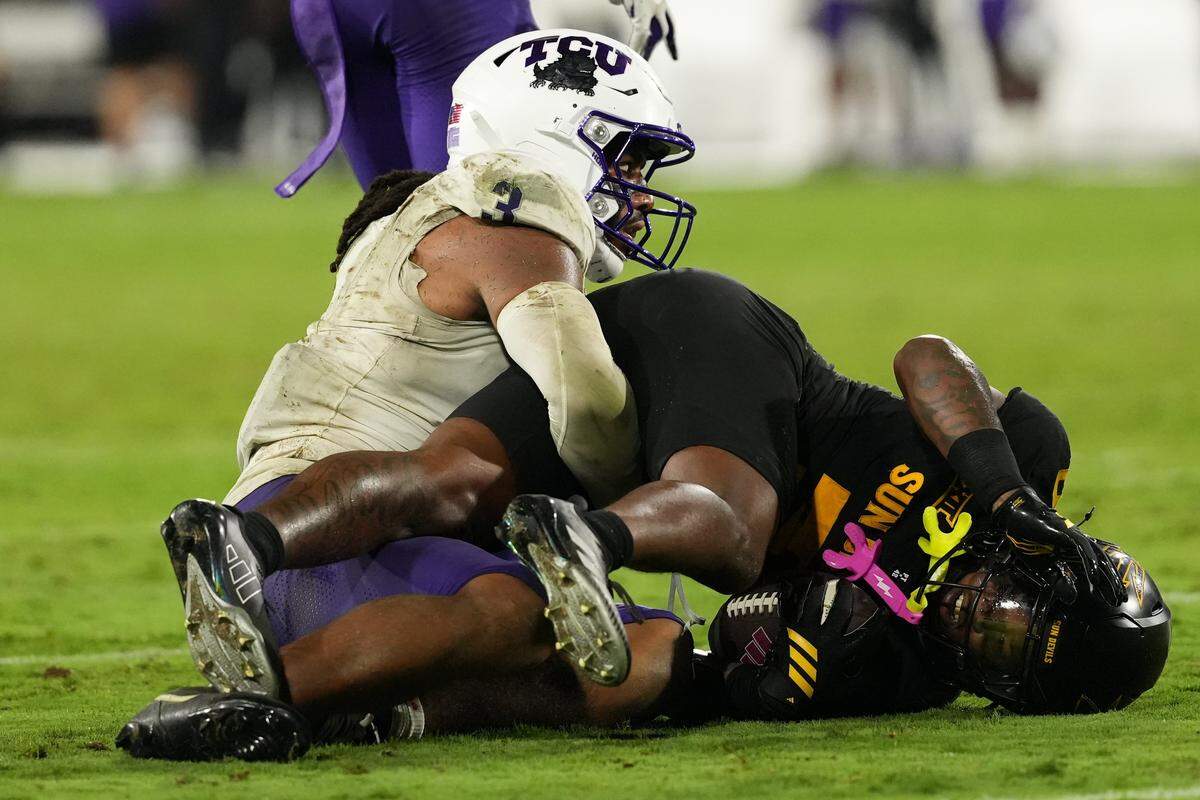
The pass rush with just four down linemen remains inconsistent, but overall Dykes has to be pleased with how the defense has performed.
TCU has reloaded at receiver, but...
It was fair to wonder how TCU would replace receivers Savion Williams, Jack Bech and JP Richardson from last year’s team, but so far the Horned Frogs have found ways to match most of their production. Houston transfer Joseph Manjack is on pace to have the best season of his career after he had 83 yards against Arizona State and recorded his first career 100-yard game against Abilene Christian.
Idaho transfer Jordan Dwyer has also looked like a steal out of the portal with 299 yards and two touchdowns. Dwyer has been a pleasant surprise as a route runner and has made a plethora of tough, contested catches. Preseason All-Big 12 receiver Eric McAlister also had one of the best games in program history with eight catches, 254 yards and three touchdowns against SMU.
Add in solid contributions from tight end DJ Rogers and freshman Ed Small, and TCU has reloaded its passing attack. But the health of McAlister will be imperative for continued success. He was limited against Arizona State and didn’t record a catch as he battled through a hamstring injury. He draws much of the defense’s attention, which opens up more room for his teammates.
If he’s not available, TCU’s passing attack isn’t nearly as formidable.
Special teams could be a weakness
Special teams has been a letdown for TCU.
Starting kicker Kyle Lemmermann was injured before the game against Abilene Christian. That left the Horned Frogs to rely on backup kicker Nate McCashland, who is 1-for-2 this season. McCashland has a limited range compared to Lemmermann, and he’ll need to earn the trust of the coaching staff going forward.
Punter Ethan Craw has also had an underwhelming start, as he ranks last in the Big 12 in yards per punt with an average of 38.4. Ideally, Craw won’t have to punt much going forward, but when he does, TCU needs him to be able to consistently flip the field.
This story was originally published September 28, 2025 at 4:50 AM.