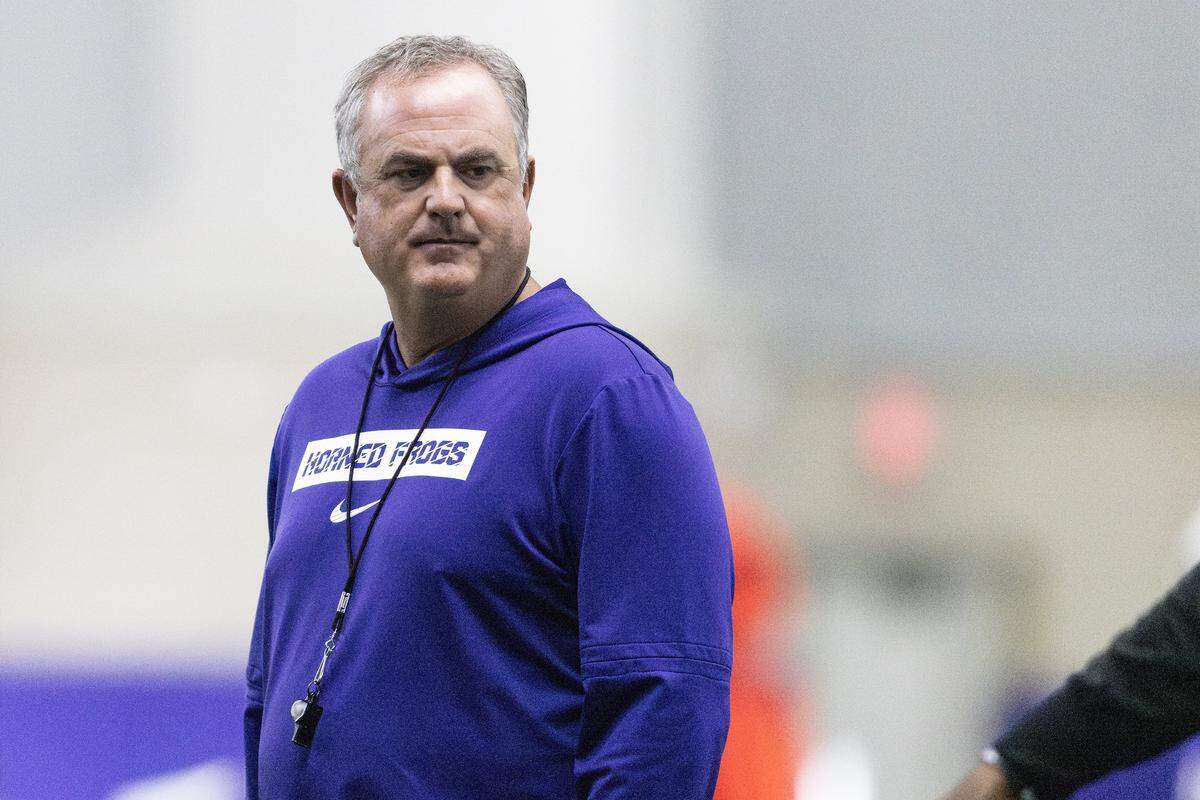
Entering his fourth season, what has coach Sonny Dykes built with TCU football?
It can be difficult to follow in the footsteps of a legendary coach like Gary Patterson.
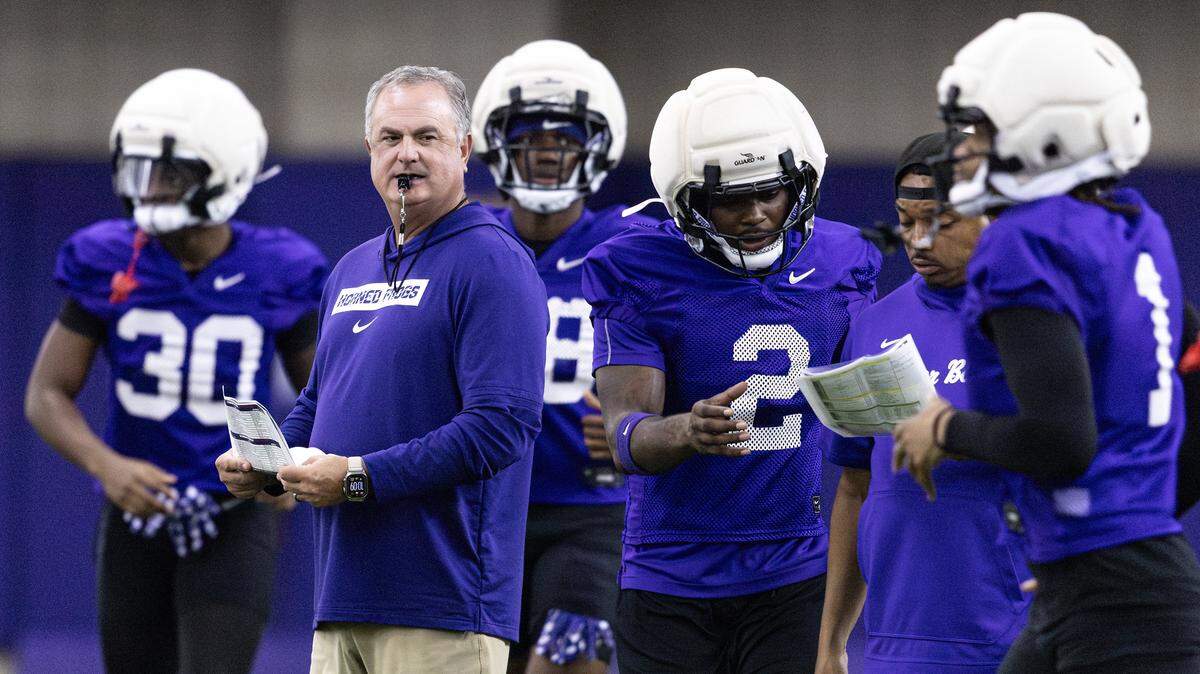
But as he enters the fourth year of his tenure, TCU football head coach Sonny Dykes is beginning to forge his own path.
There have been highs, like the Horned Frogs’ run to the national championship game in 2022, and there have also been lows, like the 5-7 season in 2023. Last year showed that Dykes had what it takes to overcome adversity, as the Horned Frogs won six of their final seven games to finish 9-4.
Now the TCU fan base anxiously waits to see what Dykes and the Horned Frogs do this season, starting with Monday’s nationally televised game at North Carolina in the college coaching debut of six-time Super Bowl champion Bill Belichick.
The fourth year of a coach’s tenure has always been viewed as a landmark season, and the same applies for Dykes, who has his coaches and his recruits in place.
He said he believes his team can live up to the standards he’s been trying to set.
“Year four is important just because you’ve had an opportunity to recruit your recruiting classes. You had an opportunity to kind of get your culture instilled in the program,” Dykes said. “All the stuff matters — your ability to evaluate high school players, to develop those high school players, to create depth in the program, to retain your starters, in today’s world with the transfers and everything.
“If you said to me that you’ve got to go take all these transfers ... that says a lot about your program. It says you haven’t recruited well. It says you’re not able to develop or you’re not able to retain players. And, you know, I think going into year four, that we’ve been able to do that.”
TCU’s roster retention and development are big reasons why Dykes has a quiet confidence about this season, despite a schedule that looks quite challenging, with road games against defending Big 12 champion Arizona State, Kansas State and BYU.
Gary Patterson did ‘tremendous job’ as TCU coach
Every coach runs his program differently. For Dykes, initially his TCU tenure was about finding a balance between creating his own culture while also respecting the standard set by Patterson, the program’s all-time winningest coach (181-79).
“I had a kind of unique perspective because I was here in 2017 and I got to see Coach Patterson and how he ran the program,” Dykes said. “I don’t know too many programs maybe in history where the current head coach had a statue of him outside the facility. Everybody recognized what a tremendous job Gary did and how long he did it and how much he moved the needle for TCU. Not only the football program — the athletic department, but really the whole university.
“That’s hard to follow. The thing that we’re trying to do, though, is kind of create our own path. And I think Gary and I have very similar core values in terms of what we think is important when it comes to winning and losing. We go about it in different ways, I think, which is good.”
One of those differences was that Dykes wanted the players to be the face of the TCU football program. Like most prominent collegiate coaches during his time, Patterson was the face of the program.
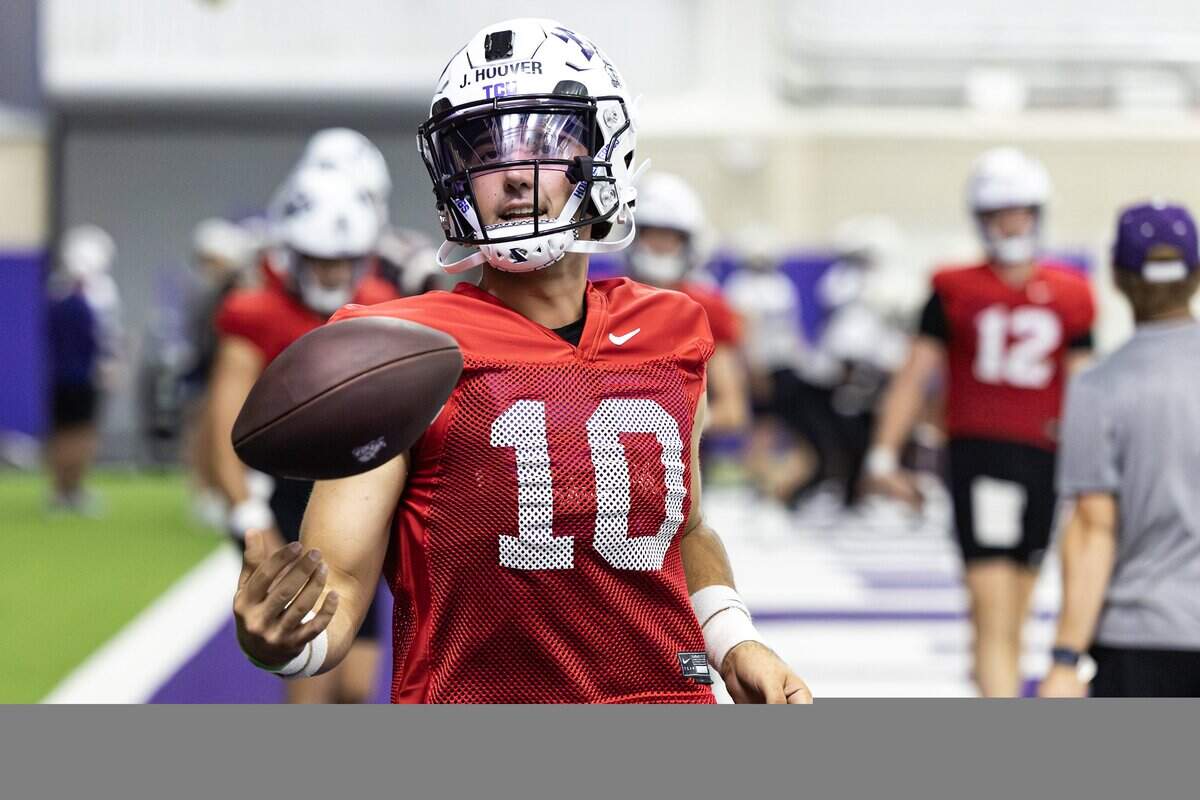
Now players like junior quarterback Josh Hoover, senior safety Bud Clark and senior linebacker Namdi Obiazor serve that role for the Horned Frogs.
“It starts off in the workouts. A lot of them are player-led,” Obiazor said. “The players are getting the sheets and reading out what we have to do today. In the locker room we rely on the older guys to get the young guys prepared and show them what’s to be expected.”
Why take this approach? Dykes understands that it’s the role of the coach to set the standards, but the players have the best chance of upholding those standards in the locker room when the coaches aren’t around.
“Those guys are the ones that can move the needle. I mean, they can make plays,” Dykes said. “Now, we have to have a very high standard. We have to make sure that we demand that the players meet the standard every day, not some days or most days, but every day.
“And buy-in. The buy-in has to be there because a player can affect a player a lot more than a coach can affect a player.”
Dykes’ approach has allowed players like Max Duggan, Josh Newton, Jack Bech and so many more to become household names during his tenure.
Dykes didn’t just empower those players in the locker room; he also allowed their stories to be told on a much bigger scale.
While most college coaches treat their practices like a top secret meeting, Dykes has maintained a wide-open media policy, allowing reporters to watch full practices in the spring and fall camps, and even allowing fans and media to watch entire scrimmages.
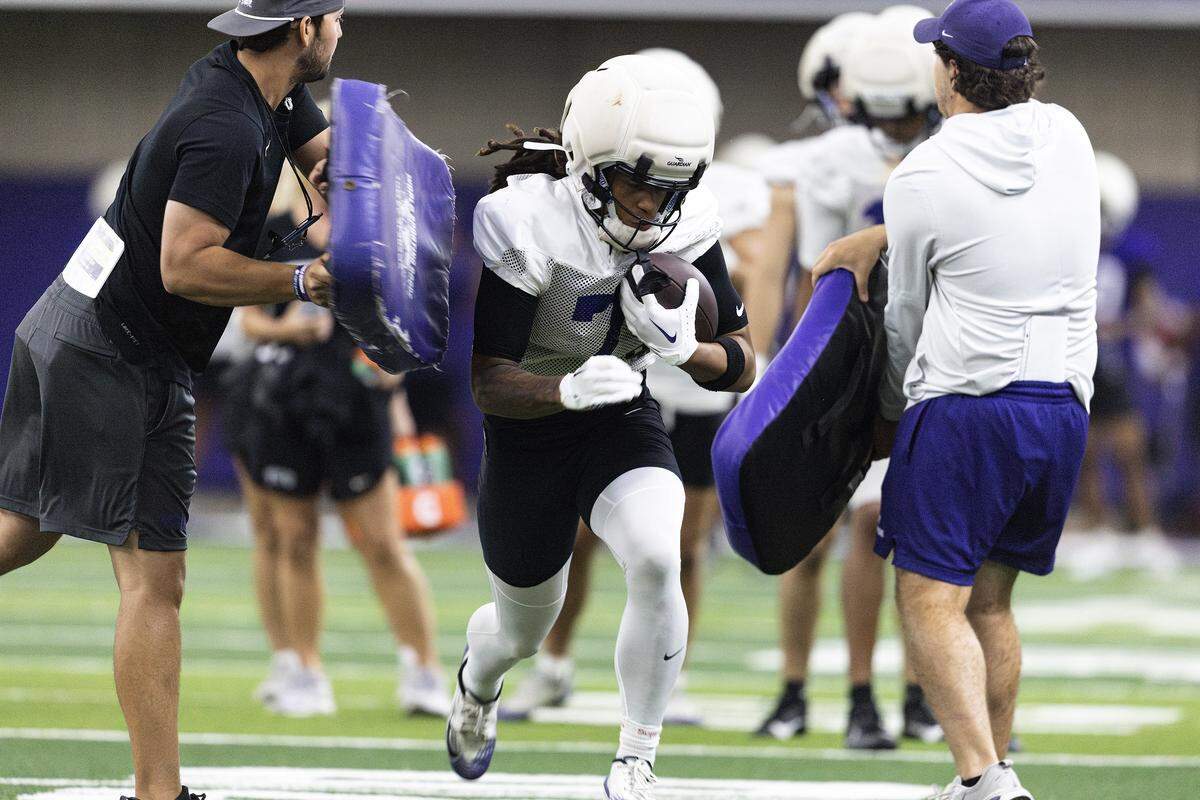
Dykes’ approach could be considered radical compared to some of his coaching colleagues, but it’s clear that the program and the players enjoy the bigger media spotlight.
“I’ve always viewed the media as an ally and not an adversary,” Dykes said. “I’ve never concerned myself that much with somebody knowing, OK, look, we’re going to run this pass route on third down. I just don’t know what somebody can glean from a scrimmage report or something like that.
“I think I want our fans to know about our team. I want our players to be able to get their names out in the college football world. I want them to get as much exposure as they can get.”
For Dykes, empowering the players isn’t just about pushing them to be leaders or helping them out with their branding. It’s also about him and the staff put them in the best possible position to succeed.
“I think the biggest thing is the recovery, nutrition and making sure guys are available for the game,” wide receivers coach Malcolm Kelly said. “All the different investments we make off the field to make sure our guys are strong, healthy and getting the proper nutrition.
“We also allow guys to be themselves. We never ask a guy to be something he isn’t. I think that’s the biggest thing coach does.”
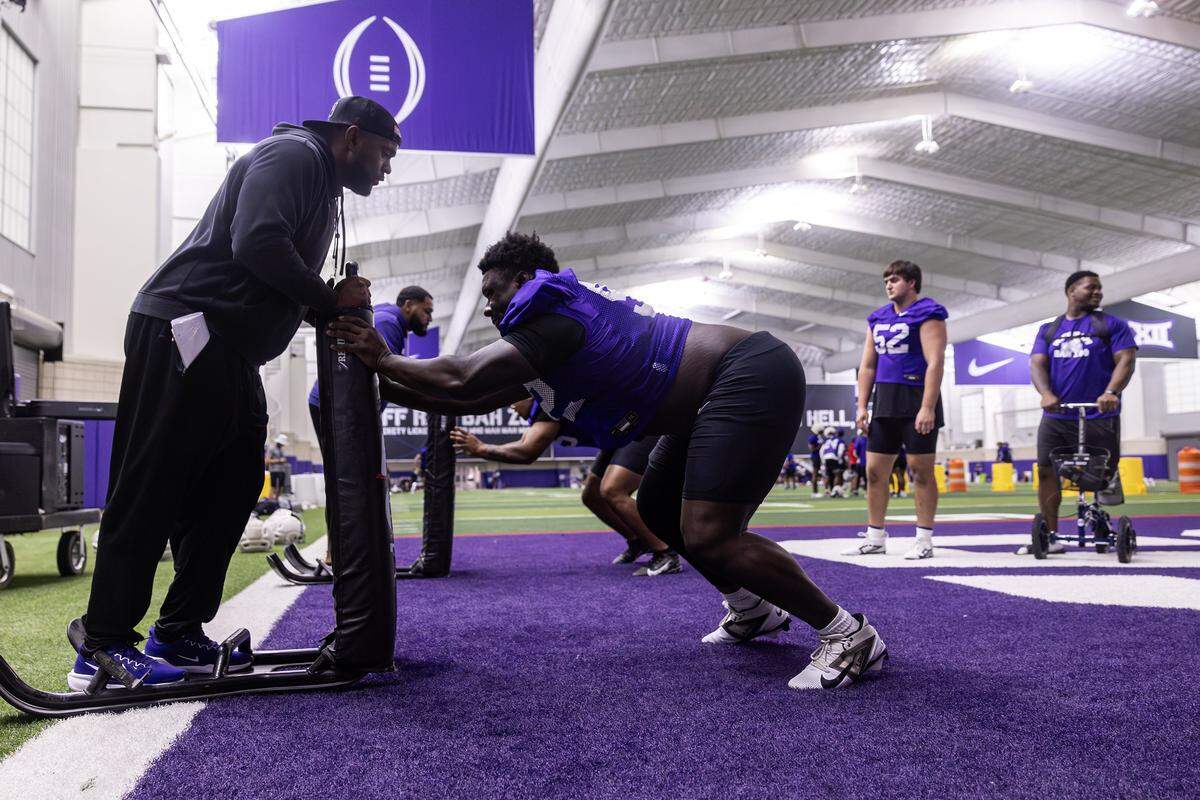
One of the biggest Investments Dykes and TCU made into nutrition was the recently completed human performance and athletics center expansion. The expansion features state-of-the-art weight rooms, a nutrition center, multipurpose spaces for recruiting and more.
Transfer running back Kevorian Barnes is a great example of what a strong nutrition program can do for a player. Barnes struggled last year at UTSA, rushing for only 221 yards.
Now, after going through a full offseason in TCU’s strength and conditioning program, Barnes looks like the back who was voted the Conference USA freshman of the year in 2022, and he could be the starter on Monday.
Barnes said TCU’s approach to nutrition helped him get back to the level he desired.
“It’s amazing,” he said. “I feel like that’s a major part in shaping my game from last year to this year. Feeding my body the right things and building muscle in the right way. From where I’m coming from, it’s a major difference.”
Evaluating TCU football’s offense, defense
So Dykes has established his culture and spent three years recruiting, developing and cultivating this roster. There’s no doubt the quality of life for players in Fort Worth has improved, but will that translate to wins on the field?
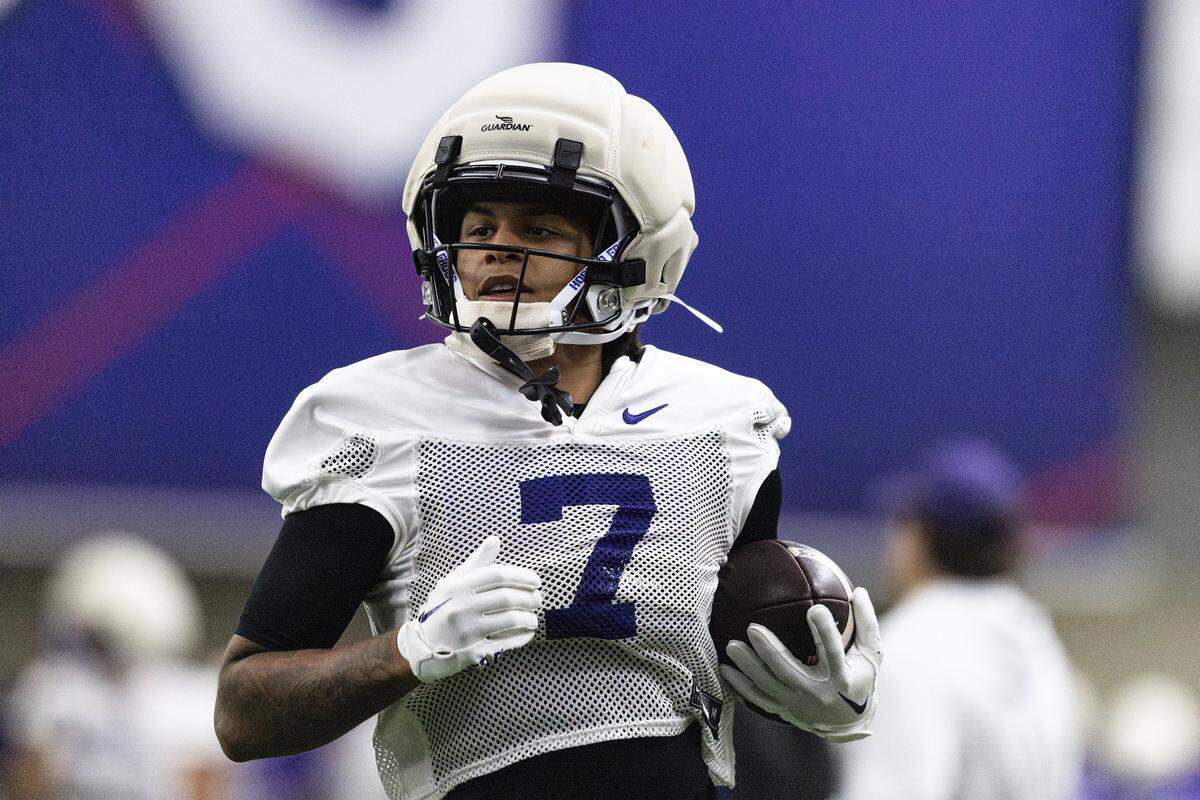
On paper, TCU has what it takes to reach the Big 12 title game. Offensively, there are questions at running back, but with Hoover, a receiver room led by Eric McAllister and Dykes’ reputation as an offensive guru, the Horned Frogs should still rank among the country’s best attacks.
Defensively is where TCU’s true transformation should be seen. The defensive line and cornerbacks are the deepest of the Dykes era, and the linebackers should be among the best in the conference. In its second year under coordinator Andy Avalos, this defense could be the best Dykes has had.
“We’re playing fast. People are beginning to trust the defense and trust themselves,” defensive tackle Markis Deal said. “I think we can be one of the best defenses in college football.”
Despite all the positive momentum, the Horned Frogs have not generated much buzz nationally. TCU wasn’t ranked in the Associated Press Top 25 preseason poll, and the Frogs are viewed as more of a dark horse in the Big 12 race behind Arizona State and in-state rivals Texas Tech and Baylor.
As Dykes enters the biggest season of his tenure, he is not only OK with TCU flying under the radar, he actually prefers it.
“We’re not getting a lot of attention,” he said. “There’s not a lot of talk about us, which I think is a good thing.”
That can change quickly if TCU spoils Belichick’s debut on Labor Day.
This story was originally published August 28, 2025 at 4:30 AM.