TCU basketball receives punishment from NCAA for violations by former assistant
The TCU men’s basketball program avoided any major sanctions following a two-plus year NCAA investigation that stemmed from a former assistant coach’s involvement in the FBI’s probe of corruption throughout the sport.
Fortunately for TCU, the school did not have any scholarships reduced or taken away, nor was any postseason ban implemented. Instead, the NCAA slapped TCU with three years of probation and the organization accepted the program’s self-imposed $5,000 fine and 1% reduction of its basketball budget.
The NCAA found that the coach at the heart of the matter, Corey Barker, violated the ethical conduct rules when he accepted a $6,000 payment from a management company in exchange for agreeing to influence student-athletes to use the company’s services.
TCU fired Barker days after he had been publicly linked in the FBI case in early March 2019. Barker, who was an assistant under Jamie Dixon from 2016-19, refused to cooperate with an internal investigation. Barker, now an assistant coach with New Mexico State, received a five-year show-cause order.
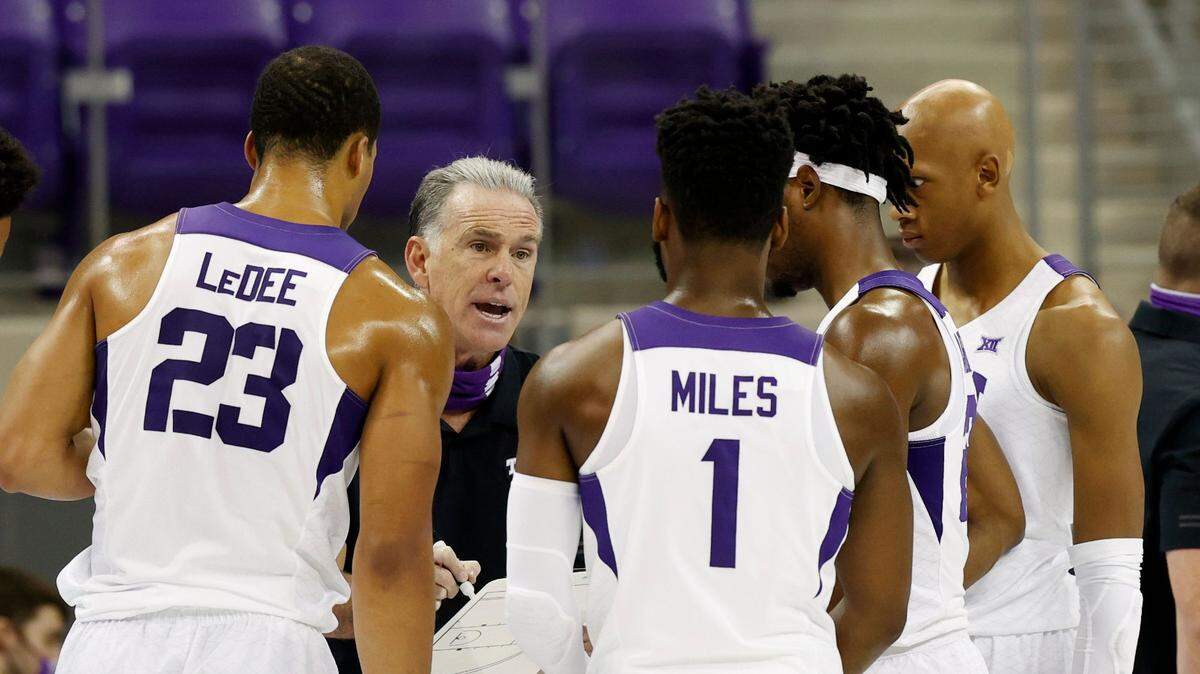
“We’re glad the process is complete. We’re excited to move forward,” said TCU head basketball coach Jamie Dixon, who spoke to the Star-Telegram Tuesday afternoon. Dixon, currently in Europe, will be coaching USA Basketball’s U19 World Cup Team in Lavtia through July 11.
Dixon reiterated that no advantages were gained or recruiting penalties incurred by his program due to Barker’s conduct.
TCU issued a statement of its own, writing: “We are proud of our culture of ethical leadership and the way we immediately responded to the federal basketball probe and promptly addressed the issues once we learned of possible involvement by a former coach. That employee only worked at TCU briefly, and we are grateful to close this chapter with the support of the NCAA enforcement staff and the Committee on Infractions.
“The NCAA accepted our self-imposed penalties and commended TCU for its history of self-reporting as well as its exemplary cooperation in this case, which speak to the integrity and accountability of our athletics programs. TCU remains focused on the educational experience of our students who work diligently to achieve in their academic and athletics pursuits.”
Background on violations
Barker’s name surfaced in the FBI probe late in the 2018-19 season, alleging he received a $6,000 bribery payment to steer players to a specific sports agency in July 2017. One of the players was Barker’s cousin, an NBA prospect who did not play at TCU, while another was a TCU player.
Barker allegedly received the bribe, but then returned the money later that night. However, the NCAA said there is no record of the money being returned. Even if Barker returned the money, as the NCAA’s chief hearing officer on the panel Carol Cartwright said during a conference call Tuesday, accepting the money in the first place is a violation.
“I can tell you that the act of taking money constitutes the violation,” said Cartwright, president emeritus at Bowling Green and Kent State.
Barker maintained his innocence in meeting with NCAA officials.
“He stated that he did not believe he had done anything wrong in attending the Las Vegas meeting, but admitted he did not tell anyone at TCU about the meeting either before or after it occurred,” the NCAA wrote in its findings.
In its ruling, the NCAA said Barker facilitated a phone call with a student-athlete (Barker’s cousin) and the agent after receiving the initial bribe payment. Additionally, the NCAA said, Barker set up a meeting with another student-athlete (a TCU player) and told the agent associate that the meeting would be “a layup for you.”
“In facilitating the phone call and meeting, the coach had followed through on the agreement he entered into when he accepted the $6,000 in Las Vegas,” the NCAA wrote.
The NCAA went on to write that TCU had conducted an internal review in October 2017 after the FBI’s probe became public. During that review, Barker verbally denied any involvement in or knowledge of activity that led to arrests of others within the college basketball industry.
TCU also issued a questionnaire asking men’s basketball staff members if they had accepted anything of value from an agent or financial advisor in exchange for access to student-athletes, or whether they had been involved in any situations similar to those that led to the arrests. Barker left both questions blank.
Then, in February 2019, TCU received a federal subpoena for Barker’s employment records for use in upcoming federal trials. The school requested an interview with Barker, who declined to participate. Barker also declined to participate in an internal review in early March 2019 once his name was publicly linked to the FBI probe. TCU fired Barker on March 11, 2019.
Barker eventually cooperated with the NCAA enforcement staff’s investigation, but the NCAA found that Barker provided false or misleading information during those sessions. Barker claimed that he did not accept a payment or enter into an agreement with the company, and also claimed that he did not facilitate or arrange meetings with student-athletes.
“As a result, the assistant coach committed additional ethical conduct violations,” the NCAA said.
Barker is now unable to coach college basketball until the 2026-27 season unless a member school employing him “shows cause why the restrictions should not apply.”
TCU’s punishment comes a week after the NCAA handed down its ruling on Creighton, which had former assistant Preston Murphy accused of also taking $6,000. Creighton received two years’ probation along with restrictions on scholarships and recruiting.
Creighton’s case involved a situation in which its athletics director, Bruce Rasmussen, conducted his own investigation without coordinating with his compliance department. Rasmussen concluded an NCAA violation did not occur, although the NCAA felt he did not “conduct a reasonable investigation.”
More schools remain under review by the NCAA including Oklahoma State, Arizona, Kansas, Auburn and LSU. The FBI case also led to the convictions of agent Christopher Dawkins, former Adidas executive James Gatto and former Adidas consultant Merl Code.
Probation matters
TCU had four of its athletic programs placed on one-year probation in December 2019 for student-athletes being paid for work they didn’t do through the university’s physical plant. That probation listed a number of points that are almost identical to what the men’s basketball program will have to adhere to through June 28, 2024.
Among the probation terms for TCU as handed down by the NCAA:
▪ Continue to develop and implement a comprehensive educational program on NCAA legislation to instruct coaches, the faculty athletics representative, all athletics department personnel and all institutional staff members with responsibility for recruiting and certification legislation.
▪ Submit a preliminary report to the NCAA’s infractions office by August 13, 2021, setting forth a schedule for establishing this compliance and educational program. Then file annual compliance reports with the NCAA’s infractions office indicating the progress made with this program by April 15 during each year of probation.
▪ Inform prospects in the men’s basketball program in writing that TCU is on probation for three years and detail the violations committed. If a prospect takes an official paid visit, the information regarding violations, penalties and terms of probation must be provided in advance of the visit. Otherwise, the information must be provided before a prospect signs a National Letter of Intent.
▪ Publicize specific and understandable information concerning the nature of the infractions by providing, at a minimum, a statement to include the types of violations and the affected sport programs and a direct, conspicuous link to the public infractions decision located on the athletic department’s website “landing page” and in the media guides for men’s basketball.
This story was originally published June 29, 2021 at 12:14 PM.