‘Best job in America.’ Jerry Kill embraces new role, ready to turn TCU’s offense around
Jerry Kill and Gary Patterson first crossed paths in the early 1980s, two small-town Kansas kids aspiring to climb the college football coaching ladder.
Life was far from glamorous. They weren’t making seven-figure salaries and driving courtesy vehicles provided by universities.
“We started at the bottom, living off $250 a month in trailer houses,” Kill said. “We’re just two small-town guys from Kansas. Now here we are at TCU.”
Kill made the comments as he sat in his new office overlooking Amon G. Carter Stadium. It’s a first-class football setup at a school that has become a football powerhouse the last two decades under Patterson.
But the football team has disappointed the last two seasons, going 12-13 and missing bowl eligibility for just the third time in Patterson’s tenure in 2019.
Kill is here to help rectify that, overseeing the entire offensive operation. He’s not going to be a “yes man.” He won’t be afraid to go back-and-forth with Patterson on the direction to take the offense.
“Me and Gary will go at it but, like I always say, with war there’s peace,” Kill said. “He knows that. It’s sort of like brothers. You walk out at the end of the day and you’re all together. I’m not a ‘yes guy’ and he knew it when he hired me. I think that’s a good thing. He wants somebody to tell it like it is.”
Yes, Patterson does. That’s why he went all-in luring his best man Kill to TCU this off-season. Patterson sees a two-headed coaching monster.
Kill overseeing the offense. Patterson overseeing the defense. We’re talking more than 70 years of coaching experience between the two that will be difficult for opposing teams to counter.
Coming to Fort Worth, though, wasn’t an easy decision for Kill.
“My initial reaction was, ‘Really?’” Kill said. “And Gary goes, ‘Yeah, I’m dead serious. I need you.’”
Life was good for Kill. He joined Justin Fuente’s staff at Virginia Tech in September, was enjoying his role and preparing for a bowl game. Patterson wasn’t going to interfere with bowl preparation and circled back with Kill afterward.
So did TCU offensive coordinator Sonny Cumbie. So did recently re-hired assistant coach Doug Meacham. So did defensive coordinator Chad Glasgow.
Everybody in TCU’s coaching office wanted Kill to come on board.
“They said we want you here. We need you here,” Kill said. “We want an older person, somebody who’s been through it, been a head coach. We need your knowledge on the offensive side of the ball.”
Kill eventually agreed to join Patterson and his staff as a special assistant in an analyst-type role. But, as Patterson said earlier this month, Kill is the “offensive head coach” and will have a strong voice in the direction the offense goes from personnel groupings to determining play-calling duties.
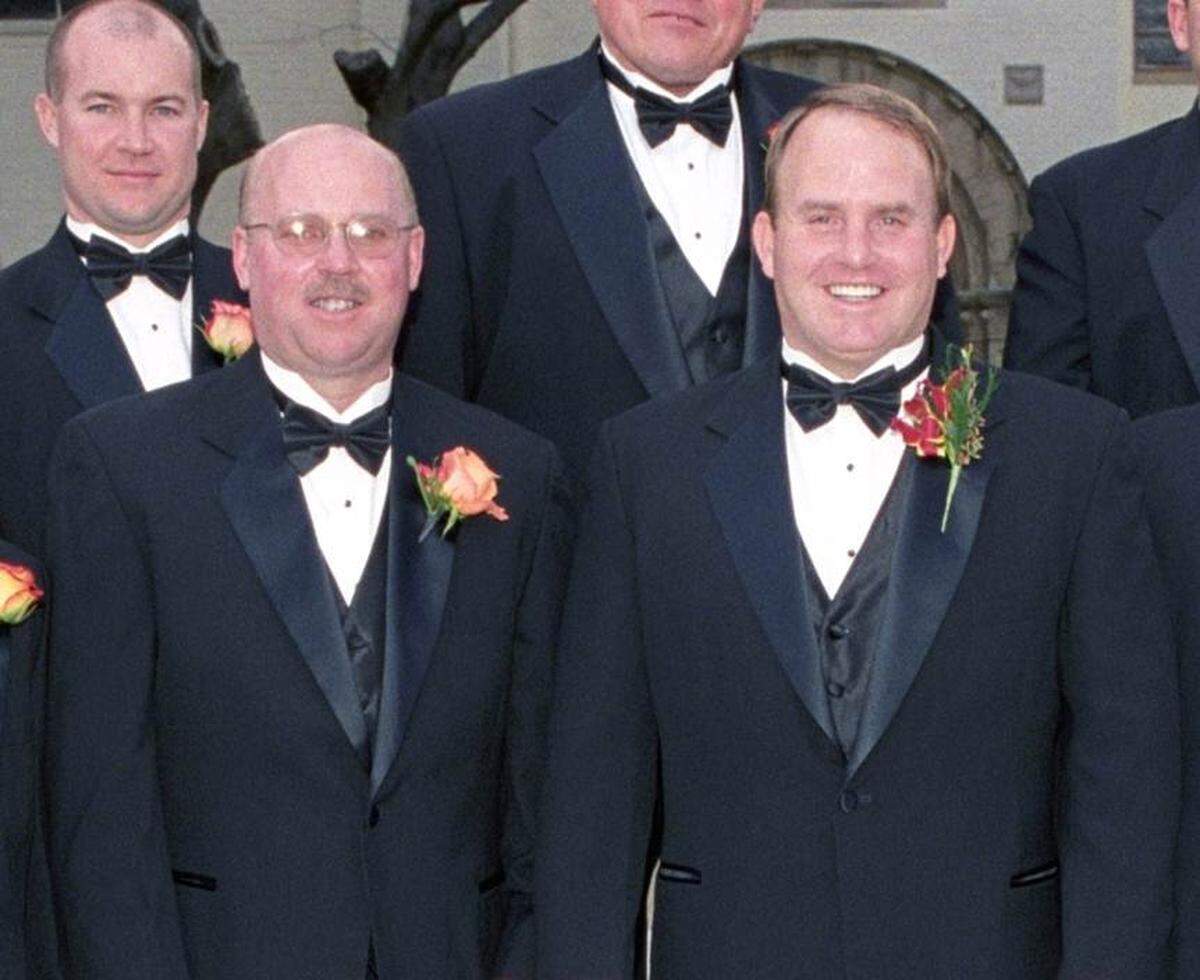
“Gary and I always said we wanted to coach together down the road somewhere,” said Kill, who was the best man in Patterson’s wedding. “I said, ‘What a better way to close my career out at TCU and being with someone I have so much respect for and do everything I can to contribute to help us win.’ I wasn’t going to do it for anybody.”
Early impressions
Kill hasn’t been around the program too long, but he’s become a quick believer in sophomore quarterback Max Duggan.
Duggan showed flashes throughout his true freshman season such as leading TCU to victories over Texas and at Texas Tech. But he also struggled at times, finishing with just a 53.4% completion percentage.
Overall, though, Duggan is viewed as the face of the program for the coming years. And Kill is more than OK with that.
“I think he’s going to be very good,” Kill said. “I think he fits what I’m used to doing and I think he’ll have a great year next year. He’s going to learn a ton from that freshman year. Then we’ve got to build around him a little bit. He can throw the ball, he can run the ball, we’ve just got to do a better job.
“When I was at Virginia Tech, everybody knew about that kid. Everybody knows he brings something to the table.”
Kill acknowledged he’s more concerned about the backup quarterback position with Matthew Baldwin and Matthew Downing sidelined with injuries for spring practices. For now, the top candidates for the backup job are non-scholarship players in Grant Beucler and Logan Burnett.
For as much confidence as the staff has in Duggan, the passing game still must improve in 2020. This is a unit that ranked ninth in the 10-team Big 12 in pass offense (203.7 yards per game) and last in pass efficiency (112.4).
Being a “fixer” is something Kill prides himself on.
Kill went 1-10 his first season at Southern Illinois in 2001, but had consecutive 10-win seasons in 2003-04 and then went 12-2 in 2007.
Northern Illinois went 2-10 in 2007 before Kill took over and went to three consecutive bowl games. Northern Illinois had the Mid-American Conference’s best scoring offense and total offense Kill’s last season in 2010.
Minnesota was 3-9 in 2010 before Kill took over in 2011 and had it bowl eligible three consecutive seasons from 2012-14.
The goal is for Kill to bring some of that magic touch to TCU. The ideal scenario is for Kill to do for the offense what Patterson has done for the defense.
As Kill said, “My job is to bring GP to the offense. That’s my job. He’s in there yelling and screaming about something with the defensive end not doing this or that. I’ve got to bring that same discipline to the offense. That’s what he wants. He’s my boss and I’ve got no problems with that, but we have such mutual respect that I think that helps a lot.
“He’s made the statement that this is the best offensive staff he’s ever had. That’s kind of like saying it’s the best recruiting class we’ve ever had. We’ve got to prove it. Am I worried about it? Not at all. That’s not arrogant or anything.”
Kill then leaned back in his chair, looked out his office window, smiled and said: “I’ve got the best job ever.
“People say, ‘What do you do?’ I say, ‘I’m the NFL coach for TCU.’ I just kick back and evaluate people and watch recruiting film and evaluate players. I’ve got the best job in America.”
Fran tree
Kill played linebacker at Southwestern College in Kansas under coach Dennis Franchione, and eventually became Franchione’s defensive coordinator at Pittsburg State from 1985-87.
But Franchione told Kill that if he wanted to become a head coach one day, he’d have to coach on the offensive side. Kill responded by making a seamless transition to that side of the ball.
He returned to Pitt State as its OC from 1991-93 under Chuck Broyles, and helped the Gorillas win a Division II championship in 1991. He’s gone on to build solid offenses at every stop, such as the Mid-American’s No. 1-ranked offense in 2010 at Northern Illinois and the Big Ten’s fifth-best rushing attack in 2013 at Minnesota.
None of it has come as a surprise to Franchione.
“Jerry’s a guy you could always issue a challenge to and he could always take the challenge,” Franchione told the Star-Telegram in a telephone interview. “You could tell he was destined for success in coaching.
“Jerry’s a great X’s and O’s mind. Even when he coached defense, he’d come in and sit in the offensive meetings, so he knew how to defend it and attack it. He’s been a great student of the game.
“Coaches can coach. Jerry could coach on either side.”
After Kill left, another up-and-coming coach — Patterson — joined Franchione at Pitt State in 1988 to coach linebackers.
Much like Kill, Franchione knew Patterson was something special. Patterson rejoined Franchione’s staff at New Mexico in 1996 and followed him to TCU in 1998. When Franchione left for Alabama in 2001, Patterson succeeded him at TCU.
Franchione couldn’t be happier to see two of his pupils on the same staff together, at a school he coached at.
“You knew they had the makeup to do whatever they were determined to do,” Franchione said. “Gary Patterson was as fine a defensive coach as I’ve ever seen, and Jerry Kill was very successful at every level. You didn’t have any doubt that they were going to be very good as time passed. Everything they did was really good.”
For Kill, Franchione instilled three things that have stuck with him throughout his career — organization, discipline and detail.
That’s what he wants to bring to TCU’s offense. From blocking assignments to route running to play calling, everything has to be done correctly. He’s a perfectionist. Nothing will go unnoticed.
“We’ve got to be technically sound and disciplined,” Kill said. “That’s what I’m here for. I can come back and come out of practice and watch film and say, ‘Hey, this isn’t what we want.’ I’m one of those guys that it’s got to be right step, right foot, got to make the right call. I’ll go over everything. I’ll drive them crazy, but that’s what Gary does. We’re perfectionists.
“That’s what we’ve got to become on offense. We’ve got to have the same mentality as they’ve got on defense. Swagger, whatever you want to call it. ... Everybody has got to swallow their pride now. There can’t be any egos in the room. We need confidence in the room.”
Looking ahead
Kill found his inner Patterson when asked if he missed running his own program.
“Hell yes,” Kill said, similar words Patterson said in a postgame TV interview last season following the Texas victory.
Kill was forced to step down as Minnesota’s coach midway through the 2015 season, debilitated by epileptic seizures. He simply couldn’t continue the stressful demands and long hours of being a D-1 head coach.
He changed his diet, exercised more and got more sleep. Kill hasn’t had a seizure in “a long time,” and is a two-time cancer survivor.
“I’ve had to change my whole lifestyle,” Kill said. “When I went down to Virginia Tech, I had cancer but I’m in remission again. Even then I felt great. It’s all about your mental state of mind, but I’ve felt great.
“Do I miss it as a head coach? Hell yes.”
But Kill has embraced the roles he’s been given when he joined Fuente’s staff, and now Patterson’s. Outside of his football knowledge, Kill can provide input and insight on things such as the training table and facilities compared to other programs around the country.
It’s clear that Kill will become one of Patterson’s closest confidants throughout the season.
“Win, lose or draw, nobody wants to be around the head coach,” Kill said. “It’s my job to be around Gary and be his confidant.”
Said Patterson: “I’ve been trying to get him to come this direction. We were finally able to get that done. Everywhere he’s gone, he’s made it better.”
That isn’t limited to the football program, either.
Kill is going to add plenty to TCU’s entire athletic department. After stepping down at Minnesota, Kill served as an associate athletic director at Kansas State in 2016 and athletic director at Southern Illinois (2018-19) before joining Fuente at Virginia Tech.
TCU athletic director Jeremiah Donati couldn’t be more excited about Kill coming to Fort Worth.
“Gary and I have spent a lot of time talking about the program A-Z since the season was over and it was evident very early that he believed Jerry could be a difference maker for our coaches and players,” Donati said. “His experience as a head coach, AD, administrator, and consultant will be invaluable. I think he has a lot to offer the department and university as a whole — above and beyond football.
“He is the type of guy who will be brutally honest with you and won’t sugarcoat the situation.”
Maybe that’s what TCU needs to get its football program back to the level it’s been before. After all, the expectation is for the defense to continue playing at a high level under Patterson.
Now it’s on Kill and the rest of the offensive minds to get that side playing at a high level again.
“Gary’s the best coach in the country. There ain’t no question in my mind and I guarantee you as a defensive coach, he’s a genius,” Kill said. “We’ve seen that. Hell, if you can keep them under 30, we should win here. We should win. We should win every damn game.
“That puts a lot of pressure on what I just said, but we should win every game.”