Texas Senate Rundown: News on Paxton, Cornyn, Talarico — and what it means | Opinion
There’s too much news to keep up with in the fascinating Texas Senate race. And with a month to go until the Republican runoff between Sen. John Cornyn and Attorney General Ken Paxton, it’s only going to get worse. So, here’s our first roundup of some recent news and commentary, with my analysis of what each development might mean for a contest that the entire nation is watching.
Setting up the runoff: Can Cornyn expand the electorate?
In a guest post for DecisionDeskHQ, veteran Texas politics reporter Patrick Svitek examines Paxton’s track record in primary runoffs and what it could mean for 2026. Paxton won his 2014 attorney general runoff over state Rep. Dan Branch by 27 points and his 2022 runoff over George P. Bush by 36 points — both times despite being outspent.
In both races, turnout dropped sharply from the primary to the runoff, falling to 5.4% of registered voters. Svitek notes Paxton has leveraged high-profile endorsements to help voters look past his legal troubles — Ted Cruz in 2014 and Donald Trump in 2022 — and has shown a strategic eye for facing weaker opponents, including attacking Rep. Wesley Hunt in this year’s primary to prevent him from making the runoff.
The key variable now is Trump’s endorsement; the president said after the March 3 primary he would decide “soon” but still has not. Cornyn argues the GOP runoff electorate has never faced a well-funded blitz focused on Paxton’s scandals — “Judgment day is coming,” Cornyn said on primary night. But Svitek observes that Cornyn has already had nearly a year and tens of millions of dollars to make that case, and University of Texas polling showed Paxton’s unfavorable rating among Republican voters actually dropped from 22% in December 2025 to 18% in February 2026.
One factor that could boost turnout beyond past runoffs: nine congressional Republican primaries are also headed to runoffs.
My take: Svitek is one of the smartest political reporters around, and his piece is a great summary of where the race stands and how it’s likely to unfold. Cornyn has to hope — and work to motivate — more casual Republicans to turn out in the primary runoff. Time and time again, a runoff tends to go to the candidate favored by the party base that most fervently follows politics. Average voters may not even know or understand that there’s another round of voting before the winner takes on Democrat James Talarico.
When Paxton was impeached a few years ago, I wrote a column attempting to explain exactly how he keeps winning. The answer is that his fate ends up being decided by a sliver of a slice of the electorate. Cornyn, unlike the predecessors Svitek and I examined, has the name, money and high-profile race to at least make broader interest possible. It was a mild surprise when the four-term incumbent narrowly led the first round of voting. There are clearly enough Texas Republican voters to put Cornyn over the top; getting them to the polls is the trick.
Follow the money: What Cornyn’s edge, Talarico’s big haul mean
The Texas Tribune reported that Cornyn outraised Paxton fourfold in the first quarter of 2026, bringing in about $9 million across his campaign and joint fundraising committees compared to Paxton’s roughly $2.2 million. Cornyn entered the runoff stretch with nearly $8.2 million in cash on hand versus more than $2.6 million for Paxton, and the super PAC gap is similarly lopsided: the pro-Cornyn Texans for a Conservative Majority raised about $9.5 million, while the pro-Paxton Lone Star Liberty PAC took in about $2.1 million.
On the airwaves during the runoff, the imbalance is even starker — the pro-Cornyn PAC has spent or booked $2.85 million in ads, while Lone Star Liberty PAC has spent about $22,000, according to AdImpact.
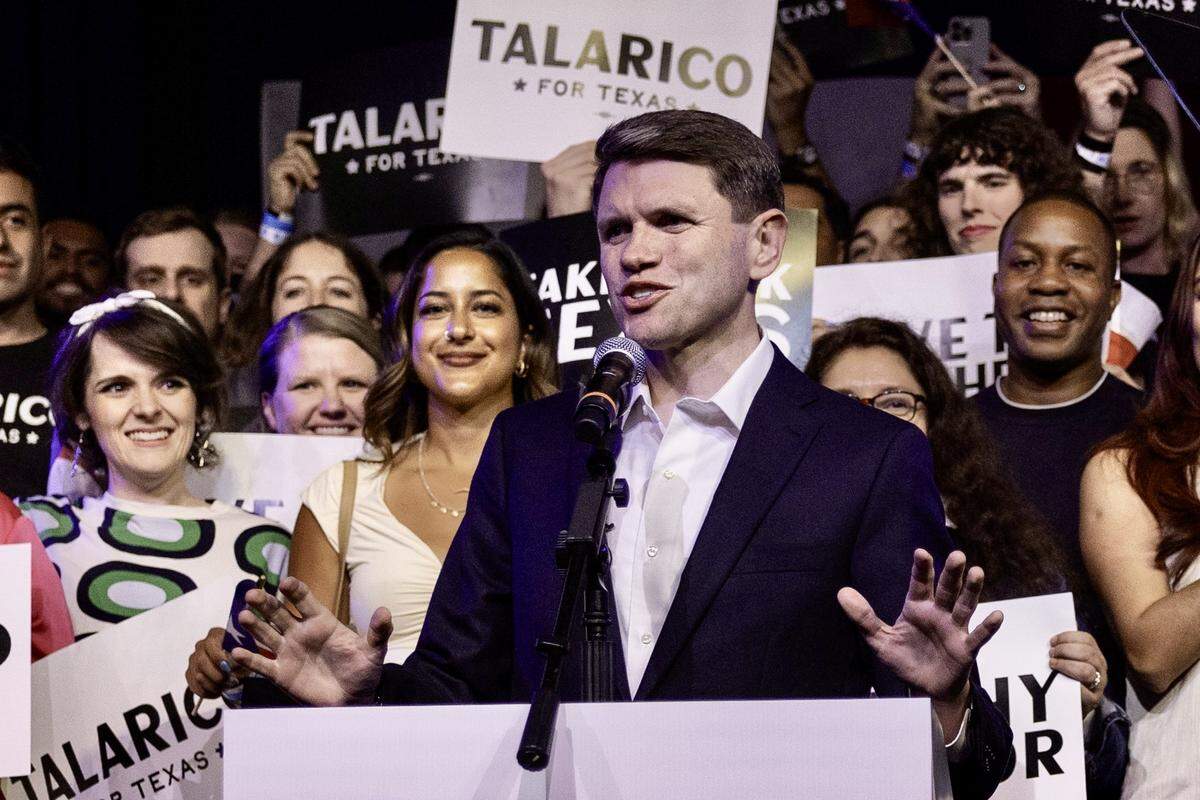
But the most striking fundraising number in the piece belongs to Democratic nominee James Talarico, who raised $27 million in the quarter — triple Cornyn’s haul — and can now stockpile resources while the two Republicans continue spending against each other.
My take: Cornyn needs every dime he can get to pay for a broad advertising campaign. As discussed above, he is trying to reach voters who aren’t necessarily tuning into politics on a daily basis. Paxton can run a lighter campaign, especially with friendly appearances on arch-conservative media outlets.
It’s worth noting as well a recent Hearst Newspapers report that Senate Republicans are not spending more money in the Texas primary for now. Institutional money controlled by Senate leaders was a big player for Cornyn in Round One. Washington Republicans have all but said that they fear Paxton will be much more vulnerable in the general election than Cornyn, and so far, they’ve been spending early, hoping not to have to divert more money later, when control of the entire Senate could be at play.
It could just be a pause to spend strategically later. But if Majority Leader John Thune and other GOP titans see a Paxton victory brewing, they might just decide not to burn any more cash trying to save Cornyn, which would be a big blow to the incumbent.
As for Talarico’s impressive haul: We’ve seen this movie before. The question is whether it’s a shot-for-shot remake. Democrats at the top of the ticket haven’t had trouble raking in cash from around the country in recent years — see Beto O’Rourke’s two statewide runs and Colin Allred’s Senate candidacy last year. Democrats relish the idea of winning here, and they’ll throw a small donation toward a candidate who makes them swoon from a thousand miles away rather than their own boring congressional or Senate race.
Talarico will not lack for resources, especially if he seems to be within striking distance in the fall. In a case like this, money is a threshold — a candidate has to have enough to compete, but huge sums beyond that won’t guarantee anything. If money elected a senator, O’Rourke would be in Washington and Ted Cruz might have taken up Trump on a possible Supreme Court nomination.
Paxton hits Cornyn over Trump support, campaign activity
Paxton told a Grapevine Republican Club meeting Thursday night that Cornyn “is not a Trump guy,” my colleague Eleanor Dearman reported for the Star-Telegram. Paxton said he rarely sees Cornyn on the campaign trail and that the senator “pretty much lives in D.C.” Cornyn campaign senior adviser Matt Mackowiak responded that Cornyn “has voted with President Trump 99.3% of his time in office.”
Paxton spent much of the speech casting himself as the conservative, pro-Trump alternative, calling election integrity his “No. 1 issue” and noting that Cornyn once referred to Trump as an “albatross” for the party in 2016.
My take: Paxton’s entire case against Cornyn has been built on loyalty to Trump and the MAGA agenda, the populist vision that has taken hold on the far right. Trump’s grip on the GOP, especially the portion likely to vote in the runoff, remains near-complete. But perhaps at least a few who aren’t as personally devoted to him are thinking ahead to life after Trump, a number that will surely grow if Republicans get shellacked in the fall. One way or the other, Trump will fade from the scene in the next two years.
As for Paxton’s charge that Cornyn hasn’t been on the campaign trail much, he’s hinting (and has previously said) that Cornyn just can’t generate enthusiasm among Republican voters. Perhaps there’s some truth to that, but making the case from a conference room in a suburban furniture store, as Paxton did, doesn’t exactly scream “movement that’s sweeping Texas,” either.
The summaries above were compiled with the help of AI tools and edited by journalists. The source reporting referenced above was written and edited entirely by journalists.
This story was originally published April 25, 2026 at 5:34 AM.