Beware of something for nothing, especially in Abbott’s property tax plan | Opinion
AI-generated summary reviewed by our newsroom.
- Gov. Greg Abbott vows to kill homeowners’ school property taxes without more sales tax.
- Texas would need about $40 billion annually to replace what homeowners pay.
- Shifting funding to the state risks reduced local control and cuts to school programs.
Texas Gov. Greg Abbott’s heart is in the right place on property taxes.
His head, however, is in campaign mode, and that means making promises he may not be able to keep.
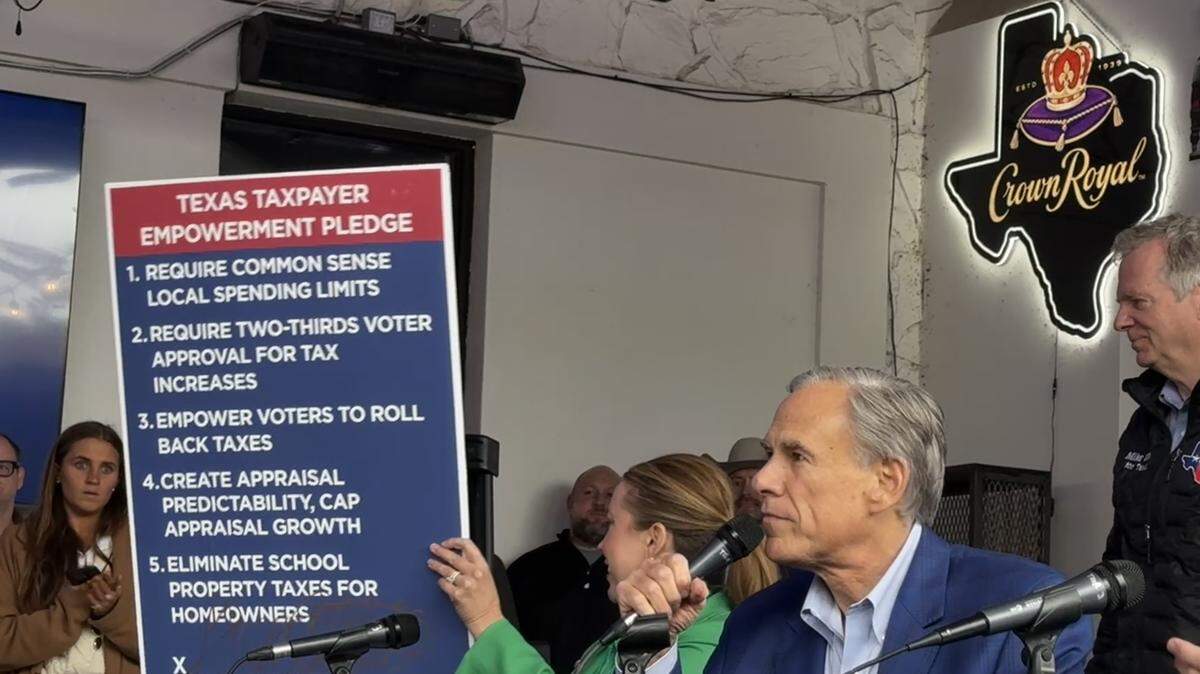
Abbott, visiting Fort Worth on Thursday, repeated an ambitious plan to rein in property taxes and raised the stakes on proposals to eliminate them entirely: For homeowners, Abbott said, he would do it without increasing sales taxes.
“There will be no new taxes whatsoever,” the governor told followers at Rex’s Bar and Grill on University Drive. “The current streams of tax revenue that we have will be sufficient for us to be able to accomplish this mission.”
As lofty campaign promises with fuzzy math go, this one is breathtaking.
Abbott, seeking an unprecedented fourth four-year term, contends that Texas’ economy is so strong — and will continue that way for so long — that the state has a sufficient budget surplus to make it happen.
He makes his plan somewhat more plausible by limiting the no-tax idea to homestead properties — in other words, there will still be school taxes on businesses, rental properties and second homes.
The state does not collect property taxes directly. Lawmakers buy down local school property taxes by spending more general revenue on education. The total cost to maintain cuts made so far is about $25.5 billion per year.
In 2023, the most recent figures available, Texas school districts collected $39.5 billion in local property taxes. Single-family homes make up about 45% of the taxable property value for all school districts. So, a rough (and conservative) estimate is that it would take about $17 billion to eliminate school taxes on homeowners.
Under Abbott’s plan, the state would be on the hook for more than $40 billion a year right out of the gate to keep education spending level. That’s before adding one dime to teacher pay or other efforts to improve student outcomes. That’s before spending a single dollar on healthcare, state universities, highways or any other need.
You can bet that businesses will see the windfall for homeowners and demand relief for commercial property as well. And they pay lobbyists handsomely to get what they want.
Keep this in mind, too: If school districts are increasingly dependent on the state for revenue, they may have less control over programs and priorities. Lawmakers could decide that a district could save money with fewer college readiness programs or eliminate teaching positions and cram more students into a classroom. Local school boards couldn’t raise additional money to keep what their families and residents want, even if taxpayers were willing to pay more for it.
Texas homeowners say they haven’t seen property tax relief
With real estate costs skyrocketing, some homeowners complain they haven’t seen relief. And it’s hard to get voters excited over the fact that the Legislature kept their bills from getting worse.
When frustration builds, campaign promises get bigger. Conservative activists and some lawmakers want to eliminate local school property taxes entirely. Staunch conservatives have added a moral component, arguing that no one truly owns a home that is taxed.
Most proponents have been honest enough to admit that sales tax rates would rise, though they often decline to estimate how much. The state collects 6.25%, and local taxes added for cities, public transportation or crime reduction mean that the rate is 8.25% in most of Texas. Maintaining state and local revenue would mean paying twice that, probably more.
Abbott raises the bar — and the difficulty — by offering homeowners a big cut with no tradeoffs.
He touted the state’s economic diversity, nearly suggesting that Texas is recession-proof. And he predicted a boom unleashed by property-tax cuts that draw new residents.
“With more people coming here, and just in the inflation rate alone, all of that increases the sales tax going forward,” he said.
Hear that, folks? Inflation is good for us! It’ll help bring down property taxes. Remember that next time you put bacon back at the store because it costs so dang much. Do your part to help out homeowners!
Limiting Texas property appraisals is a good idea
Other provisions of Abbott’s plan are quite promising. He would drastically limit the regular wallop of property-appraisal increases. He’d offer more tools to control local government spending.
Some insist local governments can slash spending without anyone feeling it.
Yes, there is always waste and fraud to root out. Surely there are programs that don’t deliver bang for the buck. But the vast majority of government budgets pay workers’ salaries and benefits. Who wants fewer road crews, police officers and teachers — or pay so low that it’s hard to attract good ones at all?
There are few sources of state and local revenue, chiefly taxes on income, sales and property. Texas has declared the first a nonstarter, and that should not change. It’s a huge economic advantage over states such as California and Illinois. Income taxes are an intrusion of privacy, too.
With one leg cut off, the Texas revenue table is wobbly, but it stands. Cut off two, and what you have is not furniture anymore but a pile of kindling.
Abbott says he’s found a way to trim without collapsing the whole thing. Voters better measure twice before cutting.
This story was originally published December 5, 2025 at 4:49 AM.