Fort Worth DEI vote reveals high cost of federal money gravy train | Opinion
AI-generated summary reviewed by our newsroom.
- Federal funding shapes local policy by attaching conditions to grant money.
- A Fort Worth City Council debate on DEI programs highlights the concern.
- Local self-sufficiency could raise taxes but mean more effectiveness and accountability.
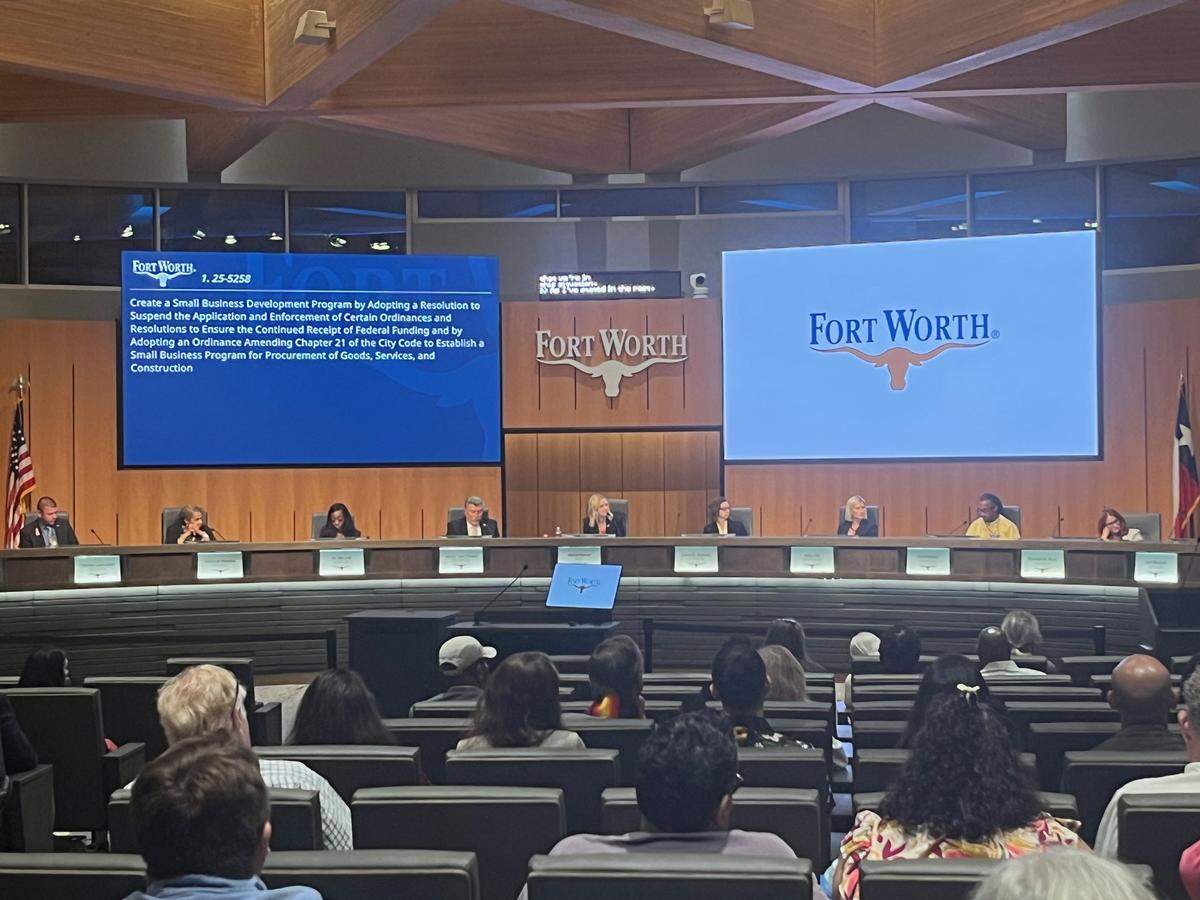
Whether he intended to or not, Fort Worth City Council member Chris Nettles put a spotlight on an important truth during the debate over whether to end the city’s diversity-based business incentives. It’s one that might help lead us out of our ferocious national political divide — if we’re willing to act on it.
Nettles, a pastor, opined that it’s morally wrong to sacrifice your principles to keep federal money flowing. He invoked a universal truth known as the Golden Rule. Not that one; the one that warns: He who has the gold makes the rules.
He ran through a list of concerns about President Donald Trump’s executive order attempting to bar diversity, equity and inclusion programs, which prompted the city’s changes to protect about $41 million a year in federal grants.
“Can we actually do what we need to do? The 11th-largest city in the U.S. should not be dependent on federal dollars,” Nettles said. “At some point, we gotta figure out how we can be self-sufficient.”
Council member Mia Hall put a fine point on it, too: “What does our identity and soul actually cost a taxpayer?”
Cities, schools, universities are addicted to federal money
This just in: Federal money comes with strings. That’s kind of the whole point of it. Over decades, Washington has spit out cash for untold tasks, obligating cities, counties, schools, universities and other institutions to follow the whims of whoever controls Congress and the presidency at the moment.
What started as a nice after-dinner mint is now a rich dessert, and our communities have a full-blown sugar addiction. The money perverts our federalist system. The Founders never intended for Washington to dictate what far-flung and diverse communities must value and pursue.
If we’re going to keep ping-ponging back and forth between Democrats and Republicans in charge, with partisans increasingly convinced the other side at the national level is not just wrong but has evil intent, the best thing we can do is say, no thanks, I’m on a diet.
Nettles lost the vote but deserves credit for connecting the dots. He indicated that rather than vote on what he views as an immoral abrogation of efforts to right some wrongs of history, he was willing to trim other areas of the budget, raise property taxes or sue the administration over the order.
Different communities should be able to pursue different policy choices. We’ll still have divisive battles, but it’s harder to look at your neighbor and see horns and a pitchfork than it is “the other side” in Washington.
Many Republicans are gleeful over President Donald Trump’s muscular assertion of executive power to accomplish goals they’ve had for years, such as ending race-based programs and incentives. Few think beyond the turn of the next election, when a Democratic president could decide to strip communities of funds if they don’t require DEI programs or, say, access to gender transition treatment? (And yes, the same goes for Democrats, too.)
Look back on spending cuts pursued at the start of Trump’s term. Every time the Department of Government Efficiency found a few bucks to trim from a federal program, predictions of horrors to come soon followed. Shut-ins wouldn’t eat. Food banks would close. History would be lost.
Local spending would mean more efficacy, accountability
The money always comes with conditions, but rarely is its effectiveness examined. If communities collected the money and directed the spending, we might have higher local taxes, and local officials would have to get better at setting priorities. But we’d have more accountability — and lower federal taxes, or at least a smaller deficit.
There will always be big projects for which Washington is best suited to apply large amounts of resources, such as broad medical research and space exploration. And federal money can be useful to get ambitious projects started, such as in public transit.
If Congress isn’t quite ready to cede so much control, it should at least start delivering more funding through block grants. Those give more authority to state or local governments to decide the specifics of what’s spent and how. Done right, it can spark creative policy experiments that lead to unexpected solutions, ones that would never be discovered if Washington dictated where every dollar must go.
One way or another, the federal gravy train is going to end, or at least slow. With higher interest rates, carrying $37 trillion of national debt is not sustainable for long. We’ll struggle to preserve Medicare, Social Security and the national defense — most other spending is going to be crowded out.
When Washington can’t fund everything, local governments will face bigger decisions on spending priorities. Nettles is ahead of the curve in noting that one bright side is not facing a choice between federal largesse and community values.