
History project in Fort Worth’s Northside falls victim to Elon Musk’s DOGE cuts
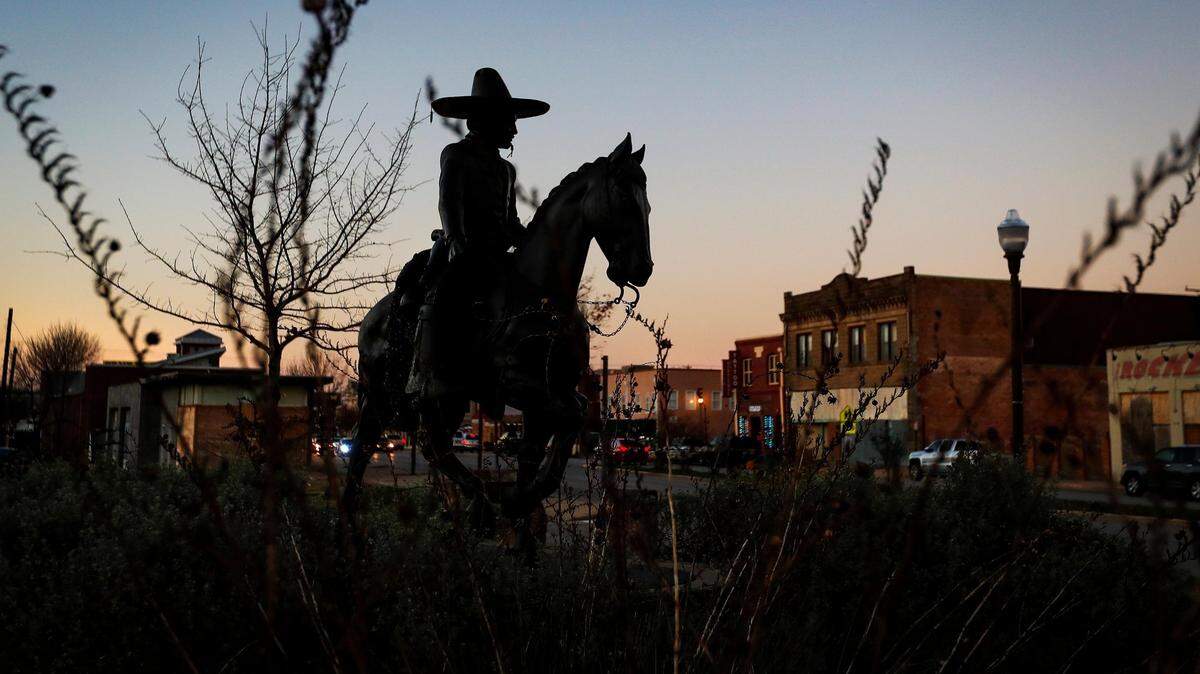
An oral history project documenting the heritage and culture of Fort Worth’s Northside, a predominantly Hispanic community that includes the Fort Worth Stockyards, is now in jeopardy after the Department of Government Efficiency, commonly referred to as DOGE, cut its funding.
Using a $130,000 National Endowment for the Humanities grant awarded at the end of last year, a group of Tarrant County College professors and students planned to record Northside residents’ stories and recollections, then embed those recordings in an interactive map that could be accessed online by the public.
The project was set to be funded from April 1, 2025, to April 30, 2027. A day after the start date, however, that changed when more than 1,000 NEH grants were suddenly canceled.
“On either April 2 or April 3 we received a letter from the National Endowment for the Humanities letting us know that, due to certain priorities, the grant funds would be rescinded,” said Daniel Hopkins, a Spanish language professor at the TCC Trinity River campus and the project’s lead.
According to its website, the NEH awards approximately 900 grants each year ranging from $1,000 to $750,000 each. Around 16% of proposals receive funding, and Hopkins said he and the project team were “ecstatic” when they were notified of their award.
It had taken the group of TCC professors from multiple disciplines, including history, philosophy, foreign languages and science, more than two years to draft their endowment proposal. Now, the future of their project, titled Northside: Discovering the Spirit of Place, is up in the air, though Hopkins vows to forge ahead.
“While we were definitely saddened by this, we are not deterred,” he said. “We want to find a way to continue on this project, to carry it out in the same spirit and collaborativeness with the Northside community and with our partners from the community who did support us in the grant writing project. We are looking forward to finding ways in which we can carry this out without the funds.”
An NEH spokesperson did not respond to a request for comment.
DOGE at work
President Trump issued an executive order on Jan. 20 establishing the Department of Government Efficiency, spearheaded by billionaire Elon Musk, with the aim of reducing federal spending.
As of April 20, DOGE claims to have saved the U.S. Government $160 billion through budget cuts at 22 federal agencies, including the Department of Health and Human Services, the Department of Education, the Department of Labor, the Department of Housing and Urban Development, the Small Business Administration and the Environmental Protection Agency.
An NPR report on April 3 quoted acting NEH Chair Michael McDonald as saying DOGE “wants to claw back $175 million” in NEH funds. In that same report, an anonymous NEH official said no further awards would be issued in the 2025 fiscal year.
On April 1, the New York Times reported that NEH staff were warned cuts were coming, along with extensive departmental layoffs. On April 11, the Washington Post reported that millions of dollars of NEH funds are being earmarked for the National Garden of American Heroes, a planned statuary park “where the legends of America’s past will be remembered,” according to an executive order signed by President Trump during his first term.
Humanities Texas, which supports educational arts and humanities programs across the state, also lost its NEH funding on April 2.
According to a statement posted to its website, Humanities Texas receives $2.6 million each year in NEH funds, which comprises approximately 65% of its budget.
“These cuts will have a devastating effect,” the statement said.
“Without NEH funding,” continued the statement, “we lose the operating grant that not only supports our service to Texans statewide but also catalyzes local investment from individuals, foundations, and corporations.”
What happens now?
Prof. Hopkins admitted the scope of the TCC project might have to shrink, and the timeline will likely have to be adjusted given the sudden financial constraints. Still, he believes it’s a worthwhile endeavor, and he hopes he and his team can find the money to adequately document the Northside’s stories for posterity.
“The Northside is a wonderful community, and they are most deserving of this oral history,” said Hopkins. “I think it’s something that is a great value as we go from generation to generation, no matter where we’re from.”
This story was originally published April 24, 2025 at 10:51 AM.