
What we need in a new pope: less politics, attention on Jesus’ call to Christians | Opinion
As the May 7 papal conclave draws near, questions intensify as the world anticipates a successor to Pope Francis: Who will emerge as the new Pope? How long will the process take? And will that process resemble the current Hollywood film dramatizing the subject?
OK, that last question may not have as much global reach. But it is firmly planted in my mind since I joined the audiences streaming “Conclave” to see if its accuracy is as praiseworthy as its performances.
The answer appears to be: not really. While Ralph Fiennes, John Lithgow and a superb cast combine with stellar direction to create a diverting movie experience, it is no way a documentary. While the setting and process are represented reliably, church officials and historians say there is considerable dramatic license added in the form of scandals, politicking and polarization.
So while the real conclave will not feature those spectacles (nor, one presumes, the plot twists at the end which have divided many viewers), the coming days will surely feature ample curiosity, speculation and dramatic tension until a plume of white smoke emerges from the Sistine Chapel chimney to signal the arrival of the momentous decision.
The roughly 60 million American Catholics and 1.3 billion more around the world will be the most ardent observers, anticipating the ways in which the new pope will affect internal issues from liturgical practices to local church procedures. But as the single most visible figure in the Christian world, the pope crafts positions and priorities that are significant to all followers of Christ.
So, as a non-denominational evangelical, I offer my wish list.
The unifying qualities are easiest. I hope the new pope echoes the personal humility, authenticity and approachability that made Pope Francis so deservingly popular.
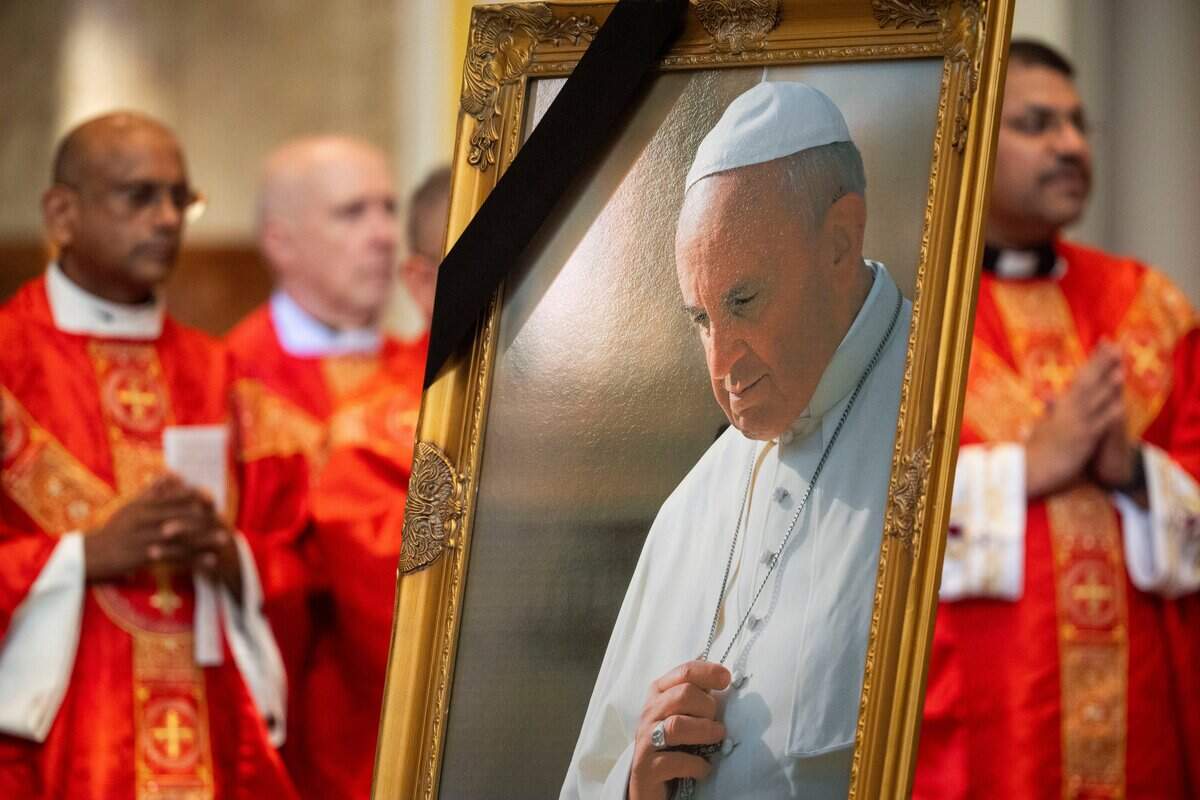
I will leave to the Catholic congregations the various liturgical and doctrinal issues that have filled many internal discussions. I will say I’ve evolved on my outsider’s view of the traditional Latin Mass. I used to think it made little sense to have a church service filled with words many attendees did not understand. But there is something poetically elegant about worship services around the world conducted in the same language. In fact, the portions of “Conclave” that showed cardinals from multiple countries following Latin procedures underscored that quality.
Which brings us to the unavoidable topic of politics. If both Catholics and non-Catholics can find significance in a Pope’s moral and scriptural teaching, it follows that those inside and outside the church would have a reaction when a pope chooses to inject doses of political content into his spiritual pronouncements. Francis did this with regularity, to the chagrin of some and the delight of others.
A pope can obviously weigh in with clear biblical views regarding issues around the world. God would have an obvious view of acts of objective sin; Jesus can be quoted on matters of personal behavior of everyone from world leaders to everyday people.
But when the bishop of Rome joins the voices of climate extremism, that is another matter. When the vicar of Christ tries to tell me that Jesus would disapprove of America managing its borders, we have a problem.
Obviously, this was not a problem for many liberal Christians who shared those views. Having the Holy Father join your side of a political debate is considerable wind in the ideological sails. The South American leftism Francis brought to the Vatican was divisive not just because it injected the papacy into political skirmishes, but also because it blurred the proper boundaries surrounding what is and is not a pope’s business.
Popes are human, entitled to whatever personal views they wish to express. But attempts to wrap those views in the robes of church authority are not helpful to the goal of clarity over what God and Jesus actually say.
Of course, the Lord and his son want us to value the planet that was created for us. But it is a secular fabrication to claim scriptural support for the increasingly contested claim that human productivity is heating if not outright destroying that planet.
On immigration, there are plentiful verses about treating foreigners with grace and kindness, but no basis whatsoever to extrapolate that God requires porous national borders.
This cuts both ways. I can’t find Bible verses that argue for President Donald Trump’s tariffs or tax cuts, so I would not advocate for the new pope to cheerlead for those, either.
I do hope for the 267th pope to give voice to various truths central to rediscovering what those who follow Christ are called to do. I have noted a variety of quotes curated from various cardinals mentioned as possible successors. I offer a few:
“The church is not made to please the world. She is made to convert it, to open the gates of eternity. Without heaven, all our work is in vain.”
“The greatest poverty is the loss of God. The worst violence is the refusal to speak about eternity. If we do not live for heaven, we live in despair.”
And my favorite: “Let us not be afraid of being a few. Let us be afraid of being lukewarm. Christ saved the world with 12 apostles, not with crowds.”
I’ve reviewed a lot of quotes, but those standouts are from the same man: Cardinal Robert Sarah of the west African nation of Guinea. His courageous scriptural focus on issues from salvation to the earthly debates over sexual morality and the right to life have earned him a growing rooting section as the conclave prepares to meet.
One problem: He will turn 80 in a few weeks. Since we have not had a pope younger than 75 for 30 years, that might be an obstacle. But I hope whoever is chosen carries those views, and I’ll bet I have a lot of Catholic company in that wish.
This story was originally published May 3, 2025 at 5:32 AM.