This park is Fort Worth’s hidden gem. It needs a big investment in the city’s bond | Opinion
.JPG "Gateway Park in east Fort Worth covers nearly 800 acres. It’s more than two miles long and a mile wide in places.")
In a TripAdvisor list of 250 outdoor attractions across Texas, Gateway Park ranks 17th , just slightly behind the Fort Worth Botanic Garden. The east Fort Worth park sees 600,000 annual visits by people from all over the county. It is a major Fort Worth attraction, yet many city residents know very little about this park. It is practically hiding in plain sight.
Gateway Park sits near three freeways just a mile east of downtown. Nearly all the wooded and undeveloped acreage north of Interstate 30 between Riverside Drive and Oakland Boulevard is park land. Gateway Park features mountain bike trails, disc golf, soccer and baseball fields, the city’s first off-leash dog park, picnic tables on wooded sites, a looped section of the Trinity Trails system and some of the only unspoiled views of the Trinity River in the city.
As the only metropolitan park in the city, Gateway dwarfs all other Fort Worth parks in size. At nearly 800 acres, it is over two miles long and a mile wide in places. Half of the city’s 304 parks would fit inside Gateway — with room left for Trinity Park! Gateway Park is also larger than 30 Texas state parks.
.jpg "2022 Gateway 4 (Large).jpg")
Many city leaders have never fully understood the value of Gateway Park and its potential as a destination point. This is easily demonstrated by the fact that nearly 50 years after it became a park, only about half is open to the public.
Many cities would be envious of a park the size and location of Gateway. There are a number of large city parks with national reputations, like New York’s Central Park, San Francisco’s Golden Gate Park, Fairmount Park in Philadelphia and Lincoln Park in Chicago. They are great civic spaces because their cities invest in them.
As a metropolitan park, Gateway Park needs this kind of investment, too. The city took a significant step in 2024 with approval of a new master plan for the park, which is estimated to cost $140 million to fully implement. But without funding, a master plan is just a wish list with pretty colors.
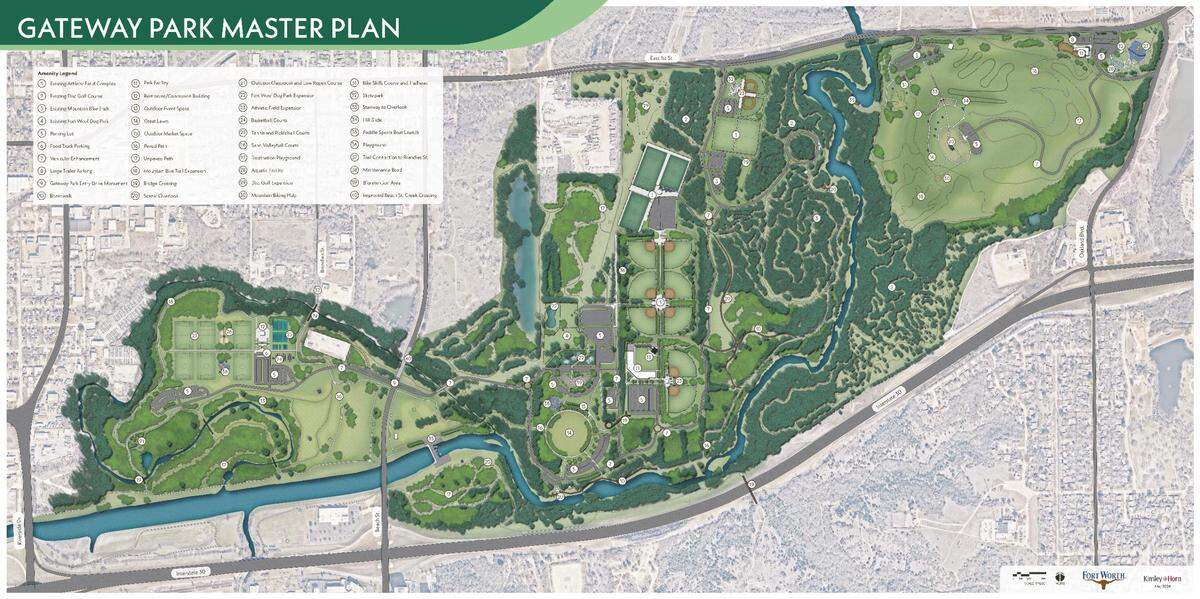
In 2026, the city will ask voters to approve bonds to pay for public improvements. The list of projects will be refined after a series of public input meetings this spring and summer. The only way the master plan for Gateway Park will be achieved is by biting off some big chunks at one time. We can hope some philanthropic sources will contribute, but otherwise, it will require city funds.
Right now, the city is suggesting $21 million for Gateway Park as part of the bond election. That sounds like a lot, but it’s like making a minimum payment on a credit card. At that rate, the master plan simply won’t be realized in our lifetimes.
Fort Worth is known for ambitious things, with sometimes far greater benefit than is perceived at the time. In 1914, the city funded the construction of Lake Worth as a water source, and it became essential to Fort Worth’s growth. The 1936 publicly-funded construction of the Will Rogers Complex with its signature tower spawned a world-class cultural district The 1940 purchase of west side property for a pilot training airfield rose to strategic importance in World War II.
Today it is the Joint Reserve Base, with the Lockheed Martin aircraft plant adjacent to it. The late-1980s public-private partnership with the Perot family resulted in Alliance Airport, which has become a model for cargo-based airports and has generated phenomenal growth all the way into Denton County.
.jpg "2022 Gateway 2 (Large).jpg")
Gateway Park is one of those ambitious investments that could yield far more than it costs, but only if people understand the park’s value to the city and support the bond election proposal. The bond election is a little over a year away. Mayor Mattie Parker has called Gateway catalytic for the entire city.
There is tremendous potential to serve the public with new recreation space, to drive tourism and to create a new destination point in the city. Time will tell if that happens, but it’s already been a long time coming.