Closing schools is more than a numbers game. Fort Worth ISD can address inequity | Opinion
At community meetings about closing schools, Fort Worth ISD officials are reassuring parents that campuses will be shuttered based on data. As a parent in a school zone under threat, though, I hope the district is considering the humans and the history behind those numbers.
Take Daggett Middle School in the Paschal High pyramid, for example. Some Lily B. Clayton Elementary parents are circulating materials expressing their alarm that if Daggett remains open, their children could be rezoned there, as has been suggested in facilities meetings. Their materials focus on two data points: the relative school rankings of Daggett Middle and McLean Middle and the “transfer-out rates” of these schools — how many students living in the school zone attend their zoned school.
This group argues that Daggett’s low academic ratings and high transfer-out rates mean that the school should be closed, with the students rezoned to a larger McLean Middle School.
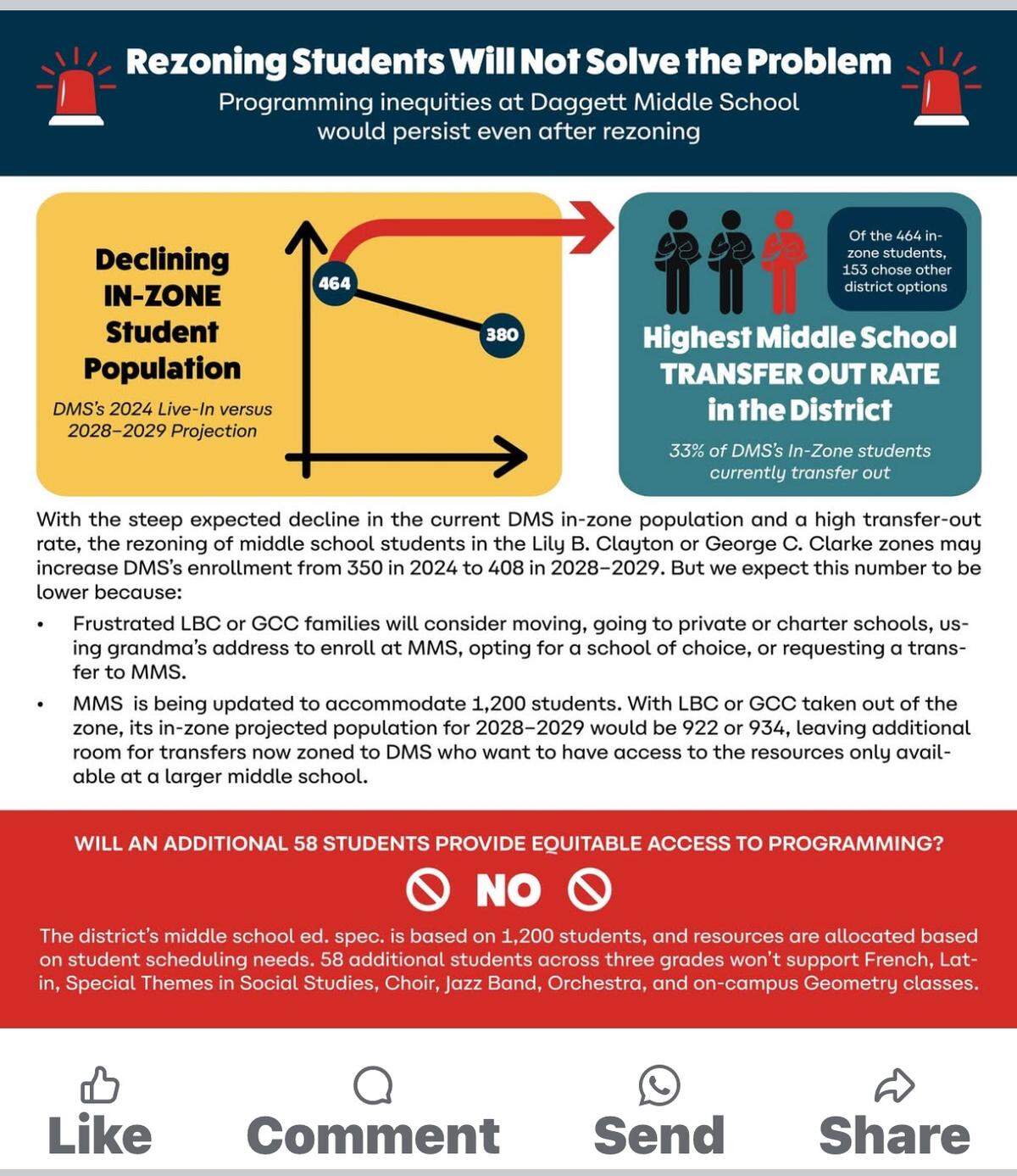
My son attends De Zavala Elementary and looks forward to attending Daggett Middle in a few years like his big sister — if the school still exists. So, I’m biased, but even I acknowledge those numbers don’t look good for Daggett. The disparity should make us pause, though. Why are the rankings and transfer-out rates so different for two middle schools in the Paschal pyramid, both surrounded by relatively wealthy and socially engaged neighborhoods?
The answer lies in past decisions made by the school district that exacerbated race and income inequalities within the Paschal pyramid. In 2002, when it became a standalone school of choice, Daggett Montessori (unlike most other schools of choice) was given a special attendance zone; students zoned for Daggett Middle School feeder schools had preference for admission.
This zone was removed in 2020, after community members raised concerns about how it extended race and class segregation in Near Southside schools. However, after 18 years, the damage was done. As a school that required a special application and did not offer a full complement of dual language and special education services, Daggett Montessori became an enclave for higher income families in the Ryan Place and Fairmount neighborhoods, while the zoned schools in those neighborhoods educated and served families with higher needs. For their efforts, they got a reputation as “bad schools.”
Fort Worth ISD’s inequitable policies on Daggett Middle don’t end there. For many years, the district maintained an overlapping zone that gave some Fairmount neighborhood parents living closest to the Berkeley Place neighborhood a choice to send their kids to Lily B. Clayton or Daggett Elementary. Like the Montessori attendance zone, this move exacerbated racial and class segregation in the Paschal pyramid, this time by redirecting attendance at a Daggett Middle feeder to wealthier elementary and middle schools.
Based on history and not just the numbers, closing Daggett Middle just as it emerges from decades of suppressed attendance due to inequitable policies is unacceptable. If the small group of parents pushing Daggett Middle’s closure get their way, students currently zoned for Daggett would face transportation barriers, increased and unequal competition for access to advanced classes and extracurricular activities, and a risk of being zoned out of the Paschal pyramid because of their distance from the combined McLean campus.
Rezoning rather than closing Daggett Middle, however, could create more opportunities in academics, arts and athletics for more kids, challenge school segregation and bring a geographically and culturally connected community into closer alliance and cooperation. As the Daggett Montessori attendance zone sunsets (the youngest students it applied to are now in fourth grade), Daggett Middle will probably see a renaissance in local support and test scores similar to what its feeder elementary schools are experiencing.
Resistance to rezoning may appear to be a response to the data, but it actually comes from outdated race-based anxieties about “good schools,” a scarcity mindset and a desire to preserve a status quo that hasn’t served the majority of Fort Worth students. As the district meets with facilities committees and school communities, its leaders should keep in mind the human history behind the data. Let’s use these changes as a chance to heal the harm that inequitable policies have done to students and families, rather than to retrench and double down on those disparities.