
If not for Texas bail law, my sister’s nightmare at Tarrant jail could have been avoided
My youngest sister, Kelly Masten, turned 39 in September. One of my birthday presents for her was Baby Alive. It’s her favorite doll. She carries it everywhere, lovingly taking care of it like a real-life baby.
The other was a trip to the beach. She had never seen the ocean before. She fell in love with seashells and sand castles. After Kelly spent nearly 8 weeks in a medically induced coma on a ventilator at John Peter Smith Hospital, every moment on the beach was a miracle.
When she was 2, Kelly was diagnosed with a rare seizure disorder. She suffers daily seizures that necessitate constant monitoring. Due to frequent oxygen loss, her brain has not developed beyond that of a 4-year-old. She can neither read nor write. She has almost no capacity to understand numbers.
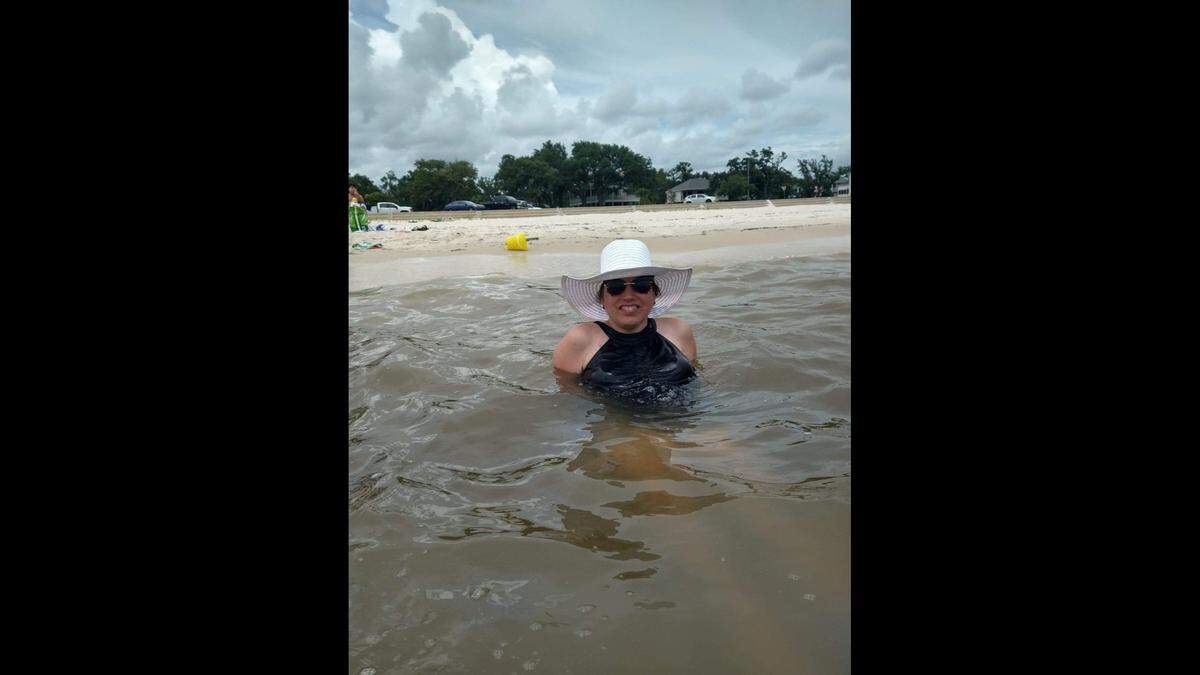
Like most 4-year-olds, Kelly needs help with daily tasks such as eating, taking medications, showering and getting dressed. In the past 37 years, she has been hospitalized often and undergone multiple surgeries, including one for a brain implant and another for an underarm subcutaneous battery pack that helps us control her implant during seizures.
My entire family restructured our lives to care for Kelly. My mother had worked at institutional homes and never wanted that for her daughter. Although I am Kelly’s legal guardian, with medical power of attorney, my grandmother, mother, and sister all lived together to care for her. Her father, who lives nearby, is a crucial part of our support system. Hospital visits are frequent, as her medications require constant adjustments.
On April 11, 2022, Kelly was having a difficult day. Just a few weeks prior, I had moved to rural Mississippi to make a new home for my own growing family. The plan was for Kelly to join us within a couple of months.
On that hot evening, we had run out of chicken pot pie, and Kelly was fussing for an extra. My mom was running late from work. Attempts to soothe Kelly only made her more agitated. So she threw a tantrum and bit my grandmother, who called 911 for the first time in our lives, expecting to receive medical assistance.
Grandma needed help transporting Kelly to JPS Hospital. Instead, Kelly was arrested, handcuffed and taken to the Tarrant County Jail. Repeated pleas and explanations of Kelly’s rare medical condition and developmental disability were met with the response: “Don’t worry. We’ll get her to JPS within a few hours.”
What followed were hours of confusion that turned into nightmarish days.
The Fort Worth police department, the sheriff, jail officials, the prosecutor, the court-appointed attorney, even the mayor — no one could help us or even share basic information about Kelly’s condition.
We repeatedly took Kelly’s essential anti-seizure medications to the jail, only to be turned away. We were told that her cash bail for “assault on an elderly person” was set at $25,000. We could free her by paying 10% to a bondsman. If we had had the money, we could have saved Kelly from all that followed. But we didn’t have $2,500 to buy her freedom.
I learned later that the first magistrate who saw Kelly could have approved a personal bond to divert her from the jail had it not been for a new law known as SB 6. Passed last year by the Legislature and signed by Gov. Greg Abbott, SB 6 strips away judges’ discretion and prevents a wide range of people from being released on personal bonds.
I’ve been told very little about what happened to my sister while she was caged in the county jail for 11 days. On the one occasion we were allowed to briefly visit, she barely recognized us. She had a split lip and dark bruises around her eyes. I imagine she was petrified, lonely, hungry and sick.
She was taken once to JPS Hospital, where the medical staff dismissed her symptoms as those of a drug user. A spelling mistake in her name in the arrest paperwork meant that 36 years of medical history at JPS were useless in getting access to the care that she so desperately needed.
It took us 11 days to cobble together $2,500 for a bondsman. We sat outside the jail for hours awaiting Kelly’s release. But she never came. Even though they knew that we were waiting out front, sheriff’s deputies whisked Kelly away from the back of the jail, in the dead of the night, via ambulance to the hospital.
When I finally saw Kelly, my knees buckled. My screams brought hospital security running to us. She looked like two grown men had repeatedly beaten her. She was covered in large bruises and had broken ribs. She had been unwashed and unchanged for days. Her hair was so matted, most of it had to be shaved.
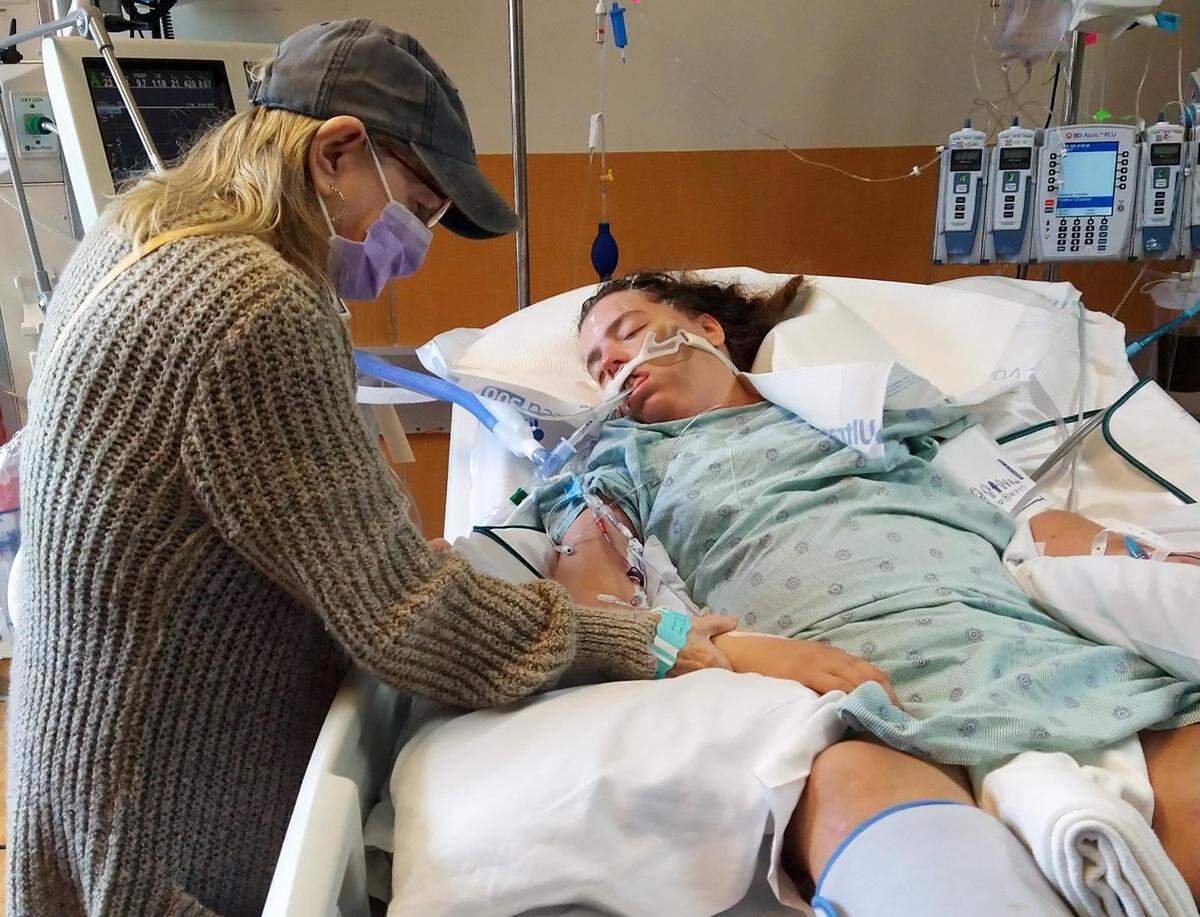
Kelly was immediately admitted to intensive care, where doctors had to put her into a medically induced coma. No one expected her to survive.
While Kelly was fighting for her life, I fought hard for answers. How could someone so vulnerable end up so brutalized in a jail? I naively assumed that a jail would be the one place where it would be easy to keep her safe.
To our shock, the only response we got was a canned line: “We followed all policies and procedures.” Those “policies and procedures” caused my developmentally disabled sister to look like a near-dead victim of assault.
I learned from the statewide advocacy group Texas Jail Project, which has been monitoring jail conditions and advocating against wealth based detention, that at least 39 people had died in the Tarrant County Jail in the three years prior to Kelly’s abuse. At least two of them had epilepsy.
Since Kelly’s hospitalization, five more people have reportedly died in the jail. All of them had yet to go to trial — legally not guilty of anything — but unable to afford their cash bail.
Meanwhile, the bail bond industry reaps obscene profits. I can’t forget how the bondsman we paid threatened to have Kelly’s bond revoked the morning of her release because we couldn’t take her to court — as she lay in a coma.
In a final twist, a few days into her coma, the prosecutor dropped all charges against Kelly.
The damage we have incurred from this experience goes far beyond the trauma inflicted on Kelly’s body. Our hearts are broken. Our trust in our government is destroyed. My mother was hospitalized at JPS for a stroke she suffered just days after Kelly was put into a coma. My 83-year-old grandmother is wracked with guilt for having called 911, never expecting the consequences that followed.
As for Kelly, what she remembers most, and often cries about, is the moment she was held down and stripped as the jail followed suicide-watch protocols that forced her to wear nothing but a green paper smock. That my baby sister was treated this way by the very people I believed were supposed to protect her will haunt me for the rest of my life.
Texas lawmakers who passed SB 6, without which almost none of this would have happened, claimed it was necessary to keep us safe.
It did the exact opposite for my family.
This story was originally published November 17, 2022 at 9:17 AM.