How could we possibly have a nationwide baby formula shortage crisis in America?
There are some things that shouldn’t happen in America, and the shortage of baby formula we’re seeing now is one of them.
Parents with an infant who is primarily fed through formula are thinking of little else right now. One Texas mom was forced to drive an hour just to find her baby formula. This should not be.
Formula is unique in that it’s meticulously made to mimic the milk a mother can produce and it serves to feed only a very tiny human for a short period of time. To magnify the problem, if the baby has been consuming only formula, he or she can handle little else.
Many women who nurse still supplement with formula if their milk supply is low. In fact, around 50 percent of moms either give their babies breast milk and formula or just give their babies formula.
Supply chain issues and inflation have contributed to the shortage, but Abbott Nutrition’s recall of several major brands in February seems to have taken the issue from a problem to a crisis.
The recalls were necessary. Four babies fell ill and two died from drinking infections caused by consuming formula that had Cronobacter sakazakii bacteria in it.
The facility was shut down and has not yet reopened — and it gets worse.
A whistleblower alleged as far back as October that Abbott has been covering up the fact that some batches of formula were contaminated. The Food and Drug Administration delayed inspections until January. Both may be culpable here. Did the FDA alert other brands of a possible supply crisis?
Abbott produces the top-selling baby formula in the U.S.: Similac, which is about 40 percent of the entire market.
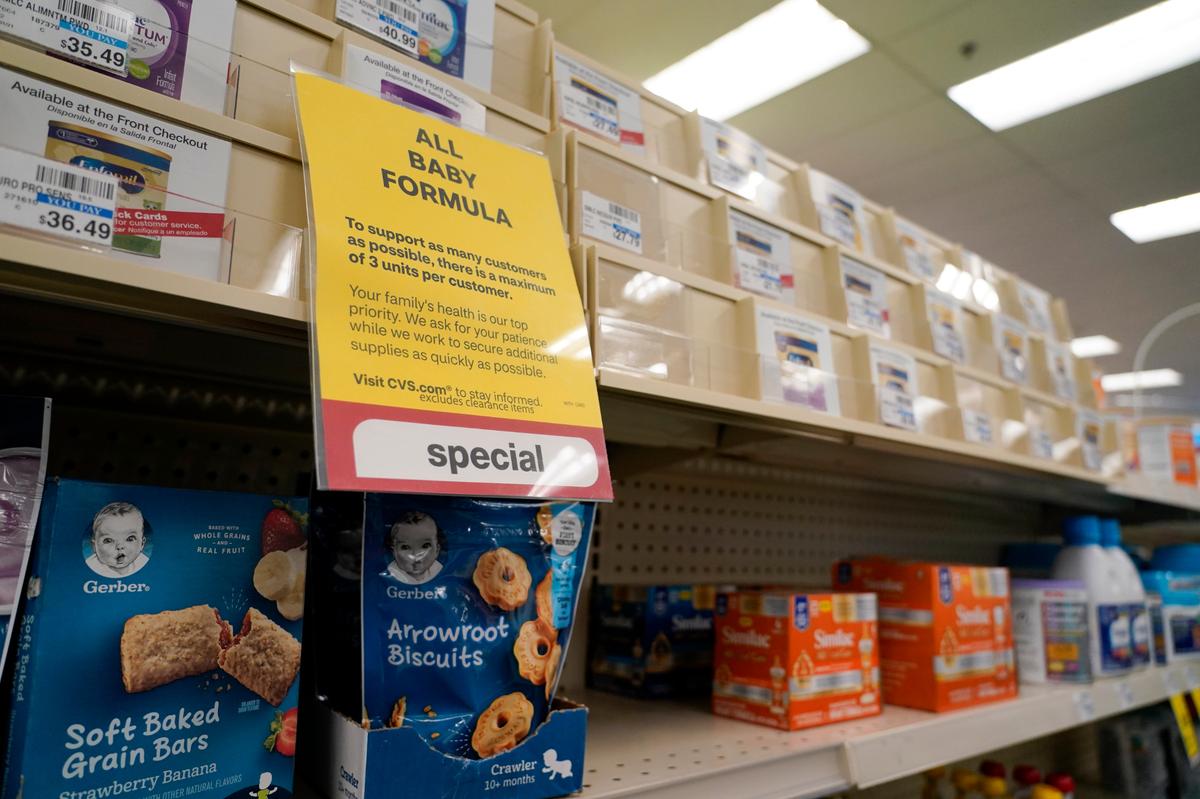
Between November and early April, the out-of-stock rate of baby formula jumped to 31%, and then to 40% to finish out April. In six states, including Texas, more than half of baby formula was completely sold out during the week starting April 24, a data site that tracks retail prices said.
Still: There are upwards of 50 other formula brands available in the marketplace. Where are they?
For months, we’ve been talking about the “supply chain crisis.” This is apparently what it looks like when it hits home — and I don’t mean you didn’t get your latest Amazon Prime find in two days. I mean, you’re feverishly worried that the four cans Target lets you buy online will last until you can find more.
A manufacturing and delivery cycle now takes between 12 and 16 weeks from start to finish. Between freight delays, labor shortages, and winter storms, the 2021 supply chain issue created a 2022 supply chain crisis.
Moms who really need formula, like those on the federal Special Supplemental Nutrition Program for Women, Infants and Children programs, may find a shortage because Abbott’s Nutrition is one of the programs’ main suppliers.
All this puts parents in a bind. Parents with formula-fed infants cannot give their children pureed food too soon, or it could cause allergies. Cow’s and goat’s milk are also no-nos, and watering formula down isn’t good for the baby, either.
The office of Sen. Sherrod Brown, D-Ohio, reportedly suggested that the FDA adopt the same kind of monitoring system for formula “that an agency task force recommended in 2019 to forestall prescription drug shortages.”
The 2021 whistleblower’s report on Abbott should have been enough of a red flag: It’s time to set up an alarm system. The FDA has requested money to do so in the next federal budget.
For now, private manufacturers need to kick it into high gear, and parents must be ready to swallow the inevitable uptick in price. When a huge manufacturer is forced to shut down, combined with government-induced supply chain issues and inflation caused by stimulus checks and a pandemic, the free market sometimes struggles, and it needs attention to iron out the kinks.
After all, America’s privileges look weakened when we can’t feed our most vulnerable citizens — our babies.
This story was originally published May 10, 2022 at 3:27 PM.