Star-Telegram endorsement: Which Republican for Texas’ oil agency? | Opinion
We hoped that Texas Republicans, in their primary for the state’s oil-and-gas regulating industry, would choose a candidate with practical experience in the field and a willingness to innovate without constricting the vital energy sector.
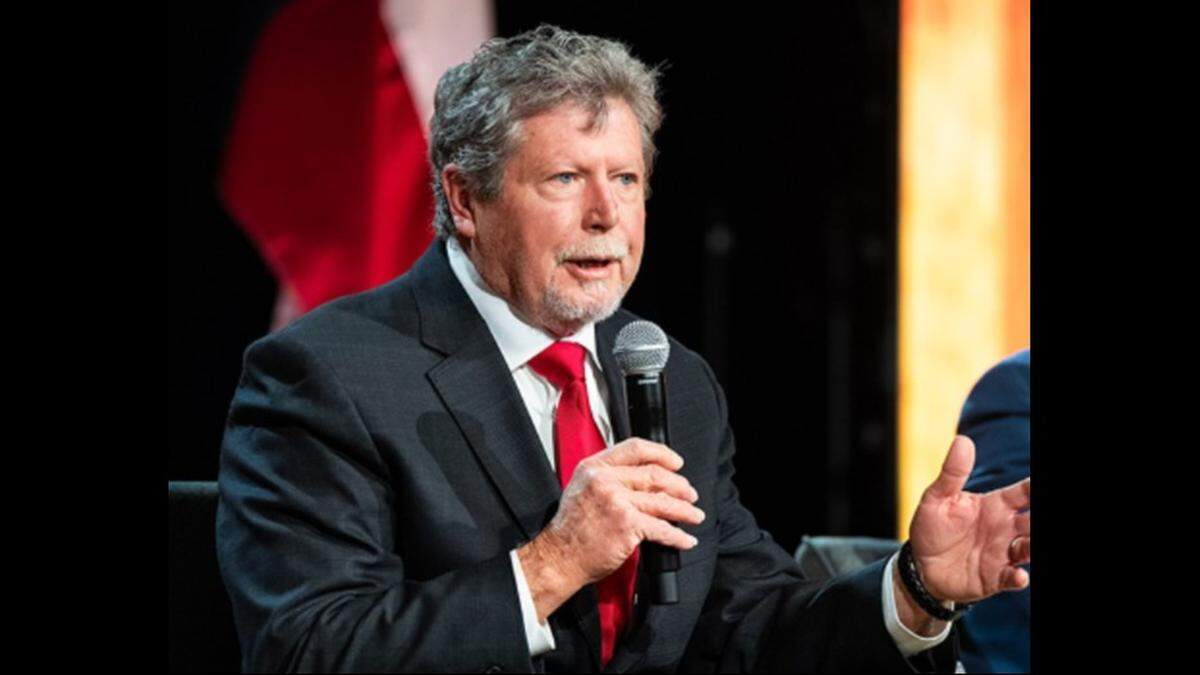
Two of five hopefuls advanced to the May 26 runoff for the misnamed Railroad Commission. Neither was our initial choice, but there’s no doubt which is preferable: incumbent Jim Wright.
Wright is far from perfect, and we have concerns about his potential conflicts of interest on the three-person commission. But his opponent, Bo French of Tarrant County, has no business anywhere near any office of public trust, let alone a statewide perch.

Wright, 64, says he wants to cut red tape to speed projects such as pipelines and natural-gas terminals and to help landowners ensure that lease operators follow state regulations. He has drawn the ire of some small oil companies who blame him for environmental rules they believe should target larger firms.
Wright, a resident of Orange Grove in South Texas who is seeking a second six-year term, maintains ownership stakes in oilfield waste companies, meaning his decisions could connect directly to his bottom line. This is sadly more common than it should be, and Wright should either divest himself, recuse himself from more votes or place his holdings in a blind trust.
Those conflicts, while troubling, are almost quaint in the face of French’s vile rhetoric. The Westover Hills resident served as chairman of the Tarrant County Republican Party and built an online profile with homophobic, racist comments. His hatred stands out as deep and broad, a feat at a time when Republicans are tripping over one another to demonize Muslims in particular.
French, 56, whose family owns an oil business, has suggested that nearly a third of the people in the country are not legitimately here. There aren’t that many who immigrated illegally, so he means stripping legal status or citizenship from tens of millions of people. You can be sure the vast majority would be nonwhite.
Prominent Republicans finally had enough when French asked, tongue-in-cheek, whether Jews or Muslims were more dangerous to the country. From Lt. Gov. Dan Patrick down, they demanded his resignation, which he declined to render. In recent weeks, perhaps sensing the damage he could do to the party as a statewide candidate, prominent state office holders, including Patrick, have endorsed Wright.
French’s followers must think he’s “telling it like it is.” They should consider that he’s throwing chum in the water to cynically advance himself on the backs of their prejudices.
The Railroad Commission has important work to do in dealing with abandoned wells and issues stemming from hydraulic fracturing. It needs steady hands as the industry adjusts to economic fluctuations and the eventual outcome of the war with Iran.
What it does not need is an ambitious climber determined to amass power by attacking racial and religious minorities. There are plenty of offices from which to fight culture wars. We wouldn’t want to see French in any of them, but Texas certainly does not need oversight of its most important industry distracted by someone head-counting how many brown people he thinks should be kicked out of the country.
Wright is a flawed choice, but the only legitimate one.
Early voting begins Monday and runs through Friday. The winner will advance to face Democrat Jon Rosenthal, who is leaving a Texas House seat near Houston to run for the commission.
About our campaign endorsements
BEHIND THE STORY
MOREHey, who is behind these endorsements?
Members of the Editorial Board, which serves as the Fort Worth Star-Telegram’s institutional voice, decide candidates and positions to recommend to voters. The members of the board are: Cynthia M. Allen, columnist; Steve Coffman, editor and president; Bud Kennedy, columnist; and Ryan J. Rusak, opinion editor.
Read more by clicking the arrow in the upper right.
How does the process work?
The Editorial Board interviews candidates, asking about positions on issues, experience and qualifications, and how they would approach holding the office for which they are running. Board members do additional research on candidates’ backgrounds and the issues at hand. After that, members discuss the candidates and generally aim to arrive at a consensus, though not necessarily unanimity. All members contribute observations and ideas, so the resulting editorials represent the board’s view, not a particular writer.
How do partisanship and ideology factor in?
We’re not tied to one party or the other, and our positions on issues range across the ideological spectrum. We tend to prefer candidates who align with our previously stated positions, but qualifications, temperament and experience are important, too.