
Star-Telegram endorsement: Real-world experience for Texas’ oil regulating agency
Republican voters have a wealth of choices in their primary for railroad commissioner. It’s a perfect time for a dose of recent real-world experience in the oil and gas industry, which the misnamed agency regulates, and for someone with an eye on reform.
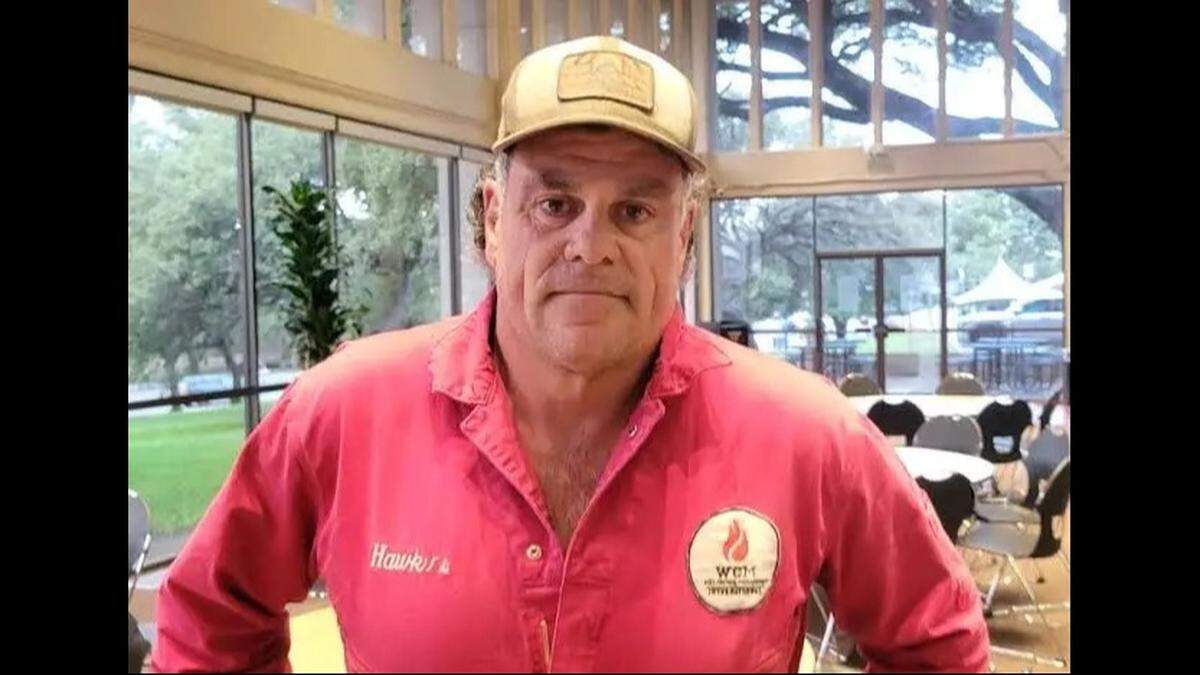
Several candidates qualify, but we think Hawk Dunlap would make the best commissioner. Dunlap, 55, is a well-control specialist with three decades of domestic and international experience. In name and mien, Dunlap, who lives in Monahans, could be straight from a casting call for a roughneck part in a movie. But he’s sounding the alarm about a threat not getting enough attention: the huge increase in fracking wastewater returned to the ground.
So-called injection wells have drawn attention as a likely cause of mild earthquakes. But as Dunlap notes, the more acute threat now is to groundwater supply when old, abandoned wells are overwhelmed and start to leak. One idea he floated in our interview with the candidates was to clean and repurpose fracking wastewater for cooling at data centers, whose consumption of water has alarmed rural communities already at risk of going dry, or on certain non-food crops, such as cotton.
Another candidate who clearly has knowledge to improve the commission is Katherine Culbert. The 51-year-old process safety engineer shares concerns about abandoned wells and water injection. And she has seen enough of the commission’s work to know it needs an infusion of transparency and willingness to stand up to the industry.
It’s a tough balance to protect a vital economic engine for the state, one literally of importance to national security. But commissioners have gotten too lenient, especially with cleanup issues.
The drawback for Culbert is that less than 16 months ago, she was on the ballot as a Democratic candidate for the commission. It’s a tough ask of GOP primary voters in this hyperpartisan era. Dunlap was also on that 2024 ballot as a Libertarian, though that’s an easier jump for most Republicans to accept.
James Matlock, 51, is a retired disabled veteran who lives in Cushing in East Texas. He also ran in 2024, losing in the Republican primary. He is also raising concerns about lax regulation and too much industry influence on the agency.
Incumbent Jim Wright surprised the political world when he unseated Republican Ryan Sitton in the 2020 primary. Now seeking a second term, Wright has drawn criticism over his continued ownership stake in several oilfield waste companies, the very business for which the commission recently redrew regulations. Like most incumbent commissioners, he also draws big campaign contributions from the industry.
And then, there’s Bo French, whom Tarrant County Republicans know all too well. As the local party chairman, he routinely brought ignominy with racist, nativist comments that sometimes seemed to condone violence. It reached the point that Republicans around the state condemned one of his social media posts and sought his resignation.
He has industry experience, but a seat on the Railroad Commission would merely give French, 56, a bigger platform for his rants about Islam, China and homosexuality. Voters should make sure he has plenty of time to keep building his online profile instead.
Early voting runs from Feb. 17 to Feb. 27. Election Day is March 3. If no candidate wins an outright majority, the top two finishers will face off in a May 26 runoff.
The ultimate winner will face Democrat Jon Rosenthal in the fall. The three railroad commissioners are elected in staggered six-year terms.
About our campaign endorsements
BEHIND THE STORY
MOREHey, who is behind these endorsements?
Members of the Editorial Board, which serves as the Fort Worth Star-Telegram’s institutional voice, decide candidates and positions to recommend to voters. The members of the board are: Cynthia M. Allen, columnist; Steve Coffman, editor and president; Bud Kennedy, columnist; and Ryan J. Rusak, opinion editor.
Read more by clicking the arrow in the upper right.
How does the process work?
The Editorial Board interviews candidates, asking about positions on issues, experience and qualifications, and how they would approach holding the office for which they are running. Board members do additional research on candidates’ backgrounds and the issues at hand. After that, members discuss the candidates and generally aim to arrive at a consensus, though not necessarily unanimity. All members contribute observations and ideas, so the resulting editorials represent the board’s view, not a particular writer.
How do partisanship and ideology factor in?
We’re not tied to one party or the other, and our positions on issues range across the ideological spectrum. We tend to prefer candidates who align with our previously stated positions, but qualifications, temperament and experience are important, too.
This story was originally published February 15, 2026 at 4:28 AM.