
Star-Telegram endorsement: Is Ted Cruz or Colin Allred better for Texas in the Senate? | Opinion
Colin Allred has campaigned for Senate for more than a year as a bipartisan lawmaker, willing to compromise, recognizing nuance and ready to serve as a bridge between our polarized tribes in a time when politics is stuck in a partisan rut.
If he can govern that way, Allred would make a better senator than his opponent, Ted Cruz. Texans should give him the chance.
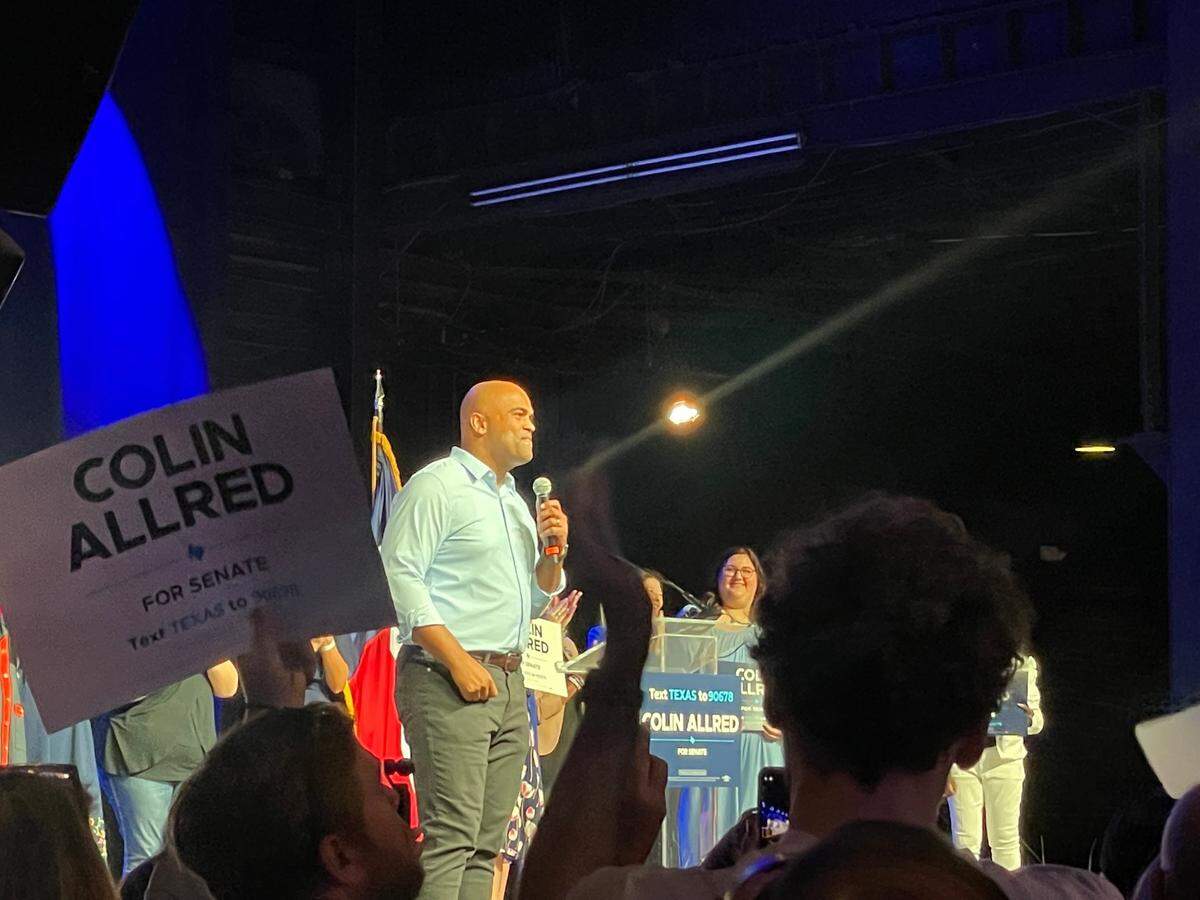
Allred, a 41-year-old Dallas Democrat who has served three terms in the House, is probably to the left of most Texas voters. But he’s no raging progressive. As long as he can resist the pressure to enable a far-left agenda in the Senate, he’ll continue a Texas tradition of finding common ground where possible and focusing on the state’s needs. He would pair well as a center-left mirror of Texas’ Republican senior senator, John Cornyn.
Allred, in an interview with our Editorial Board and his Oct. 15 debate with Cruz, showed strong support for Israel paired with an understanding of the tricky moment in the Middle East as our ally faces down Iran. He backs Ukraine’s war to repel the Russian invasion, and U.S. support there is good for workers in Tarrant County’s defense industry jobs.
On two of the state’s top issues, border security and energy production, Allred stands apart from his party’s progressive base. He supports the immigration bill that a bipartisan Senate group tried to work out last year. While that bill had flaws, it represented the most serious effort to bridge the gaps on an issue that has hammered Texas and vexed American politics for decades.
We hope that if Allred is elected, he’ll get in the trenches and work toward even stronger legislation that cracks down on illegal immigration, reforms the asylum process, legally admits much-needed workers and strikes a fair deal for “Dreamers,” those brought here by the parents at a young age.
On energy, Allred understands two vital facts that escape too many in his party: Fossil fuels will remain a vital part of the American standard of living and the backbone of the Texas economy long into a necessary energy transition, and it’s not realistic to rush to cut them off too soon. He’ll support innovation on renewable energy without crippling American oil and natural gas.
We’re confident, too, that Allred also has the level-headedness to avoid national politics, at least for now. If he becomes the first Texas Democrat to win the state in 30 years — and polls indicate he has a puncher’s chance — he’ll immediately be seen as a national figure, even a potential presidential candidate.
That would mean a pull to the left, where the party’s base voters are. Allred must guard his independence, particularly if Kamala Harris wins the presidency. Texans don’t want a senator who’s on board for a vast progressive project to remake the country.
One step in such a project would probably be to eliminate the filibuster in the Senate. There, Allred offers a typically nuanced take — he believes in the rule that requires a supermajority for significant legislation but wants senators to have to put their back into it, like in the days when they stood for hours on the floor blocking a bill. Some reform of the filibuster process would be welcome, but the fundamental threshold, meant to ensure bipartisan consensus, should remain.

Cruz, a Republican seeking his third term, has recently become a more effective senator for Texas than many want to admit. His first term was spent as an insurgent, even against his fellow Republicans, and a presidential candidate. Since his narrow win in 2018 over Beto O’Rourke, he’s done more legislating, without changing the hard-charging style that staunch conservatives love but many other Texans are weary of.
Cruz, a 53-year-old Houston resident, has built up seniority and would be in line to lead the Senate Commerce Committee, a vital panel for business issues, if Republicans win a majority. Losing that influence would be a blow, but Allred stands ready to represent Texas’ business interests.
And Cruz, who declined to interview with editorial boards in this campaign cycle, is simply out of the mainstream on too many issues. He goes too far to appease Donald Trump and MAGA Republicans; his role in disputing the 2020 election results, even after rioters stormed the Capitol, stands as a stain on his reputation.
Cruz’s likability deficit gives Allred an opening. He’ll have to close the deal with some number of Texans who will otherwise vote for Trump and other Republicans. They should hear him out and take him at his word that he’ll govern in a bipartisan manner befitting what’s increasingly becoming a purple state.
Also on the ballot is Libertarian Ted Brown. The winner earns a six-year term. Early voting begins Oct. 21 and ends Nov. 1. Election Day is Nov. 5.
BEHIND THE STORY
MOREHey, who is behind these endorsements?
Members of the Editorial Board, which serves as the Fort Worth Star-Telegram’s institutional voice, decide candidates and positions to recommend to voters. The members of the board are: Cynthia M. Allen, columnist; Steve Coffman, editor and president; Bradford William Davis, columnist and editorial writer; Bud Kennedy, columnist; and Ryan J. Rusak, opinion editor.
Read more by clicking the arrow in the upper right.
How does the process work?
The Editorial Board interviews candidates, asking about positions on issues, experience and qualifications, and how they would approach holding the office for which they are running. Board members do additional research on candidates’ backgrounds and the issues at hand. After that, members discuss the candidates and generally aim to arrive at a consensus, though not necessarily unanimity. All members contribute observations and ideas, so the resulting editorials represent the board’s view, not a particular writer.
How do partisanship and ideology factor in?
We’re not tied to one party or the other, and our positions on issues range across the ideological spectrum. We tend to prefer candidates who align with our previously stated positions, but qualifications, temperament and experience are important, too.
This story was originally published October 19, 2024 at 5:28 AM.