
Biden’s immigration order is about politics, not fixing border, asylum disasters | Opinion
If you’re cynical enough — or merely observant enough — to think that any major White House policy announced five months before Election Day is primarily about politics, you may think you already understand the immigration order President Joe Biden unveiled Tuesday.
But this one is particularly galling. Biden set arbitrary limits for border crossings that would trigger a crackdown, but he did so knowing that a court will probably block him. He reportedly overrode policy and operational aides in favor of what political advisers suggested. And he took action that mere months ago he proclaimed he could not without congressional approval.
Of course, after congressional Republicans sank similar border legislation without bothering to negotiate because they, too, want the issue for the fall campaigns, nothing should surprise us — least of all continued failures by all sides in Washington to meaningfully address our border security and immigration systems.
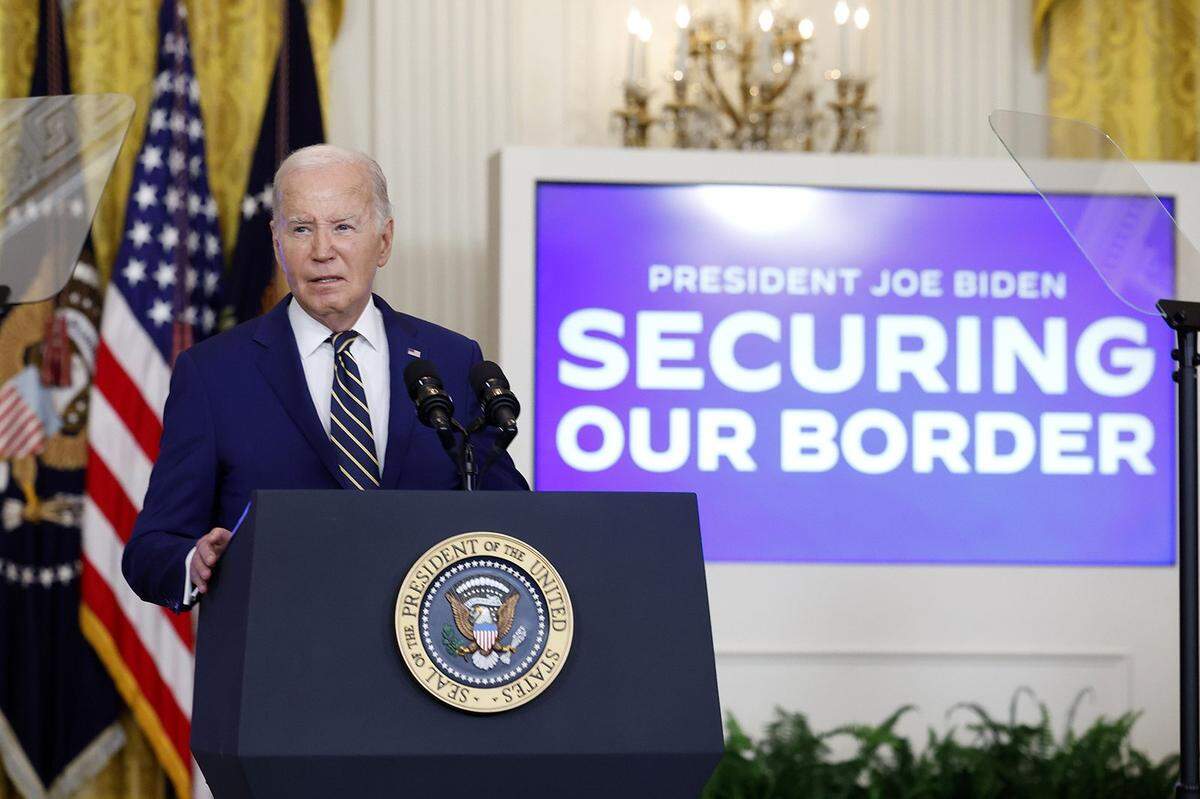
Biden’s policy, should it ever be enforced, would allow U.S. officials to deny asylum claims to those entering the country illegally once such border crossings top a seven-day average of 2,500. The number regularly exceeds that. Quick returns to Mexico or a migrant’s home country would be allowed until the daily average stays below 1,500 for two weeks.
If those numbers seem plucked out of thin air, you’re not wrong. Why an annualized rate of 547,500 illegal entries is fine but not one that would approach a million a year, Biden didn’t say.
Human smuggling cases and unaccompanied children would not be affected, potentially creating a perverse incentive for the worst kind of immigration abuses.
Immigrant advocates noted that the authority Biden claimed is the same that former President Donald Trump cited to try to stop asylum claims, which courts rejected. The administration seems to hope that the on/off switch for denying asylum claims will lead to a different outcome.
The order would do nothing to address the long-term need to restrict and redefine asylum. Hundreds of thousands will still be able to enter a claim by making an appointment through a government app, and they will still be able to stay in the U.S. for years awaiting a court hearing.
Perhaps the most significant thing about Biden’s order is the political reality it acknowledges: Immigration is a top issue in the campaign, and it hurts the president and Democrats. Texans have felt this for a while, as Republican leaders have poured state resources into the federal job of border enforcement.
By conservative estimates, at least 4 million people have sneaked in or been released into the country on Biden’s watch. It’s unsustainable, despite our need for workers. It has stressed border towns and charities that try to help, and the message has finally gotten through to self-righteous political jurisdictions that touted “sanctuary” policies for years until migrants showed up needing housing, food and medical care.
The asylum system is strained beyond hope. The administration has canceled 350,000 cases for asylum-seekers, according to data obtained by the New York Post, leaving those migrants free of deportation risk but in the very kind of legal limbo that Democrats decry.
Fixing the asylum system is vital. And that means not just flooding it with resources — criteria for asylum eligibility must change, and policymakers must ensure that the judges who evaluate cases enforce tougher standards. Lasting border security that chokes off most illegal immigration is a priority, too.
And then, as we’ve said repeatedly, Congress must craft a legal immigration system that serves our economic needs and allows for the compassion for refugees and families that has been a proud hallmark of American immigration.
But as usual, that will have to wait until after the next election, or the next, or the one after that. Cynical politicians on both sides apparently can’t do any better.
BEHIND THE STORY
MOREHey, who writes these editorials?
Editorials are the positions of the Editorial Board, which serves as the Fort Worth Star-Telegram’s institutional voice. The members of the board are: Cynthia M. Allen, columnist; Steve Coffman, editor and president; Bud Kennedy, columnist; and Ryan J. Rusak, opinion editor. Most editorials are written by Rusak. Editorials are unsigned because they represent the board’s consensus positions, not the views of individual writers.
Read more by clicking the arrow in the upper right.
How are topics and positions chosen?
The Editorial Board meets regularly to discuss issues in the news and what points should be made in editorials. We strive to build a consensus to produce the strongest editorials possible, but when we differ, we put matters to a vote.
The board aims to be consistent with stances it has taken in the past but usually engages in a fresh discussion based on new developments and different perspectives.
We focus on local and state news, though we will also weigh in on national issues with an eye toward their impact on Texas or the Dallas-Fort Worth area.
How are these different from news articles or signed columns?
News reporters strive to keep their opinions out of what they write. They have no input on the Editorial Board’s stances. The board consults their reporting and expertise but does its own research for editorials.
Signed columns by writers such as Allen, Kennedy and Rusak contain the writer’s personal opinions.
How can I respond to an editorial, suggest a topic or ask a question?
We invite readers to write letters to be considered for publication. The preferred method is an email to letters@star-telegram.com. To suggest a topic or ask a question, please email Rusak directly at rrusak@star-telegram.com.