
If Fort Worth council wants a pay raise, here’s the right approach | Opinion
It’s never easy to ask for a pay raise.
Approaching one boss is hard enough; imagine if you had to persuade tens of thousands not only that your performance merits the boost but also that your position generally is underpaid.
That’s the challenge facing the Fort Worth City Council if, as anticipated, members vote to ask voters to amend the city charter next year so that members make a salary more in line with the hours and responsibilities they bear.
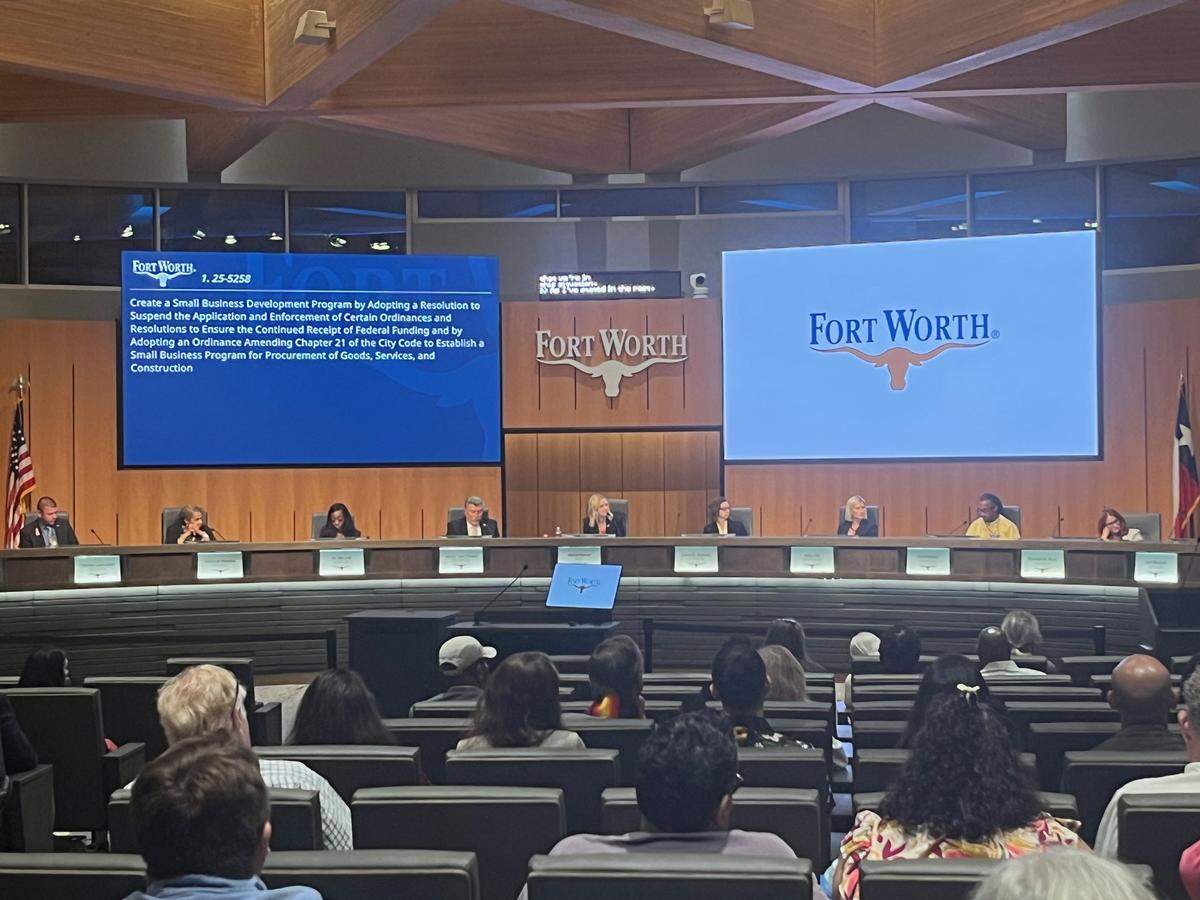
Increasing pay could well lead to a broader group of candidates and more attentive representation. But it requires convincing voters to bolster pay for a group of politicians, which often just feels extravagant or wasteful, especially if you’ve got a beef with government.
So, if the third time is to be the charm for paying council members better, the city must land on a formula that voters can live with and a message that persuades them to vote for it.
Voters rejected Fort Worth council raises in 2016, 2022
The failures of the previous two efforts are instructive, if frustrating. The first, in 2016, would have raised pay to $45,000 for council members and $60,000 for the mayor. The second, in 2022, would have indexed salaries to those of top managers in city government, providing built-in future raises. That’s something voters are never thrilled about.
The mayor currently makes $29,000 a year, and each of the 10 council members $25,000. Raising pay is the right thing to do, and next spring is as good a time as any to have a vote on it. The city will already have bond proposals on the ballot, so amending the city charter to increase pay wouldn’t bring the cost of an additional election.
But what should they make?
Options include ties to median income or typical city worker
Assistant city attorney Gavin Midgley outlined several possibilities in a recent council briefing. Median Tarrant County household income for a family of four, he noted, is about $85,000.
We opposed, and voters rejected, the 2022 proposal to tie pay to city department directors and assistant directors. It was too big a jump all at once, putting the mayor’s salary near $100,000 and council members at almost $77,000. The chief problem was the creation of built-in raises; as the civilian managers made more, so would council members, whether voters liked it or not.
One option would be to look at what typical city employees make. As of 2024, the average base pay for a civilian worker was close to $66,000. For police officers and firefighters, it was more than $95,000. That’s a big range, and we anticipate voters would balk at the larger number — the symbolism of paying elected officials what we pay civil servants to risk their lives would make for a tough sell. Something around $65,000 for council members and $80,000 for the mayor seems right.
Crucially, though, future raises should not be baked in by indexing one salary to another. As cumbersome as it might seem, the city should go back to the voters each time a raise is truly necessary.
And they are necessary, or at least represent a modest investment toward better government. Council jobs have evolved to become full-time, though that wasn’t the original intention. The city manager and his deputies and department heads run daily operations. But council members are expected to be plugged in, knowledgeable on the full range of city issues and readily available to constituents.
When a citizen is angry about something or wants to cut through red tape, odds are that a council member or aide, not a city staffer, gets the call. After all, it’s their names on the ballot every two years.
Speaking of, that’s another change whose time has come. Electing members every two years is burdensome. Lengthening terms to three years (or even four, perhaps only for the mayor) would reduce the number of uncompetitive — often uncontested, even — elections. Perhaps voter turnout rates that are currently abysmal for local elections would improve.
Midgley told the council that adding term limits, which Fort Worth currently does not have, might make the pay raise more palatable for voters. It would avoid the possible appearance of members voting themselves fat increases for years on end.
Fort Worthians are not clamoring for change at the ballot box. It’s a good time to consider what will truly make for the best governance going forward. Low pay often gives an advantage to people who are wealthy or whose businesses allow them flexibility for service, such as lawyers and insurance agents.
Allowing a broader range of people to run for office without huge sacrifice for themselves and their families will ultimately make Fort Worth stronger.
BEHIND THE STORY
MOREHey, who writes these editorials?
Editorials are the positions of the Editorial Board, which serves as the Fort Worth Star-Telegram’s institutional voice. The members of the board are: Cynthia M. Allen, columnist; Steve Coffman, editor and president; Bud Kennedy, columnist; and Ryan J. Rusak, opinion editor. Most editorials are written by Rusak. Editorials are unsigned because they represent the board’s consensus positions, not necessarily the views of individual writers.
Read more by clicking the arrow in the upper right.
How are topics and positions chosen?
The Editorial Board meets regularly to discuss issues in the news and what points should be made in editorials. We strive to build a consensus to produce the strongest editorials possible, but when we differ, we put matters to a vote.
The board aims to be consistent with stances it has taken in the past but usually engages in a fresh discussion based on new developments and different perspectives.
We focus on local and state news, though we will also weigh in on national issues with an eye toward their impact on Texas or the Dallas-Fort Worth area.
How are these different from news articles or signed columns?
News reporters strive to keep their opinions out of what they write. They have no input on the Editorial Board’s stances. The board consults their reporting and expertise but does its own research for editorials.
Signed columns by writers such as Allen, Kennedy and Rusak contain the writer’s personal opinions.
How can I respond to an editorial, suggest a topic or ask a question?
We invite readers to write letters to be considered for publication. The preferred method is an email to letters@star-telegram.com. To suggest a topic or ask a question, please email Rusak directly at rrusak@star-telegram.com.