
Here’s how Tarrant leaders should have responded to church pride event | Opinion
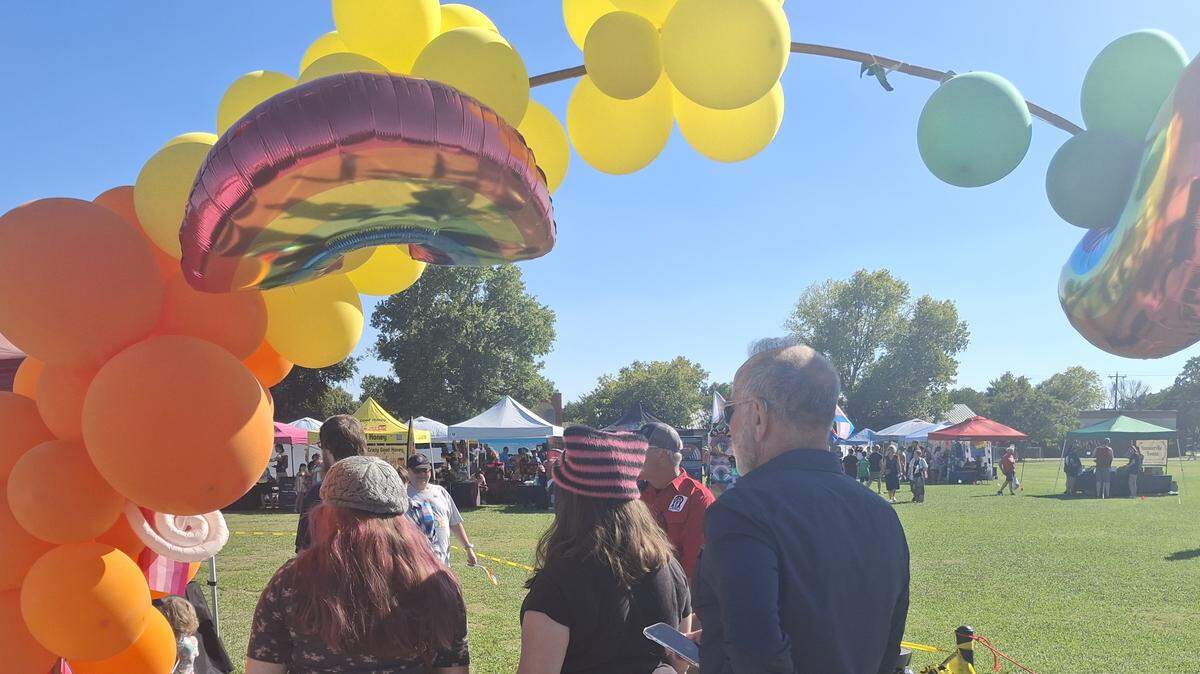
When we endorsed Matt Krause for Precinct 3 Tarrant County commissioner in 2024, we did so despite concerns regarding his targeting of 849 public school library books involving race, gender and LGBT issues. We implored Krause not to confirm suspicions he would use his office to push draconian, discriminatory attacks on children and families and asked him to represent Northeast Tarrant County as “an independent commissioner, not a rubber stamp for County Judge Tim O’Hare or a partisan agenda.”
But Krause recently joined O’Hare in condemning Pride Kel-So, a LGBTQ event at a Southlake Episcopal church that includes drag performers. “Very rarely — if ever — do these shows depict anything but an exaggerated sexuality of female stereotypes,” the Republicans wrote before Saturday’s event, “which is not in any capacity appropriate for children.”
Krause and O’Hare, along with Keller mayor Armin Mizani, who’s running for state House, cited SB 12, a 2023 law that sought to ban certain drag shows but is on hold in federal court. (Confusingly, the Legislature passed another SB 12 this year, which bars Texas students from forming optional, school-sponsored LGBTQ clubs.)
A phrase is sorely missing from the lexicon of North Texas officials such as Krause: It’s not for me.
Those four words encompass a crucial idea: our collective right to express our differences, even stridently, while preserving freedoms, even for those with whom we have substantial disagreements.
You can be sure that the members of St. Martin-in-the-Fields Episcopal Church, the sponsor of Pride Kel-So, have cleaved to that mantra many times over. As theological and social progressives in a denomination that lets local congregations decide whether to honor same-sex relationships, church members are minorities in a town that has, in recent decades, become increasingly hostile toward their beliefs and identities. And yet we suspect most have no plans of rappelling down the roof of every house of worship, draping pride flags over pulpits that don’t see the Bible the way they do.
Saturday’s Pride Kel-So event, organized by two married women — one of whom grew up in Keller closeted about her identity — should be understood as the queer community’s attempt at compromise. But compromise is insufficient for those satisfied only with conquest.
Krause and his backers are wrong. The law, as written, does not apply to private events like a church. We’re not surprised they said that, though — in fact, it’s exactly what we feared.
But the assault on this community pride event depends on the faulty idea that pride events are inherently sexual and thus inherently dangerous to children.
The idea that children can never, at any stage, process innuendo without being harmed would place most forms of entertainment behind an adult-verification paywall. We would rather Bugs Bunny cartoons (trigger warning: rabbit wearing a bra), cheer squads at sporting events and Wonder Woman comics be available to kids to enjoy and interpret with their parental figures instead of relegated to dusty bins in adult film shops.
We’re all adults here. Drag performances are well-known for racy double entendres and sexy attire. But those are adult performances, intended for adults. Many other drag performances are far more modest, with attire common in public spaces such as beaches and waterparks. And for a family event, the performers generally refrain from vulgarities, creating routines more analogous to clowns at a birthday party. Just with a few more sequins, a little less makeup, and an equally colorful wig.
Some people enjoy family-focused pride events such as Kel-So because they want young people in their care to know that they’re accepted. They want to take those kids to demonstrate that whoever they grow up to be will never separate them from the acceptance of their family.
Krause, O’Hare, Mizani and their allies may not want that kind of acceptance in their homes or for their kids. That’s all right. But instead of spouting easily disprovable falsehoods about their constituents and butchering the Constitution, they would be better off saving us all time by saying: It’s not for me.
BEHIND THE STORY
MOREHey, who writes these editorials?
Editorials are the positions of the Editorial Board, which serves as the Fort Worth Star-Telegram’s institutional voice. The members of the board are: Cynthia M. Allen, columnist; Steve Coffman, editor and president; Bradford William Davis, columnist and editorial writer; Bud Kennedy, columnist; and Ryan J. Rusak, opinion editor. Most editorials are written by Rusak or Davis. Editorials are unsigned because they represent the board’s consensus positions, not necessarily the views of individual writers.
Read more by clicking the arrow in the upper right.
How are topics and positions chosen?
The Editorial Board meets regularly to discuss issues in the news and what points should be made in editorials. We strive to build a consensus to produce the strongest editorials possible, but when we differ, we put matters to a vote.
The board aims to be consistent with stances it has taken in the past but usually engages in a fresh discussion based on new developments and different perspectives.
We focus on local and state news, though we will also weigh in on national issues with an eye toward their impact on Texas or the Dallas-Fort Worth area.
How are these different from news articles or signed columns?
News reporters strive to keep their opinions out of what they write. They have no input on the Editorial Board’s stances. The board consults their reporting and expertise but does its own research for editorials.
Signed columns by writers such as Allen, Kennedy and Rusak contain the writer’s personal opinions.
How can I respond to an editorial, suggest a topic or ask a question?
We invite readers to write letters to be considered for publication. The preferred method is an email to letters@star-telegram.com. To suggest a topic or ask a question, please email Rusak directly at rrusak@star-telegram.com.