
JPS getting less bang for more buck in bond program. Poor people will pay the price | Opinion
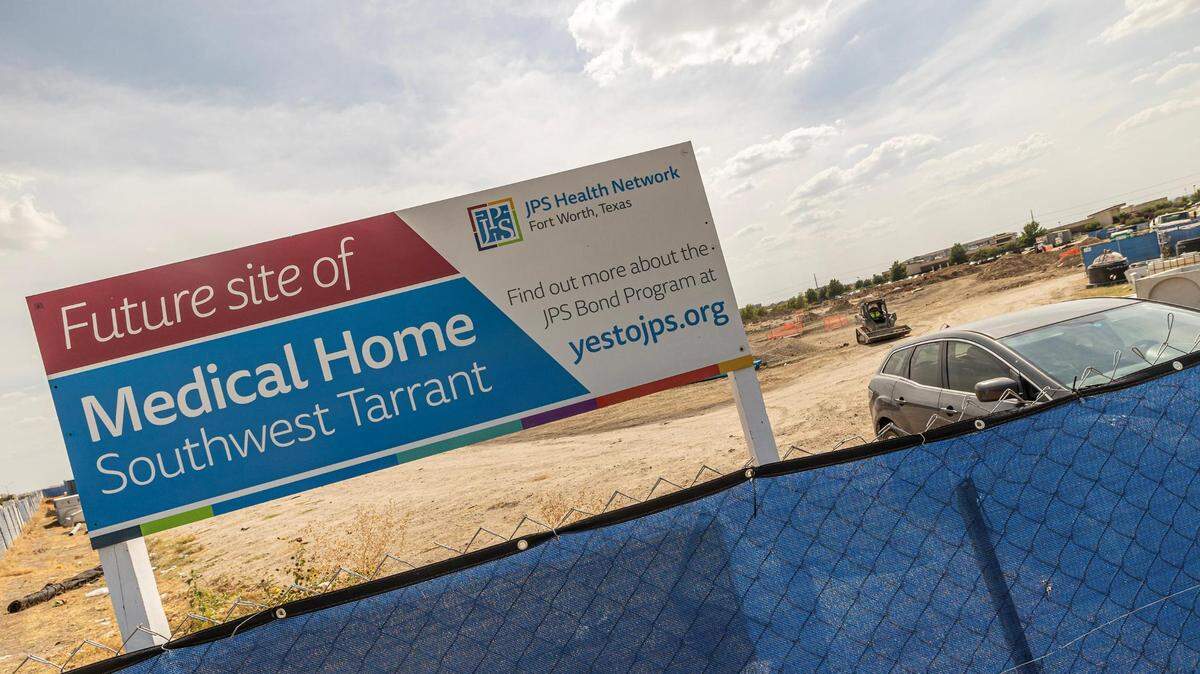
If you ever wonder why people are cynical about government spending and planning, consider the JPS Health Network.
Tarrant County’s public health operation asked voters for approval to issue $800 million in bonds, part of an estimated $1.2 billion package that envisioned new hospital buildings, a new mental-health facility and four innovative clinics that would help people without insurance seek care and, with any luck, reduce costs.
Now — five years later — the price tag of the entire package is approaching $1.5 billion. Nothing is built. And that ambitious plan for four “medical homes” is pared back to just one.
Hospital district and county officials do not deserve blame for sustained inflation; every project, public and private, is seeing spiraling price tags. But they compounded the problem with a lack of urgency and creativity, and they’ve invited more public skepticism and disappointment with a failure to act transparently the entire way.
But then, responsiveness to the public apparently isn’t a priority. The hospital system’s board of managers seem clueless to the prevailing attitude about property tax rates. They tried to enact a large effective tax increase by failing to reduce the tax rate even as higher property appraisals would mean a revenue windfall.
County commissioners overturned them, 5-0. That’s Republicans and Democrats alike. The public has had enough of local governments enjoying huge revenue increases on the backs of ballooning property values, and thank goodness the elected commissioners recognize it, because the appointed managers don’t.
And, as usual, JPS was slow to make itself accountable to the public. It steadfastly refused to answer Star-Telegram reporter Ciara McCarthy’s questions about the medical homes. That was after demanding that McCarthy file a formal records request — with its built-in delays — for budget information that any member of the public should be able to access with the click of a mouse.
Board member Trent Petty finally acknowledged the medical-home change at a meeting Thursday, explaining that priorities changed amid the COVID pandemic and lasting inflation. He said board members had to choose among priorities with the available resources.
The medical homes promise an improved model for preventive care for those without the resources to regularly acquire it. They offer one-stop shopping for those who might struggle to find (or afford) a primary care physician.
If the bond program’s ambitions must be trimmed, perhaps JPS officials are right to prioritize an expansion of the main hospital and the creation of more mental health facilities. It’s just a shame it’s come to that. The cost of managing chronic diseases such as diabetes and treating their consequences will be a frightening challenge for health systems everywhere in the years ahead.
County officials expressed confidence as recently as April 2022 that all four clinics could still be built. Inflation was a known factor by then, and yet no one seemed to think it might be a good idea to put on a little speed. Now, we’ll have just one medical home, too far out to do much good for most of the county, including Arlington and the northeast suburbs.
The health care equation is growing only more complicated. Costs continue to rise, and Texas continues to decline expanding Medicaid. That puts a burden on the public-health system, and if we wait for health concerns to show up in the emergency room, that’s the most expensive and least efficient way to deal with them.
JPS managers know this. They face a difficult landscape, to be sure. But Tarrant County needs a robust public health system, along with an efficient one. Right now, it’s getting neither.
BEHIND THE STORY
MOREHey, who writes these editorials?
Editorials are the positions of the Editorial Board, which serves as the Fort Worth Star-Telegram’s institutional voice. The members of the board are: Cynthia M. Allen, columnist; Steve Coffman, editor and president; Bud Kennedy, columnist; Ryan J. Rusak, opinion editor; and Nicole Russell, editorial writer and columnist. Most editorials are written by Rusak or Russell. Editorials are unsigned because they represent the board’s consensus positions, not the views of individual writers.
Read more by clicking the arrow in the upper right.
How are topics and positions chosen?
The Editorial Board meets regularly to discuss issues in the news and what points should be made in editorials. We strive to build a consensus to produce the strongest editorials possible, but when we differ, we put matters to a vote.
The board aims to be consistent with stances it has taken in the past but usually engages in a fresh discussion based on new developments and different perspectives.
We focus on local and state news, though we will also weigh in on national issues with an eye toward their impact on Texas or the Dallas-Fort Worth area.
How are these different from news articles or signed columns?
News reporters strive to keep their opinions out of what they write. They have no input on the Editorial Board’s stances. The board consults their reporting and expertise but does its own research for editorials.
Signed columns by writers such as Allen, Kennedy and Rusak contain the writer’s personal opinions.
How can I respond to an editorial, suggest a topic or ask a question?
We invite readers to write letters to be considered for publication. The preferred method is an email to letters@star-telegram.com. To suggest a topic or ask a question, please email Rusak directly at rrusak@star-telegram.com.