
Council’s rejection of police board shows why it’s needed: Many Black people feel shut out
Five years ago, a Fort Worth police officer tackled and arrested Jacqueline Craig, a Black woman who had called 911 to report an assault on her son. The charges levied against her were dropped only after body camera footage was leaked.
The viral arrest prompted an investigation and the origination of the Race and Culture Task Force to examine the relationship between law enforcement and the community and other inequality concerns. The task force offered many recommendations, but one stood out: Implement a resident-based advisory board so Black and brown people would have a seat at the table to have law-enforcement concerns heard.
Then, in 2019, Fort Worth police Officer Aaron Dean shot and killed Atatiana Jefferson after a neighbor called a non-emergency line reporting that Jefferson’s door was open. Dean’s murder trial, which has been pushed back repeatedly, is now scheduled to start in December. It’s been a grievous wound for Jefferson’s neighborhood and Black Fort Worthians in general, compounding the need for such an advisory board.
Yet, in the middle of all the busyness of Election Day, the Fort Worth City Council met to vote down the creation of such a panel. Reasons were varied: Several council members said that Fort Worth Police Chief Neil Noakes needed more time to make necessary changes among his officers.
But it’s a mistake.
There has been plenty of time. It’s now time to take action.
A community advisory board is an important bridge between police and residents, especially those with plenty of historical justification to distrust law enforcement. The council’s 5-4 vote was frustrating, a seeming fait accompli that leaves plenty of residents wondering what it will take to have their voices heard.
After about two hours of public comment from 38 residents, many of whom were in favor of the board, and more than an hour of debate between council members, the vote was pretty much down party lines: More conservative or moderate-leaning members Mayor Mattie Parker, Carlos Flores (District 2), Michael Crain (District 3), Alan Blaylock (District 4) and Leonard Firestone (District 7) voted not to create the board. Voting yes were members more to the left: Gyna Bivens (District 5), Jared Williams (District 6), Chris Nettles (District 8) and Elizabeth Beck (District 9).
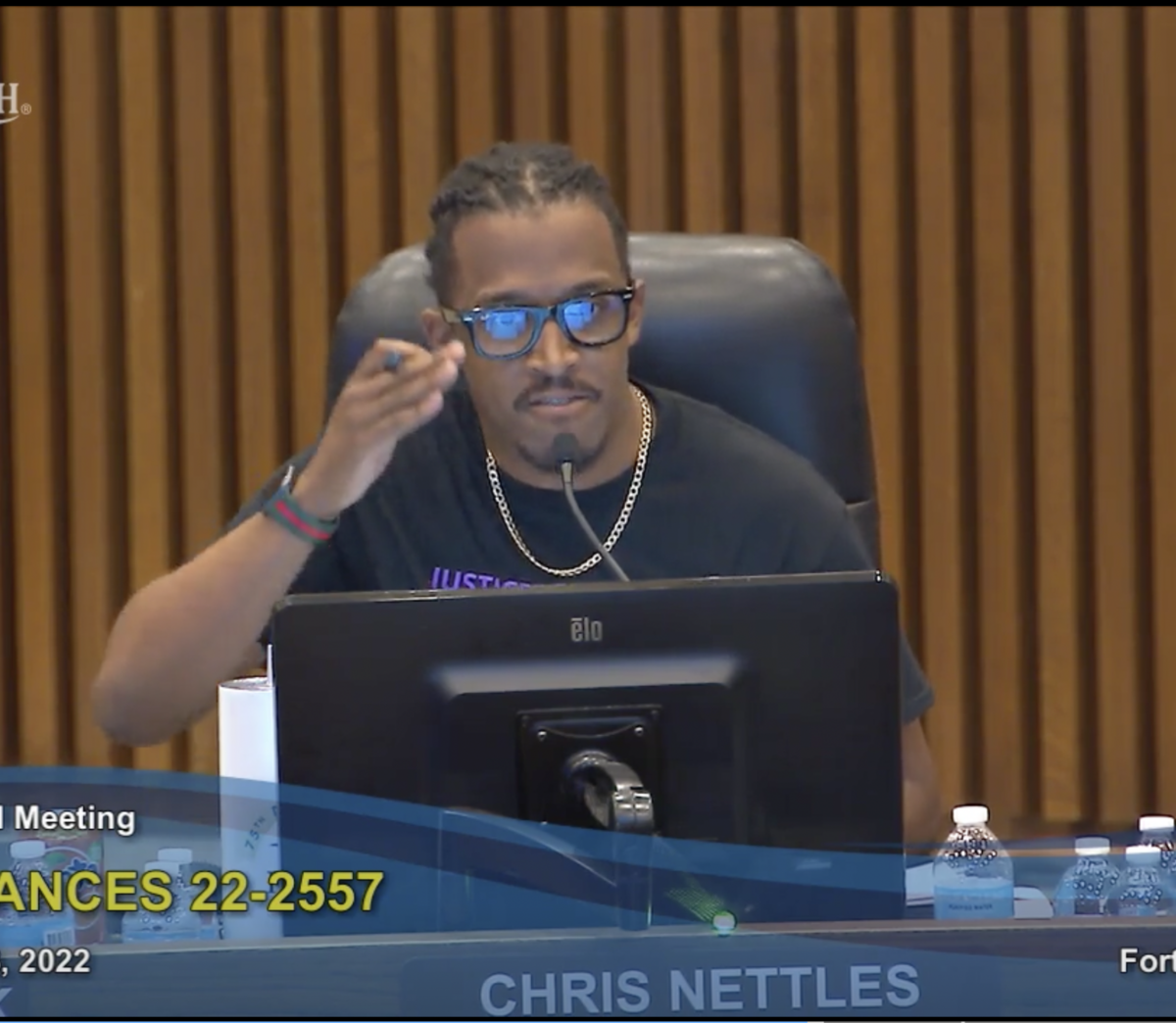
The proposed board’s nine members would have reviewed police practices and recommended possible changes to the chief. The board would not have oversight power, but it might at least spotlight some positive policy changes. And it’s important to note that representatives of the police department were involved in developing the plan for the advisory board.
Most importantly, such a board would serve as an avenue for community input, so that minority members of the Fort Worth community feel they have a seat at the table — because they should.
Bob Ray Sanders, the longtime Star-Telegram columnist who was a co-leader of the task force, put it this way: “As the native son of Fort Worth, I rise to implore you elected officials to do the right thing tonight.”
Sure, there are plenty of reasons that a “no” vote that might seem valid: Several community members and council members pointed out that there already is an oversight committee in the police monitor’s office, making an advisory board redundant. Noakes said he’d never seen a community board that actually improved relations between police and residents. “Please let me do the job I was hired to do,” he said Tuesday night.
But make no mistake: the “no” votes were also fueled by a failure to understand the perspective of Black residents and a fear of being labeled “anti-police” in the next election.
Even until Tuesday night, the advisory board was not to include police officers or their family members. An amendment changed that, offering a reasonable compromise to board opponents who were worried a law-enforcement point of view would be missing. And it still wasn’t enough to sway just one vote.
Frankly, intended or unintended bias appears to be part of the problem among Fort Worth law enforcement. Many members of the Fort Worth community feel like the deck is stacked against them in dealing with police, because it often has been for decades. To them, the predetermined outcome at Tuesday’s council meeting is simply another example. Recognizing that bias exists and suggesting ways to change it would be one of the many roles of the advisory board.
Going forward, it’s crucial that the police monitor retains authority to dig into misconduct, but it would be wise to have a group of concerned citizens — with nothing to personally gain or lose from their recommendations — making suggestions for how law enforcement should handle difficult situations.
Besides, what’s the point of creating a task force to make suggestions if the governing body is simply going to reject one of the most important recommendations?
Not everyone needs access to the process through this advisory board. But some do. Some who feel marginalized, victimized, and excluded. The advisory board is not a matter of being pro- or anti-police, it’s a matter of doing what is best for our community.
As Nettles said: “You would never understand walking in a Black man’s shoes. Understand what it feels like to have a target on your back because of the type of hair that you have, the type of cars you drive and the type of neighborhood that you live in.”
Many of us do not understand. The advisory board would have helped foster that understanding. It falls to Noakes, the police monitor’s office and the council to find other ways to make that happen.
BEHIND THE STORY
MOREHey, who writes these editorials?
Editorials are the positions of the Editorial Board, which serves as the Fort Worth Star-Telegram’s institutional voice. The members of the board are: Cynthia M. Allen, columnist; Steve Coffman, editor and president; Bud Kennedy, columnist; Ryan J. Rusak, opinion editor; and Nicole Russell, editorial writer and columnist. Most editorials are written by Rusak or Russell. Editorials are unsigned because they represent the board’s consensus positions, not the views of individual writers.
Read more by clicking the arrow in the upper right.
How are topics and positions chosen?
The Editorial Board meets regularly to discuss issues in the news and what points should be made in editorials. We strive to build a consensus to produce the strongest editorials possible, but when we differ, we put matters to a vote.
The board aims to be consistent with stances it has taken in the past but usually engages in a fresh discussion based on new developments and different perspectives.
We focus on local and state news, though we will also weigh in on national issues with an eye toward their impact on Texas or the Dallas-Fort Worth area.
How are these different from news articles or signed columns?
News reporters strive to keep their opinions out of what they write. They have no input on the Editorial Board’s stances. The board consults their reporting and expertise but does its own research for editorials.
Signed columns by writers such as Allen, Kennedy and Rusak contain the writer’s personal opinions.
How can I respond to an editorial, suggest a topic or ask a question?
We invite readers to write letters to be considered for publication. The preferred method is an email to letters@star-telegram.com. To suggest a topic or ask a question, please email Rusak directly at rrusak@star-telegram.com.
This story was originally published November 11, 2022 at 2:58 PM.