
Obsession with proving broad voter fraud threatens to disrupt Texas elections. Cut it out.
We hear plenty of talk about threats to our election systems, from mail-ballot fraud to conspiracy theories about voting machines.
But a more urgent danger isn’t getting enough attention: How will we hold elections if no one shows up to work at the polls?
Escalating harassment and threats, driven by paranoid visions of mass fraud, are taking a toll on both the temporary workers who help voters at polling places and the full-time government employees tasked with overseeing the complicated process of voting and counting ballots. The latter are inundated with new rules and liabilities by state officials, swamped with requests for data and documents, and harassed over factors beyond their control.
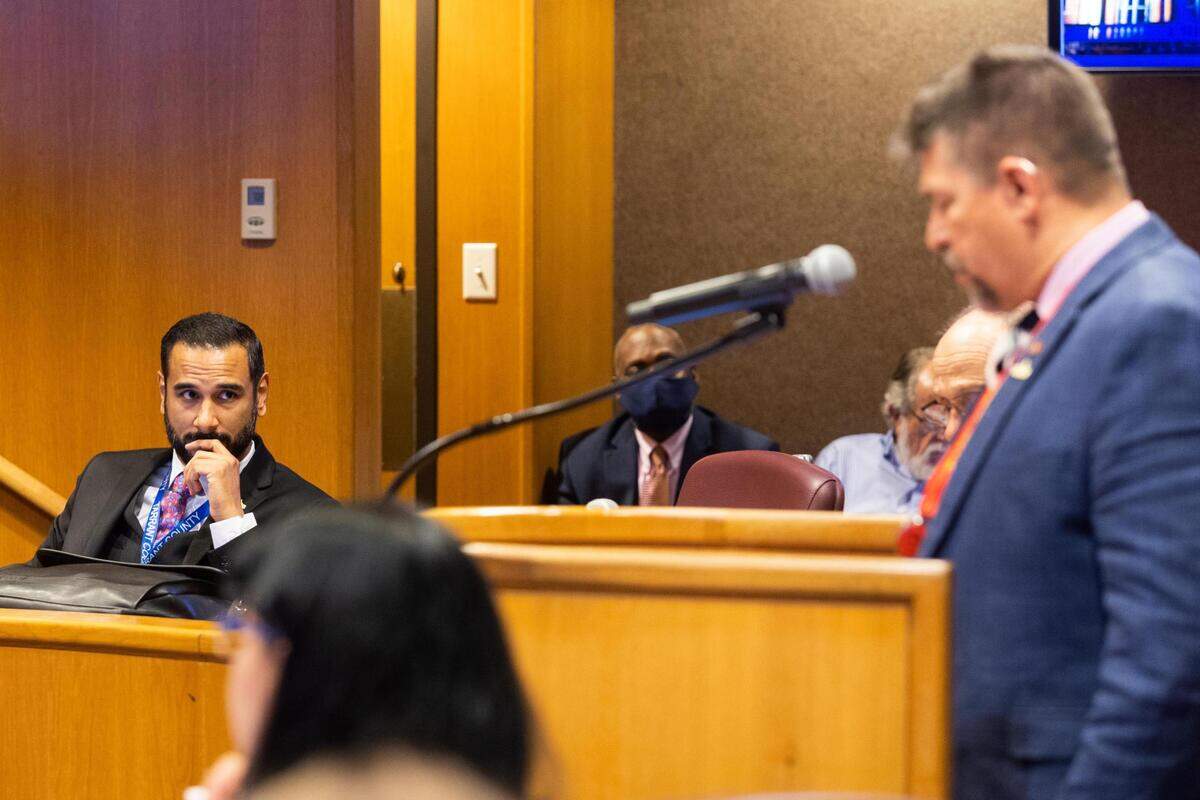
Tarrant County Elections Administrator Heider Garcia recently testified to Congress about how his family was threatened and his loyalty and competence questioned after the 2020 election, in which Joe Biden narrowly beat Donald Trump in the county. Elsewhere, Texas elections officials have thrown up their hands and quit, tired of dealing with constant second-guessing and baseless accusations.
It all demonstrates that unreasonable nitpicking of our elections undermines confidence in our entire democracy. There’s nothing wrong with demanding transparency, accountability and strict adherence to election law. No government agency is perfect, and robust scrutiny of people and processes is an American right and tradition.
But much of what we’re seeing now is based in fevered imagination. We’ve always said that voter fraud, particularly ballot harvesting, is a real danger, a serious crime that demands layers of protection. What we’re seeing now, though, is closer to the Hollywood trope of a wild-eyed conspiracy theorist — staring at a complicated network of strings and thumbtacks on a corkboard, waiting for the true picture to reveal itself.
Consider the group of activists who spent weeks in the Tarrant County elections office recently poring over hundreds of thousands of ballots from the March 2020 primaries. Remember all the controversy over that one? Of course not, because there was none. It was a smoothly run election that drew no protest from any candidate, campaign or party.
It took a tremendous effort for Garcia’s office — which, remember, you pay for — to create a secure environment for the ballots to be reviewed without possible tampering. And for what?
It’s one thing for such disruption to come from the political fringes. But elections officials are also bedeviled by layers of rules from the Legislature and baffling demands from state officials such as Attorney General Ken Paxton. He recently issued confusing guidance that suggests elections officials should make ballots available for public review immediately after an election.
Currently, counties hold ballots for 22 months. Paxton’s opinion was first reported by Votebeat, a news organization that covers election laws and procedures. The site also noted that just a few days prior, the attorney general’s office had told Tarrant County officials, in response to an open records request, that the 22-month standard was correct.
The later opinion is not legally binding, but it could open the door to lawsuits demanding immediate access to ballots, before results are even finalized. Let’s be clear about what that would mean: opening the door to tampering with ballots in the false name of election integrity.
But then, preventing fraud isn’t really what this is about. Paxton’s involvement points to the real motive: Donald Trump.
Paxton has contributed to the lie that Trump was denied re-election by fraud and other chicanery. He spoke at the Jan. 6, 2021, rally that preceded the attack on the U.S. Capitol. And he brought the ridiculous lawsuit that tried to persuade the Supreme Court to let Texas intervene in other states’ election results.
Trump loyalists think that the only explanation for their man’s loss in Tarrant County is fraud. They can’t bear to reckon with the truth: The former president’s vulgarity and incompetence prompted many Republicans to split their votes, supporting candidates such as Sen. John Cornyn and re-electing GOP state legislators.
That belief gives them justification for activism that some twist into harassment and even possibly illegal threats. As we head into another hotly contested voting season, we cannot let them deter honest people from working to ensure that polling places run smoothly and votes are accurately and legally counted.
If enough throw up their hands and quit, then we’ll really see what a chaotic, confused election looks like.
BEHIND THE STORY
MOREHey, who writes these editorials?
Editorials are the positions of the Editorial Board, which serves as the Fort Worth Star-Telegram’s institutional voice. The members of the board are: Cynthia M. Allen, columnist; Steve Coffman, editor and president; Bud Kennedy, columnist; Ryan J. Rusak, opinion editor; and Nicole Russell, editorial writer and columnist. Most editorials are written by Rusak or Russell. Editorials are unsigned because they represent the board’s consensus positions, not the views of individual writers.
Read more by clicking the arrow in the upper right.
How are topics and positions chosen?
The Editorial Board meets regularly to discuss issues in the news and what points should be made in editorials. We strive to build a consensus to produce the strongest editorials possible, but when we differ, we put matters to a vote.
The board aims to be consistent with stances it has taken in the past but usually engages in a fresh discussion based on new developments and different perspectives.
We focus on local and state news, though we will also weigh in on national issues with an eye toward their impact on Texas or the Dallas-Fort Worth area.
How are these different from news articles or signed columns?
News reporters strive to keep their opinions out of what they write. They have no input on the Editorial Board’s stances. The board consults their reporting and expertise but does its own research for editorials.
Signed columns by writers such as Allen, Kennedy and Rusak contain the writer’s personal opinions.
How can I respond to an editorial, suggest a topic or ask a question?
We invite readers to write letters to be considered for publication. The preferred method is an email to letters@star-telegram.com. To suggest a topic or ask a question, please email Rusak directly at rrusak@star-telegram.com.