
With YouTube debacle, ‘ghost’ courts, voters must ask: Is Kim fit as Tarrant juvenile judge?
Judges in any Tarrant County court should remain impartial, act ethically and strive for equality and justice under the law. In some ways, the COVID-19 pandemic helped reveal which judges may lack those qualifications.
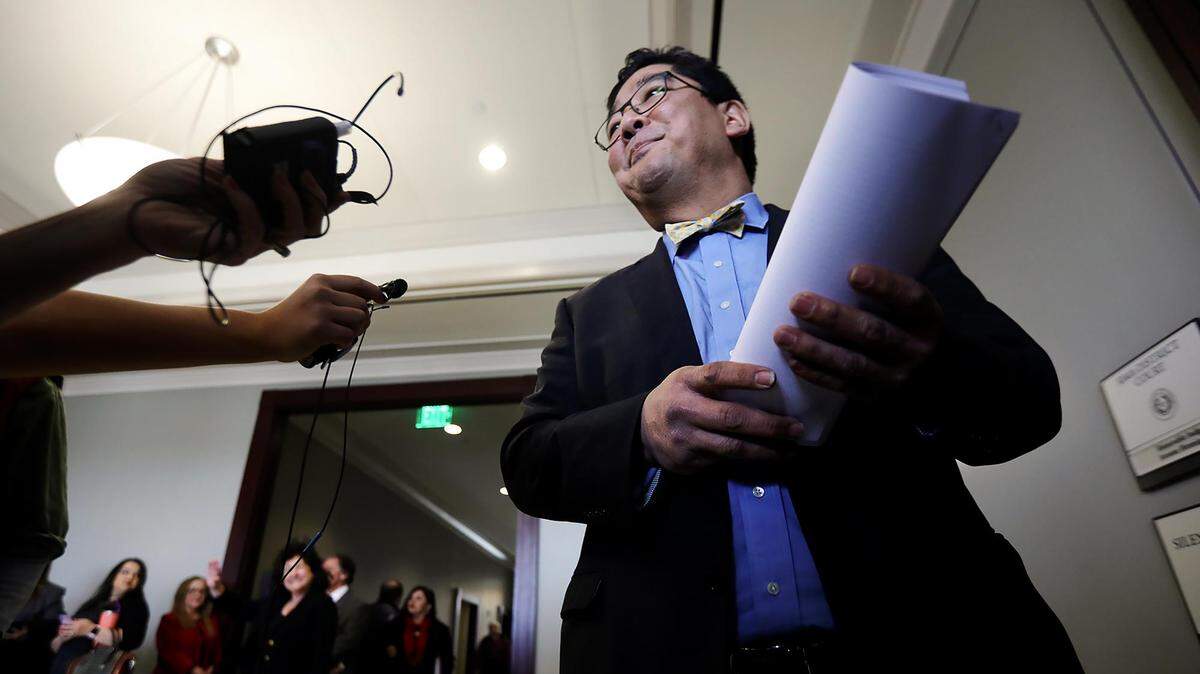
One is Judge Alex Kim, the juvenile judge in the 323rd District Court. A Republican first elected in 2018, Kim is up for another term this year. Voters should give him a hard look and consider if he exemplifies the qualities of an ethical and impartial judge.
Kim has had a checkered history since taking the bench, but the biggest strike against him is his decision to livestream his court’s detention hearings in 2020 and 2021. Many judges, in order to prevent a backlog during the pandemic, held virtual hearings. But instead of just holding detention hearings privately over Zoom, Kim and his two associate judges, Cynthia Terry and Andy Porter, broadcast them live on Kim’s YouTube channel and kept the comment section open.
The hearings were full of minors and their misdeeds, the very worst moments of a juvenile’s life.
In one hearing, Kim presses a 12-year-old boy to reveal specific names of adults who gave him guns and marijuana, causing real backlash among criminal actors in the child’s life at home.
That YouTube video was one of more than 500 that attracted 1.7 million views and 11,300 subscribers to Kim’s YouTube channel, earning $9,000 in ad revenue. County commissioners voted unanimously this summer to return the money once they were made aware of it.
The Texas Family Code says any proceedings for children younger than 14 should be closed, unless there’s a compelling reason that would serve the public.
Unless a minor is the subject of a major crime garnering statewide or national attention, we can’t understand why any hearings for children would be broadcast to the public. The point of juvenile detention is to rehabilitate children. Broadcasting their crimes to the public severely inhibits this goal, as well as infringes on the child’s basic rights of privacy.
Leaving the videos available to the public allows for anyone in the juvenile’s future — from a coach or friend to spouse or employer — to find what is probably one of the lowest moments that person has experienced.
The comment section on the YouTube hearings featured people suggesting how Kim should rule. It was open season on the kids: racial slurs, grievances, condemnations, and more. This feature could have been turned off but was allowed to perpetuate controversy and cause chaos for juveniles who are already struggling to make solid choices. It seems to be unethical at best and a poor decision, at worst.
Terry, one of Kim’s associate judges, said in a 2021 hearing: “We are livestreaming on YouTube so that victims of any of the offenses may observe without having to come to court.” But broadcasting the hearings of troubled minors likely did far more damage to the kids than it gave help to the victims.
Kim must be held accountable for that poor decision that lasted well past the pandemic. The judges finally stopped recording about a year ago and now hold all hearings in person. But the damage has been done.
Kim’s management of juvenile justice is troubled on several fronts. In another case, Kim placed a 17-year-old who had not been criminally charged as an adult in the Tarrant County Jail with adults, in violation of federal and local laws, because the teen swore at him during a hearing. To add insult to injury, Kim even livestreamed the announcement via his YouTube channel. We understand the inclination to be hard on older kids, especially borderline adults, but they can’t be endangered in violation of the law.
In 2020, Child Protective Services cases were moved out of Kim’s courtroom because he often went against the recommendations of the state agency. Tarrant County judges and officials might have to step up again to strip Kim of authority over a system he clearly cannot manage.
Voters should demand better, too. Terry and Porter are both running for different judicial posts on the November ballot, and voters should consider that an outside audit found courthouse staff used the term “ghost” courts because so few hearings were held. That helped contribute to crowding at the county juvenile center, a dangerous situation.
Kim, who faces Democratic attorney Frank Adler, is popular among Republicans, thanks in part to his reputation for being tough on juvenile crime.
But the ongoing problems in his court contribute to a system that risks doing the opposite of what it should: driving troubled children further into crime.
BEHIND THE STORY
MOREHey, who writes these editorials?
Editorials are the positions of the Editorial Board, which serves as the Fort Worth Star-Telegram’s institutional voice. The members of the board are: Cynthia M. Allen, columnist; Steve Coffman, editor and president; Bud Kennedy, columnist; Ryan J. Rusak, opinion editor; and Nicole Russell, editorial writer and columnist. Most editorials are written by Rusak or Russell. Editorials are unsigned because they represent the board’s consensus positions, not the views of individual writers.
Read more by clicking the arrow in the upper right.
How are topics and positions chosen?
The Editorial Board meets regularly to discuss issues in the news and what points should be made in editorials. We strive to build a consensus to produce the strongest editorials possible, but when we differ, we put matters to a vote.
The board aims to be consistent with stances it has taken in the past but usually engages in a fresh discussion based on new developments and different perspectives.
We focus on local and state news, though we will also weigh in on national issues with an eye toward their impact on Texas or the Dallas-Fort Worth area.
How are these different from news articles or signed columns?
News reporters strive to keep their opinions out of what they write. They have no input on the Editorial Board’s stances. The board consults their reporting and expertise but does its own research for editorials.
Signed columns by writers such as Allen, Kennedy and Rusak contain the writer’s personal opinions.
How can I respond to an editorial, suggest a topic or ask a question?
We invite readers to write letters to be considered for publication. The preferred method is an email to letters@star-telegram.com. To suggest a topic or ask a question, please email Rusak directly at rrusak@star-telegram.com.