
Arlington soldier died a hero at the border. But why is the National Guard even there?
What did Bishop Evans die for?
No one should question the Texas National Guard specialist’s heroism and sacrifice. The 22-year-old, an Arlington resident and product of Mansfield schools, jumped into the Rio Grande last week to help two migrants struggling in the water. They survived; Evans did not.
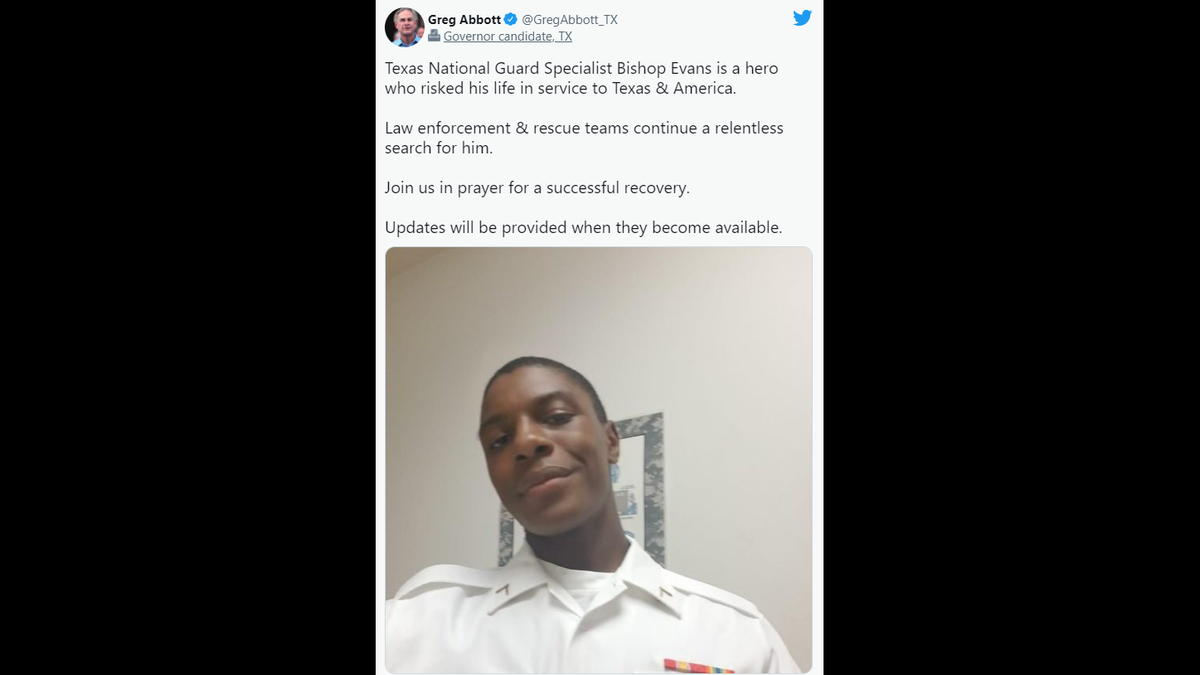
It demonstrates the damning flaw of the Guard mission that brought Evans to the border: Troops are there to address problems they cannot truly engage. Stopping illegal immigration is a federal task, and no matter what level of resources Texas throws at it, there are hard limits to what state actors can do.
It’s high risk, very little reward. Evans paid the ultimate price. Many of his colleagues have suffered through long deployments, poor work conditions and even delayed pay.
Gov. Greg Abbott deployed the Guard as part of Operation Lone Star, his ongoing attempt to fill the federal government’s gaps on border security. Texas leaders, already exasperated with a broken immigration system, anticipate even larger numbers of migrants will soon arrive at the border and/or get past it.
The battle of the moment is over a policy called Title 42. It’s the pandemic policy started by the Trump administration that let border officials immediately expel arriving migrants, even those requesting asylum. Texas Republican leaders — and notably, some Democrats in Congress — are concerned, and rightfully so, that when the Biden administration ends the policy, migrants will overwhelm the border.
Texas Attorney General Ken Paxton joined several other states and sued the feds last week over Title 42. On Monday, in a separate case, a Louisiana federal judge temporarily blocked the administration from letting the Title 42 policy expire May 23, as it intended to do.
The U.S. needs an asylum system that doesn’t allow people to enter on specious claims and melt into the background. But using emergency public-health policy to police immigration isn’t the answer.
Neither is sending Texas troops to the border with little authority to meaningfully address the problem.
Under Operation Lone Star, Texas is apprehending some migrants crossing illegally. But it has no authority to deport them. The best the state can do is process trespassing or other minor charges. And it’ll spend more than $4 billion in the current two-year budget on the overall effort.
Where the state can be useful is helping local communities bearing the brunt of the federal government’s failures. Border counties are generally small and need help with law enforcement, technology and equipment. Local landowners are suffering, too. Ranchers see their fences cut or trampled.
If the state wants to tackle the effects of the federal failure on immigration, more help for these Texans is in order.
These aren’t the only costs of our border dysfunction. Texas needs workers, as does much of the rest of the country. A rational and effective system for letting people come to the U.S. for jobs in construction, meatpacking, restaurants and other suffering industries would benefit all involved: American companies, consumers and migrants who are subject to exploitation on the journey here and a life in the shadows once they arrive.
Fixing that would take a level of creativity and compromise Congress hasn’t shown in years. In the meantime, Texas will keep throwing resources at the problem.
Davis’ death shows the tremendous risk and cost. He shouldn’t have been there.
Neither should those whose lives he saved.
BEHIND THE STORY
MOREHey, who writes these editorials?
Editorials are the positions of the Editorial Board, which serves as the Fort Worth Star-Telegram’s institutional voice. The members of the board are: Cynthia M. Allen, columnist; Steve Coffman, editor and president; Bud Kennedy, columnist; Ryan J. Rusak, opinion editor; and Nicole Russell, editorial writer and columnist. Most editorials are written by Rusak or Russell. Editorials are unsigned because they represent the board’s consensus positions, not the views of individual writers.
Read more by clicking the arrow in the upper right.
How are topics and positions chosen?
The Editorial Board meets regularly to discuss issues in the news and what points should be made in editorials. We strive to build a consensus to produce the strongest editorials possible, but when we differ, we put matters to a vote.
The board aims to be consistent with stances it has taken in the past but usually engages in a fresh discussion based on new developments and different perspectives.
We focus on local and state news, though we will also weigh in on national issues with an eye toward their impact on Texas or the Dallas-Fort Worth area.
How are these different from news articles or signed columns?
News reporters strive to keep their opinions out of what they write. They have no input on the Editorial Board’s stances. The board consults their reporting and expertise but does its own research for editorials.
Signed columns by writers such as Allen, Kennedy and Rusak contain the writer’s personal opinions.
How can I respond to an editorial, suggest a topic or ask a question?
We invite readers to write letters to be considered for publication. The preferred method is an email to letters@star-telegram.com. To suggest a topic or ask a question, please email Rusak directly at rrusak@star-telegram.com.