Many Texans loved Charlie Kirk, but it was about more than politics | Opinion

AI-generated summary reviewed by our newsroom.
- Texas Democrats face long odds despite Republicans’ struggles and public unrest.
- Charlie Kirk's popularity stems more from faith than partisan political views.
- Winning in 2026 demands high Democratic turnout, funding and GOP voter fatigue.
Yes, Texas’ flailing Democrats still have a thin chance to win a statewide election next fall.
But only if Texans turn sharply against the White House, if the economy staggers or if voters grow more wary of Ken Paxton or Dan Patrick.
The shocking assassination of Charlie Kirk does not affect Texas Democrats’ slim hopes of flipping a race in 2026.
For one thing, their odds couldn’t get much worse. For another, Kirk has a huge following for his earnest Christianity, not as much for inflammatory partisan commentary.
Look at the churches drawing crowds by showing Kirk videos. They’re not showing him debating free trade or earthly politics.
The No. 1 book on Amazon.com is his new “Stop, in the Name of God: Why Honoring the Sabbath Will Transform Your Life.”
The description: “Charlie Kirk guides you on how to unplug, recharge, and reconnect with God, family, and yourself in a way that nurtures your soul ... how honoring the Sabbath restores balance, reduces anxiety, and nourishes your soul.”
Nothing about that screams a political party.

By the November 2026 election, KIrk’s assassination will be an outrageous crime more than a year in the past, before the March primaries and before dominant news events like the Olympic Winter Games, the national America 250 celebration and the World Cup.
A political science professor at McMurry University in Abilene, a crossroads of faith in Texas, made all these points.
Paul Fabrizio, who has taught 29 years, wrote in an email that while Kirk turned young people out in 2024, that was to vote for President Donald Trump, who will not be on the 2026 ballot.
“Midterm elections are generally lower-turnout elections than presidential races, and it is hard to get young people to vote,” he wrote.
“The type of voters that Kirk attracted are the ones most likely to sit 2026 out.”
Fabrizio wrote that Democrats’ chances of winning a statewide race depend on whether the economy weakens.
Midterm elections generally go against the party in the White House.
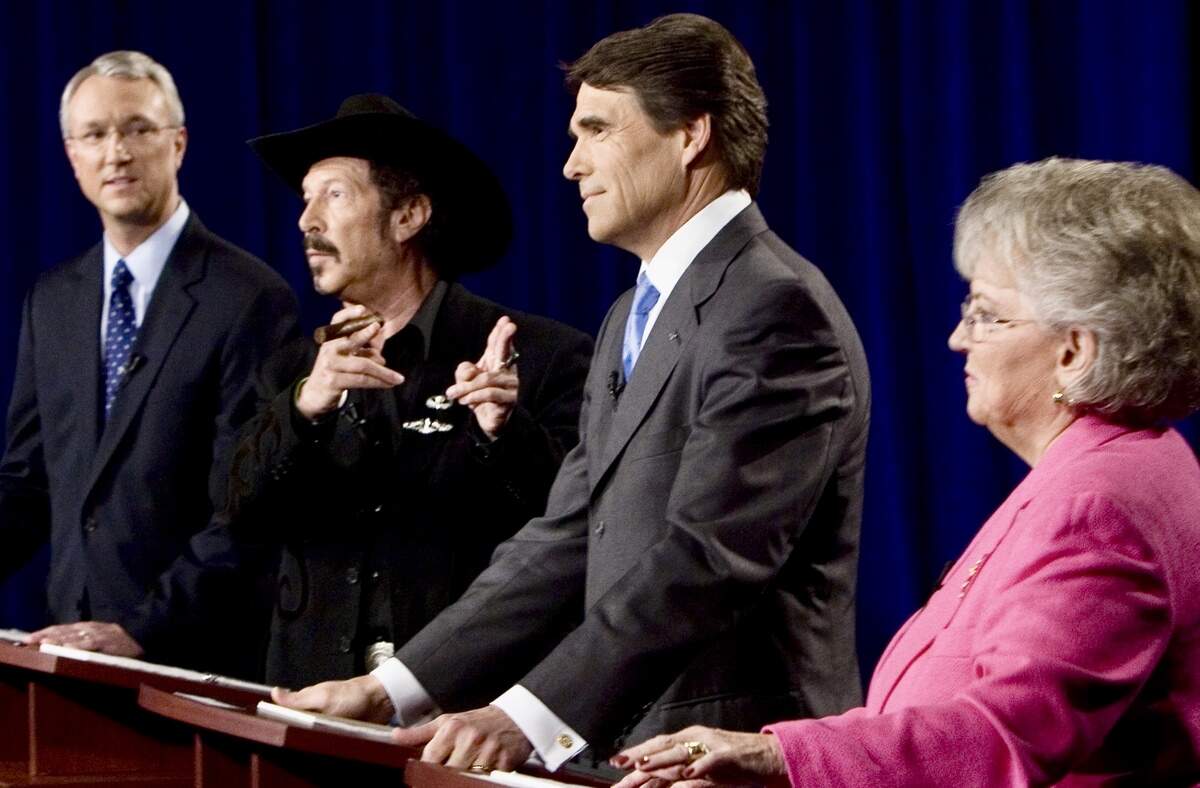
In 2006, for example, with Texan George W. Bush in the White House and Republicans riding his popularity, Texas Democrats flipped five Texas House seats. Republican Gov. Rick Perry was re-elected, but he faced three challengers and won only 39% of the vote.
If — that’s if — voters swing against the White House again, Democrats Colin Allred or James Talarico might have a chance for a U.S. Senate seat against either Sen. John Cornyn or primary challenger Paxton.
Other political experts don’t see any Democratic wins.
“I don’t think they have a chance,” professor Eric McDaniel wrote from the University of Texas at Austin.
Democrats aren’t mobilized, he wrote, and need “deep frustration with the state” to get voters out.
There is definitely frustration over Kerrville flooding, cannabis edibles and bans on sports and casino gambling.
When Houston Democrat Andrew White announced his campaign for governor recently, he cited Republicans’ culture war “failing our schools, hospitals and infrastructure” and incompetence that “led to my son almost dying in the 4th of July flood.”
But are Texans frustrated enough to vote for a Democrat?
“To say it’s an uphill climb,” University of Houston professor Brandon Rottinghaus wrote, “is a dramatic understatement — This is like hiking Guadalupe Peak in flip-flops.”
Democrats need “boatloads of money,” the return of Hispanic voters and a weak Republican turnout, he wrote.
“Lots of ‘ifs’ there.”
Democrats have a ticket. And a lot of ifs.
This story was originally published September 18, 2025 at 10:57 AM.