Yes, it was hot in 1980. But did you hear about 1936?
AI-generated summary reviewed by our newsroom.
- Texas reached 120 degrees in 1936 during the state's centennial celebrations.
- Newspapers downplayed extreme heat, emphasizing events and minimizing deaths.
- Despite record highs, locals accepted summer heat as typical for the region.
(First published Aug. 5, 2011.)
Texas was even hotter in 1936.
But there wasn’t as much talk about it.
On Aug. 12, 1936, at the height of the world-renowned Texas Centennial fair in Dallas and the competing Frontier Centennial in Fort Worth, temperatures across the state climbed into the 110s and near Wichita Falls, to a record 120 degrees.
But back then, in the year of America’s worst heat wave, a hot month in Texas wasn’t big news.
From a check of archives, neither the Star-Telegram nor The Dallas Morning News wrote much about the 100-degree days during either Centennial, which drew more than 7 million visitors combined.
Yes, both newspapers wrote that it was hot.
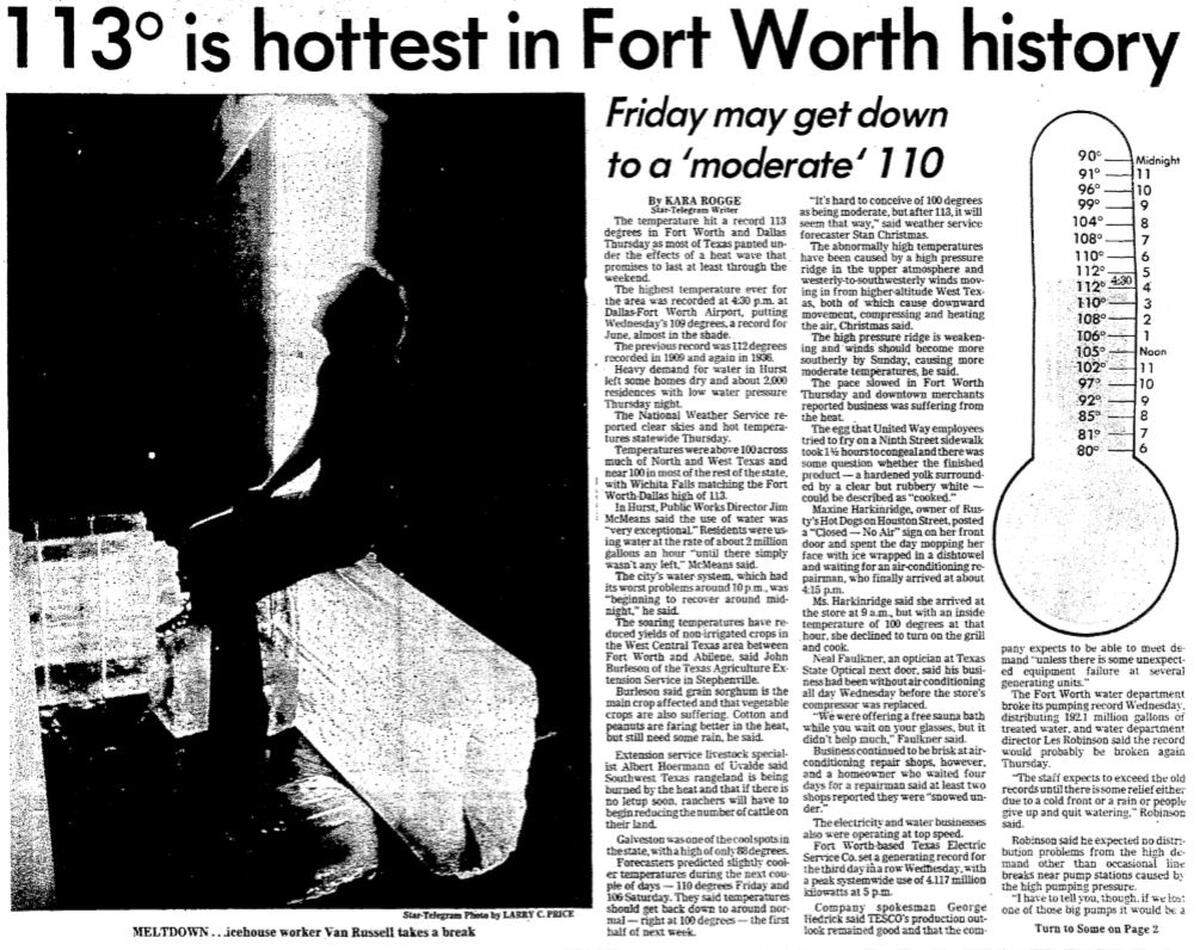
But mainly under headlines such as “Fair Publicity to Tell Nation of Air Cooling.”
When a sweltering June broke records in 54 cities statewide, The News called it the “recent warm spell.”
On the day after President Franklin D. Roosevelt welcomed Dallas visitors, a chorus of 50,000 children was booked for a Texas concert under the burning sun in the Cotton Bowl.
Art Linkletter covered the event for CBS News. Later, he wrote: “We finished the program with about half the chorus gone.”
But The News reported: “Delighted by Show — Excitement and Heat Are Cause of 500 to Faint.”
On Page 13, readers learned that 250 were hospitalized.
News Publisher George Bannerman Dealey thought the heat was bad for Dallas’ image, according to retired Executive Editor Tom Simmons in a 1994 column.
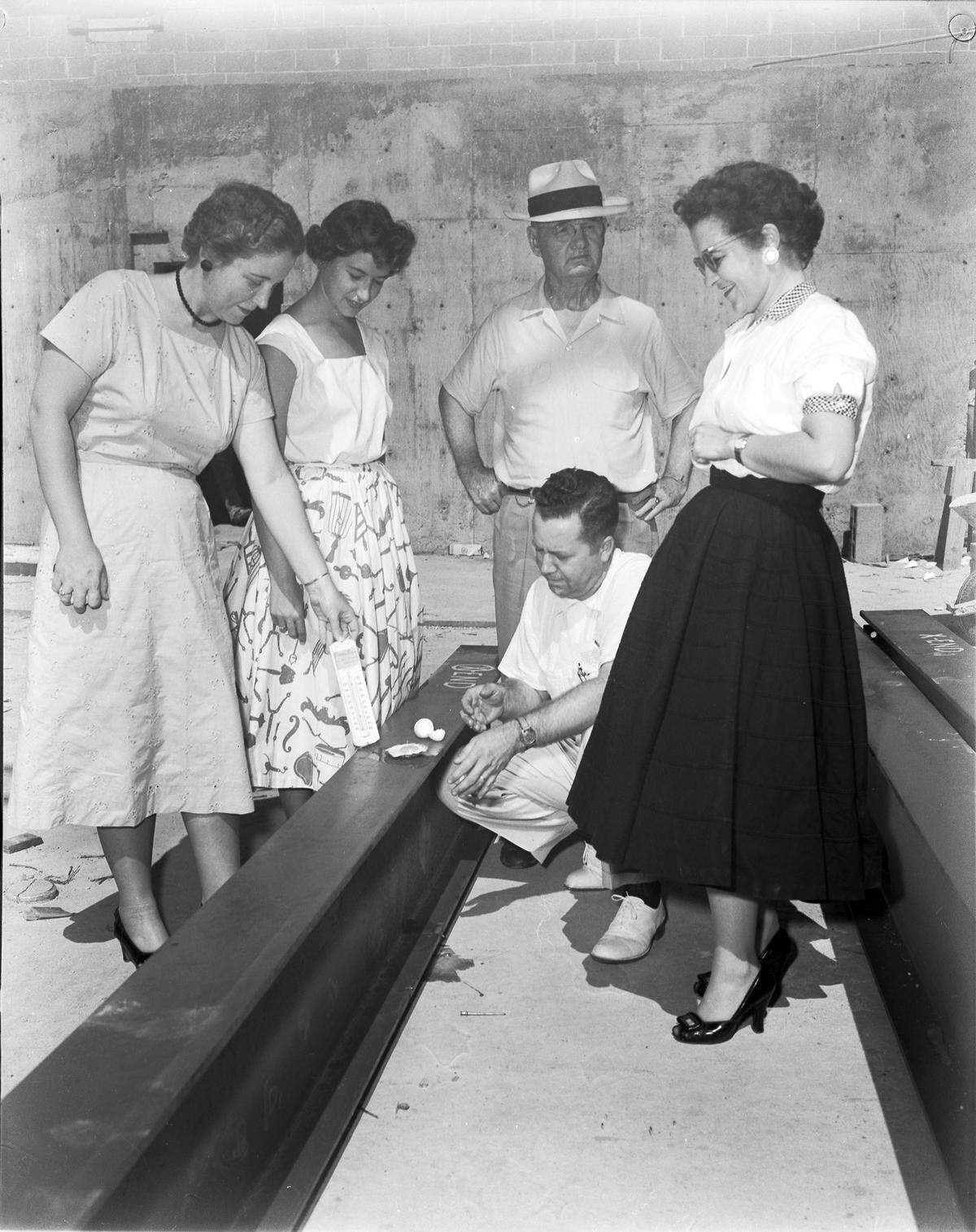
In Fort Worth, Amon G. Carter’s Star-Telegram downplayed heat and drought as nothing newsworthy. But rain was celebrated.
A search of our archives at the University of Texas at Arlington did not turn up any reference to the 105-degree August heat.
Yes, both newspapers reported the more than 20 deaths across Texas.
But when the local high hit only 101 — two days after that 120-degree record in Seymour — The News reported a “cooling spell.”
At 82, author Kenneth B. Ragsdale of Austin remembered both fairs in his 2000 book, “The Year America Discovered Texas: Centennial ‘36 “
”With all those concrete walkways, the heat was very severe,” he said by phone Thursday.
”But I grew up working the cotton fields. Sure, we all talked about how hot it was. But back then, we also just took for granted that it gets hot here.”
It was just summer in Texas.
This story was originally published July 19, 2018 at 11:33 PM with the headline "Yes, it was hot in 1980. But did you hear about 1936?."