How Fort Worth became ‘Where the West Begins’ and left the South. Or did we? | Opinion
To us, Selma, Alabama was far away, somewhere white Christians fought black Christians in grainy TV news images.
We never imagined that Lancaster Avenue and Division Street were on the same U.S. 80 highway that led east to Selma and Montgomery, Alabama, or that anything happening in those ugly scenes from the South might ever happen in Fort Worth.
Turns out our “Where the West Begins” slogan also taught us to look away from Dixieland.
As America marks 50 years since the courageous march in Selma, Texas scholars say our state’s Western identity was crafted in part to downplay a history of Confederate secession and slavery.
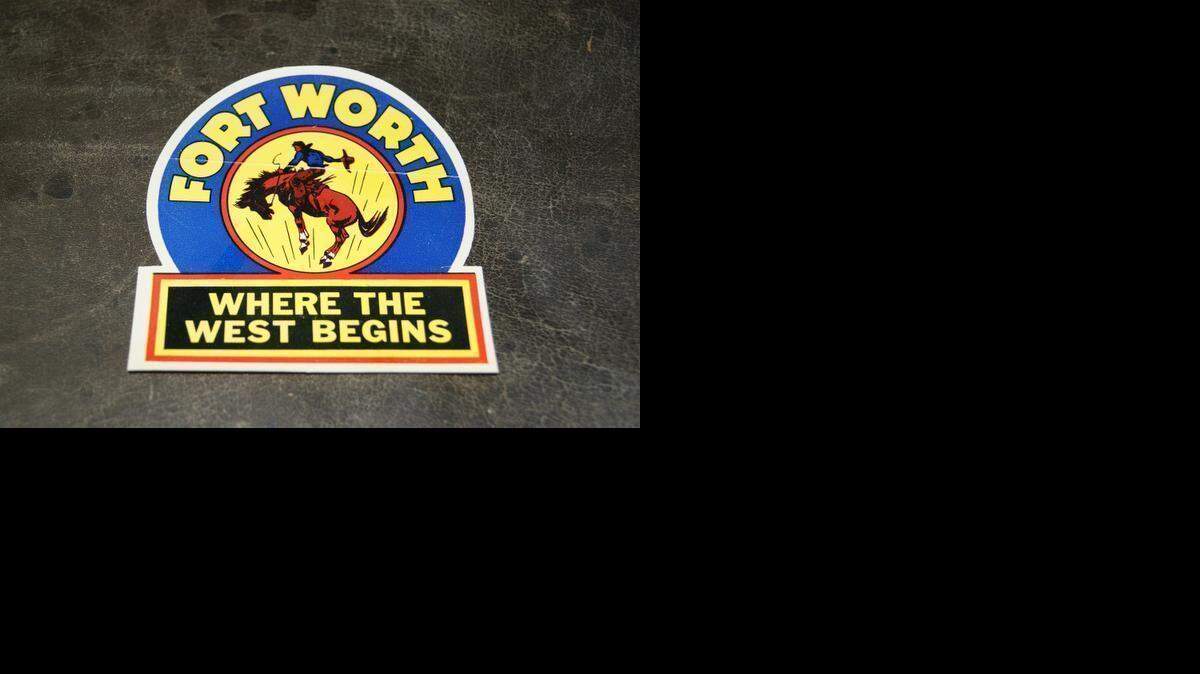
For example, take the slogan that remains on our front page: “Where the West Begins.”
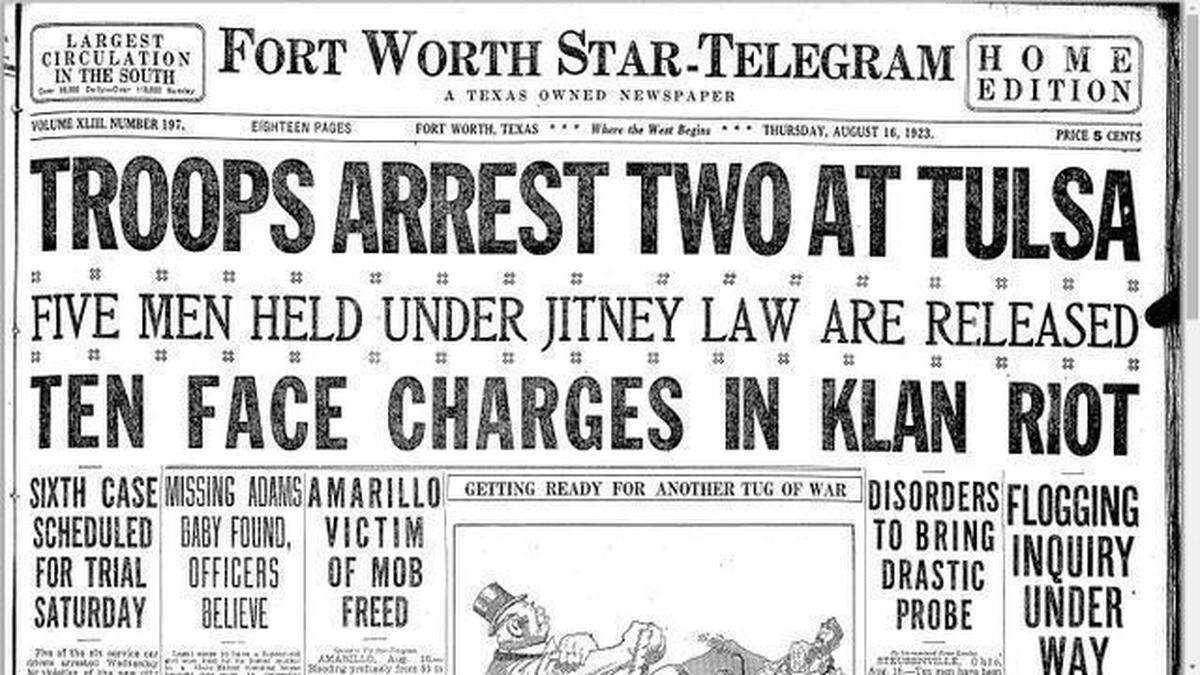
That slogan was first added to founder Amon G. Carter’s Star-Telegram on Aug. 15, 1923.
The rise of the Ku Klux Klan in Fort Worth
That summer, the 1920s rebirth of the Ku Klux Klan had staged two robed and hooded parades in Fort Worth, one described as 25 blocks long.
Business leaders across Texas wanted desperately to promote the state to investors and customers from the North.
But tens of thousands of white Texans wanted to revert to a racist, nativist “Invisible Empire” that used vigilante attacks to intimidate black Texans, immigrants and everyone except white Protestant prohibitionists.
In his 2012 biography of Klan-friendly Baptist televangelist J. Frank Norris, “The Shooting Salvationist,” Virginia author David Stokes wrote how Fort Worth business leaders of the era wanted the city “reinvented to become friendlier to a broader and more diverse business base.” The goal was to promote “long-term prosperity” and dissuade Klan influence.
The “West begins” line isn’t original. It came from a wistful 1911 poem about the West by a Denver writer.
Carter’s Star-Telegram was already promoting Fort Worth as the financial center of ranching-and-oil-boom West Texas, and it published his friend Will Rogers’ weekly column, “The Cowboy Humorist.”
West Texas mayor first called Fort Worth ‘Where the West Begins’
In 1921, at a mayors’ banquet in Fort Worth, the mayor of the small West Texas town of Munday, Joe Davis, drew loud applause when he said West Texans consider the city “where the West begins.”
Two years later, the Star-Telegram added it to the front page.
There is no direct evidence that Carter himself meant to downplay Southern history for Western.
But in the 1978 biography “Amon,” the late Star-Telegram writer Jerry Flemmons wrote how Carter made the “West begins” slogan a mantra and “hammered it into the nation’s brain,” so much that it was repeated by everyone from President Franklin D. Roosevelt to comedian Bob Hope.
According to Austin College history professor Light Cummins, that’s one example of a statewide effort after World War I to promote Texas as Western, even in overwhelmingly Southern and cotton-driven Dallas and Houston.
In his essay “History, Memory and Rebranding Texas,” Cummins wrote: “Things ‘Western’ were seen by many people across the country as positive, progressive … Texas thus adopted the West and Western imagery during the Depression decade in a broad-based historical rebranding of the state.”
How Texas became the ‘West’ to forget the South
By 1936, when competing festivals were held — the Texas Centennial in Dallas and the Frontier Centennial in Fort Worth — Texas’ state of mind had seceded from the South.
In a current Texas Monthly magazine piece tied to Texas Independence Day and the March 6 anniversary of the Alamo’s fall, writer John Nova Lomax asks, “Is Texas Southern, Western or truly a Lone Star?”
He calls Houston and Dallas’ claim to the West “big fat historical fiction,” although he does call Fort Worth a “real Cowtown” on the edge of the West.
And he quotes TCU history professor Gregg Cantrell on the de-Southing of Texas: “Defeat, military occupation, Jim Crow and lynching … were things that a lot of Texans would probably just as soon not talk about.”
Cantrell traces the Western-izing of Texas to the 1910s and the building of monuments to Texas Revolution heroes instead of Confederate generals.
The 1920s followed with history lessons, state symbols and a state song. In 1929, the Texas Legislature adoped the state song “Texas, Our Texas,” with music by Fort Worth church organist William J. Marsh.
In 1932, state Rep. Sarah T. Hughes of Dallas passed a bill to celebrate the first week of March as “Texas Week.”
We learned those Texas-centric lessons in the 1960s.
Sure, Six Flags Over Texas had a Confederate flag and section. But we didn’t know much about it, nor did we want to.
Even though Selma was no farther away than say, Albuquerque, the march to Montgomery and much of the civil-rights movement all seemed to be happening somewhere else.
We learned to remember the Alamo. And to forget the South.
This story was originally published March 7, 2015 at 4:39 PM.