Father cared for disabled son for years, until ICE took him away | Opinion
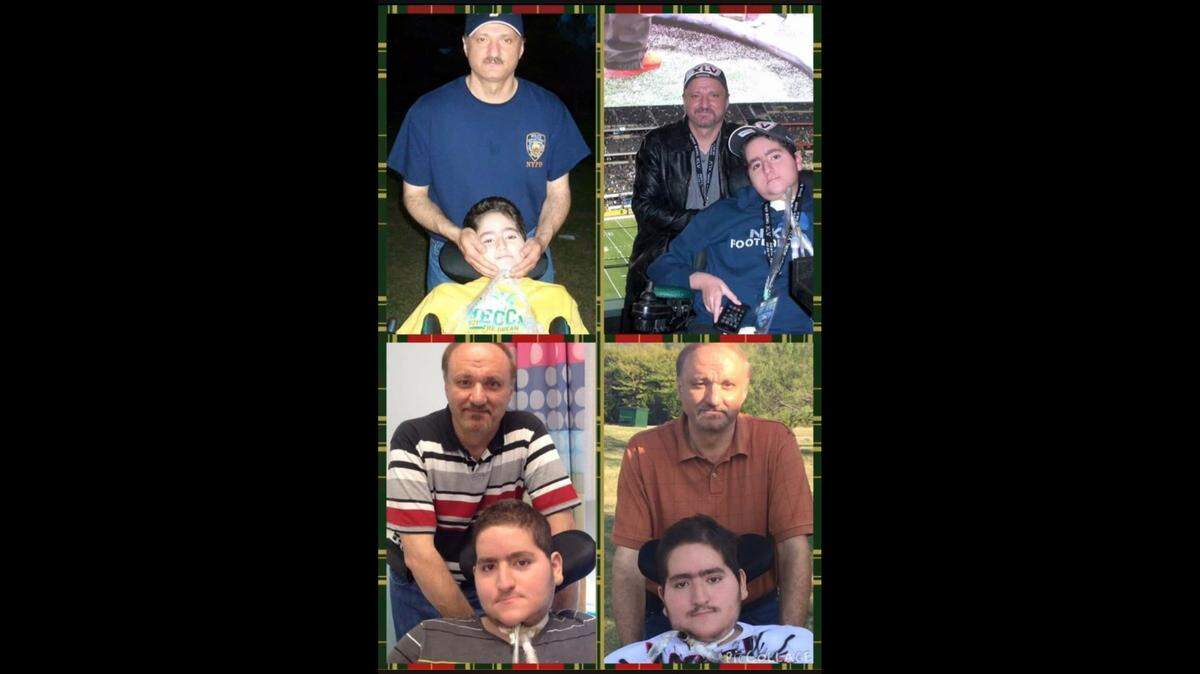
When I met Wael Tarabishi, I didn’t ask him about the obvious. There’s the various machines and devices hooked up to his body keeping him alive, and his father, Maher, who used to studiously monitor his condition before immigration enforcement officers arrested him during what his family claims was a routine appointment, both in its own way, a drain on his spirit. Since his father’s arrest, Wael’s family has stepped in to manage the ongoing complications of Pompe disease, a rare genetic disease steadily destroying his muscles. They feed and clothe him while ensuring he has regular bowel movements.
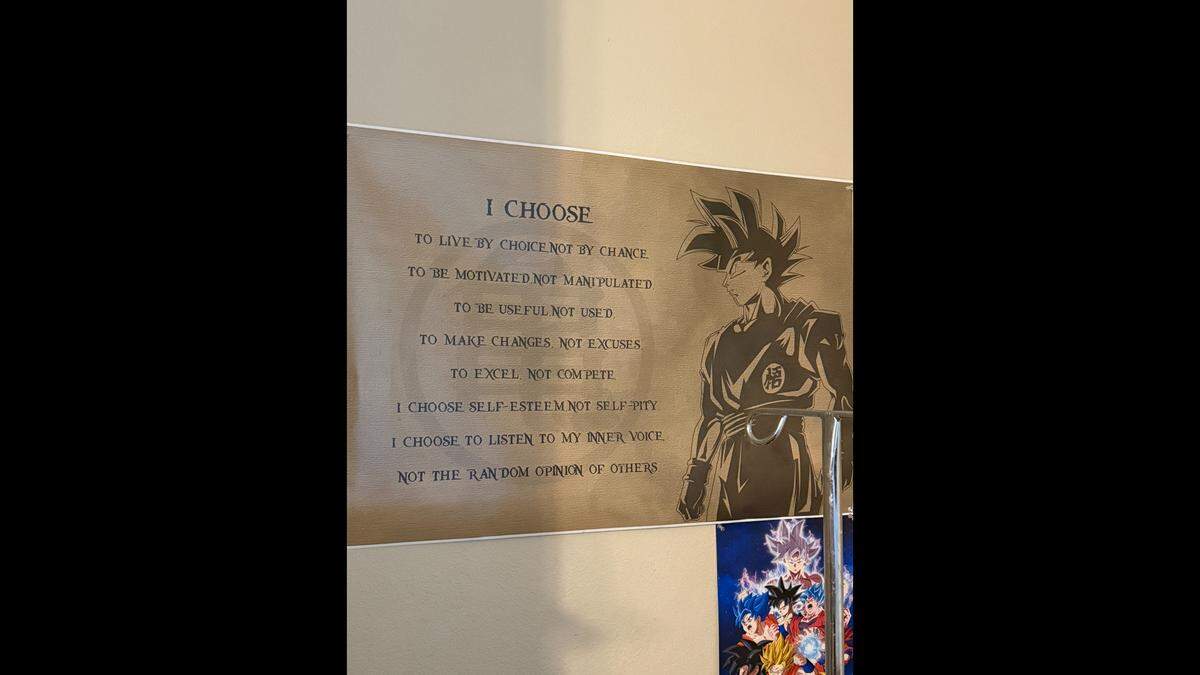
Instead, I asked Wael a question about a poster behind his bed, where he took the interview, just to confirm that we were the same kind of nerd:
“Is that Goku?”
Louie, a cousin who said he and Wael grew up together in Arlington their entire lives, chimes in. “Yeah, Wael’s into all the anime.”
Naturally, I told Wael I’ve been rewatching “Dragon Ball Z” and was currently wrapping up the Cell Games storyline. Goku’s son, Gohan, uses his father’s intensive training to surpass him in power before saving humanity from Cell, a terrifying bug-shaped android who grows in power by, like a giant mosquito, sucking on the bodies of others.
For readers who didn’t instinctively shout “kamehameha,” let me explain.
Goku is an iconic superhero from the groundbreaking manga and anime series “Dragon Ball,” a Japanese cartoon about a kind-hearted martial artist with inhuman strength as improbable as his physics-defying spiky hair. Critics credit “Dragon Ball” with a Disney-like impact on storytelling, and I’ve written multiple times about its cross-cultural appeal.
Wael and I grew up on the English voiceovers that helped popularize the show across the Anglosphere but have a special place in local history. The popular “Funimation dub” was recorded across the Dallas-Fort Worth region, cementing the show’s global impact while making the region a hub for anime production.
Eventually, we learn in the sequel “Dragon Ball Z” that Goku’s inhuman powers have a Superman-like origin; he’s the last full-blooded member of the dwindling Saiyan race. As a baby, Goku escaped his home planet minutes before it was destroyed and crashed-landed on Earth. Put crudely, the beloved superhero is, in a literal sense, an undocumented alien refugee who fled a genocide.
Father came to U.S. on tourist visa, was allowed to stay
Maher Tarabishi isn’t quite like Goku. After all, unlike the Super Saiyan, he has his immigration papers, his family says, arriving to the United States in 1994 on a tourist visa. Since its expiration, Maher claimed asylum. He was denied in 2006 and received a deportation order. But because of his son’s special needs, the government allowed him to stay if he checked in regularly with ICE, relatives say. Wael, a citizen born in the U.S., still calls his dad his hero.
Since coming to the U.S., Maher, a native of Jordan, has worked as an electrical engineer while serving as his son’s primary caretaker since Wael, now 30, was diagnosed with Pompe disease at 4 years old. As Wael’s body breaks down — he says he’s had 36 surgeries to treat his condition — Maher’s responsibilities continue to grow, including more intensive feeding, changing, device maintenance and administering the 11 medications his son takes daily.
Even Wael’s speech is muddled by his condition. While we chat, Louie uses a cough assist machine to suck the saliva and mucus filling Wael’s mouth, ensuring his cousin doesn’t choke on his fluids.
“My dad changed my life for me,” Wael said. “What did he do [wrong]?”
Maher’s family says they’re trying to figure that out. According to Shahd Arnaout, Wael’s sister-in-law, the patriarch has no criminal record, making him one of a growing number of people ICE has detained with a clean rap sheet. A Sept estimate from TRAC, a Syracuse University project that gathers and analyzes government data, found that 71.5% of the roughly 60,000 current detainees are being held without a criminal conviction.
ICE officials said that Maher was designated to be deported because he was a member of the Palestine Liberation Organization, which the family denies, and blamed the Obama administration for allowing Maher to stay in 2011.
“ICE’s successful arrest of Tarabishi shows clear evidence of the game-changing impact the Trump administration’s immigration enforcement efforts are having to restore common sense to our immigration system [and] strengthen national security and public safety in our country,” the agency said in a written statement.
Wael said that contrary to the image ICE wanted to portray of someone hiding from authorities, his father “followed the law, paid his taxes and attended every immigration appointment on time.”
Arrest came during regular ICE check in, Tarabashi family says
Shahd said Maher, 62, was arrested during what the family thought would be a typical appointment at the local ICE office in Dallas, similar to those he’s had for decades. This time, when Maher arrived, Shahd said Maher told the family, he waited for his appointment for hours until ICE officers arrested everyone at the office.
“When he was trying to talk to the officer, he said, ‘Please look at my paper, I have a sick child. The officer said, ‘Shut up and sit down, I don’t want to hear nothing.’ ”
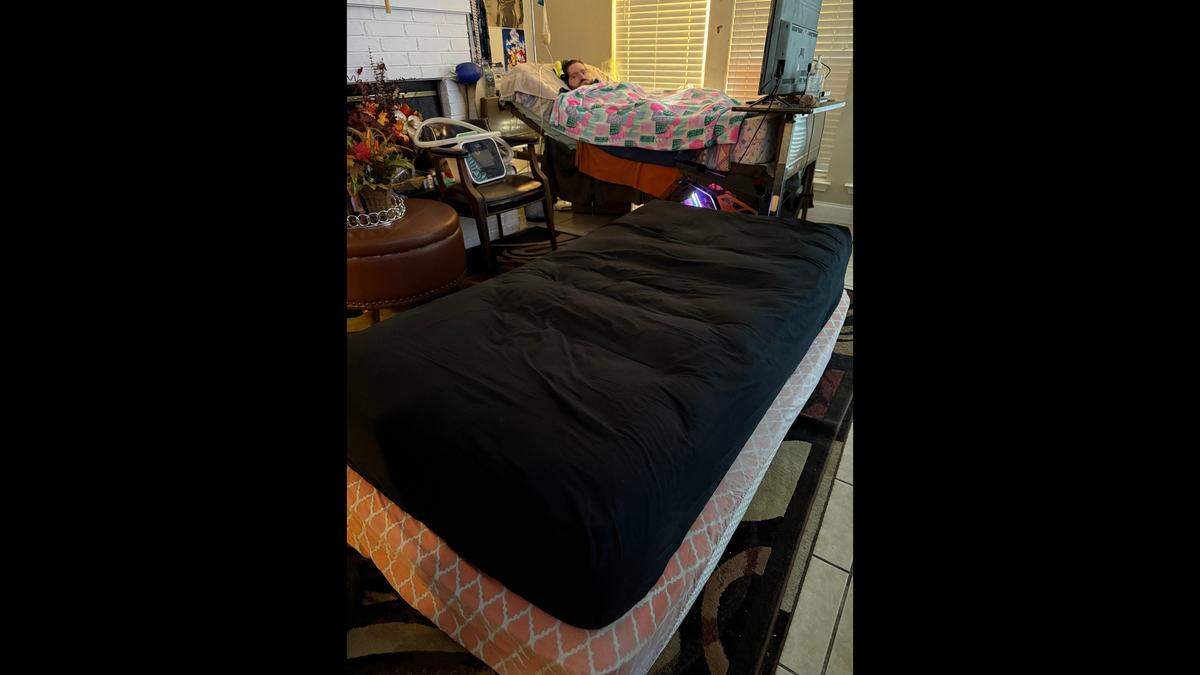
Phone conversations with Maher have been limited since his arrest. He tells them that though he is used to less-than-ideal conditions — his family says he’s slept on two mattresses stacked together next to his son for a decade — when he was arrested at the immigration center, ICE crammed him with 30 other detainees in a room with one bathroom and zero blankets. Now he’s being held indefinitely at the Bluebonnet Detention Facility in Anson, Texas, near Abilene.
When they reach Maher, his focus has still been on Wael.
“Even in jail, he asks, ‘Did Wael go No. 2?’” Shahd said with a chuckle. But then, her voice quivered as she recounted her father-in-law’s greatest fear. He has said: “If I get deported, I will never see Wael again.”
While the family hired a lawyer to get Maher out, the family set up a GoFundMe to help pay for Wael’s expenses. They’re also working on setting up video calls so the father and son can see each other until, they pray, he’s free. This would mean everything to Wael. “He makes him feel like nothing is wrong with me,” Wael said. “Like I’m a normal person. He’s my oxygen. He gives me hope.”
Which reminds me of where I left off on my nightly “Dragon Ball Z” watch.
While Gohan is struggling through the fight of his life, Cell places him in a seemingly insurmountable situation that appears to mean certain death. So, Goku — forever the hero — intervenes, sacrificing his life to protect his son. Gohan then pushes past his broken body to defeat Cell, ripping off a massive kamehameha wave — a giant energy blast capable of swallowing planets whole — to stave off Cell and save the world.
As incredible as the scene was when I watched it on Cartoon Network 25 years ago, Gohan’s raw power isn’t quite what grabs me. Instead, it’s how he finds his strength. Primed to give up, Goku intervenes by telepathically communicating from the heavens, and encouraging his son to push through.
Gohan summons the courage to keep fighting — but only upon hearing his father’s voice.
This story was originally published November 4, 2025 at 4:48 AM with the headline "Father cared for disabled son for years, until ICE took him away | Opinion."