‘Alligator Alcatraz’ foreshadows expansion of concentration camps for migrants | Opinion
AI-generated summary reviewed by our newsroom.
- Florida's new 'Alligator Alcatraz' detention camp targets migrants without trials.
- DHS plans to replicate these detention models nationwide, including in Texas.
- Experts warn the camps meet historical criteria used to define concentration camps.
Florida’s new, rapidly constructed migrant mass detention center isn’t just cheekily alliterative and, as the state Republicans have shown, useful for merchandising. But “Alligator Alcatraz,” with its invocation of its swampy Everglades surroundings and the brutal penitentiary of the past, evokes its intended function.
The camp’s design effectively leverages its environment: Caged units are closed enough to keep people imprisoned but open enough for mosquitoes typical of Florida’s hot, wet climate to freely infect detainees. Already, one “Alligator Alcatraz” detainee reports fungus growing on his feet, which he attributes to unsanitary conditions.
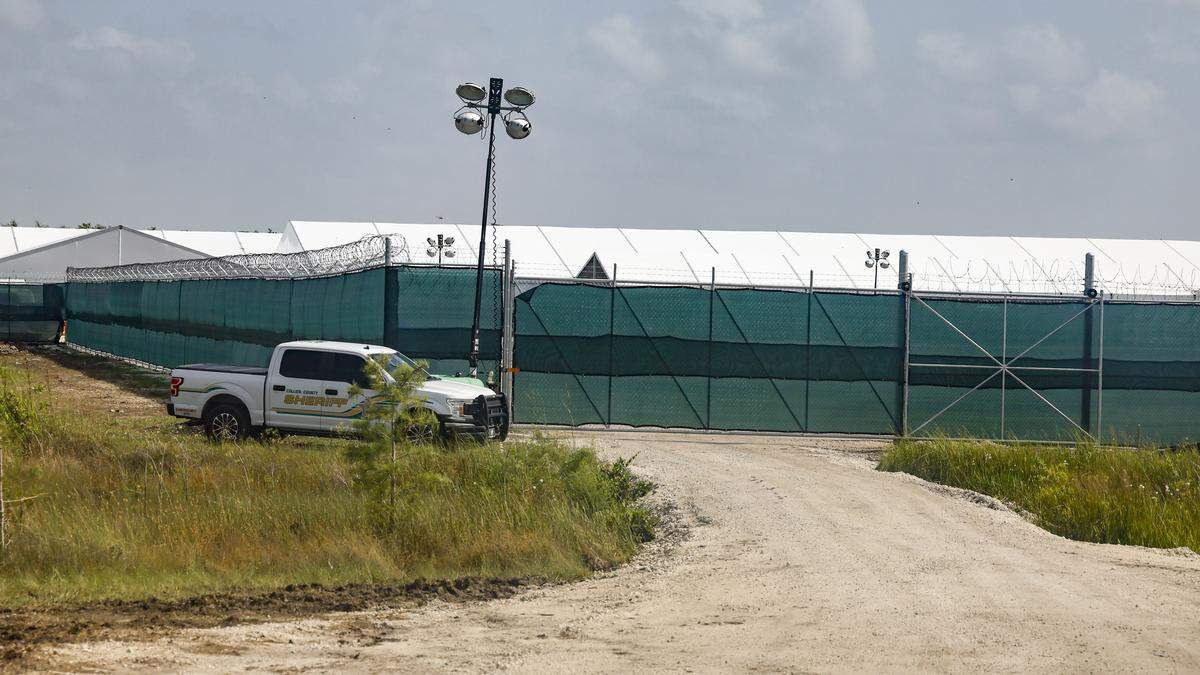
I wouldn’t want my worst enemy, even those convicted in court of the worst offenses, to be sentenced to disease and malnourishment. And yet, a Human Rights Watch analysis cited a report that found 72% of people detained have no criminal convictions, nor are detainees given trials before they’re assigned.
Many of those arrested and detained are, according to border czar Tom Homan, targeted by immigration agents “based on their physical appearance.” Independent studies, coupled with such brazen public admissions, suggest that these facilities aren’t punishing our worst enemies but those who might otherwise be our neighbors. Maybe even our friends.
The Department of Homeland Security views Alligator Alcatraz as a model to be replicated nationwide. Texas, which as of June, already has more ICE detainees than any other state, has positioned itself as a willing partner. Gov. Greg Abbott claimed through a spokesman that the state has offered “4,000 beds for detention.”
“If we can find a way to make something like [Alligator Alcatraz] work in Texas, I would strongly support it,” said Sen. John Cornyn during a recent Senate Judiciary Committee hearing.
Cornyn was flanked by mugshots of brown-skinned men who each had violent crimes listed under their respective pictures. Put together, he presented a misleading, disparaging legal profile of an ethnic group highly likely to be suspected of crossing the border that inaccurately portrayed the average person currently detained.
Word count be damned, I would rather explain what I mean than rely on the shorthand, especially when the phrase might be rhetorically tainted by ideological fault lines. However, there’s a formal, definitional name for Alligator Alcatraz and any detention center that comes next. And, in the interest of precision, we should use that name even at the risk of provoking a few eyerolls and closed tabs.
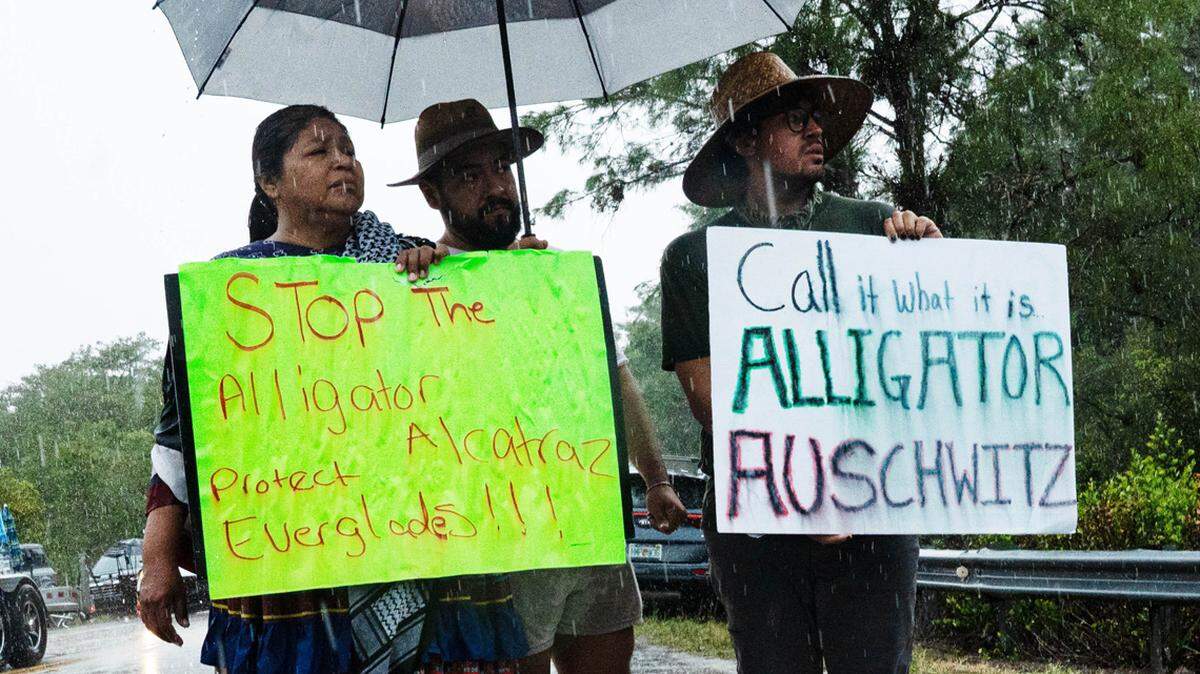
“Alligator Alcatraz” is a concentration camp. Whatever is modeled after it will also be a concentration camp. And we need to name it as such to understand what may be coming en masse to Texas, and America.
Those peripherally aware of the term “concentration camp” may recoil, likely as the most common frame of reference involves the firing squads, gas chambers and ovens en route to a Final Solution. In 2019, New York Rep. Alexandria Ocasio-Cortez referred to our migrant detention system as “concentration camps,” which drew criticism from conservatives who alleged that using the term diminished the severity of the Holocaust. However, America need not mimic Auschwitz to qualify.
Andrea Pitzer, author of “One Long Night: A Global History of Concentration Camps,” told me that though our centers, even “Alligator Alcatraz,” do not currently function with the genocidal purpose of death camps, they otherwise check every box of what historically distinguishes concentration camps from mere prisons.
“One of the conclusions that I drew from looking at all these different systems in different countries on different continents across more than a century” — including Spanish reconcentrados in colonial Cuba, Soviet gulags and British Boer and Black African camps in South Africa — “was that it was almost always done by targeting a really vulnerable group in that given society,” Pitzer said. (If you’re keeping score, our emerging detention sites indefinitely detain considerable amounts of non-criminals, demonize said immigrants as threats to society, and determine who is detained outside the courts and based on physical profiles.)
Pitzer said that if anything, the American process of mass detention that is most reminiscent of the Nazi system is the steady criminalization of existence that was previously deemed lawful.
“Governments that have tried for this kind of ability to lock people up typically make it impossible for the target group to exist legally,” said Pitzer, citing Germany’s Nuremberg Laws that stripped Jews of their citizenship, making it “impossible to exist if you were Jewish in Germany without becoming illegal yourself.” Similarly, Pitzer argues the Trump administration has “hyper-criminalized” border crossing, escalating what was formerly a misdemeanor (and before 1929, completely legal) into a sufficient provision for violent punishment.
“Prior administrations, both Democratic and Republican, did a lot of things that added to this kind of making it possible to target immigrants this way,” Pitzer added, making sure not to pin this all on Donald Trump. Among Democrats, she cited the Clinton administration’s treatment of HIV patients at Guantanamo Bay, who weren’t given access to medical care during the Clinton administration, and Biden’s use of Title 42, a public health provision, to turn away asylum seekers despite lacking scientific grounds.
But as I wrote earlier this week, operating as two sides of the same coin does not make America’s two parties identical.
“Some of the people that have been grabbed and swept up and are being deported are people who had papers [and] who are here legally,” said Pitzer of the Trump administration’s particular zeal. “So there’s this morphing of it all together. And the administration is saying that these are all dangerous criminals.”
This direction is unlikely to change, not with a massive $45 billion appropriation for new migrant detention sites in Trump’s federal spending bill. And if Texas gets its own expansion, I suspect we may get another syrupy nickname. Such a name will reveal some of its intent but obscure its full scope.
But if we are to ever deal with the scale of the human rights abuse, we should call concentration camps what they are, no matter how uncomfortable the image might be.
Sometimes, it’s truly all in a name.
This story was originally published July 28, 2025 at 11:47 AM with the headline "‘Alligator Alcatraz’ foreshadows expansion of concentration camps for migrants | Opinion."