You again? Why Texas progressives are losing faith in Colin Allred | Opinion
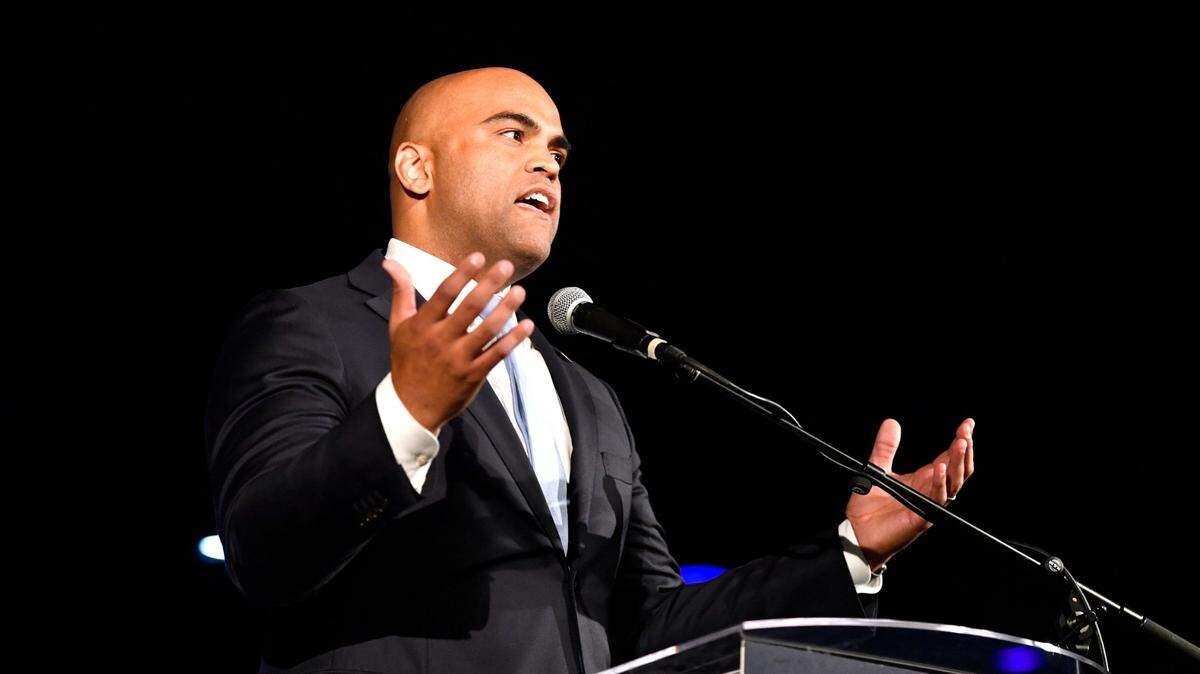
True Bradford-heads know I spent my literal first day in Fort Worth attending a Colin Allred rally and came away with a cautiously optimistic assessment of his candidacy. Perhaps watching a Senate candidate who went on to lose to an incumbent nobody likes, on what was supposedly my day off, was your first warning that my instincts are poor and judgment should not be trusted. Honestly? Fair. All I ask of you is that we mutually agree to leave 2024 in the past.
Otherwise, we might end up like, well… Colin Allred.
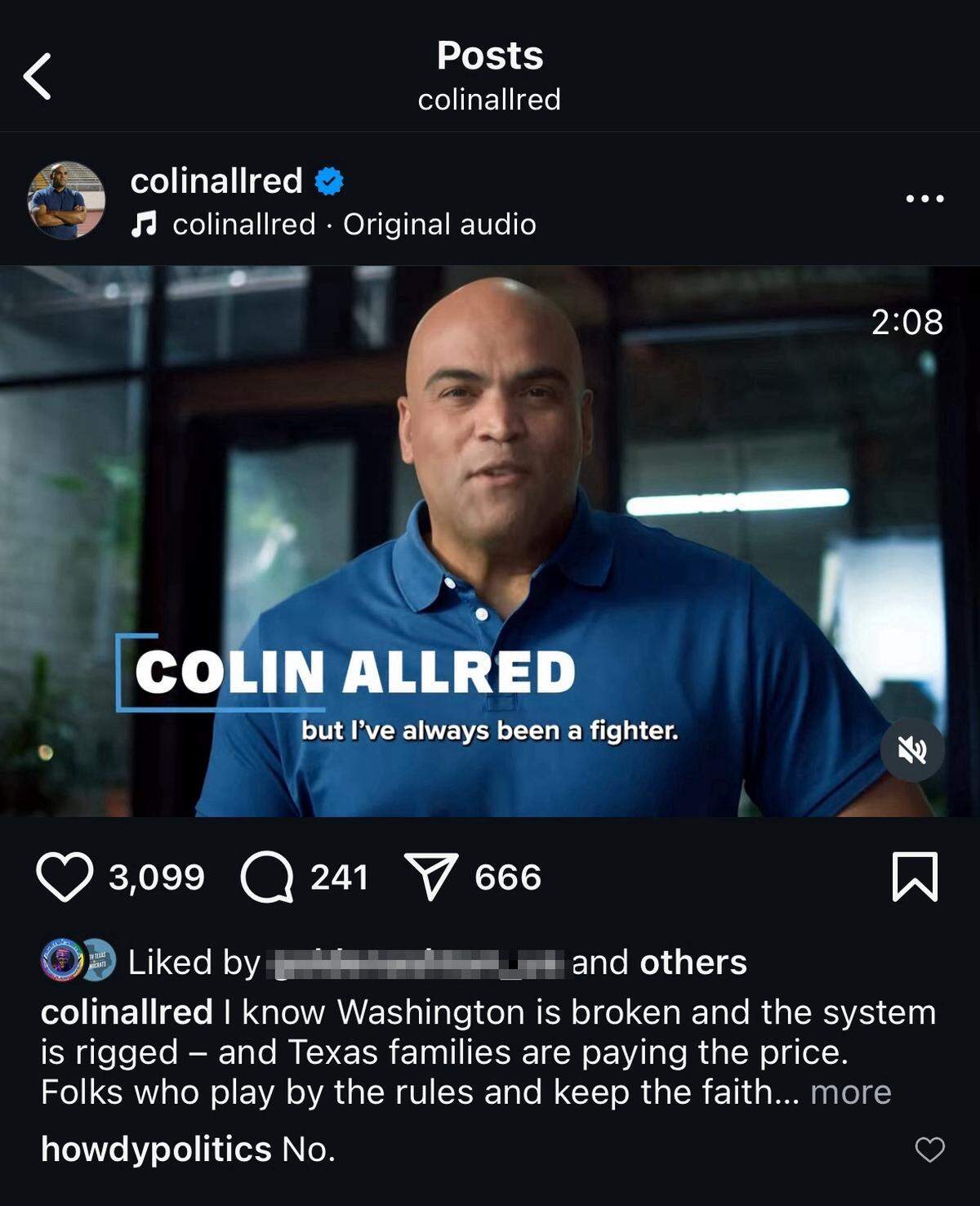
Losing by nine points despite outspending Sen. Ted Cruz by over $9 million didn’t deter the former congressman from asserting himself as the Democratic challenger to whoever wins the John Cornyn-Ken Paxton slugfest in 2026. But the first thing I noticed when I saw Allred’s announcement wasn’t the actual video he shared from his Instagram, but the first response Meta’s algorithm served:
“No.” A single word, and a complete sentence.
The account opposing Allred’s candidacy wasn’t a MAGA-aligned gadfly or any high-profile Democrat should expect to antagonize. It was Howdy Politics, a passionately progressive account run by Plano-based content creator Kat Vargas. She campaigned hard for Allred last year, but not this time.
“Trying to reach moderate voters was kind of [Allred’s] whole schtick,” said Vargas, who has accumulated around 120,000 followers across her platforms, which include Instagram, TikTok and Bluesky. “And in doing so, he really kind of turned his nose up at our base,” which Vargas believes is centered around minority communities like the Latinos concentrated along the Rio Grande Valley.
“His campaign was told repeatedly not to ignore South Texas, that he needed to be seen in South Texas,” Vargas said. She added that despite her best efforts to share her insights on how Texans who follow her stands on the issues, she felt disregarded by the Allred campaign: “The Valley could not be ignored. That was supposed to be our blue wall. And Colin let it go.”
Vargas’ complaints about the lack of engagement with the Valley echoed what I had heard for months when I first learned that local and state progressives were pessimistic about his candidacy.
“A U.S. Senate candidate that does not center diverse, Black and brown communities in our large urban areas is not serious about trying to win an election,” said Tarrant4Change cofounder Alexander Montalvo. “Any other antiquated playbook that wants to emphasize white suburban communities or white Republicans and is trying to focus on those policies and outreach is what will continue to have Democrats lose in Texas.”
Montalvo, who has been active cultivating opposition to Tarrant County Commissioners Court redistricting that gerrymandered Precinct 2’s Alicia Simmons away from much of her Black and liberal base, believes Allred’s approach deserted a ground game capable of winning elections in favor of national fundraising.
“[Allred] actually did not try to run a quality campaign or candidacy that could win against Ted Cruz,” Montalvo said. “But he did run a campaign that made a lot of people money.”
Indeed, Allred raised $90.2 million — over $20 million more than Cruz, plus nearly $10 million from PACs, giving him an 11% advantage in total campaign contributions over the junior senator. However, Montalvo argued, Allred’s money was disproportionately spent on digital marketing — $60 million on campaign ads and social media clips — rather than community engagement.
Even Vargas, a social media influencer, likened Allred’s strategy to “lighting money on fire” at least five times in our half-hour phone call.
Montalvo also said that Allred moderated on issues to the point that he alienated his most likely voters, particularly in his “pro-border” politics. The candidate sought common ground with a Republican Party obsessed with laundering racial grievances and punishing political dissidents, Montalvo said.
“He represents a type of Democratic elected official and a type of thinking within the Democratic party that has failed Texans over the past several decades, Montalvo said. “As we saw authoritarianism on the front steps of our door, we also saw [Allred] ask, ‘How do we compromise? How do we negotiate? How do we try to work with a faction of American politics that is fully committed to authoritarianism?’ ”
Last year, I was similarly critical of the unappealing taste of a “Diet Republican.” Still, Vargas’s analysis stood out to me because she isn’t a staunch anti-institutionalist, but open to being pragmatic if it means getting the W. One of Howdy Politics’ most popular videos is a clip of her then-10-year-old son grilling Kamala Harris on the most pressing of electoral issues: the former veep’s favorite tacos.
Despite Vargas’s willingness to work with Harris even as she ran a campaign resembling Allred’s — Vargas mentioned how Harris recruited unpopular conservative Liz Cheney in an appeal to conservative-leaning moderates — she’s more pointed about her problems with this approach.
“We even saw the top ticket, with the Harris campaign, was all these things were going to magically put people [into office],” Vargas said. “I saw my own family say, ‘No, I don’t agree with what the Republican Party is doing.’ But they still voted the way they did. They didn’t trust Colin Allred because he didn’t stand for anything. They didn’t know what he stood for. And so, it didn’t work.”
Now, people change, as Vargas is clearly demonstrating. Allred might fuse the best of his fundraising ability with a ground game that unapologetically targets of his base, refusing to validate fearmongering about immigrants or transgender people. Republicans won’t be on board. But by November, the communities who see him on their streets instead of just their phones might have a reason to leave their couch.
Alternatively, Allred might invest in a $20 million study to determine why Democrats are losing men. The study’s budget allocated $3 million towards a line item that includes “Strengthening grassroots organizing” and twice that for “ads appearing in video games.”
Excited yet?
This story was originally published July 10, 2025 at 11:05 AM with the headline "You again? Why Texas progressives are losing faith in Colin Allred | Opinion."