
A struggling Texas Rangers lineup is missing SEAGER — in more ways than one | Opinion
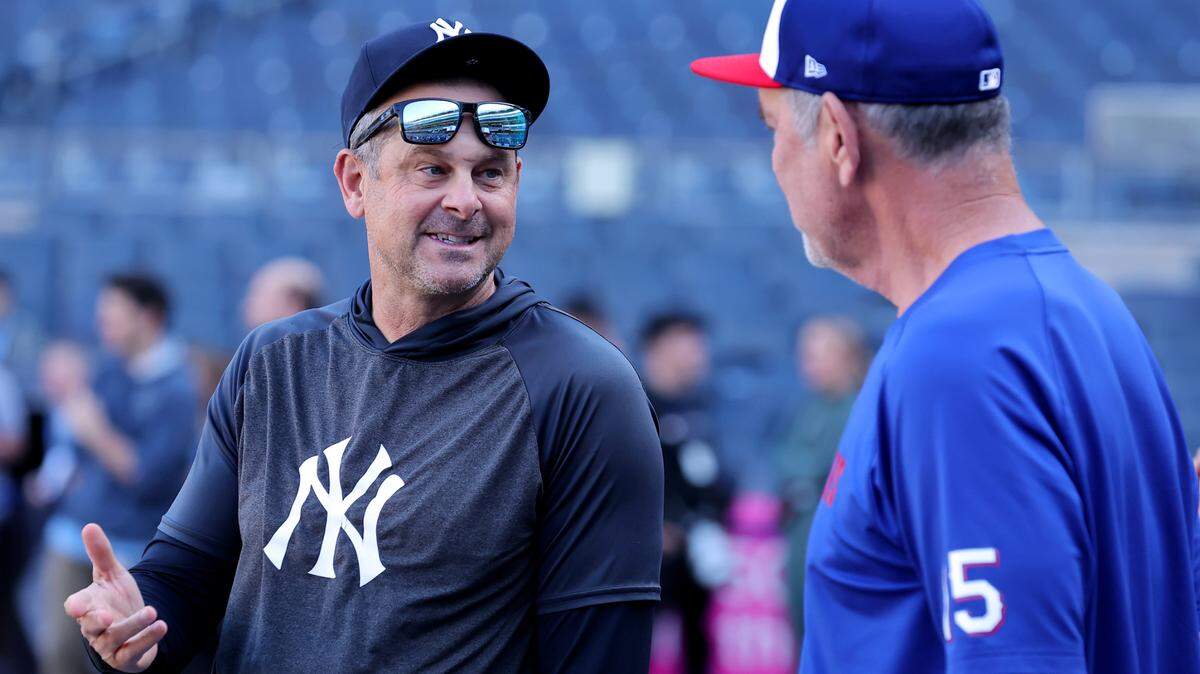
The Texas Rangers came into Yankee Stadium with an impenetrable pitching staff stacked with Cy Young contenders, a dominant defense that never makes mistakes.
They left holding a triple-L, a losing record on Memorial Day weekend, and a strong case that none of what they’re good at will matter.
Unfortunately, it doesn’t matter if pitcher Jacob deGrom is finally healthy and commanding his trademark slider like never before, Nathan Eovaldi leads the league in Fangraphs’ Wins Above Replacement metric, and Patrick Corbin continues his resurgence — all against the defending American League champs.
Stacked with killers across the lineup surrounding Aaron Judge, who is burnishing his case of being the best right-handed hitter in 100 year, the Yankees swept the Rangers.
And yet, the scoreboard was not on their side, as they scored just five runs, continuing the season-long offensive collapse from a team that, as recently as 2023, excelled at all facets of the game.
Are the Rangers missing SEAGER?
No, not all-star shortstop Corey Seager, who’s on the IL nursing a hamstring injury. That’s too obvious.
I said SEAGER, the stat named after the Rangers’ $300 million man. Developed by Baseball Prospectus’ Robert Orr, SEAGER stands for SElective AGgression Engagement Rate, and it attempts to quantify how good hitters are at making good decisions at the plate, swinging at hittable pitches in the strike zone while holding off on balls off the plate. By subtracting the percentage of chases outside the zone from swings over the plate, SEAGER measures the tenuous balance between discipline and aggression.
To my personal amusement, none of the Rangers’ hitters I spoke to had any idea their star teammate had a metric named after him. Maybe that’s a good thing — as a team, they rank 28th of 30 MLB teams in SEAGER, a steep drop off from their 7th overall ranking in 2023. Even the star shortstop who inspired the to pace the league in the stat of his namesake, Corey’s SEAGER is currently the lowest of his career.
Former star slugger Bret Boone was hired two weeks ago to coacn and redirect the team’s offense. But Boone told me he wasn’t particularly keen on the idea of trying to teach this approach.
“That’s kind of a farce. It’s a nice theory,” he told me minutes before the Rangers’ 4-3 loss. “But Corey Seager is Corey Seager, right? And he’s just kind of a freak. And I say that in a good way.”
Guys like me, the ones who love how numbers explain and assess the game, are supposed to write Boone’s dismissal off as rudimentary. But I get what he’s saying entirely. Hitters have about 0.4 seconds between the time the ball leaves the pitcher’s hand and crosses home plate to make a decision. If hitting was as simple as swinging at hittable pitches, I would not be trading this column for rent money. The size of my house would make you think my grandpa spotted oil 200 years ago. Because, reader: I would be batting cleanup against the White Sox, the Rangers weekend opponent.
Seager will one day enter the Hall of Fame because he’s one of the best in the world at slowing those 400 milliseconds down, bending time into a weapon to wear down an opposing pitcher into making a mistake. We can’t all be Seager.
Marcus Semien said Donnie Ecker, the team’s recently fired hitting coordinator, was particularly focused on the kind of offensive approach that would show up on SEAGER. “He wanted to make sure we were ready to hit pitches in the zone no matter what the situation was,” Semien told me. “Kind of a more in-depth, analytic approach.” Whether Ecker’s sermons resonated with his choir likely depends from batter to batter, but ultimately, who cares if you aren’t putting points on the board?
Semien contrasted it with Boone, offering a different voice, one that had buy-in “based on his experience” as a star hitter whose seen the highs and lows of the game.
“[Boone] understands the game,” Semien said. “What the situation may call for, when to look at this pitch, that pitch, because hitting is as hard as it’s ever been.” Also, Semien, who for what it’s worth — very little, as his .180 average so far will show — has a pretty good SEAGER that’s in the top quarter of qualified hitters. Approach isn’t everything if your swings don’t connect the way they should.
If the Rangers will see a boost in this fascinating stat, that, they hope, translates to more scoring, it will come from Boone’s soothing, encouraging attitude. As Boone said it, the number one difference between this team and last isn’t a quantifiable approach. It’s a lack of “confidence” he believes he can restore.
“They’ve all got accolades on that [baseball] card, but they’ve gotten away from them. And that happens. It happens to great players. I’ve seen it,” Boone told me. “It’s in there. They’ve proven it’s in there.”
This story was originally published May 23, 2025 at 12:27 PM with the headline "A struggling Texas Rangers lineup is missing SEAGER — in more ways than one | Opinion."