Q&A: Mo Amer’s confrontational comedy can see both sides, but forces you to pick one | Opinion
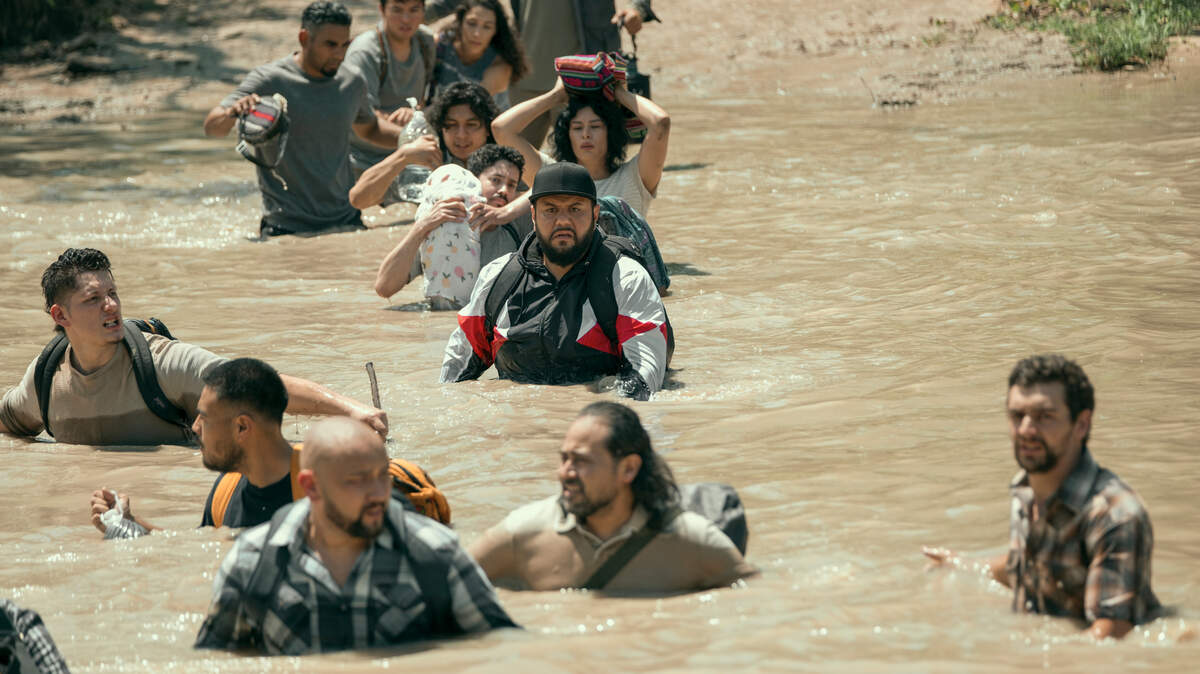
I suspect Mo Amer would prefer his comedy were just a little less doggedly relevant. The second season of the star and creator’s critically acclaimed, semi-autobiographical Netflix series “Mo” follows Mohammed Najjar, a Palestinian refugee who, as a result of taking a principled stance against Israel’s occupation of his homeland, finds himself indefinitely detained by Immigration and Customs Enforcement, or ICE, and eventually deported from the United States. Amer’s plot could be effortlessly ripped from the headlines about Mahmoud Khalil, the Palestinian Columbia student illegally detained for his campus activism.
The longtime comedian clearly has a knack for timing. Either that, or the Palestinian American issues presented through his frame of a family dramedy are maddeningly durable
I find Amer — whose family settled in Houston after fleeing Iraq when he was a child — to be one of our state’s most fascinating ambassadors. His work boldly analyzes the friction of Texan life, one where culture and politics can be in community and conflict. The lead art for season 2 promos leans into his cultural cross-pollination, as his autofictional self poses with a cowboy hat on his head and keffiyeh draped -- a checkered scarf embraced as a symbol of Palestinian identity and resistance -- draped over his shoulder.
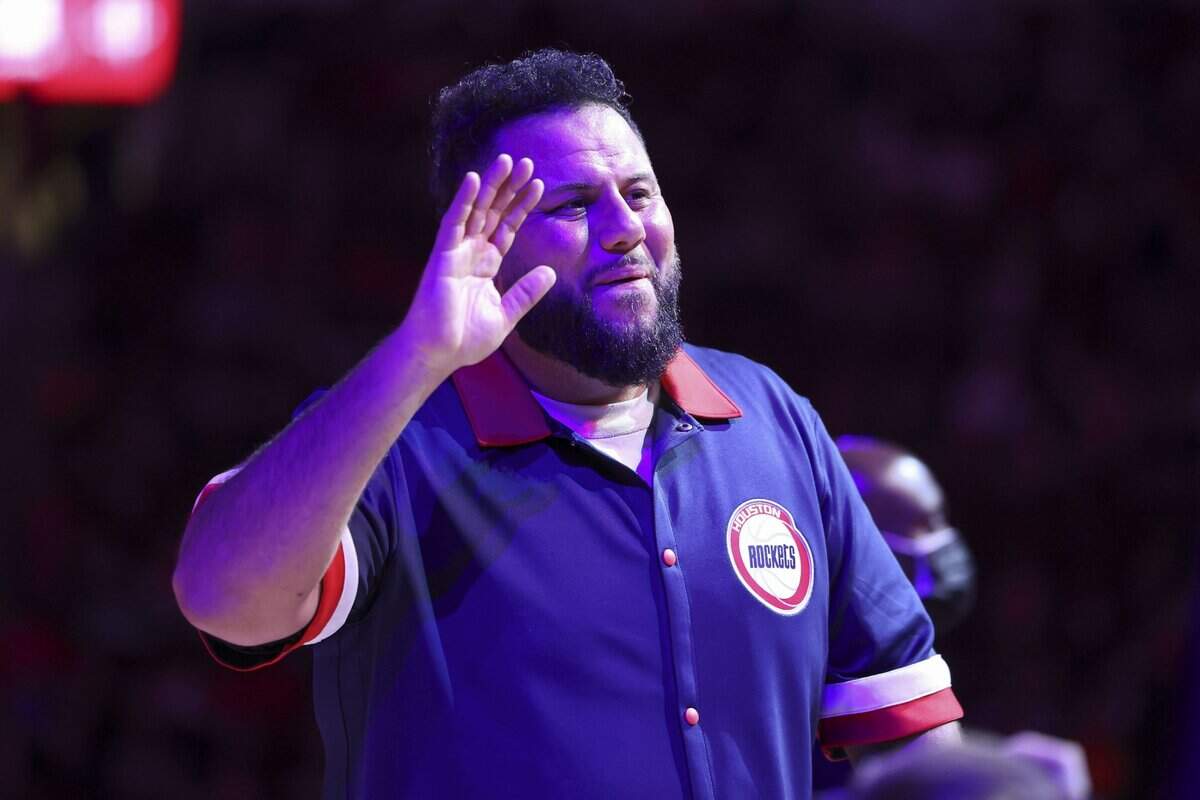
During our video call, Amer, 43, discussed how North Texas can cultivate Houston’s distinctive diversity in North Texas, navigating anti-Palestinian discrimination in an entertainment industry he seems to be thriving in, and when not to call something a conflict. We solved theological differences between the Abrahamic faiths, anti-Palestinian racism in the entertainment business, and draconian immigration policy in under 45 minutes.
This conversation was edited for clarity and length.
I initially found the cultural connection “Mo” portrays between people from very different walks of life — Black, Mexican, Jewish, East Asian and Arab all befriending, romancing, collaborating and (mostly) enjoying each other’s company — as the most compelling dimension of your series. Why do you think that’s so true in Houston? And how do you think we can create that in North Texas?
I don’t know why it’s so true, but I do know Houston is an extremely diverse city. People want to contest that and I’m like, “Take it up with Forbes magazine.” I don’t know how to solve different cities and their issues. But I have a lot of experience doing stand-up all throughout the South. People really haven’t seen anybody of my background, not only in Dallas but in the surrounding areas. I noticed my stand-up is not just stand-up, it’s actually like a person’s first experience with somebody from my background. I felt an immense responsibility with my comedy almost right out the gate. Something that I was brought up with in our Quran: “I created you from different tribes, so you may learn from one another.” The powers that be want to keep us separated for a reason, because the last thing they want is to see us galvanized and truly care about one another. If they do, they can’t keep robbing us.
I had a really diverse crew of friends myself, and that’s from Queens. But also, it can be very segregated.
That’s the difference, right? New York is very diverse, but it is very, very segregated. I noticed that the Italians live here. The Chinese people live here. Black folks are here. That’s how it feels like in New York, where, here in Houston, there’s no zoning. You can go to a shopping mall, and it’s African hair supply next to a Chinese restaurant, next to a Vietnamese spot, next to a nail salon, next to a Nigerian spot, next to an Arab halal spot. There’s no rhyme or reason to it, but it’s part of something that I grew up in and thought it was normal. It was very important for me to for “Mo” to be really grounded in that way, where it’s a real Houston experience.
In Mo’s second season, ICE becomes a major plot element that affects the choices he has to make and the people he needs to navigate. What did you hope viewers would understand about how ICE works?
As I was writing the series and interviewing my attorney, who’s actually a consultant on the show, and reading different articles about certain families that were getting separated — it gets really diabolical, truly, and it feels heartless. But we wanted to explore what living in those conditions is like. You could be in there for an undisclosed amount of time. You essentially don’t have any rights.
And not just what the detainees go through, but also what “Jack,” the detention officer goes through. He’s essentially in a prison of himself. His job is being in jail for, you know, eight to 12 hours a day. I’m like, that’s got to do something to the human spirit and mind. That came from me being fingerprinted one time for my green card. The woman who was fingerprinting grabbed my hand with such authority. She was like a robot. I looked at her and I just said, “I’m not even a person to you, am I?” And she lost it. Started laughing so hard because I caught her putting that mask up.
Did you feel any tension critiquing this system that is so harmful to so many people while seeking to still humanize someone who participated in it?
No, I didn’t. In the end we’re all human beings. If I’m gonna be like, “Oh yeah, I’m not gonna give this person any play because [expletive] them, look what they’re doing.” You don’t know what everybody’s going through, and how can you come to a true resolution and true harmony if you can’t have difficult conversations with people that you don’t like? Are some of them completely dull and devoid of any soul? Yes, but they had one at some point, and you could bring them back to it if you actually listen. It’s not necessarily just about humanizing him as a detention officer. It’s more about saying, “Hey, wake the [expletive] up. This could be you, too. This could be somebody you love.” If we truly believe in God, and God is the most merciful, but you can’t have mercy in your heart, then do you really think you’re better than God?
What you’re saying echoes the Christian idea of loving your neighbor. So many people struggle with the idea of loving or caring about someone who doesn’t care about you. Even with your different religious context as a Muslim, I see the same value being expressed.
We’re from one Creator, one source. That’s the way I was raised. Not to get super religious here or anything, but when the Prophet Muhammad, peace be upon him, was asked “Who’s gonna be in heaven?” He said, “I hope to see half of my ummah in heaven, meaning half of heaven will be Muslims. So, who’s the other half? Not Muslims! People who grew up different.
There’s a pivotal scene in the Season 2 premiere in which Mo debates an American diplomat in Mexico over the official’s misleading use of the word “conflict” when discussing Israel’s relationship to Palestine, even though this diplomat has the sole ability to safely return your character back to Texas for his asylum hearing. Why was this scene important, and what did you want your viewers to understand?
I wanted to offer a perspective that I haven’t seen represented on using “conflict” versus “occupation” because calling [Palestine-Israel] a “conflict” is wildly misleading in most cases. A lot of people who are really aware of what’s going on have a big issue with the word. They even have an issue with the word “war,” because it insinuates that both of ’em have jets and planes and equal kind of equipment. And it’s very important to clearly identify those things so you can understand what’s going on. I liked that Mo, the character, could have easily just been on his way. But deep down, he knows that if he’s silent, he’s gonna think about that [expletive] for the rest of his life. I love that this character, who has waited 22 years for his asylum hearing, would risk waiting another 10 because he can’t sell his soul.
How are you navigating an American and Western entertainment industry that has been largely hostile to the cause of Palestinian Liberation?
That’s a heavy question, bro, I don’t know what you mean. I’m doing fine. I’ve never experienced any such thing [laughs]. Great stories — whether it be a Palestinian story or Nigerian story or whatever — need to be told no matter what. Nobody’s feelings can get in the way of telling a great story, and at some point that’ll get through. How do I navigate it? It’s just being myself, man. Whatever your feelings are, whatever your projections, those assumptions don’t phase me.
I ask because in my own career, I’ve struggled with unflinchingly describing Israel’s bombing of Gaza. Sometimes I fear naming that violence will harm my career and impede my ability to tell stories that matter.
I’m misunderstood all the time. Bro, there have been some really, really, really, really racist situations I’ve been in. The stuff that comes out of people’s mouths, to me, is wild and they don’t even know it’s bad. It requires a tremendous amount of patience and understanding. The best thing that I can do is continue to open up minds and hearts. It’s very sad because in the end, I’m an artist. I have a tremendous amount of output to give. I am a rare breed, bro. I know I am. That’s the part that hurts even more than them being prejudiced. It’s like benching Michael Jordan. Like, dog, put me in the [expletive] game. It feels like a jail sentence. Which is metaphorical, because it’s nowhere near as bad as what my people feel back home. There’s people who are in actual jails detained without any cause. So you know, I’m gonna be myself to the end. The good news is: No one lives forever.
So, that’s the good news?
I fulfilled a big purpose in my life with season two. So, I’m just happy to be able to do that. You just try to influence as much as you can for those who come after you. I have a son now. That’s all I think about. I look at my little 15-month-old all the time like, bro, you got so much responsibility. Enjoy being a baby, but bro, when you grow up, you’ve got so much to do.
Netflix said the second season of “Mo” was its last. Do you want to keep “Mo” going?
I have a tremendous amount of output, whether it ends with this series or not. But having “Mo” stop after two seasons seems rushed. When you do the first season I’m learning how to ride a bike. Doing the second season, I felt like Evil Knievel jumping over 20 buses. I’m open to continuing the show, but … I’m still hurting from making this season. I put my whole soul, body and mind into it. In a fair world, that kind of effort should be rewarded. It should be nurtured, and I don’t necessarily feel it is right now.
Season 2 of “Mo” is available on Netflix.
This story was originally published March 13, 2025 at 10:21 AM with the headline "Q&A: Mo Amer’s confrontational comedy can see both sides, but forces you to pick one | Opinion."