This endangered bird is showing up in more parts of Texas. Here’s why
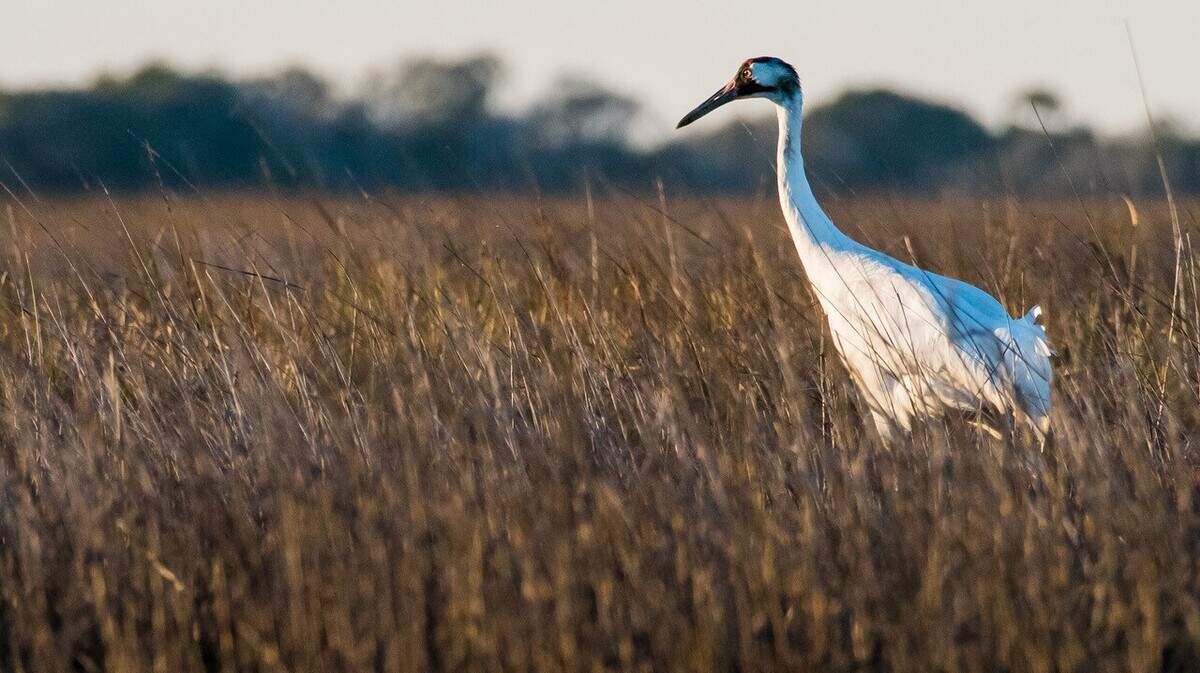
A giant white bird standing nearly as tall as some children isn’t something most Texans expect to come across. But wildlife officials say there’s a growing chance you could see one as the endangered whooping crane population continues to recover.
The species once dwindled to about 50 birds nationwide, but today, the population has grown to more than 500.
Here’s where you might spot one, how to tell if you’ve seen one, and what to do if you do.
Where can I spot a whooping crane in Texas?
Your best chance of spotting a whooping crane is along the Texas coast, where the world’s only self-sustaining wild population returns each winter after migrating from Canada.
A recent survey by the U.S. Fish and Wildlife Service counted an estimated 540 whooping cranes on the coast during the 2025-26 season.
But the survey also counted 52 whooping cranes outside its primary survey area, another sign the birds are spending time in more places than before.
Researchers counted whooping cranes in Wharton and Colorado counties west of Houston, as well as Mad Island, Matagorda Island, Powderhorn Lake, Mission Bay and the Leonabelle Turnbull Birding Center in Nueces County.
How can I tell if a bird is a whooping crane?
One of the easiest ways to identify a whooping crane is by its height. The Texas Parks and Wildlife Department said the birds stand nearly five feet tall and “will be the tallest bird you see.”
Adult whooping cranes are almost entirely white with a red patch on the head and a black “mustache,” while young birds have rusty feathers mixed with white.
TPWD said whooping cranes fly with their long necks and legs fully extended, and their wing beats are slow and steady.
One of the birds people are most likely to mistake for a whooping crane is a sandhill crane, its closest relative.
“Sandhill cranes are somewhat smaller, with a wingspan of about five feet,” Texas Nature Trackers, a program within TPWD, said in a Facebook post. “Sandhill cranes occur in flocks of two to hundreds, whereas whooping cranes are most often seen in flocks of two to as many as 10 to 15.”
What should I do if I spot a whooping crane?
If you spot a whooping crane in Texas, TPWD encourages you to report it through Texas Whooper Watch.
The agency says reports from the public help researchers locate new wintering areas and better understand where the endangered birds are spending time.
When you submit a report, include as much information as possible, including how many birds you saw, where you spotted them, what they were doing and any photos you were able to take.
“While we encourage the submission of photos to verify observations, we do not want anyone to try to approach whooping cranes for the purpose of photography,” TPWD said. Instead, the agency says to photograph and observe the birds from where you first spotted them.