
Texas was fascinated with its Civil War veterans. The last one died here at 117.
Today, most people realize it’s insensitive to celebrate those who fought for the Confederacy.
But we also know that has not always been the case. Well into the 20th century, monuments were erected to them on public grounds, their graves were decorated on Memorial Day, and the state of Texas maintained a Confederate veterans’ home that did not close until 1954.
Texas Civil War veterans received a pension check from Austin for $100 every month if they were unmarried, $150 if they were married. (Union veterans were pensioned by the U.S. Congress.) The pension fund was maintained by an ad valorem tax of 2 cents on every $100 valuation.
The United Daughters of the Confederacy and Sons of Confederate Veterans kept the memories alive of those who had departed with regular meetings and sponsored public works.
In 1946 there were still 16 survivors of the Civil War living in Texas, all of whom were more than 100 years old. They lived in 16 different communities, none in Fort Worth. The nearest lived in Wichita Falls: 98-year-old Thomas Evans Riddle, who had enlisted near the end of the war at the age of 18 in the Twelfth Tennessee Infantry.
The oldest still alive in 1946 was Jeremiah P. O’Brien of Kirbyville, who celebrated his 102nd birthday that year. He began serving in the Confederate army on July 1, 1864, in Company K, First Virginia Cavalry. He surrendered with Robert E. Lee at Appomattox Court House on April 9, 1865, and later made his way to Texas.
While the nation was gearing up to honor its veterans from World War II and still celebrated Armistice Day (Nov. 11), honoring its World War I veterans, the fact that there were still men alive who had fought in the Civil War (1861-65) was remarkable.
An article on the dwindling ranks of Confederate veterans still alive in the country was big news in Fort Worth, Longview, Wichita Falls, Lubbock, Abilene, and Longview in 1946. The numbers were reported variously as either 110 or maybe just 80. Either way, Texas had the most surviving veterans plus 1,049 widows of veterans.
Only 12 of Texas’ Confederate veterans were still alive two years later. Every year that passed, reporters came around to interview them and ask what they thought and how they explained their longevity. One-hundred-year-old Joseph Whitsett in 1948 said, “Some Yankees are a noble lot ..., and I tell you there’s a feeling among brave men that nobody else understands.”
A year later, Texas counted only seven living Confederate veterans, among them Thomas Evans “Uncle Tom” Riddle and Walter W. Williams. They were the last two alive in 1953.
Riddle was the last resident of the Confederate Veterans Home in Austin. In 1951 at 104-years-old he filed suit to get a share of the $4 million estate of Samuel D. Riddle of Kentucky, the late owner of legendary racehorse Man O’ War. The suit was tied up in court when Riddle was given a birthday party at the Confederate home on the occasion of his 107th birthday. Gov. Allen Shivers sent birthday greetings and promoted the former Confederate private to colonel. The Texas House of Representatives passed a resolution congratulating him.
Riddle eventually dropped his lawsuit against the Samuel Riddle estate.
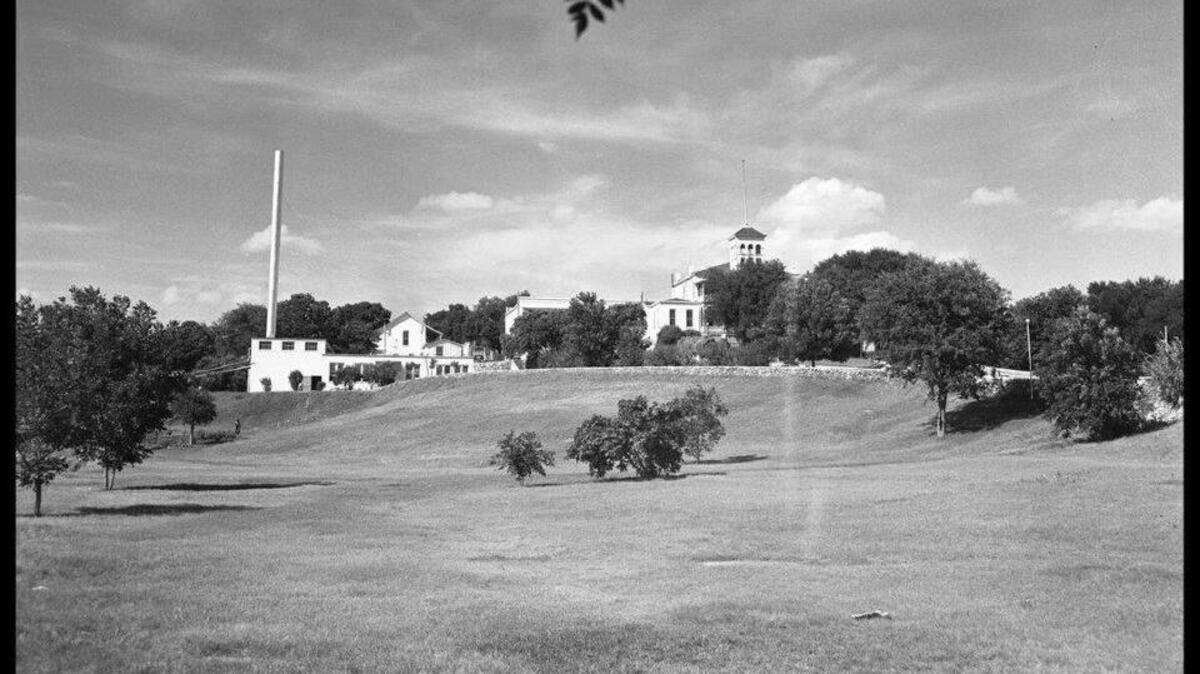
Riddle suffered from tuberculosis, but the U.S. government would not admit him to a VA hospital because he was not a United States veteran. The United Daughters of the Confederacy and Gov. Shivers stepped in to allow him to occupy an entire wing of the Confederate Veterans Home. The rest of the facility had been converted in 1949 to a state hospital for the mentally ill.
Meanwhile, 110-year-old Walter W. Williams was still alive. He passed his latest medical exam at the Houston Veterans Administration (VA) hospital with his 80-year-old, second wife at his side. He pronounced himself “fit as a fiddle.” There was a small glitch in the medical exam, however. Legally, the VA could not treat Williams because, as a former Confederate soldier, he was not entitled to federal benefits. His doctors were willing to ignore that technicality, but not administrators. The local chapter of Disabled War Veterans paid for the examination and announced they would pay all costs in the future.
Thomas Riddle died of pneumonia in 1954 at the age of 107 at the Confederate home. He was one of just five living Confederate veterans in the nation at the time. Williams, living on a farm near Franklin, was another member of that small band.
Williams outlived every other Civil War veteran, North or South, dying on Dec. 19, 1959, at the age of 117. The cause was given as “complications of old age.” Two years earlier, the Texas legislature had passed a bill raising his monthly pension to $300 a month. His body lay in state in Houston while thousands interrupted their Christmas shopping to file by respectfully. He had a block-long military procession to the church where the service was held and the cemetery afterward. President Dwight Eisenhower and Texas Gov. Price Daniel were among those attending his funeral.
Thus, Texas has the distinction of being home to the last Confederate soldier, Williams, and the last Confederate general officer, Felix Huston Robertson (who died in 1928).
With the death of Williams, the book could finally be closed on the Civil War, it seemed, though debate erupted decades later about memorializing Confederate soldiers. Tempers rose and statues came down, including a marker on the Tarrant County Courthouse lawn honoring Confederate veterans “and all their descendants” who fought in America’s wars from the Spanish-American to World War II. Put up by the United Daughters of the Confederacy in 1953, it came down in 2020 by order of county commissioners.
Author-historian Richard Selcer is a Fort Worth native and proud graduate of Paschal High and TCU.
This story was originally published September 7, 2024 at 5:00 AM with the headline "Texas was fascinated with its Civil War veterans. The last one died here at 117.."