How much snow will Texas see this winter? Old Farmer’s Almanac releases the forecast
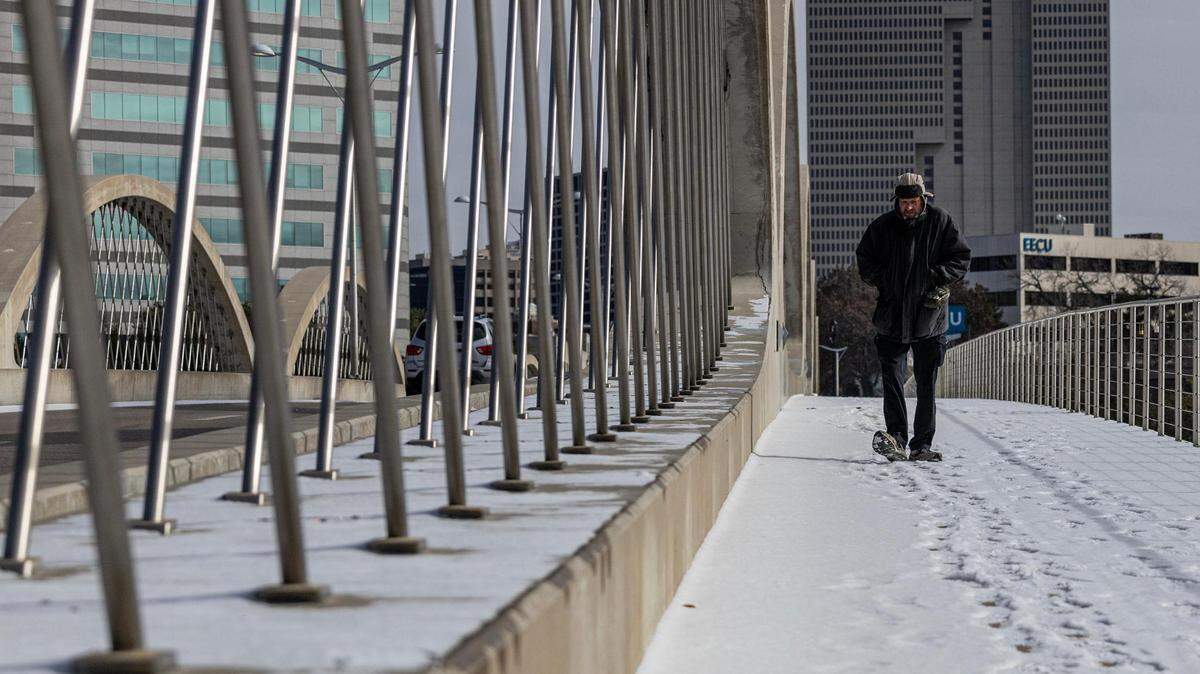
Winter is still months away for Texans, but predictions are already rolling in on how cold and snowy this season will be.
The Old Farmer’s Almanac recently released its extended winter forecast for the rest of this year and into early 2025. The over 200-year-old publication is predicting higher temperatures and lower snowfall for much of the country this year.
“While there will still be plenty of chilly temperatures and snow for most slopes, the high heating costs associated with the season shouldn’t hit so hard,” said Carol Connare, the Almanac’s editor-in-chief. “We’re predicting a temperate, uneventful winter—potentially a welcome reprieve from the extremes of recent years.”
So what does this mean for Texas in the winter months? Here’s what to know:
The Old Farmer’s Almanac’s winter outlook for Texas
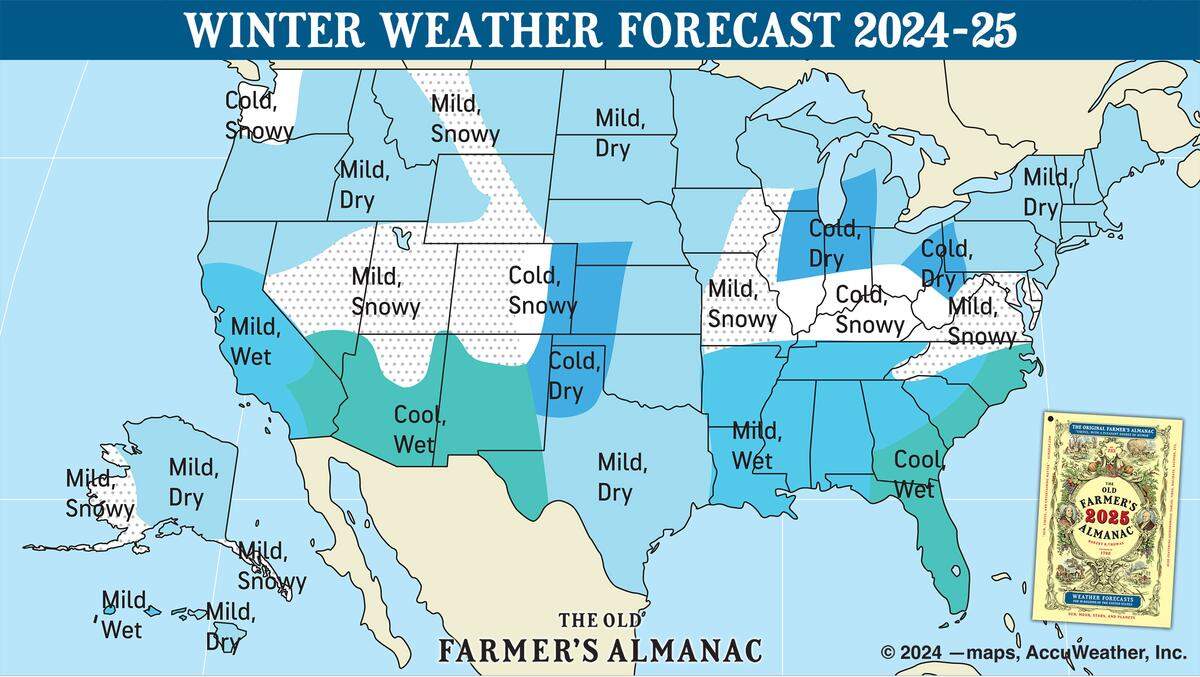
The Old Farmer’s Almanac’s splits Texas up into a few regions.
Most of the state, besides El Paso and the Panhandle, is in region 11 and is expected to have a warmer than average winter. The coldest periods are expected to be from late January to late February.
The publication mentions that this season’s winter weather does not look as extreme as the 2021 ice storm, which severely impacted the state. Over 200 people were killed by the winter storm, including 11 in Tarrant County.
As far as snow this winter in region 11, the Old Farmer’s Almanac is predicting that precipitation will be below normal.
This means that Texans should expect a “drier than average” winter. The best chances for snow will be from early to late February, according to the publication.
El Paso is in region 14 and is forecast to be colder than normal, with above-average rainfall. The Panhandle is in region 12 and is expected to have warmer-than-normal temperatures and near-normal precipitation rates.
How does the NOAA forecast for winter compare?
Last month, the National Oceanic and Atmospheric Administration’s Climate Prediction Center released its winter weather outlook.
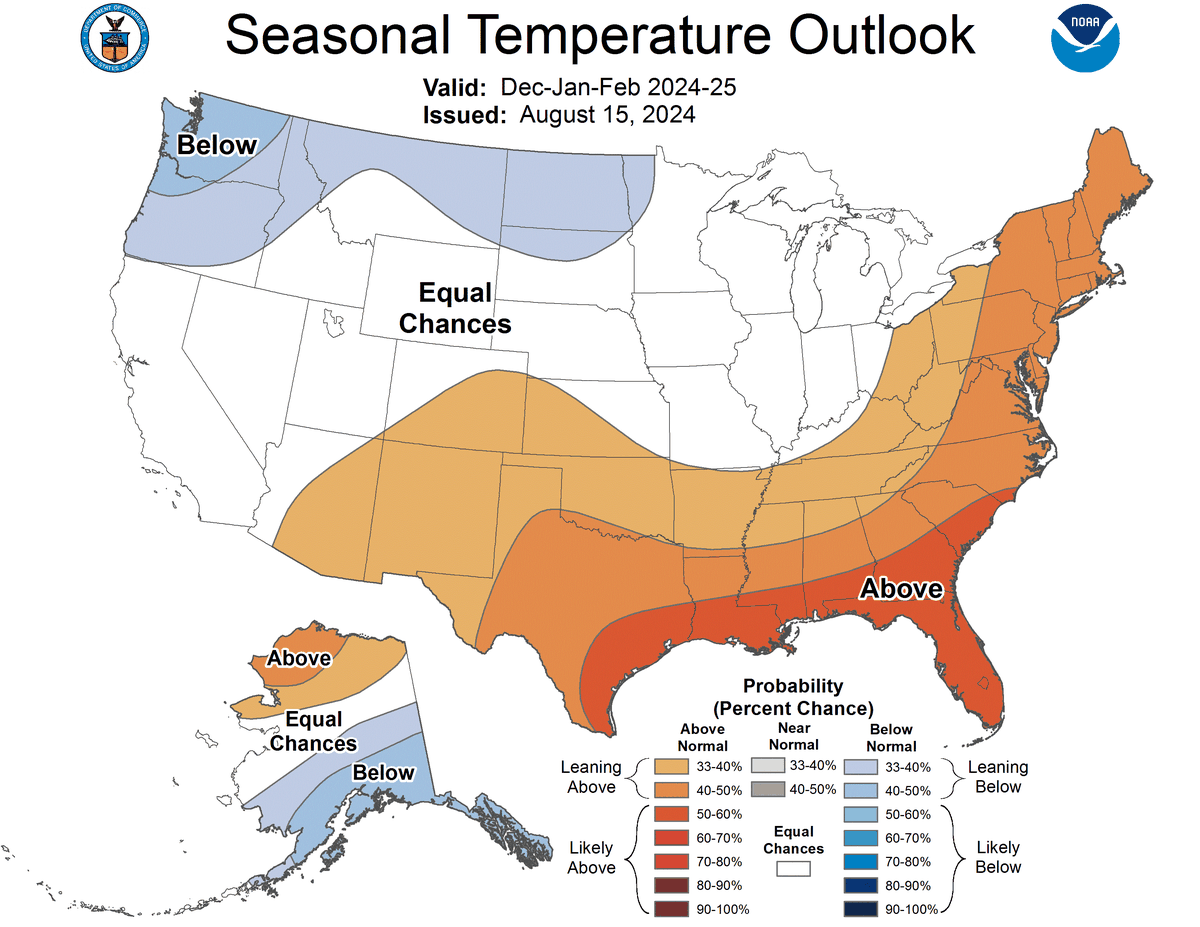
The seasonal temperature outlook, released Aug. 15, is valid for December through February and shows that most of Texas is expected to see above normal temperatures during winter.
While above normal may seem extreme, it means exactly how it sounds for a given period of time.
For example, annually, the normal high temperature in December in North Texas is 57.9 degrees. If there’s an “above normal” outlook, that could only mean a few degrees more, according to the National Weather Service.
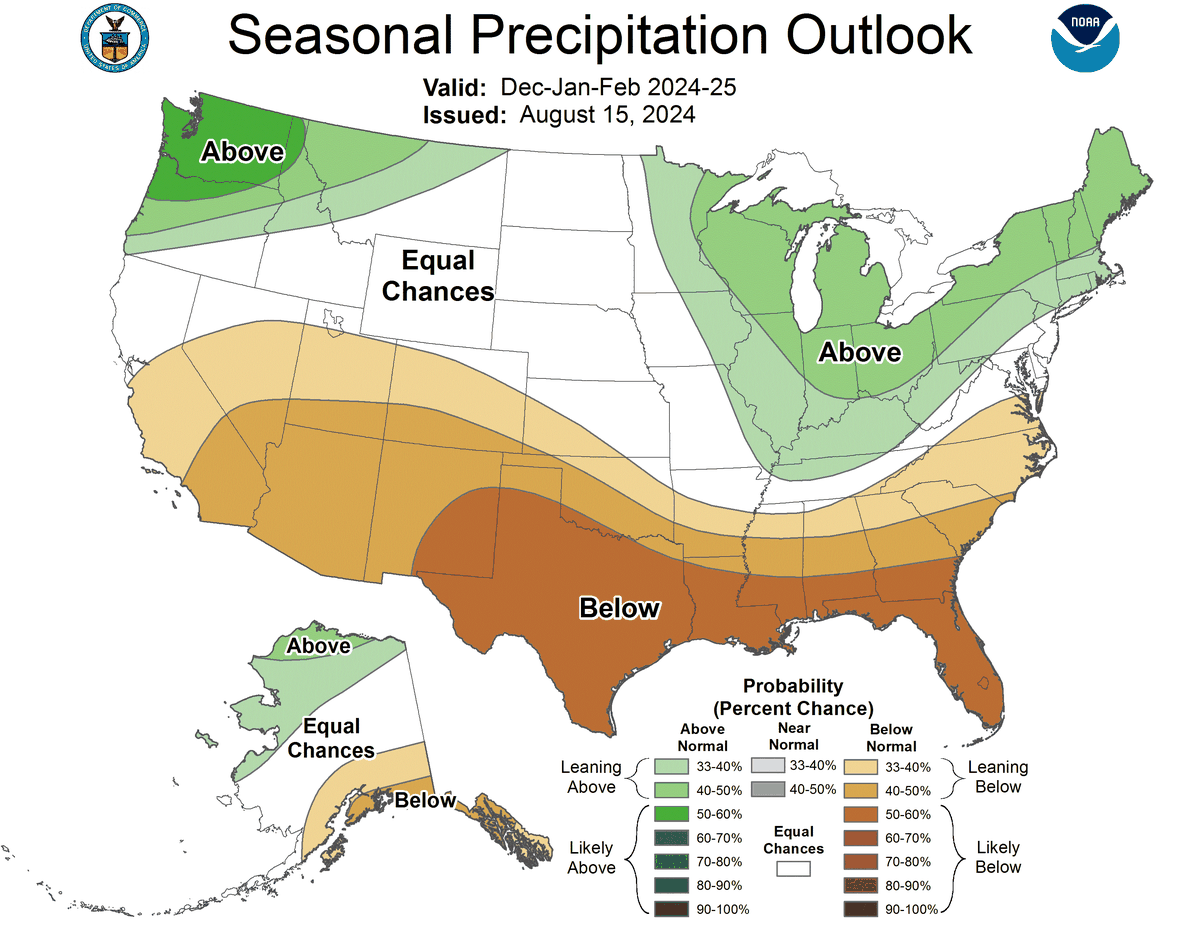
As far as seasonal precipitation during winter, NOAA is predicting below normal conditions for much of Texas.
The normal precipitation totals in North Texas for the winter months are:
- December- 2.84 inches
- January- 2.53 inches
- February- 2.76 inches
How accurate are the Old Farmer’s Almanac forecasts?
Since 1792, the Old Farmer’s Almanac has been predicting weather and said its long-range forecasts are 80% accurate.
The publication predicts the weather through three methods:
- Solar science- The study of sunspots.
- Climatology- The study of prevailing weather patterns.
- Meteorology- The study of the atmosphere.
By comparing solar patterns and historical weather conditions with current solar activity, the almanac is able to predict weather trends.