$5 avocados and $2 limes? What the truck backlog at the Texas-Mexico border could cost you
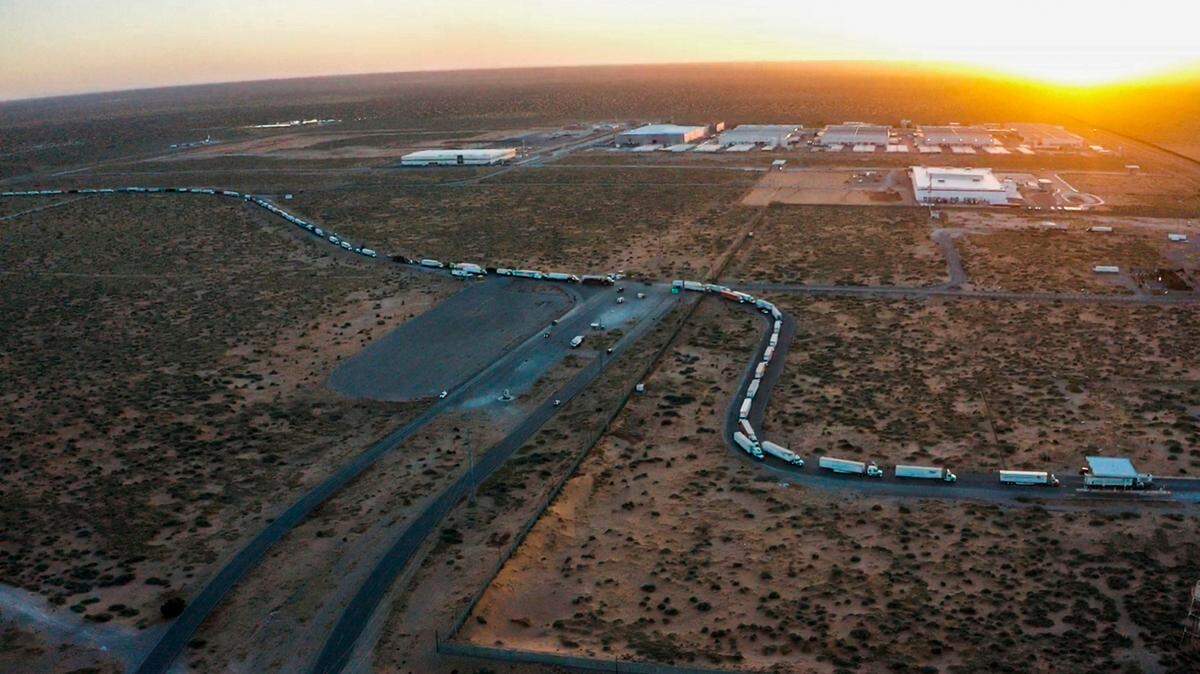
Gov. Greg Abbott’s new policy to inspect trucks at the U.S.-Mexico border could lead to higher produce prices, experts warn.
On Friday, Abbott directed the Texas Department of Public Safety to conduct enhanced safety inspections of vehicles as they travel into Texas through international ports of entry. The policy comes after the Biden administration said it was ending Title 42 expulsions, a program that restricted border crossings amid the COVID-19 pandemic.
Since Abbott’s announcement, there have been truck blockades and backups on the border, including at the Pharr-Reynosa International Bridge in the Rio Grande Valley, which since Monday had been blocked by Mexican truckers in protest of the policy. The protests had ended by Wednesday afternoon, according to the Associated Press.
Abbott amended the policy Wednesday to exclude the Mexican state of Nuevo León after he said he reached an agreement with its governor on border security. The border between the states is about nine miles long and contains one crossing near Laredo.
Depending on how long the delays last, Texans could see shortages or higher prices at the grocery store, said Raymond Robertson, the director of the Mosbacher Institute for Trade at Texas A&M University, in an interview Wednesday before Abbott’s afternoon announcement.
“We know that inflation is already rising,” he said. “We already know the cost of foods is way up and the cost of loss of agricultural and super market stuff is climbing, so this isn’t helping.”
[ Take our poll: Do you support Abbott’s new border inspection policy? ]
Grocery store prices in the Dallas-Fort Worth were up 13.7% in March compared to the year before, according to the U.S. Bureau of Labor Statistics. Fruit and vegetable prices rose by 13.5%.
The delay on the southern border could impact all goods, manufactured and produce, said Emund Prater, a professor of global supply chain operations at the UT Arlington. The longer the delays last, the greater the impacts, he said.
“Probably what people here in the Dallas area might see the earliest are produce issues, because you can’t store produce for long periods of time,” he said ahead of Abbott’s announcement.
Easing the restrictions in Nuevo León is an improvement, Prater said, but the potential effects on produce costs and the supply chain will depend on the volume of traffic. He predicted that some trucks that had been detouring through Arizona will now move to that entry point.
“Everything helps decrease the delays,” he said. “Think of this as a big bucket filled with water. If you’ve only got one small hole in it, that water is draining fairly slowly. The more holes you put into it, the more water drains out and it moves faster.”
Abbott’s border inspection policy has been met with backlash from Texas Agriculture Commissioner Sid Miller, who in a Tuesday letter called Abbott to end the practice. He said up to 20,000 trucks cross the border on a typical day. Miller at the time said thousands of trucks were backlogged and produce was being ruined as refrigerated trucks ran out of fuel waiting in line.
Miller predicted consumers could see $2 limes and $5 avocados.
“This misguided policy will have little or no impact on the invasion on our southern border caused by the inaction of the Biden Administration,” he said in the letter. “Instead, this policy will hurt Texas and American consumers by driving up already sky rocketing food prices, worsening ongoing supply chain disruptions, causing massive produce shortages, and saddling Texas and American companies with untold losses.”
In a Wednesday interview, Miller told the Star-Telegram he wishes Abbott would have reached out to the agriculture department about the ramifications the policy would cause.
“We have a crisis on the border and what the governor’s done is cause a second crisis,” Miller said. “It’s not doing anything to prevent illegal immigration or stop the illegal drugs.”
Ahead of Abbott’s Wednesday news conference, Miller said he hadn’t heard from the governor or his staff about his letter.
“I’ve written the governor numerous letters over the last seven and a half years,” Miller said. “He’s never responded to me and never returned a phone call. Can’t get a meeting with the man.”
Miller hadn’t yet reviewed Abbott’s Wednesday announcement when reached by the Star-Telegram later in the day. When the change was described, Miller said it would “help some, but doesn’t solve the problem.” Much of the produce coming to Texas travels through the entry point in Pharr, he said.
From 2007 to 2018, there was a 143.6% increase in the number of truckloads of Mexican-grown fruit and vegetables crossing into Texas, Dante Galeazzi, the president of the Texas International Produce Association, told The Produce News.
In 2019, imports of agriculture products from Mexico to the United States totaled $28 billion and exports of agricultural products were $20 billion, according to the Office of the United States Trade Representative. Texas’ top import from Mexico that year was vehicles and machinery.
Produce that’s imported from Mexico to Texas includes lime, lemons and avocados, as well as winter vegetables like broccoli, Miller said.
“Anything we can’t grow ourselves during the wintertime, we get it from Central America or Mexico,” Miller said.
Abbott said his office has heard from other governors in Mexico whose states border Texas and that he looks forward “to working with all of them towards achieving results similar to what we are achieving today.” Until agreements are reached, DPS will “continue to thoroughly inspect vehicles entering into the United States from every Mexican state except Nuevo León.”
“Now listen, I understand the concerns that businesses have trying to move products across the border,’” Abbott said. “But I also know well the frustration of my fellow Texans and my fellow Americans caused by the Biden administration not securing our border. The ultimate way to end the clogged border is for President Biden to do his job and to secure the border.”
This story was originally published April 13, 2022 at 5:02 PM.