‘The slaughter’: A Texas rancher fights the state over its plan to kill his 500 deer
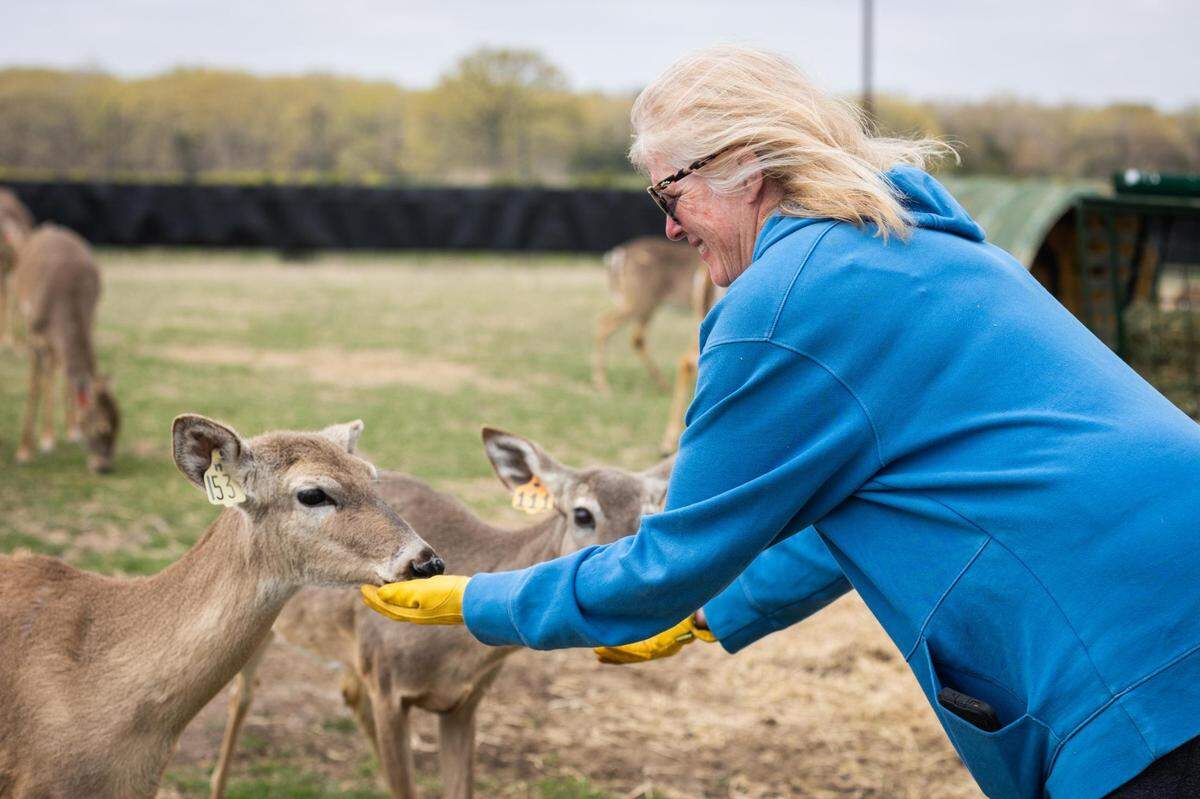
More than a dozen whitetail deer walk toward Maree Lou Williams, quietly surrounding her and eyeing her hands for snacks.
She knows many of the does in this pen by name, and she also knows which treats each of them prefers.
Sharon likes bananas. Sky Beauty likes raspberries. Lucy Lou likes grapes.
The ranch manager croons at the does as they walk up to her and gingerly take the treats out of her gloved hands. She has spent 11 years raising the deer on this farm. But she might not have much time left with them.
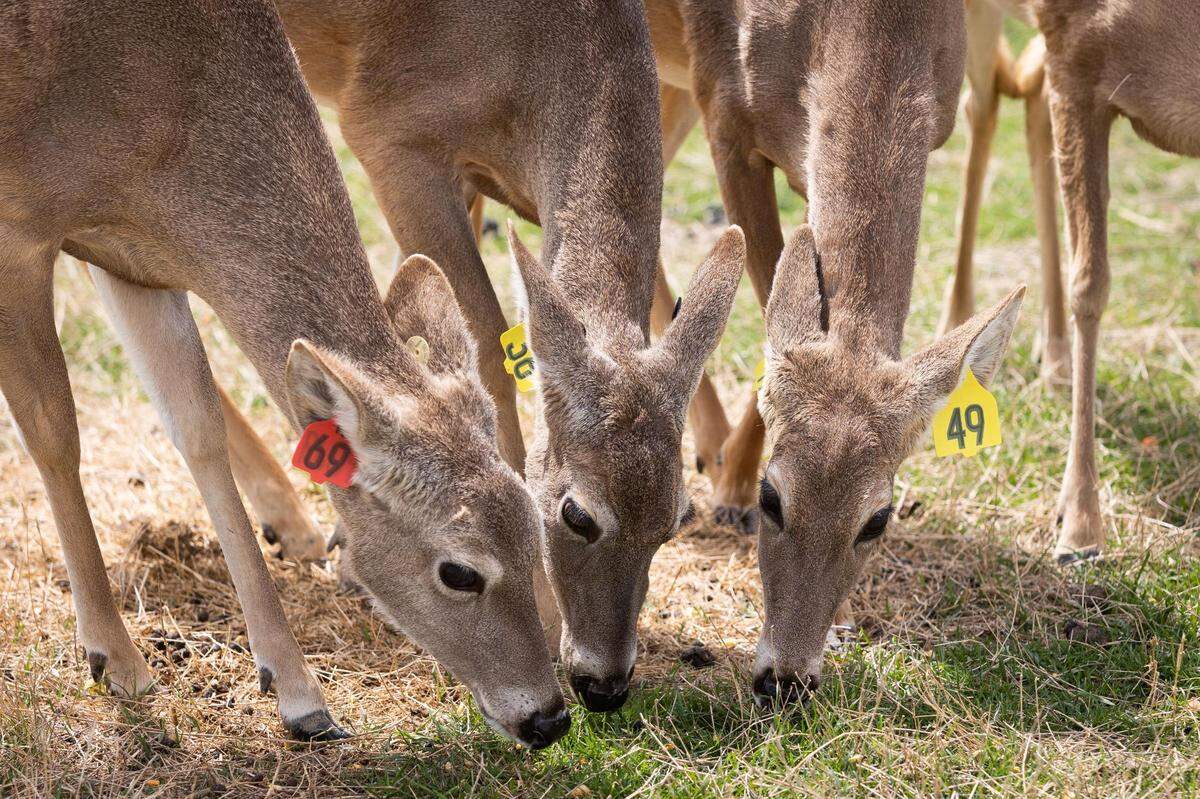
The does in this pen are among the 500 whitetail deer at RW Trophy Ranch, in North Texas, that are scheduled to be killed by the state.
The Texas Parks and Wildlife Department has slated the farm east of Dallas for depopulation after several deer in the herd tested positive for a deer-specific illness called chronic wasting disease. “Depopulation” is the formal term for killing all of the deer at a farm, and TPWD says it’s necessary in this case to prevent CWD from spreading further.
On Monday morning, TPWD officials were en route to the ranch to set up for a massive operation in which they planned to shoot each of the 500 deer over the course of one or more days.
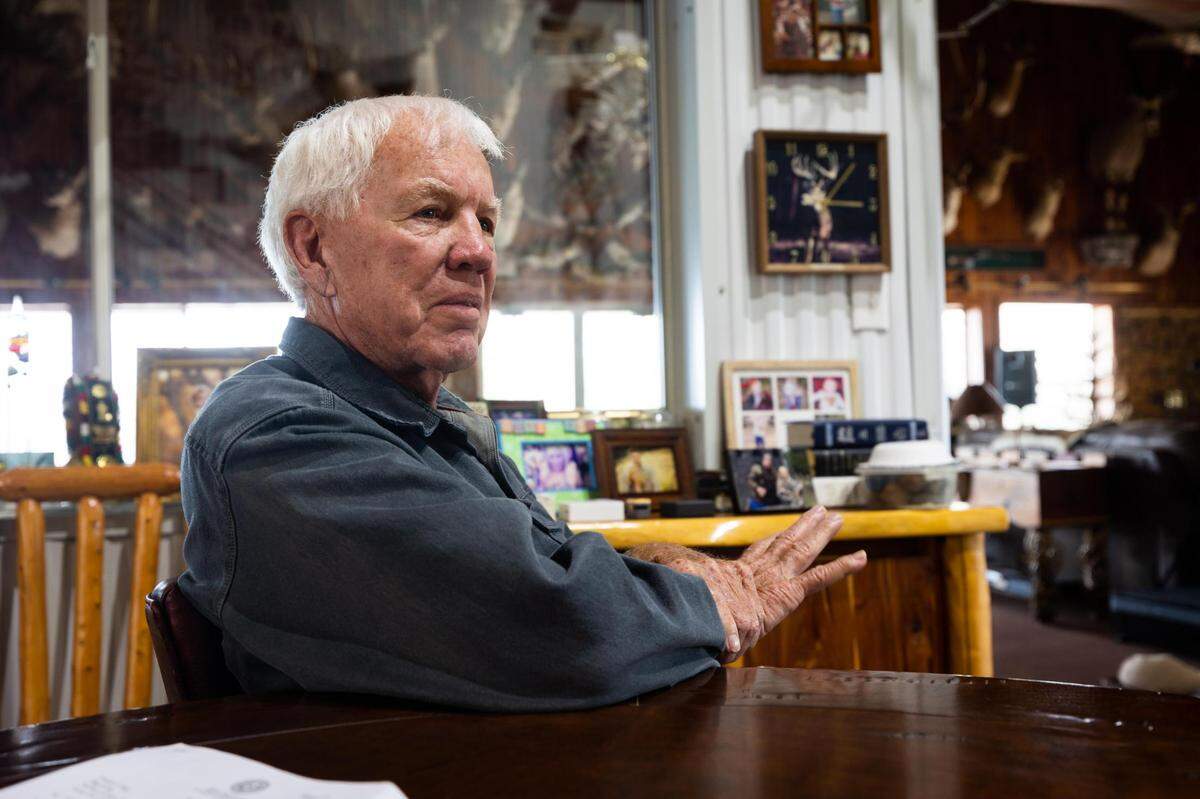
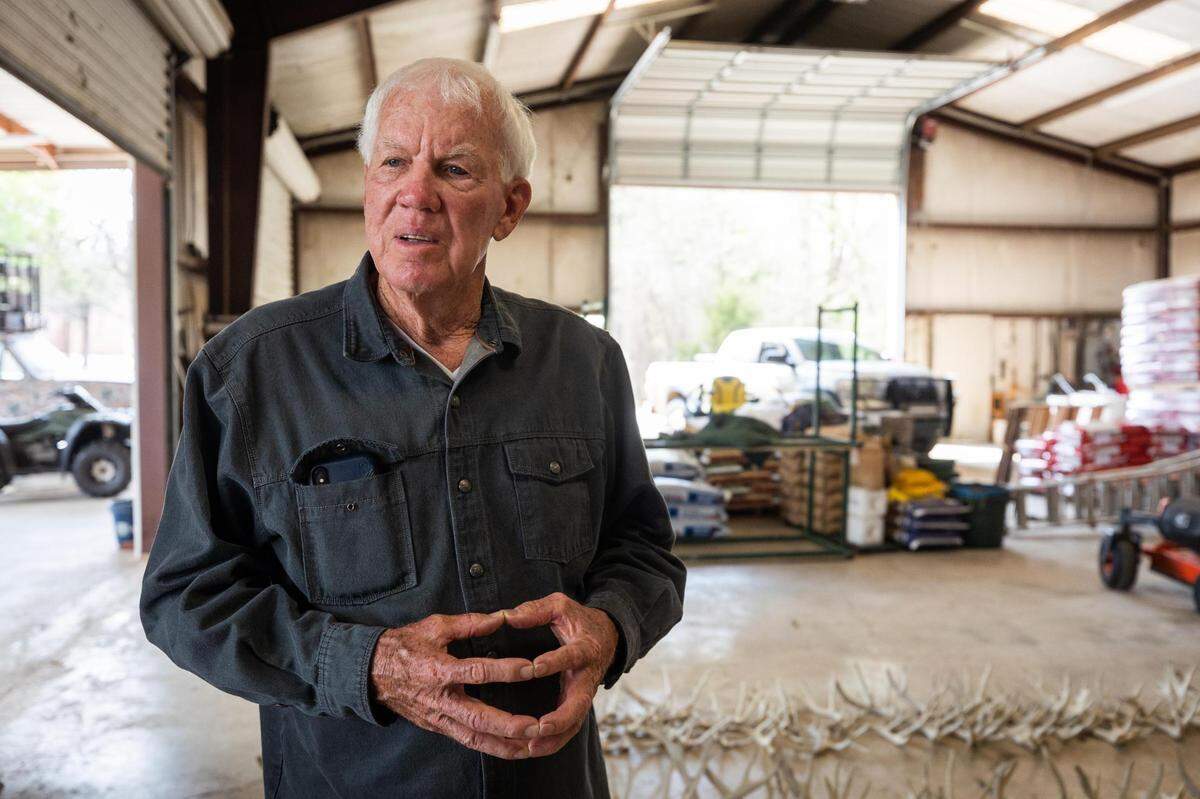
But the owner of the ranch — Robert Williams, who is Maree Lou Williams’ father and, at age 83, among the oldest deer breeders in the state — is fighting the depopulation order in court. As TPWD officials neared the ranch on Monday, Robert Williams got word of a shift: Kaufman County’s 86th District Court had issued a temporary restraining order. TPWD was barred from depopulating the farm for at least another week and a half.
The court case — in addition to the animals and money that hang in the balance — raises issues of property rights and government interference in an industry estimated at $350 million a year in Texas.
TPWD officials say they’re trying to protect the state’s overall whitetail deer breeding population, which is a public resource, from a contagious and deadly disease.
“Depopulation is the gold standard in handling these sorts of facilities,” said Dr. Hunter Reed, TPWD’s wildlife veterinarian. “If the conditions aren’t met to mitigate those risks, then depopulation is our only alternative, our only option.”
But Robert Williams says the state agency is overstepping, in a move that could well ruin him financially — and wreck both him and his daughter emotionally.
If TPWD goes through with the depopulation, Williams said, he worries about his daughter’s reaction, especially because some of the does are more like pets than livestock.
“I hope she don’t have a heart attack,” he said. “It’ll kill her.”
How it began
Williams has been breeding whitetail deer for over 35 years. He remembers the first few deer he bought and says he paid $250 per animal. Now, there are nearly 1,000 registered whitetail breeders across the state, and one animal can sell for tens of thousands of dollars.
Nowadays, deer breeding also comes with a number of regulations, including a requirement that breeders send samples of brain tissue from all deer that die on their property for CWD testing. The disease is always fatal and can spread throughout a herd for months before deer begin to show symptoms.
Williams followed the state’s rules and, after several of his deer died in the February 2021 freeze, he sent in samples to be tested.
The Williamses’ lives turned upside down the next month, when they received word that one of those samples had tested positive for chronic wasting disease.
After the positive result, Williams took tissue samples from all of his live deer, according to him and TPWD officials. Four more animals tested positive, and Williams had those animals euthanized.
But TPWD was concerned the disease could still be lurking at the farm, and it could spread to other herds or to free-ranging whitetail. So the agency proposed that the entire farm be depopulated.
Williams refused to agree to that proposal.
TPWD officials told the Star-Telegram that the agency then proposed a number of alternatives, called herd plans, that would’ve required some, but not all, deer to be killed. (TPWD declined to provide the Star-Telegram with copies of those herd plan proposals, but some of the plans were included in court documents filed later.)
One herd plan, for instance, would require Williams to kill some of his deer, keep extensive records and notify nearby landowners upon the release of any buck. Under that plan, the entire farm could still be depopulated if more than 20% of the herd tested positive for CWD.
Court documents say that Williams declined that herd plan and others, because he saw the terms as “onerous.”
After months of back and forth, during which time Williams filed a lawsuit against the state, TPWD has reverted to its original plan to depopulate RW Trophy Ranch entirely.
“These aren’t actions we take lightly. And they’re extremely difficult not only for people having these facilities depopulated, but also for the staff and for the veterinarians like me who didn’t sign up to depopulate animals,” said Reed, the TPWD wildlife veterinarian.
“But at the end of the day, with a disease such as CWD that has so few management options that are actually effective, this is unfortunately the option we’re most commonly left with.”
Williams doesn’t want his deer to be killed. But he might not have a choice in the matter because of a legal distinction between whitetail deer and other types of farmed animals: whitetail cannot be owned, legally, by any individual.
Texas law classifies live whitetail as a public resource, regardless of whether the deer are free-ranging or captive. Legally, a breeder can only hold the right to keep the deer in captivity.
Williams may not legally own his herd, but that doesn’t mean his wishes for the animals can be entirely disregarded. At least, that’s what his attorney is arguing.
The lawsuit
In early 2022, as discussions between Williams and TPWD continued to break down, he upped the ante: Williams and attorney Jennifer Riggs sued the state.
They filed first in Travis County, where state agencies are based, and later filed a similar lawsuit in Kaufman County, where the ranch is located. (The state is arguing that Williams and Riggs are “forum shopping” after they didn’t receive a favorable ruling in Travis County; Riggs says that the two lawsuits are different, and that Kaufman County is an appropriate venue because it’s where the ranch is located.)
The basic argument of the Kaufman County case, according to Riggs and to court documents, is that TPWD is violating Williams’ constitutional rights by denying him due process and attempting to proceed with a search and seizure of his property. The state has not, Riggs argues, clearly established that Williams’ deer are a risk to humans or to other animals, especially since the farm is already keeping its deer contained on the property.
TPWD counsel Todd George declined to comment on the specifics of the case. But, according to court filings, the agency is arguing that due process claims cannot apply to whitetail because the animals cannot legally be owned. The deer are not the property of a breeder, so how can property rights be violated?
Riggs said she understands that Williams doesn’t legally own his deer. But he does have a right to hold the deer, to raise the deer, to keep the deer on his property.
“Those rights may not be ownership, but those rights certainly are sufficient to trigger due process,” Riggs said. She added that Williams does own the property on which his deer reside, and he has rights there as well.
After filing the case in Kaufman County, Williams received a depopulation order.
On March 18, TPWD’s wildlife division director, John Silovksy, wrote that a total of nine animals on the farm had tested positive for CWD. The depopulation would begin on Tuesday, April 5, Silovsky wrote.
“This is an unfortunate situation that TPWD takes very seriously,” the order said. “TPWD must respond to this matter to protect the public’s resource from disease exposure.”
Four days after the order, the parties attended a mediation in an attempt to resolve the matter. But the mediation was unsuccessful, court documents show. The depopulation order still stood.
Riggs and Williams filed an application for a temporary restraining order, seeking to stop the depopulation order. The days passed with no response.
Monday morning, the day before the depopulation, Williams still hadn’t heard back from the courts. He knew that TPWD officials were on their way to his farm, to set up an operation to kill the deer his daughter has raised.
‘A very difficult situation’
TPWD’s plan was to set up the depopulation operation on Monday, wait until at least 12:01 a.m. Tuesday, and then shoot each deer on the farm.
After removing the carcasses and disposing of them, likely in a landfill, TPWD would then send a bill to Williams. The ranch owner would be expected to pay for the salaries and travel expenses of those involved in the depopulation, for the cost of carcass disposal, and for the costs of any equipment used in the depopulation.
But on Monday morning, while TPWD officials were still on their way to the farm, the Kaufman County district court replied to Williams, granting a temporary restraining order that prevents the state from killing his deer at least until April 14.
TPWD on Wednesday filed an appeal to the restraining order. Riggs said she believes the agency will “do everything possible” to carry out the depopulation.
Mitch Lockwood, TPWD’s big game director, said that the agency has a number of options to choose from when it’s carrying out a depopulation. At Williams’ farm, “the use of firearms is the safest and most humane in this case,” Lockwood said.
Williams and his attorney contend that shooting each of the deer, in a closed pen with no escape, would amount to cruelty. In legal documents, they refer to the state’s plan as a “slaughter.” In an interview, Riggs called the plan a “mass shooting.”
Lockwood and other TPWD officials acknowledge the emotional toll that a depopulation would take on Robert and Maree Lou Williams.
“It is a very difficult situation for everybody involved, especially them,” Lockwood said. “The emotional side of things is the toughest part to deal with here.”
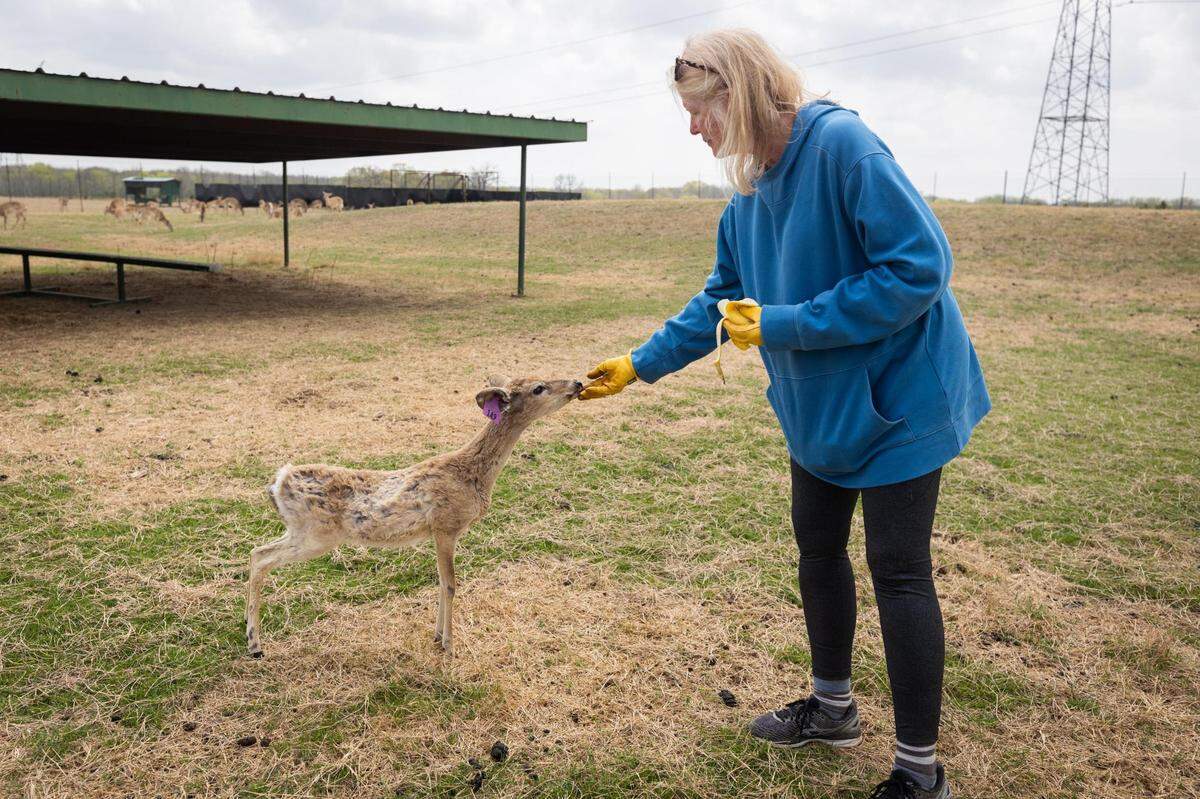
Hours after the temporary restraining order came through, Maree Lou Williams drove through the deer pens on her father’s farm. She pulled into the pen holding last year’s fawns — small bucks and does still not fully grown — and climbed out of the farm vehicle to toss mini Nilla Wafers at the deer.
Every spring, when the new fawns arrive, Maree Lou Williams searches through the grass in the pens for the newborns. “Those are my Easter eggs,” she said.
But this year, the holiday will arrive days after the Williams’ restraining order against the state is set to expire. By this Easter, the pens at RW Trophy Ranch might not have any deer at all.
This story was originally published April 8, 2022 at 5:00 AM with the headline "‘The slaughter’: A Texas rancher fights the state over its plan to kill his 500 deer."