Making big bucks: Inside Texas’ million-dollar whitetail deer breeding industry
READ MORE
Texas’ million-dollar whitetail deer breeding industry
In rural Texas, whitetail deer breeding generates millions of dollars each year. But in the pursuit of antler perfection, breeders are threatened by a deadly deer disease.
Expand All
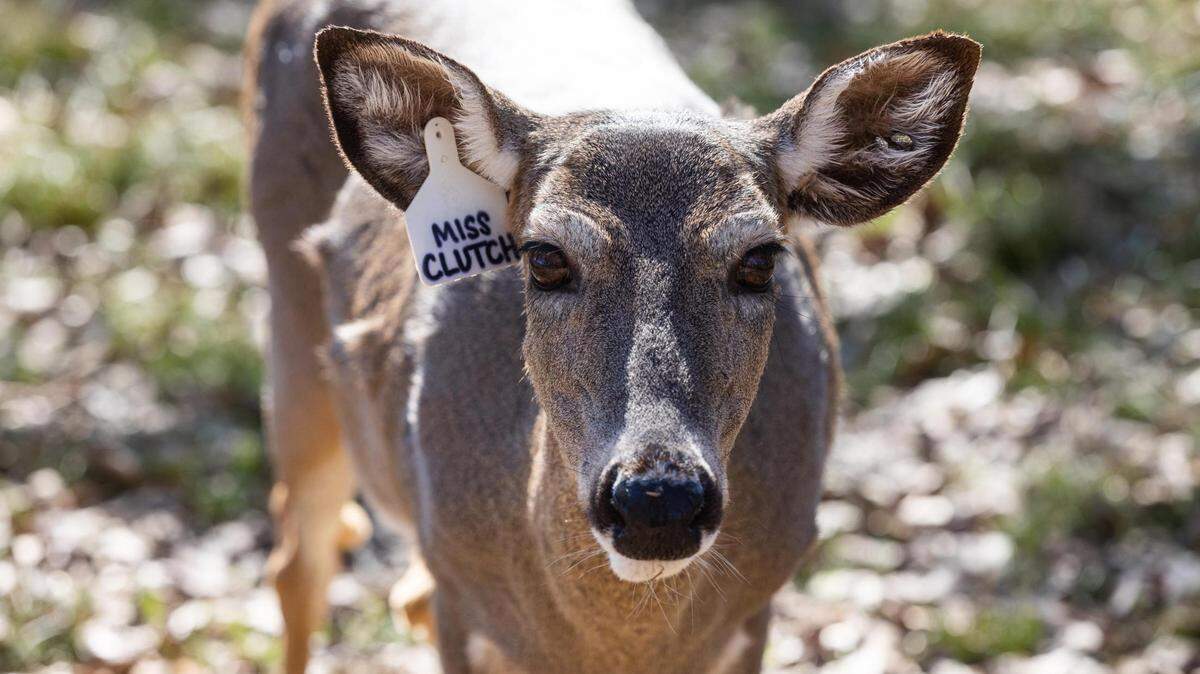
Making big bucks: Inside Texas’ million-dollar whitetail deer breeding industry
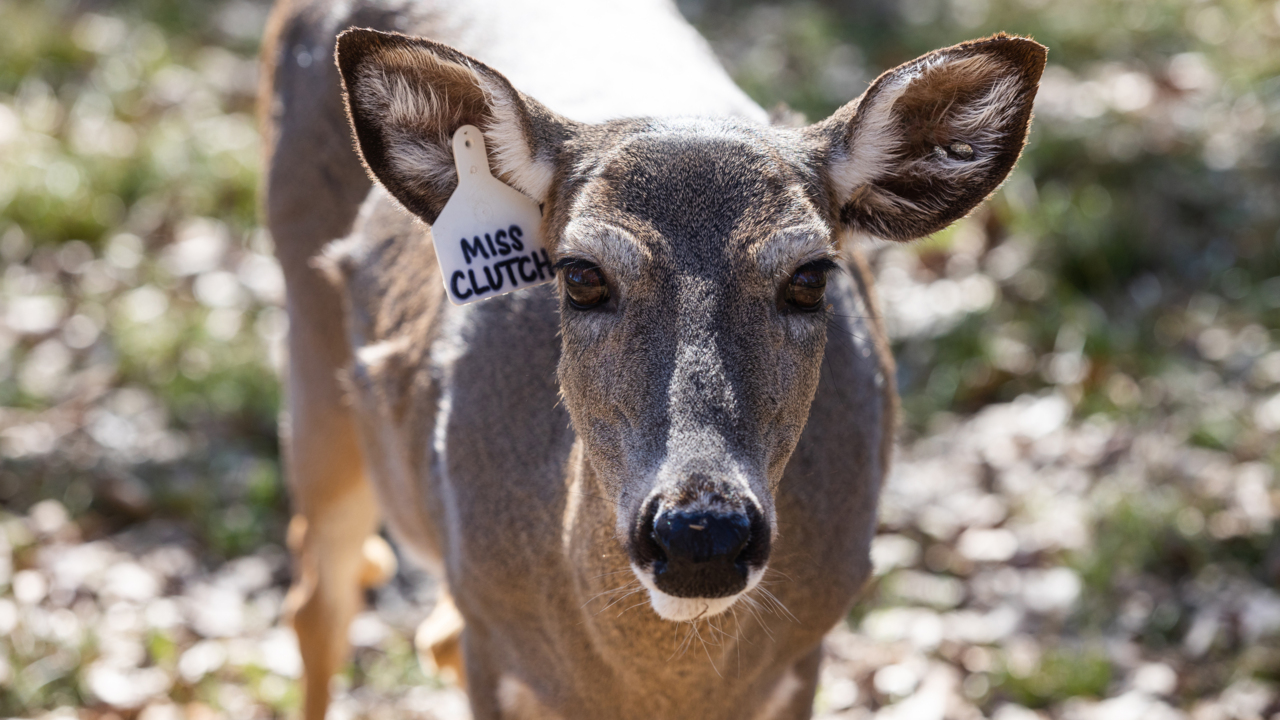
‘Coolest animal in the world’: Tour a North Texas whitetail deer farm
A deadly disease threatens Texas deer breeding. This researcher may have a solution
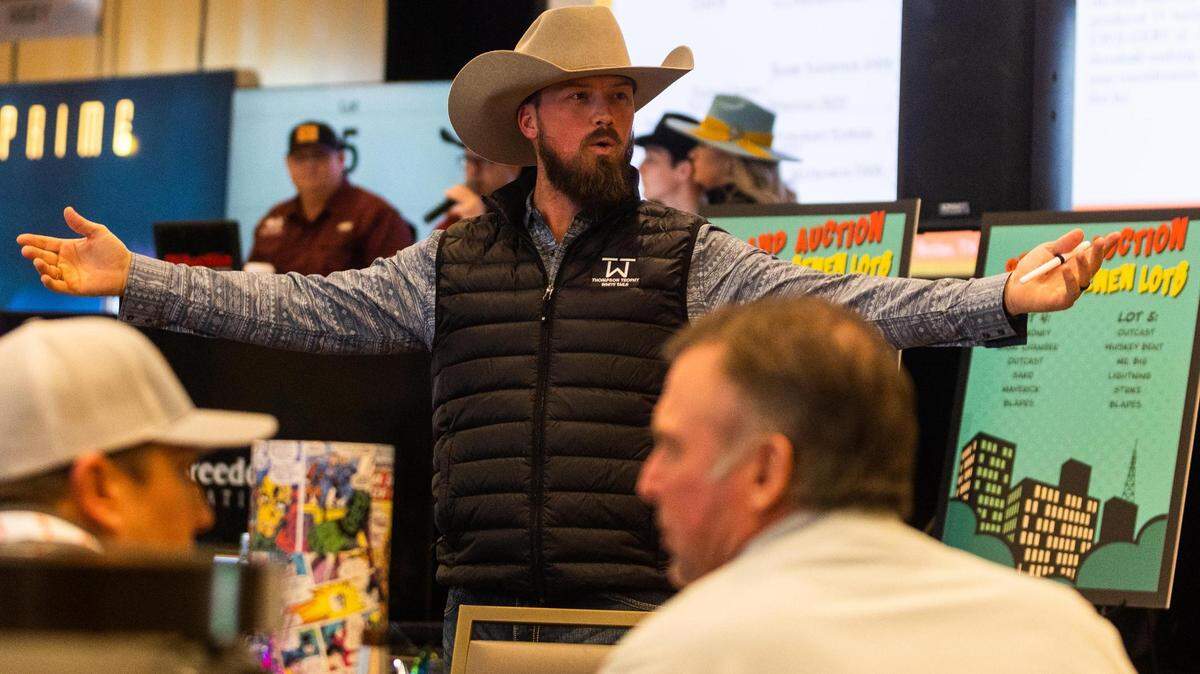
‘Don’t you worry, it’s only money’: Two days at a Texas whitetail deer auction
John True angles a UTV between two fences, paying little mind to how closely the chain link fences come to brushing against the six-seater farm vehicle.
He talks as he rolls by each animal pen, pointing out particular deer in the ⅓- to ½-acre enclosures on a sprawling ranch east of Dallas.
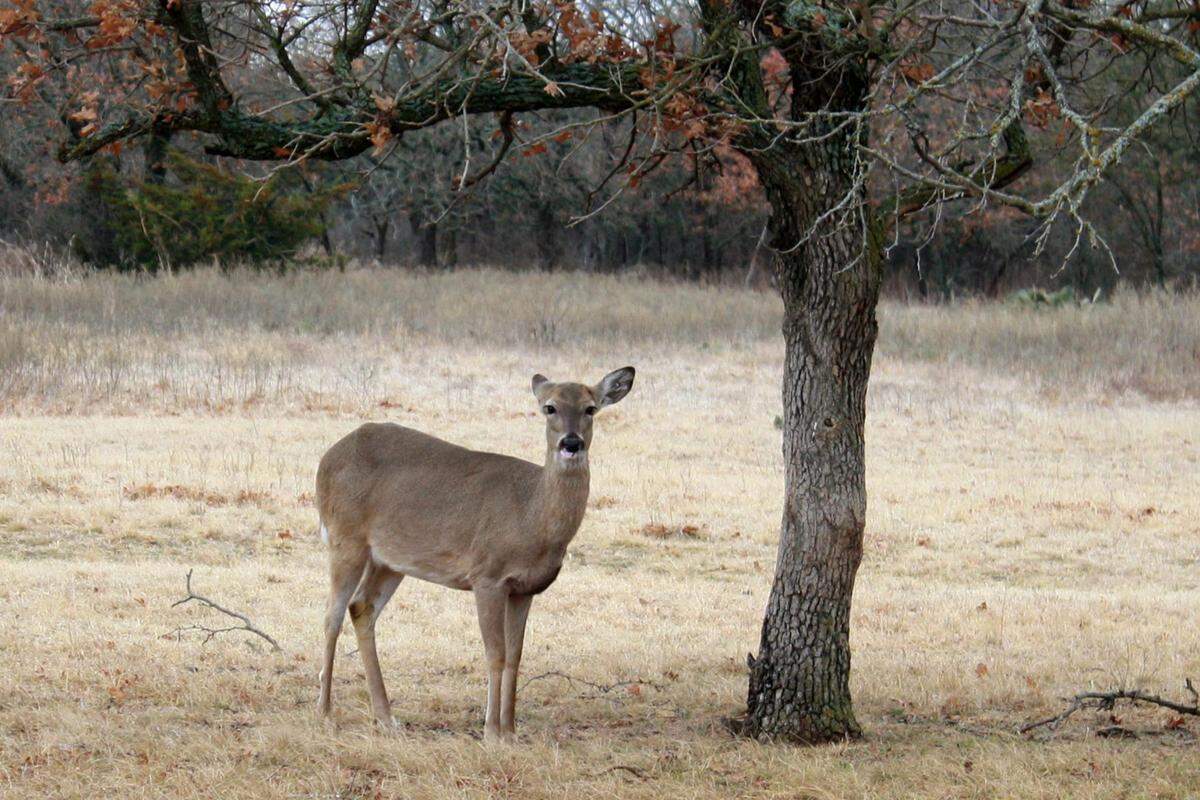
He slows in front of a pen holding eight young does, each of their small faces framed by blue ear tags. The does scatter as True pulls the UTV to a stop, eyeing him skeptically as he walks toward the fence line and even as he hucks a scoop of dried corn their way.
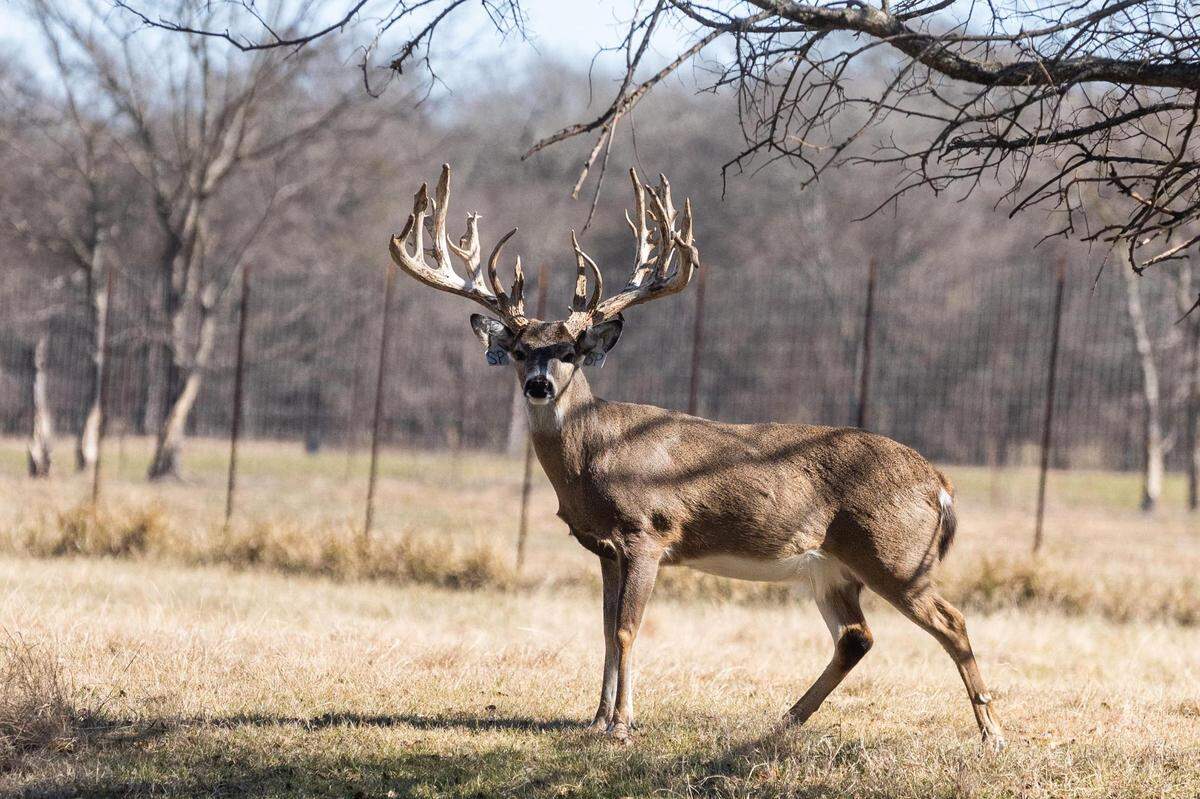
True makes his way back to the UTV and moves on to the next pen, pulling out a set of binoculars to peer at a buck inside. The buck is bald, two bumps on the top of his head marking where his antlers sprouted earlier this season. It’s late winter now, and he’s just shed his rack.
“This is our shining star,” True says of the buck. His name is Mariachi, and True could identify him by a black spot on his chin.
True is a partner in Big Rack Ranch, one of nearly 1,000 registered deer breeding operations in Texas, according to state numbers. It’s a mostly rural industry that is, in some ways, a world unto itself.
In the whitetail deer breeding world, the end-of-the-line customer is a hunter, who pays to shoot whitetail bucks whose antlers and build have been perfected through generations of selective breeding. The most-prized attributes are subjective, with some hunters drawn to the largest possible antlers and others focused on the overall shape and proportion of the antlers. As True said, “Great deer to me might not be great deer to you.”
Not all breeders sell directly to hunters. True — who works full-time in real estate and part-time in deer breeding — said that Big Rack Ranch doesn’t sell hunts at all. Instead, the farm sells about 80 deer per year to other breeders and ranches.
This distance from the end customer is one sign of the size of the deer-breeding industry in Texas, which has a direct economic impact of about $350 million per year, according to a 2017 report compiled by Texas A&M researchers. When factoring in all indirect impacts, including feed, veterinary services and hunting, the industry’s yearly impact balloons to $1.6 billion and nearly 17,000 mostly rural jobs. (Those figures include breeding operations of all deer species, including whitetail and exotic species.)
There are enough breeders in the state, and enough money on the line, for the industry to make an impact at the state Capitol, too.
True is the president of the Texas Deer Association, a professional organization and lobbying group that works to bolster the industry’s image and rallies against regulations it perceives as unfavorable to breeders.
And in recent years, the political and monetary stakes have been heightened by a deer-specific disease that’s been detected in captive Texas deer. The disease, known as chronic wasting disease and sometimes referenced in the media as the “zombie deer disease,” has sparked clashes between whitetail deer breeders and the Texas Parks and Wildlife Department.
Breeders say they’re being unfairly targeted by regulations, over a disease that also occurs in the wild.
“They make it out to be this really scary disease, but they’re not looking for it anywhere else,” True said.
TPWD officials say they’re just trying to protect whitetails, one of Texas’ natural resources.
“Deer breeders have more liberties with regard to moving animals than anybody else in the state. So that’s a privilege that comes with responsibilities,” said Mitch Lockwood, TPWD’s big game program director. “There’s going to be some sideboards for those privileges to protect the public resource, not to mention the whole deer breeding community.”
Entry to the industry
Erich Ramsey was looking for a country home, a city escape, when he came across a ranch in Freestone County, 90 miles south of Dallas, that fit his wish list. The one downside? The property came with a herd of captive whitetail deer.
Ramsey, who lives in Arlington, had no interest in stepping into the deer breeding industry, he said. His investment manager at the time, Ashton Lawson, was even more opposed.
“I was very adamant that this is — get rid of it. This is how you lose money,” Lawson said.
But the property was otherwise ideal for Ramsey and his wife, so they bought it in March 2021. They’d sell off the deer herd later, they thought.
“We decided, ‘Well, we’ll just get into the business to get it to a point where we can sell,” Ramsey said.
The weeks rolled by, and newborn fawns arrived. As the herd grew, Ramsey said, he began to see the entrepreneurial possibilities, the opportunity to build a business in an industry he described as profitable but risky. He was thinking, too, about the opportunities for his children to get involved.
“I love learning and I love creation and I thought, ‘Wow, this has ... potential,” Ramsey said.
Lawson, too, began to soften his stance as he spent time with the deer.
“My wife and I started going down to the ranch … and just working with the animals and it became a passion immediately,” Lawson said. “It’s one of those things where you think for a minute, ‘Maybe I missed my calling.’”
Now, Lawson is the farm’s full-time ranch manager, and he and his wife, Jessica, live on the ranch. Although Jessica Lawson has kept her day job, she also works on the ranch in her off-hours.
“After sitting on a computer all day long, my end result is emails and meetings,” Jessica Lawson said. “I think most farmers and ranchers would say, at the end of the day, when you’re getting the dirt out from underneath your fingernails, you feel like you’ve accomplished something. … There’s value in that. And it’s a value that you don’t get from a corporate career.”
The transition hasn’t exactly been easy. Ashton Lawson described it as “drinking through a fire hose,” particularly when he first took on the ranch manager role.
Deer breeding, as Ramsey and the Lawsons have learned, can be complicated.
First, there’s the general regulations.
Texas Parks and Wildlife is the primary agency overseeing the industry. While the Texas Animal Health Commission oversees livestock industries, including cattle, horses and exotic deer breeds, TPWD takes charge of whitetail deer breeding because the animals are technically wild.
Under Texas law, whitetail deer can’t actually be owned by any individual. Breeders may keep deer in captivity, they may choose each deer’s mate and raise its fawns, but the animals are still — technically and legally — a public resource.
TPWD requires a permit to keep deer in captivity. Earning that permit requires meeting certain facility standards, such as providing enough shelter and water, plus agreeing to regulations such as marking every deer with identification tags. Breeders also must submit tissue samples from a portion of their herd to be tested for chronic wasting disease. (More on that later.)
And then there’s the caretaking. When he stepped in as ranch manager, Ashton Lawson said, he “woke up on [a] Friday morning with 300-plus deer looking at me going, ‘Hey, you’re responsible for us.’”
“It was a hell of a sense of responsibility,” he said, and one that pushed Ramsey and the Lawsons to spend hours on the phone, consulting with veterinarians and industry experts.
“We’re learning. Every day to us is so new, because we’ve never seen it,” Ramsey said.
The Ramseys and Lawsons seem to be relatively unusual in the world of deer breeding. Some breeders spent their childhoods on deer farms, and many more grew up regularly hunting. For those folks, there never was a world without deer at the center.
Life on the farm
Along a narrow dirt road in Brown County, two hours west of Fort Worth, a smattering of longhorn cattle gaze out at the occasional passing car. Four scavenger birds conference over an armadillo carcass. And on either side of the road, tall gates mark the entrances to ranches and farms.
Michael Deveny has been working at one of those ranches since 2010. As ranch manager at Mossy Rock Whitetails & Exotics, he spends his days checking on the 300 whitetail deer in his herd, filling feeders and mending fences.
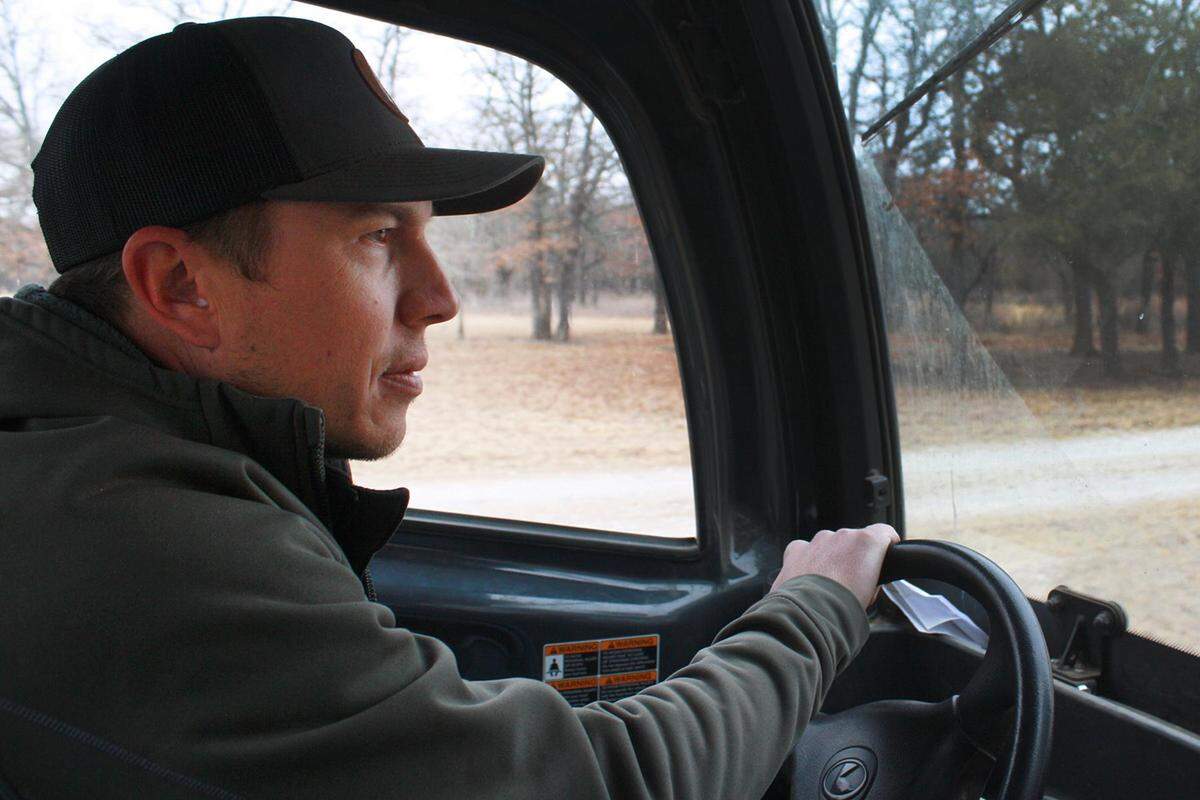
Nowadays, the operation relies more on exotic breeds than on whitetail deer, Deveny said, but his time is still dominated by whitetails, which tend to need more attention. He likes the challenge of breeding whitetails, the thrill of successfully crossing a doe and a buck to produce offspring with larger antlers, a better pedigree.
“I really enjoy watching them grow and just seeing the different characteristics — none of them are the same,” said Deveny, who is also treasurer of the Texas Deer Association. “And trying to grow the biggest, prettiest deer we can, it’s just a challenge.”
The deer, although they live on a farm, aren’t pets. In the pens at Mossy Rock, a few are friendly and curious, but most scatter at the sound of a farm vehicle or the sight of a human.
Still, raising whitetails has pushed Deveny away from hunting them, at least on the ranch he manages.
“I’m more into raising them than hunting them,” Deveny said. “I’d go hunt mule deer or pronghorn or hunt other stuff, like a trip somewhere. … But for here, I would really watch other people hunt them than hunt them myself.”
He prefers the daily work of “growing” whitetails: breeding them with a perfect match, watching their antlers appear each year, learning their personalities.
And whitetails’ personalities play a significant role in their care, according to True, the Texas Deer Association president.
Back at Big Rack Ranch on a late winter day, True opens the gate into the pen of the “shining star” buck, Mariachi, and tosses a scoop of dried corn at him. Mariachi takes a couple steps back as the food rains down. He’s wary, but not exactly afraid.
Across the path in a separate pen, a buck named Majesty is more on edge.
“It’s totally just genetics,” True says, as Majesty trots nervously up and down his pen. “His dad was really fidgety.”
True isn’t on the farm every day — he lives in Dallas and works full-time in real estate — but he’s around the deer enough to know some of their names, some of their quirks.
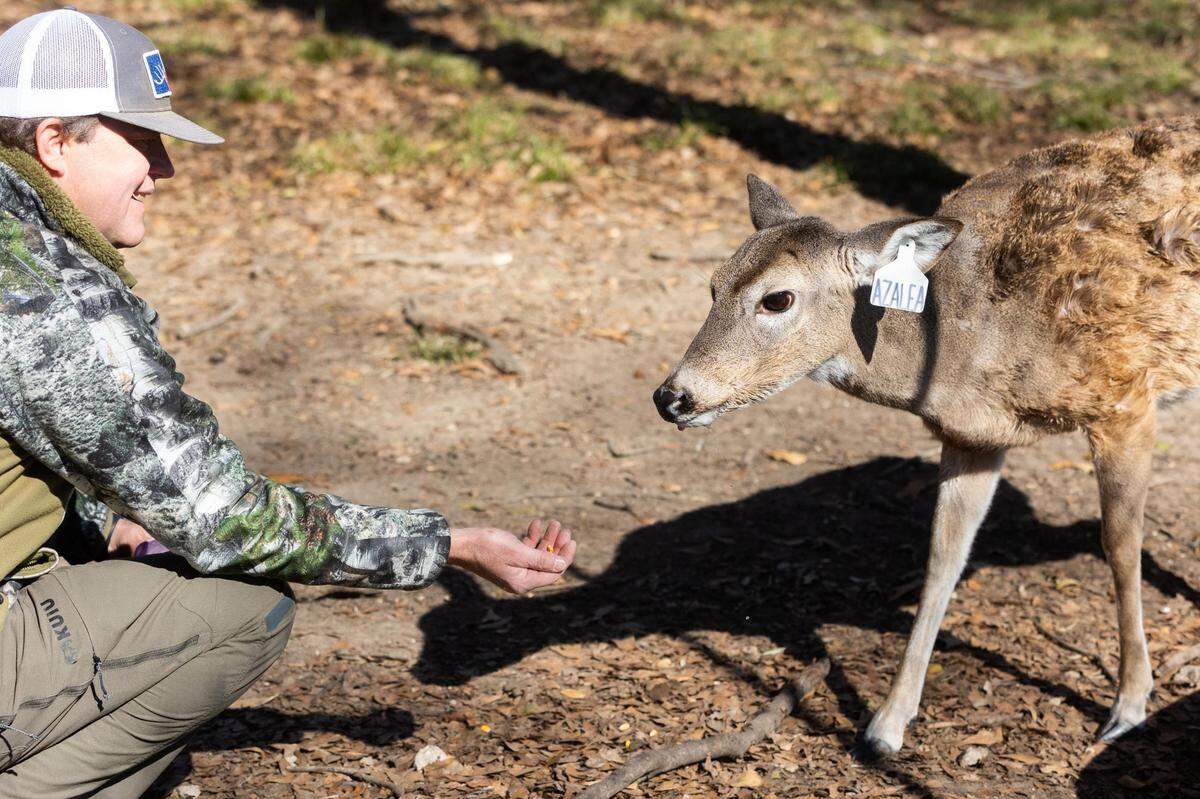
As True drives the UTV farther down the alleyway, the pens grow larger, up to five acres each. He stops at one enclosure that holds more than a dozen does. Most of the whitetails scatter, moving in coordination like a school of fish to the farthest corner of the pen. But one doe — her name, Azalea, is written in black lettering across a white ear tag — ignores her group’s skepticism. She stays close to the gate as True swings it open and doesn’t back away as True walks toward her.
True scratches her neck and the top of her head, as Azalea stands with her tongue hanging out. True isn’t sure why her tongue is always like that — perhaps a missing tooth — but he points out her ruffled fur. Azalea, True says, has either been fighting with the other does or she’s being bullied.
“(With) deer, it’s like middle school girls,” True says. “They’re very social and it’s very cliquey.”
The longer True stands in the pen, the more comfortable a couple of other does begin to feel. They make their way toward the dried corn spread at True’s feet until one, with ear tag 562, is standing next to Azalea.
The two does look at each other, their ears flattening slightly as they make small warning sounds. 562’s front hoof comes up off the ground, and all at once Azalea runs away. The seconds-long interaction is a sign, perhaps, of why Azalea is looking a little rough today.
“Make a mental note of that,” True says, mostly to himself.
The logistics
The daily work of feeding, mending fences and breaking up mean girl groups all points toward one end goal: producing larger and more appealing bucks. The aim, at the end of the day, is to breed animals that are more desirable to hunters and other breeders.
At Big Rack Ranch, True said, they don’t sell hunts for bucks. Instead, the ranch sells about 40 does and 40 bucks each year to other breeders and ranches. True said that the stocker bucks — which have large antlers but aren’t the stars of the show — typically range from $6,500 to $8,500 each. Breeder bucks, the most highly desired animals, could sell for significantly more.
From time to time, True said the ranch might take some does or straws of buck semen to sell at auction, where prices can vary widely. At a January auction held by the Deer Breeders Corp., many does sold for $10,000 or less, but two bred does sold for about $40,000 each.
Different ranches have different setups.
At Mossy Rock, the ranch Deveny manages, the focus is also on selling animals to outside breeders and ranches. Deveny said the ranch sells or releases approximately 50 bucks and 50 does per year. Does often sell for $5,000 to $10,000 each, Deveny said, although he’s seen does sell for $20,000 to $30,000 within the breeder world.
But Mossy Rock, unlike Big Rack Ranch, also sells a handful of hunts per year, out on the 2,750 acres of ranchland that border the breeding farm.
“It’s corporate groups, so they’re just looking to entertain people. So [we] bring them out, we cook, show them a good time, and then we go hunt a few animals — exotics and whitetails,” Deveny said.
Some farms shift their focus over time, starting in one specialty and transitioning to another.
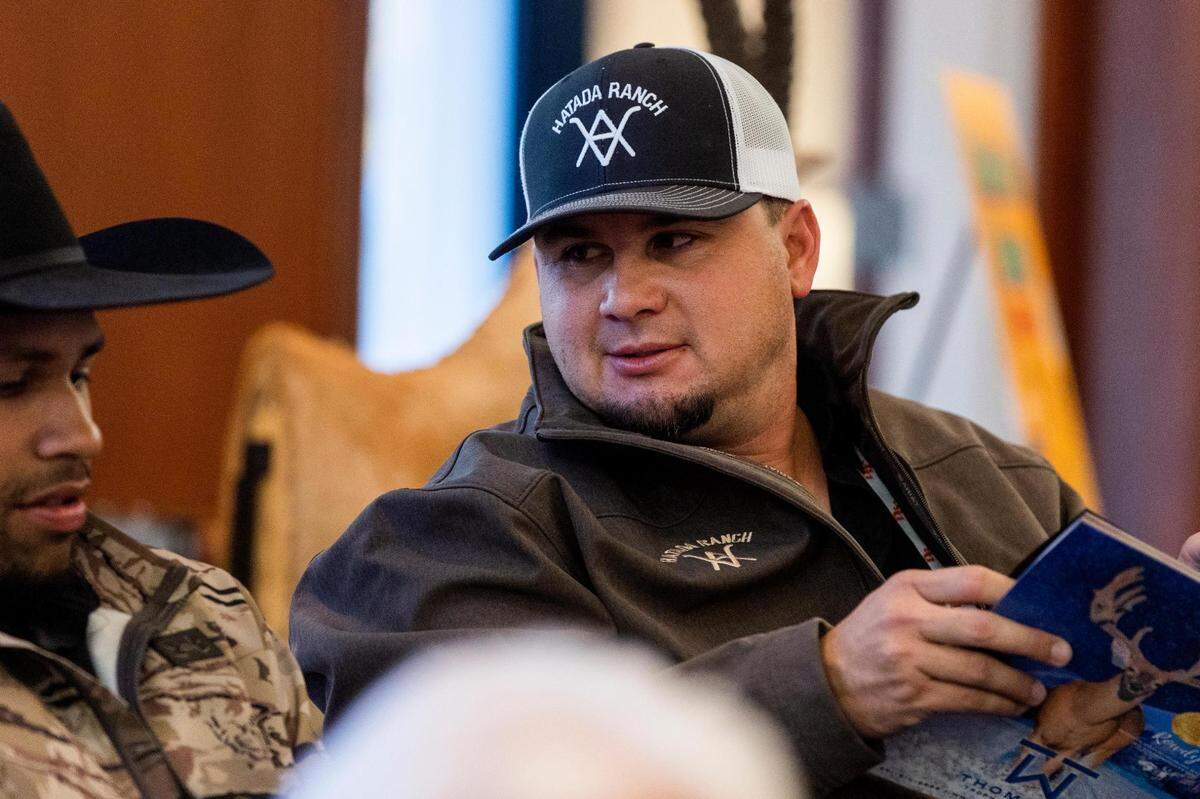
Catlin Dutschmann, the ranch manager for whitetails at Hatada Ranch in Valley Mills, grew up on the ranch where he now works with his father Doug and brother Courtlin.
“I just grew up on the ranch my whole life, so that’s all I know as home,” Dutschmann said.
When Dutschmann was a kid, the ranch, which is about 30 minutes outside of Waco, focused mostly on exotic breeds. Now, whitetails are a big part of the business, too.
Dutschmann said the ranch started with about 10 whitetail does in 2015. Now, they’re up to about 700 whitetail deer.
“You kind of surprise yourself sometimes,” Dutschmann said. “I didn’t know any of this stuff, before all that, and you just get in there and you’ve gotta learn it.”
There are hundreds of breeders and ranches across the state, from North Texas to the Gulf Coast region, with various specialties in terms of species or breeding emphasis or general vibe.
Across the board, though, the number of breeders has declined in recent years, according to the yearly permitting numbers collected by Texas Parks and Wildlife. The number of permits rose from a handful in the mid-1990s to a peak of nearly 1,400 in 2014. By 2020, that number dropped back below 1,000.
There are myriad reasons that could explain the decline in breeder permits. But the trend aligns with a growing threat to wild and captive deer populations: chronic wasting disease.
The threat of CWD
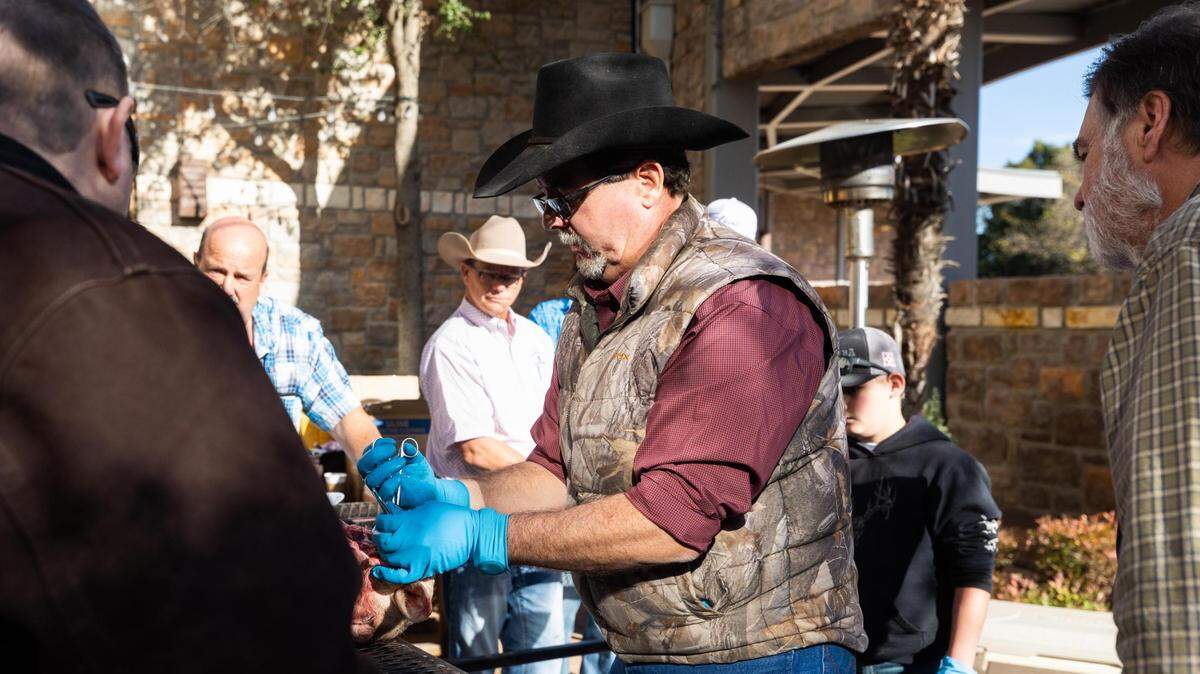
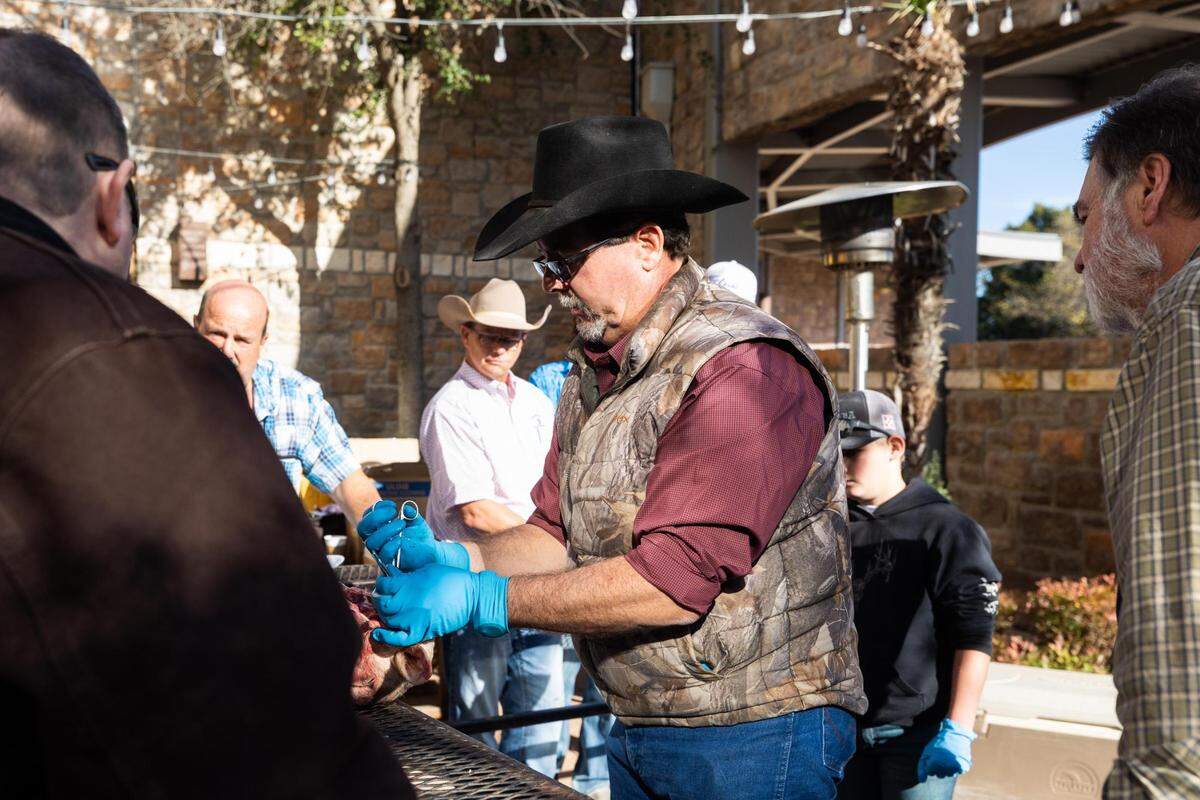
Kent Munden stands on a translucent tarp that covers a stone-laid courtyard at Horseshoe Bay Resort. He speaks in a soothing, measured tone as he bends down, flips open the lid of an ice chest and pulls out a severed sheep head.
More than a dozen people hover around a makeshift table, arranged in a U-shape with Munden at the center. Blood drips from the neck of the sheep, the fat red droplets pooling on the tarp, under the shade of palm trees. Chirping birds and a cascading artificial waterfall, the sure sounds of a resort-style conference center, set the backdrop to Munden’s interactive class.
It’s a mid-January morning, warm even by central Texas standards, and Munden — an animal identification coordinator with USDA’s Animal and Plant Health Inspection Service — is beginning the first of the day’s demonstrations on collecting tissue samples from deceased deer.
It’s a skill that’s increasingly relevant for Texas deer breeders and farm workers, who are now required to send in samples from every whitetail that dies on their farms. The state tests the samples — which come from the lymph nodes and the obex, a portion of the brain stem — for chronic wasting disease.
CWD was first observed in the late 1960s in mule deer at a research facility in Colorado. It’s a prion disease, similar to “mad cow” disease or scrapie in sheep and goats, although there has not been a recorded case of CWD spreading to humans. (The U.S. Centers for Disease Control and Prevention says that it’s still unclear how much of a risk the disease could pose to humans.)
An infected deer can carry the illness for months, potentially spreading it to other deer, before it begins to show symptoms such as listlessness and severe weight loss.
The disease is always fatal.
In the decades since it was first discovered, CWD has been detected in “free-ranging” deer in at least 27 states, according to the CDC. Texas saw its first positive in a wild mule deer in 2012, then the first positive in a captive deer in 2015. The state then saw a rash of positive cases in 2021, which the Houston Chronicle described as an outbreak of “unprecedented severity.”
TPWD tightened its CWD regulations temporarily in mid-2021 and permanently in late 2021. It now requires that lymph node and brain stem samples be sent in for every single captive deer death, compared to the previous rule of 80% of deer deaths. TPWD also now requires CWD tests for every live deer — typically taken from rectal tissue — before it’s transported to a release site.
Classes such as Munden’s help breeders become certified to collect those samples themselves, instead of paying someone else to do it.
To demonstrate the process, Munden lays the sheep head facedown on the counter-height table and stands over it with a pair of forceps and tweezers. He digs around the brain, listing out instructions and tips as he goes.
“It’s similar to cutting a rubberband,” he says. You have to get the correct lymph node, or “they’ll ‘no-test’ your sample.” “When you cut heads off, it’s going to make or break your obex.”
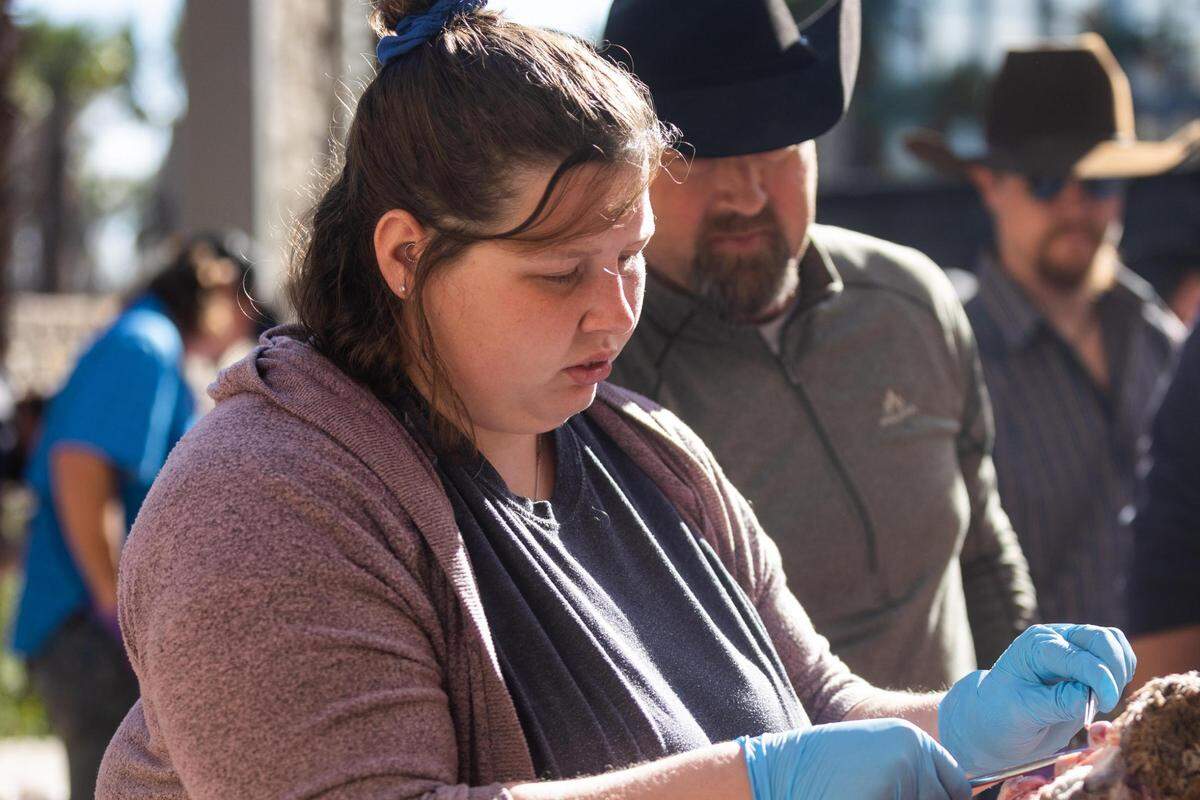
Then, it’s the students’ turn. Each is given a sheep head; some are placed on the table above the tarp, while others are set up over orange Home Depot buckets emblazoned with “Let’s Do It” on the side. They use tweezers, scissors and “spoons” that Munden specially makes for the task.
The sheep heads aren’t exactly the same as deer heads, says Kaden Baker, an inspector at the Texas Animal Health Commission. But sheep heads are a bit fattier. If the class can get passable samples from those, Baker says, then they should be fine when they’re collecting samples from deer.
A heated debate
Breeders are obligated to abide by the new sample collection regulations, but that doesn’t mean they approve of them.
The Texas Deer Association, alongside the Deer Breeders Corp., has lobbied hard against the new rules, which it sees as saddling breeders with an unfair burden. CWD regulations are so central to the industry’s agenda that the Texas Deer Association’s website provides talking points for breeders.
Deveny, the ranch manager at Mossy Rock, said he thinks that state agencies should support industries and help them navigate issues such as CWD.
“They’re not helping us through it,” Deveny said. Instead they’re saying, “‘Y’all just withstand this regulation because we can tolerate zero risk.’”
Woven through the heated debate about regulations and containment plans, there’s broad agreement that a CWD positive can be catastrophic for a breeder. If a captive deer tests positive, TPWD may eventually require a full “depopulation” of the farm — the killing of the entire herd.
And whether a breeder has been in the industry for 18 months or a lifetime, a herd culling would be devastating.
But Mitch Lockwood, TPWD’s big game program director, says the regulations are necessary, up to and including depopulation. An uncontained outbreak could spread to numerous farms, he said, but breeders aren’t the only ones in the equation.
“It’s clear that our existing rules were not effective at containing the disease. And so that puts the entire industry at risk, not to mention the free-ranging resource out there,” Lockwood said. “There’s a lot of people who depend on this resource, not just deer breeders.”