
‘An era of unregulated data centers.’ AI battle heads to the Texas Capitol
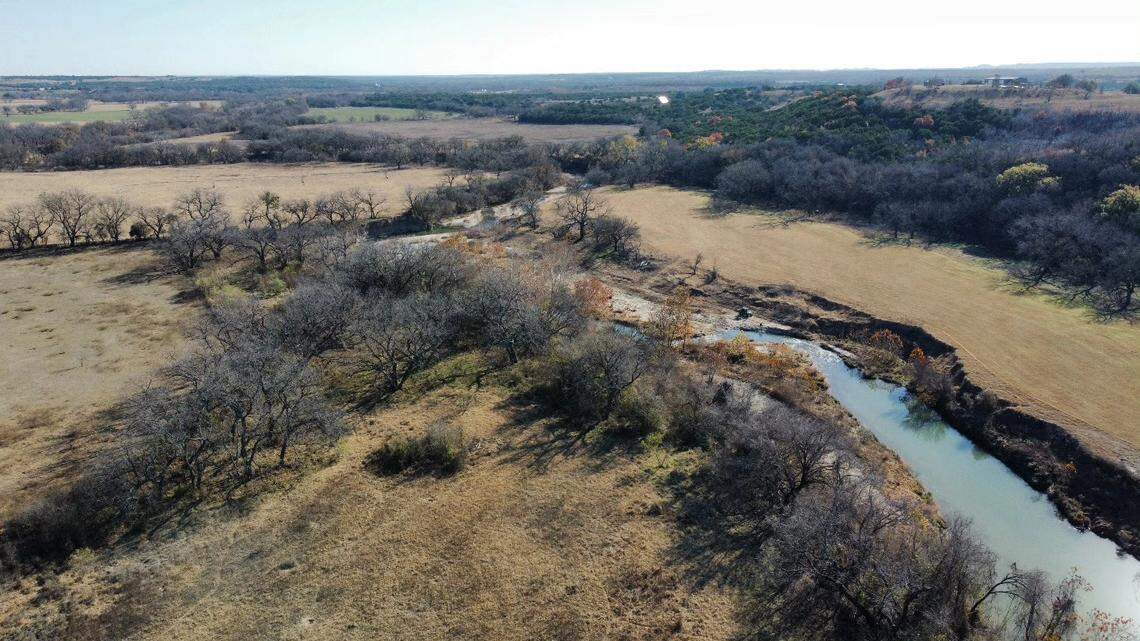
The fight over data centers isn’t technically playing out in Laura Crawford’s backyard. No – instead, it’s just across the fence line.
In her case, it’s the Comanche Circle project near Glen Rose that’s slated to move in next door, but other Texans have fought data centers in cities such as Fort Worth, San Marcos and Amarillo.
“For us, the closest building will be 300 feet from our property line,” said Crawford, a co-founder of Protect the Paluxy Valley Inc., whose home is near the Somervell and Hood County border. “We’ll be able to see them from our back porch.”
Now, the debate has made it to the state capitol, where Texas lawmakers are weighing the effects of data centers statewide — pros and cons — as they prepare to meet in January for the next legislative session.
The discussion comes as the industry flourishes, driven by the rise of artificial intelligence and cryptocurrency mining.
Texans have raised concerns about environmental and health impacts, a strained power grid, water availability and noise as they oppose data centers setting up shop in their communities. On the flip side, the Data Center Coalition, a group representing the industry, says there are misconceptions about data centers’ impact on water usage, affordability and grid reliability. The group stresses economic opportunities and demand for data across business sectors.
As the battle brews, several legislative committees are studying issues related to data centers at the bequest of Lt. Gov. Dan Patrick in the Senate and House Speaker Dustin Burrows, who announced interim charges in late March. That gives lawmakers about nine months to hear from experts and Texans about the industry and potential new laws.
Ideas offered by legislators interviewed by the Star-Telegram included state regulations on water and energy use, reining in tax breaks and a temporary pause on large data centers in. Lawmakers emphasized a need for transparency with the public and balancing a business friendly-climate with protections for residents living near the facilities.
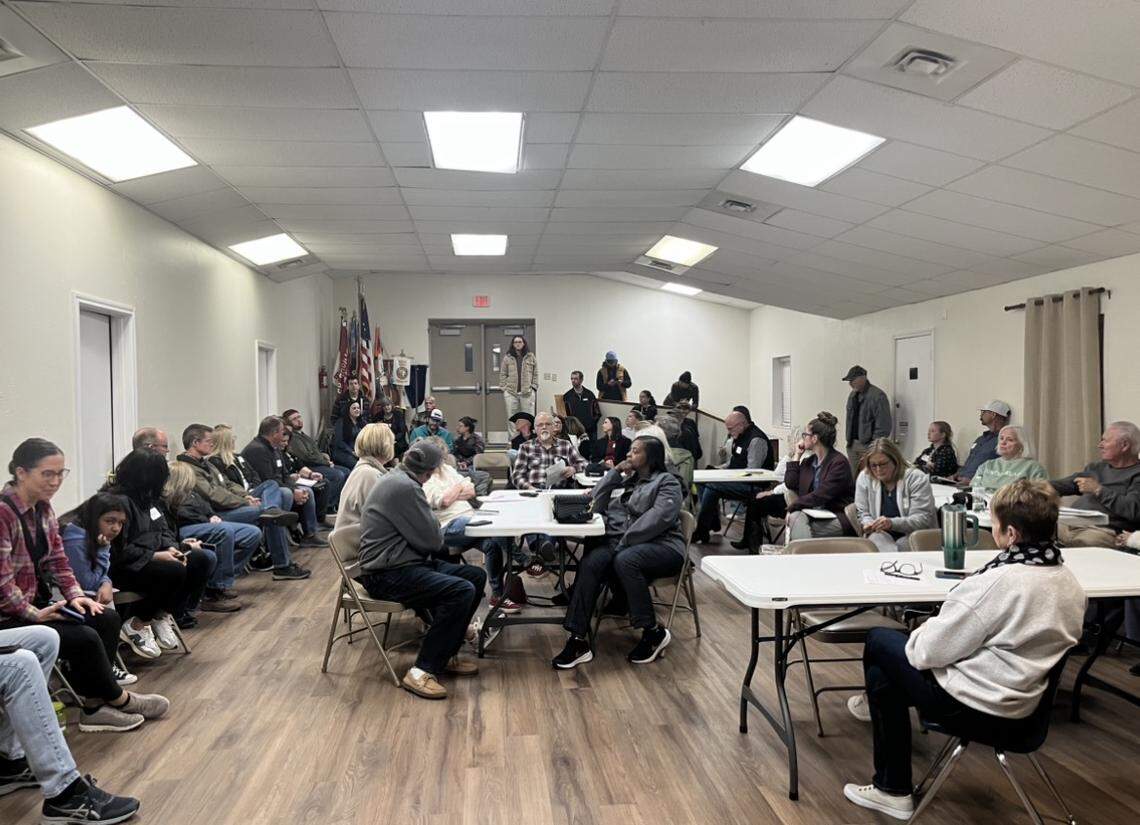
Texas lawmakers will study data centers ahead of 2027 legislative session
When lawmakers met in 2025, they addressed water funding and rules around businesses like data centers that use a lot of electricity, but the regulation of data centers wasn’t a standout issue in a session jam-packed with education, cannabis and property tax policies or subsequent special sessions.
Ahead of January, committees in the House are tasked with learning more about centers’ water use and conservation options, as well as data center development more broadly, starting with an April 9 hearing. Burrows has said the legislators should examine global competitiveness, national security and economic development, as they also look at the industry’s regulatory framework.
Representatives should “recommend proposals to streamline regulations while enabling communities to plan and manage growth responsibly,” one item says.
In the Senate, Patrick has directed lawmakers to look at data center growth management and find ways to balance economic development benefits against impacts on “landowners, private property rights, water infrastructure, and community integrity.”
Other Senate charges deal with water demands and “cost and consequences” of sales tax exemptions for certain data centers.
Burrows wasn’t available for an interview, but has previously said the “Texas House is committed to working to balance private property rights and economic growth while ensuring responsible planning that protects our communities.”
In a recent interview on the Luke Macias Show, Patrick said he’s “all in” on AI and Crypto, but that industry cannot be allowed to drive up electric rates for homes and businesses. A spokesperson for Patrick did not return an interview request.

‘The billion dollar question’
Dan Diorio, the vice president of state policy at the Data Center Coalition, said in a written statement that Texas could surpass Virginia as the world’s largest data center market by 2030. The group advocates for the data center industry and includes Amazon Web Services, Google and Microsoft among its members.
“Texas is poised to become the largest data center market for a reason: its pro-business environment,” Diorio said. “Lawmakers, business leaders, and local officials have all worked collaboratively to cultivate that environment. However, like any industry, regulatory uncertainty could lead to investment in other states over Texas.”
The economics of data centers is expected to be part of the conversation in the lead up to 2027.
Texas’ data center industry supported 364,000 jobs and contributed $52.6 billion to the state’s gross domestic product in 2023, according to a report from PricewaterhouseCoopers that was prepared for the coalition. The industry directly and indirectly generated $3.5 billion in state and local tax revenue that year, per the report.
Sen. Joan Huffman, a Houston Republican and chair of the Senate Finance Committee, will lead a review of 2013 and 2015 laws that give certain large data centers sales tax exemptions on goods that are essential to their operation such as emergency generators and cooling and electrical systems.
The exemptions’ cost to the state has ballooned from an estimated $14.6 million for 2014-2015 to a projected $3.3 billion for 2028-2029, according to a Senate interim charge.
The course the state is on with the exemptions is unsustainable and wasn’t anticipated when approved more than a decade ago, said Huffman, who was first elected to the Senate in 2008.
“How we fix this?” Huffman asked. “That’s the billion dollar question, right?”
Options could include limiting the exemptions or repealing them completely, Huffman said. The Legislature also needs to unravel what economic incentives have been granted locally to get a sense of variance across the state.
The state wants to encourage businesses to open in Texas, but the state also has existing benefits like abundant land, a great workforce, electricity that’s cheaper than many states and its own power grid, Huffman said.
“We have so much to offer that we have to sort of balance that with these incentives in any of these economic incentive programs that the state promotes,” Huffman said.
Andrew Mahaleris, a spokesperson for Texas Gov. Greg Abbott, said Texas leads the country in “strategically and methodically attracting investments that create jobs and drive innovation.” But the investments can’t come before Texans’ concerns and needs, he said.
Meeting Texans’ water and energy needs is the governor’s top priority, according to Mahaleris.
“Governor Abbott will continue to work with the Legislature to protect Texans and ensure their voices are heard,” he said.
Water, electricity and county control
Crawford, the landowner from Somervell County, and Joanne Carcamo, her fellow co-founder of the Paluxy Valley group, have several requests for lawmakers, as elected officials start their inquiries into data centers.
Crawford wants the “rule of capture” for Texas water reconsidered. In Texas, landowners can generally take as much groundwater from under their land as desired, even if that means their neighbors can’t use it.
Mandatory water studies, strengthened Texas Commission on Environmental Quality oversight and ending sales tax abatements for data centers are among the policy ideas Carcamo offered to lawmakers in written testimony prepared for the April 9 committee hearing.
She also proposed banning data centers in rural areas, where there’s often land used for farming and ranching.
“These industrial sites, they just don’t belong here,” Carcamo said in an interview.
The authority to make decisions about whether data centers can be built should be pushed down to the counties, said Crawford. Texas counties don’t have zoning authority and cannot regulate noise levels.
Crawford suggested giving counties development districts, allowing the local elected officials to determine what can be built where, like what the city does with zoning decisions. State noise regulations also need to be updated, she said.
“It does seem like local government hands are tied in most counties, and they just can’t even regulate them to get the precautions that landowner neighbors need, which is one of the big concerns,” she said.
State Rep. Ramón Romero, Jr., a Fort Worth Democrat who previously served on Fort Worth’s zoning commission, is doubtful lawmakers would extend that authority to counties.
“I’ve seen the state legislature under Republican leadership just continue to strip away power from local government,” he said.
Romero said cities and counties should control development, but favors an annexation approach where portions of unincorporated areas are essentially folded into the city and its infrastructure.
“I don’t think counties have the resources to do planning,” said Romero, who sits on one of the House committees examining data centers. “I think that it needs to stay within cities, and I think those people that find themselves out in the county should do a better job of understanding annexation and why annexation has more positive impact than negative impact.”
State Rep. David Cook, a Mansfield Republican who is running for a state Senate seat that includes Hood and Somervell counties, said data center developments are intentionally moving into underdeveloped and rural areas because counties “basically have no authority.”
A statewide, uniform process for regulating data centers that still allows “some limited local control” is needed, Cook said. One option could be a system similar to specific use permits for cities and counties, which would allow for public input and offer transparency around water and power consumption, he said.
Cook said he shares the concerns raised by Senate District 22 residents about electricity and water use. He expressed support for data centers generating their own power and using a closed loop water system, which recycles water that’s needed to cool equipment that generates heat.
Data centers are necessary, Cook said.
“I just want to make sure that we make good decisions as to where they’re going to be located and under what circumstances,” he said. Cook’s November election opponent, Democrat Amy Martinez-Salas, suggests statewide decibel limits and noise mitigation requirements, more county authority over data centers and water impact studies for projects exceeding a certain megawatt threshold.
She described current times as an “era of unregulated data center growth.” Martinez-Salas said she’ll be focused safeguards that prioritize farmers and protect property rights.
State Sen. Taylor Rehmet, a Fort Worth Democrat who is running to fill a full term representing Senate District 9 in Tarrant County, said the Legislature could take common sense steps like requiring companies to self-fund infrastructure costs, strengthening review processes and studying tax incentives to make sure they benefit the public over corporate interests.
“Right now, state lawmakers are surrendering too much responsibility for these centers to cities and counties, while state regulatory agencies continue approving these projects at an aggressive and potentially reckless pace,” Rehmet said in a written statement. “That approach just isn’t sustainable.”
Romero said the state should be inviting data centers to Texas, but in a responsible way. There should be clear standards around water use and electric grid impacts that developments must meet in order to set up shop in the state, he said.
“How do we get the highest quality projects that protect our resources — not just for the state, but, really, even for individual communities,” Romero said. “And then, not letting communities feel like we are just giving away the farm.”
What do data centers want from Texas lawmakers?
Data Center representatives will likely come out in full force next year, as they make their cases for what policies should — or should not — be passed.
Diorio with the Data Center Coalition said centers in Texas take communities’ power, water and air concerns seriously, but that there are “misconceptions” about industry.
The state’s data center industry uses less than half a percent of the state’s total water supply, and is “actively investing in technologies that reduce consumption and promote efficiencies,” Diorio said.
“On power: the industry is working closely with ERCOT on long-range planning and in many cases these large data centers are actually adding megawatts to the grid and enhancing its stability,” Diorio said.
Ryan Hughes, a managing partner of Sailfish Investors, the developer behind the Comanche Circle data center, said the country is in a global artificial intelligence race, the foundation of which is data center infrastructure.
President Donald Trump has made AI dominance a national priority and has signaled streamlined permitting to keep the country ahead, Hughes said.
“Texas should be leading that charge,” he said in a written statement. “Instead, some Republican-led counties are weaponizing regulations they were never granted authority to adopt, obstructing the projects that deliver the President’s agenda.”
Hughes expressed opposition to zoning powers for counties.
“Capital cannot commit to multi-year build cycles when counties are free to repurpose limited authority into ad hoc zoning regimes,” he said. “The Legislature should set a clear statewide framework that protects communities, holds developers accountable and prevents unlawful local obstruction.
Counties without zoning authority should not be impediments to the AI buildout this country needs,” Hughes continued. “NIMBYism is not slowing down China and Texas cannot afford to let it slow us down.”
A special session on data centers?
Some data center opponents and elected officials have sought a special session given the community concerns and the rapid expansion of centers across Texas. The move would let legislators create laws sooner than 2027.
Only Abbott can call a special session, and he hasn’t convened lawmakers as of early April or signaled plans to do so.
“If he called us in tomorrow, I’m not sure what we would do because... we haven’t done the due diligence to figure out what’s really going on, and what needs to be fixed, and what’s actually not broken,” said Huffman, the Senate Finance Committee chair from Houston.
A special session on data centers is preferred over interim charges alone given the urgency of the topic, Crawford said. Still, she’s heartened to see the issue discussed among lawmakers ahead of January.
“It is encouraging that they’re taking some action and hearing the public outcry,” Crawford said.
Rep. Helen Kerwin, a Glen Rose Republican, has asked Abbott for a temporary pause on large-scale data center projects.
The governor should also create a committee made up of experts and lawmakers to examine the long-term impacts of the centers, she said in a March 12 letter to the governor. The group could examine water consumption standards, ERCOT grid impacts and “transparency requirements so local communities are properly informed when large-scale projects seek significant resource access,” according to the letter.
State policies could then be driven by research conducted while the projects are halted, Kerwin said in an interview.
“Let me make it clear though: I support AI,” said Kerwin, whose daughter Brooke Rollins serves in Trump’s cabinet as agriculture secretary.
The technology is coming one way or another and must be embraced, she said.
“We have to win this race with all the other nations that are forging ahead with us, but I think we have to do it right, in order to protect our water and our electric resources, not for a decade or two, but for generations to come,” Kerwin said.
Data center interim charges for Texas lawmakers
Lawmakers received the following interim charges to study as committees meet over the coming months:
Texas Senate
Managing Data Center Growth: The Senate Business and Commerce Committee will “study the adequacy of current statutory, regulatory, and infrastructure frameworks to meet the rapidly increasing demand from large electric loads, such as data centers” and “recommend ways to balance economic development benefits of this growth against the impacts on landowners, private property rights, water infrastructure, and community integrity.”
Data Center Investment and State Fiscal Effects: The Senate Finance Committee will “study the cost and consequences of the sales tax exemption provided to data centers” and “make recommendations providing safeguards to ensure that Texans benefit from data center investment.”
Assessing the Water Demands of Energy-Intensive Technologies: The Senate Water, Agriculture and Rural Affairs Committee will “examine the current water consumption rates for high-consumption cooling technologies, including data centers” and “make recommendations to improve transparency for local water providers and ensure industrial growth does not compromise the affordability of water for Texas residents and agricultural producers.”
Texas House
Data Center Water Use and Conservation: The House Natural Resource committee will “examine the total water usage of data center operations in Texas, including direct and indirect uses” and “evaluate regulatory, permitting, and infrastructure considerations for water-efficient data center development, particularly in water-stressed regions.” Lawmakers will also “consider policy options to optimize water resources and enhance water stewardship in the data center sector.”
Data Centers: The House State Affairs Committee will “study the development of data centers in Texas, including its importance to global competitiveness and national security” and “evaluate the direct and indirect economic growth potential fostered by in-state data center development, including growth multiplier effects and economic diversification.” Lawmakers will also “identify existing secondary and post-secondary education and training opportunities and recommend pathways to satisfy increasing labor demands” and “review the existing regulatory framework governing data center development and recommend proposals to streamline regulations while enabling communities to plan and manage growth responsibly.” Additionally, the committee will “study the implementation of SB 6 and the Large Load Batch Study Process proposed by the Electric Reliability Council of Texas, as it relates to data centers, and identify how grid-connected data center facilities and co-located resources can support grid resilience and reliability.”
This story was originally published April 8, 2026 at 10:23 AM.
CORRECTION: Dan Diorio is the vice president of state policy at the Data Center Coalition. An earlier version of this article misspelled his name.
