29 new Texas laws affect taxes, veterans and more. Here’s how they could affect you.
As we ring in the new year Saturday, more than 20 new Texas laws will kick in. Among them, a ban on transgender student athletes competing on sports teams aligning with their gender identity and a penalty for unlawful dog restraint.
Twenty-three bills will become law on Jan. 1, 2022, and six bills will become law on Jan. 18. They were passed during the 87th Legislature Regular Session, which went from Jan. 12 to May 31, 2021.
These new laws follow more than 660 Texas laws that took effect Sep. 1. Those laws allowed the permitless carry of handguns, restricted abortion access and changed the Sunday hours for beer and wine sales, among other things.
Laws that take effect in January cover topics such as property taxes, renter rights, veteran benefits, bail reform and police budgeting.
Here’s a look at some of the new laws that are most likely to affect your everyday life.
To review the full list of new laws, visit the Legislative Reference Library of Texas.
Flood risk for renters
If you’re a renter in Texas looking for a place to live, you might want to know if the property is likely to get flooded. Under current Texas law, landlords don’t have to tell you.
Starting in the new year, landlords will have to disclose to potential renters if a property is in a floodplain or if it has been damaged by flooding in the past. This will make Texas the second state, after Georgia, to require flood disclosure to tenants, according to an NPR report.
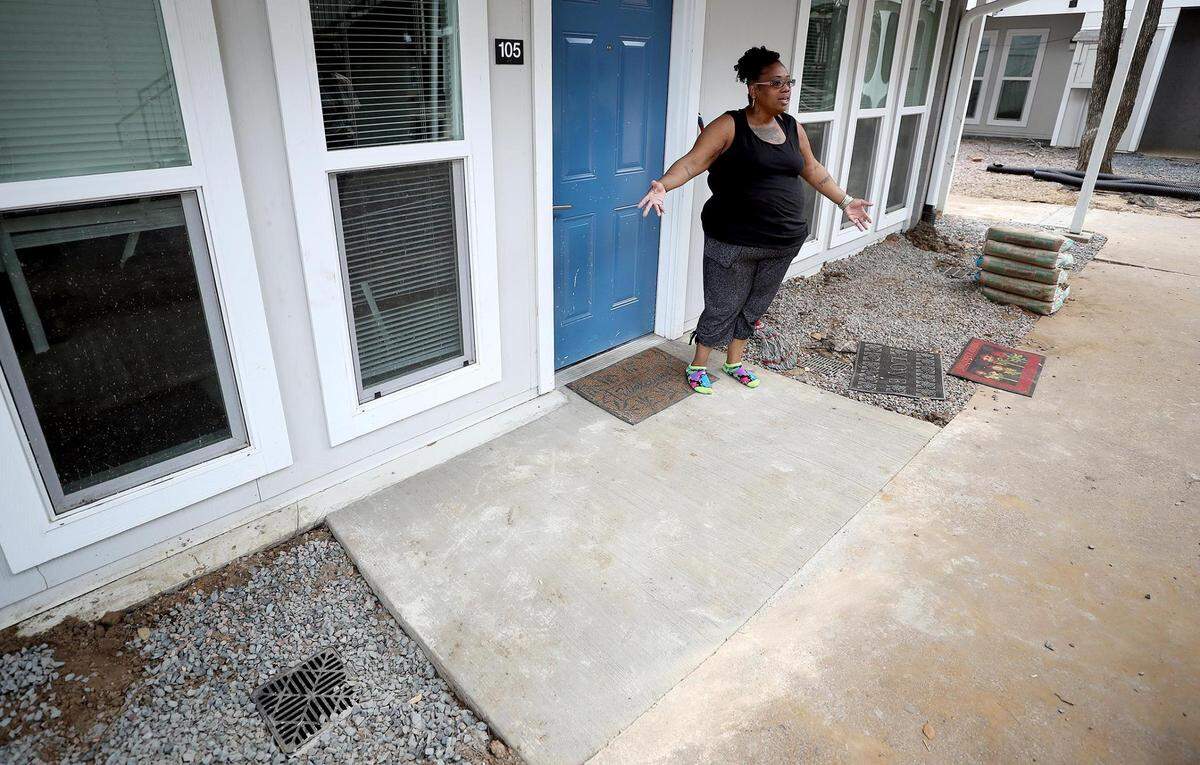
This follows a similar law passed in 2019 that entitled property buyers to flooding information. As of 2019, nearly 40% of Tarrant County households were renters, according to Census data.
Under the new law, landlords should provide a written notice with boxes checking whether the property is in a floodplain and/or has flooded at least once within the last five years.
Even if the home you’re considering is not in a floodplain, it might still be susceptible to flooding. Visit the Federal Emergency Management Agency flood map to determine if the location is in a flood hazard area.
Keep in mind that most tenant insurance policies do not cover damages or loss incurred in a flood, so you may want to look for insurance coverage that would cover that.
Transgender student athletes
Starting Jan. 18, athletes at public schools will be required to compete on teams that correspond with the sex listed on their birth certificate. That would exclude transgender students from playing on teams aligning with their gender identity.
Texas lawmakers made this change a priority this year, saying it ensures fair competition. Advocates of transgender Texans have opposed the law, saying it denies transgender youth the ability to fully participate in school sports.
“The effects of constantly being attacked by legislators is taking a toll on her mentally and physically,” Denise Rogers, the mother of a transgender daughter, said at a hearing on the bill this year. “Simply put, this legislation is hurting my child.”
Possible tax breaks for chicken and rabbit owners
As property taxes continue to rise for Texas homeowners, a new law might help.
The law keeps chicken coops and rabbit pens off of Texans’ property tax appraisals, so they’re not included in the value of your home. That means landowners could pay lower property taxes.
Texas is the sixth highest state when it comes to property taxes, according to the Tax Foundation. In 2019, the latest year data was available, Texas collected $67 billion in property taxes, 5.5% more than the prior year.
Though Fort Worth’s property tax rate has steadily declined since 2016, many residents have actually experienced higher tax bills because of skyrocketing property values. For 2022, Fort Worth expects that its property tax rate will be 73.25 cents per $100 valuation, 1.5 cents lower than the current rate.
Voter approval for police budget cuts
Municipalities in Tarrant County will soon be required to gain voter approval before reducing their law enforcement budgets. This would apply to the 71 police departments in the county.
Municipalities in other Texas counties with more than 1 million residents, namely Travis, Dallas, Harris, Bexar and Collin counties, will also have to hold elections to reduce law enforcement funding.
The bill is part of a Republican effort to protect police department funding after Austin cut its police budget.
“This patronizing legislation assumes that voters are not involved in local budgeting processes and requires a vote on the budget itself if the line item for police services decreases,” Farmers Branch resident Sarah Berel-Harrop said at a hearing for the bill. “This essentially voids the power of localities to construct their budgets by delaying implementation and requiring the added expense of an election.”
On the election ballot, you’ll see a detailed explanation of each proposed reduction, the amount that will be reduced, where the funding will be reallocated and how long the reduction will be in effect.
Tax breaks for homes in historic districts
A new law could help homeowners of historic properties afford to keep them.
Under the law, an appraiser who is determining the market value of a home located in a historic district has to consider any restriction on the homeowner’s ability to alter, improve or repair the property. Typically, they’re not allowed to do so under preservation guidelines.
Advocates say the current law places homeowners in historic districts at a disadvantage, because homeowners in surrounding areas are able to make improvements that drive up their property’s market value. This, in turn, deters buyers from purchasing property within historic districts.
“As a resident of Dallas, within a designated historic district, this bill is a vital and much needed tool for our historic districts,” said Joanna Hampton at a hearing on the bill. Hampton said that, while her area is seeing substantial growth and reinvestment, tax assessors should take into account a historic designation.
In the Fort Worth area, that would include residents of:
- Butler Place Historic District
- Central Handley Historic District
- Eighth Avenue Historic District
- Elizabeth Boulevard Historic District
- Fairmount-Southside Historic District
- Grand Avenue Historic District
- Leuda-May Historic District
- Oakhurst Historic District
- Cotton Belt Railroad Industrial Historic District
Grapevine Commercial Historic District
Visit the National Register of Historic Places to find out if your neighborhood is on the list.
Unlawful restraint of dogs
Dog owners should be careful when using restraints on their dog, because it could be criminalized in some cases under a new law.
Under the law, owners can’t leave their dog restrained outside unless they have adequate shelter and water. They also can’t use a chain or weighted restraint. The restraint can’t be one that is shorter than 10 feet or one that is not properly fitted or causes pain or injury.
“SB 5 does not introduce new penalties – it simply makes the current penalties in the Health & Safety code enforceable so that animal control officers can take action to prevent dogs from dying and keep neglect cases from escalating into animal cruelty cases,” Stacy Sutton Kerby, Texas Humane Legislation Network director of government relations, said at a public hearing on the bill.
The law is aimed at protecting dogs from unsafe conditions, like extreme weather. An offense would be a class C misdemeanor with a maximum fine of $500.
Quicker homestead exemption
In the new year, homeowners will get a homestead exemption in the same year they buy their home, instead of having to wait until the following year for the exemption to take effect. This could allow you to save more on property taxes.
State Sen. Paul Bettencourt, who authored the bill, says it will address a longstanding issue in Texas that prohibits homeowners from tax savings in their first year of home ownership.
”Senate Bill 8 is important because homeowners currently are losing out on anywhere from a few months to almost a full year of their homestead exemption and therefore paying more than they should in property taxes,” said Rep. Hugh Shine, who sponsored the bill.
To find out if you’re eligible for a homestead exemption and how to apply, go to access.tarrantcounty.com.
Cash bail on violent crimes
Effective Jan. 1, a bail reform law will prohibit a person who is charged with a violent crime from being released on personal bond. Those released by a judge on personal bond do not have to pay, but they do have to sign a contract agreeing to appear at all required court dates and promise to abstain from breaking the law. Under the new law, they will instead have to give the court cash to get out of jail before their cases are resolved.

“SB 6 is legislation which is really a direct response to the increase in violent and habitual offenders being released on personal bonds along with low-cash bonds,” Sen. Joan Huffman, author of the bill, said at a hearing.
Groups like the ACLU oppose the bill, saying it would “erect significant barriers for community bail funds that provide crucial resources for individuals who are too poor to pay for their release, as well as provide a needed safety valve for counties. It expands pretrial detention and undermines the presumption of innocence that is central to our criminal legal system.”
Veterans will get more benefits
Texas veterans and their families will be entitled to various new benefits starting in the new year.
One law will exempt a new veteran-owned business from the franchise tax and would waive all state filing fees until the earlier of the fifth anniversary of the business formation or the date the business ceased to qualify. These exemptions would expire on Jan. 1, 2026. To be eligible, the owner would have to provide verification to the comptroller of their service and discharge.
Starting in 2022, any veteran who has been awarded full disability compensation will be entitled to a total property tax exemption, regardless of whether they are actually receiving that compensation. Prior to this change, only veterans receiving the compensation were eligible. This will increase the number of disabled veterans eligible for a total homestead property tax exemption.
Another law will expand the eligibility of veterans’ surviving spouses for a total property tax exemption. The law will soon include spouses of any service members killed in the line of duty. Currently, spouses of members who died in accidents such as car crashes and other noncombat events are not eligible for the exemption.
Disabled veterans will soon have to apply for a new license plate or placard with the international symbol of access in order to park in disabled parking. Only veterans with the new license plate will be able to park in those spaces. To find out if you’re eligible and apply for the new plates, go to txdmv.gov.
This story was originally published December 30, 2021 at 4:00 AM.