As Minneapolis erupts over ICE, a quieter battle wages on every day in North Texas
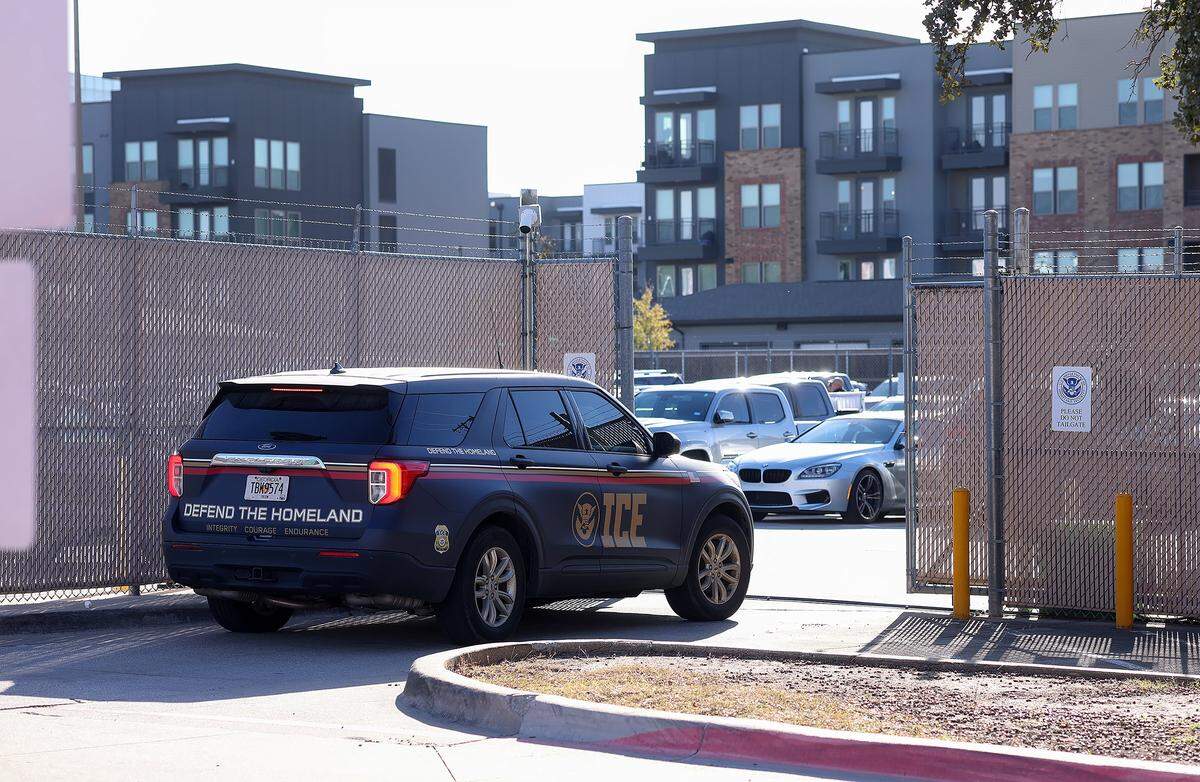
The air was frigid and windy on a January morning as Sandra Avalos scanned Empress Row in Dallas for cars entering and exiting the Immigration and Customs Enforcement field office.
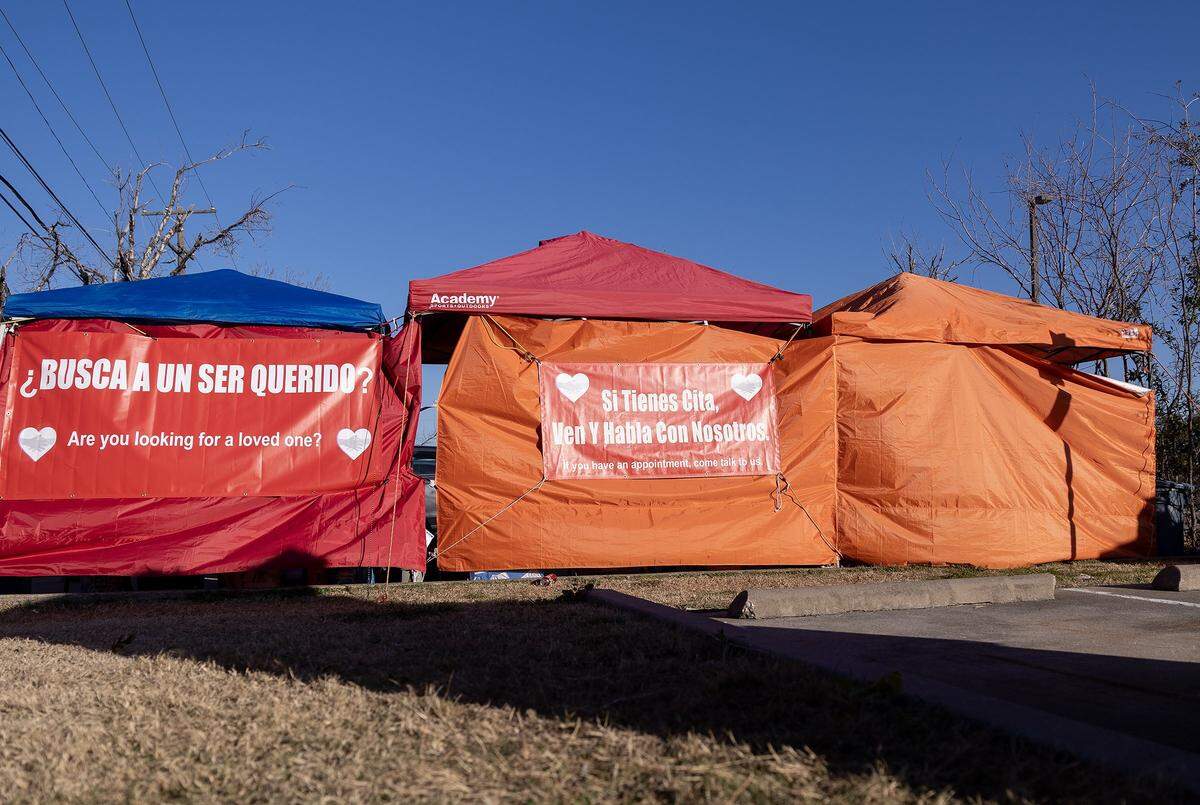
Avalos, who immigrated to the U.S. from Mexico as a child, helps erect two tents each morning outside the parking lot for the field office. A stack of papers listing the rights of detainees sits on tables inside the tents, and boxes of donated stuffed animals and clothes are on the ground nearby.
Since President Donald Trump took office for the second time last January, enacting a sweeping immigration agenda and deporting more than 605,000 people, Avalos and about 60 others like her have become a constant presence outside the ICE building. They’re part a nationwide group working to protect the rights of immigrants.
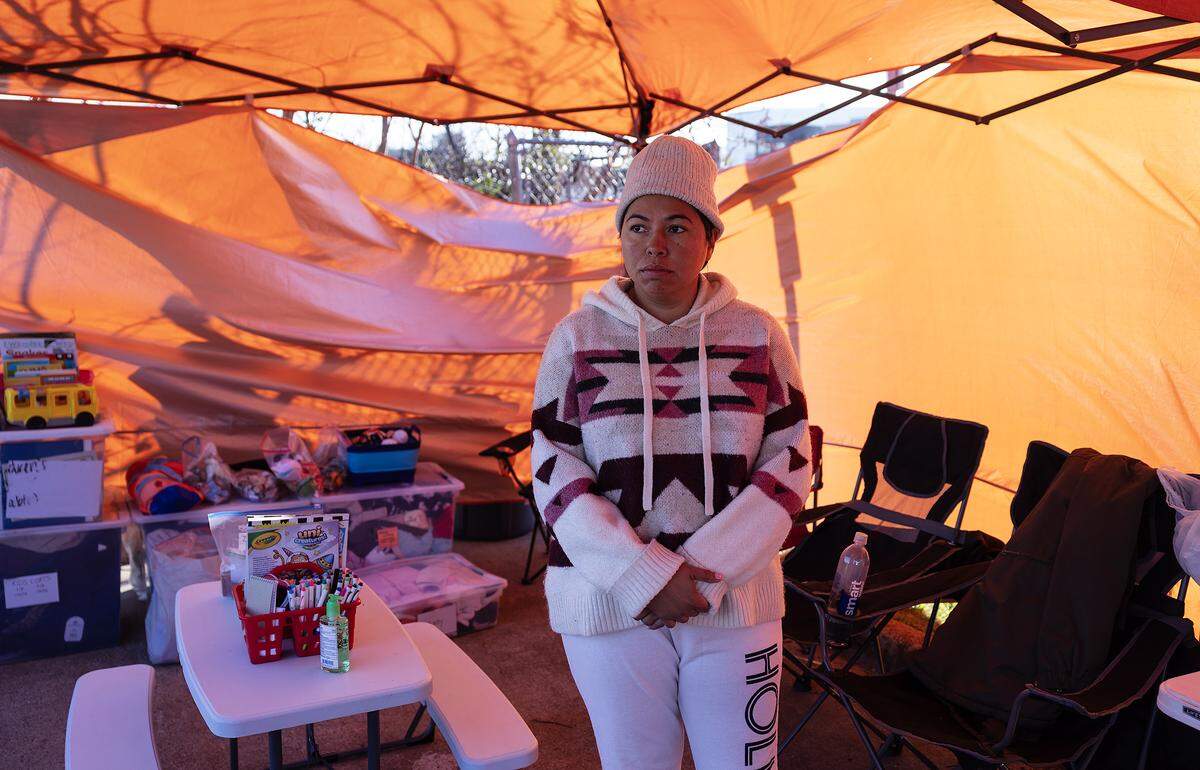
The Dallas field office, where a gunman killed two detainees and injured another in September, serves as a processing center for detained migrants, an administrative office for some Department of Homeland Security and ICE employees, and a location for check-in appointments. These check-ins are meant to give ICE a way to monitor people who have been released during the course of their immigration cases. Volunteers who stand outside each morning try to advise people of their rights, obtain contact information for a loved one in case they are detained, and troubleshoot the myriad problems that come up during these check-ins. These advocates — a mix of church members, seasoned activists and some who have never been a part of any movements — take shifts at the tent throughout the week.
Across the Metroplex, many of these advocates who focus their efforts on immigration have reinvented themselves to become de facto scholars of immigration policy and the inner workings of acquiring legal citizenship in the United States.
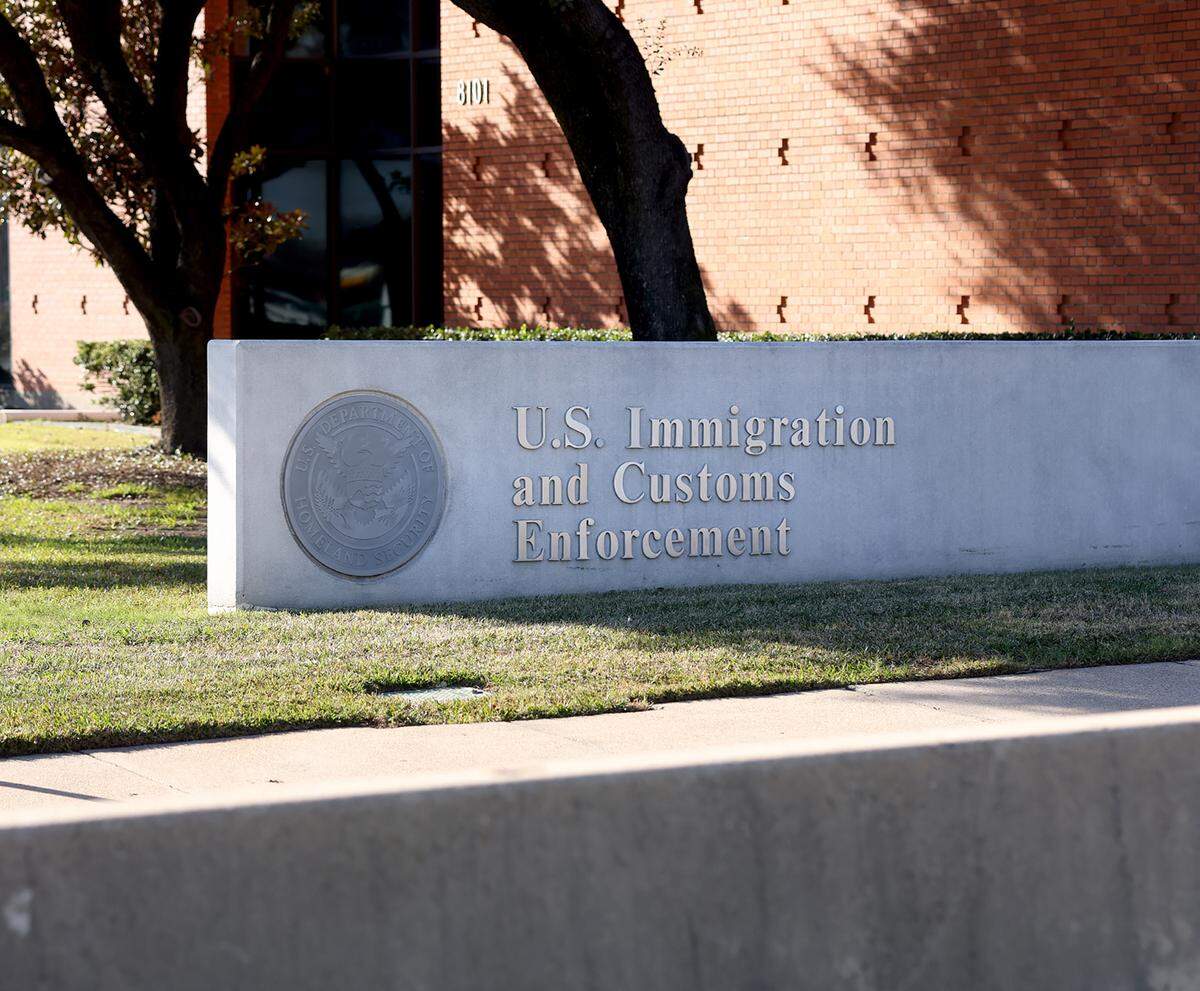
The tent has been part of a larger movement to monitor immigration agents at field offices and courthouses across the country. One of the biggest tasks each day is to keep track of who goes into the field office — and who does not come back out.
The Trump administration has said its sweeping immigration crackdown will protect Americans from “the worst of the worst.”
Homeland Security Secretary Kristi Noem has defended the actions of federal agents, and DHS has described its mission as “protecting the American way of life.”
Officials with the Dallas field office told KXAS Channel 5 in early January that officers had arrested more than 9,644 noncitizens in Dallas since October — 8,000 of whom faced criminal charges or had a criminal history. The field office averages roughly 100 arrests per day.
Avalos started volunteering outside the field office in October. She has returned each day since.
[Related: Do U.S. citizens have to show papers to ICE? What federal law says]
‘Low-hanging fruit’
“The tent,” as it’s become known, stands to help what Avalos describes as “easy pickings” for immigration officials: Young, single men or people who don’t understand how the immigration process works and show up unprepared for their appointment.
Avalos, and others, have seen cars remain in the parking lot for days on end after migrants went in for their scheduled appointments and vanished.
“What we began to see was that they decided to collect what we call the low-hanging fruit,” Avalos said. “And that’s when we started seeing a rise in arrest in the courts. And now the rise [in arrests] here, when folks come for check-ins.”
It’s one of the many, many bumps in the road that unfold across any given morning at the tent.
On that Friday morning, Avalos got word that a detainee needed critical medications. The detainee’s spouse was afraid to come in, fearful that they would be detained as well.
Lee Michaels of Dallas, a retired corporate attorney who started volunteering with court watch groups in New York and Texas, offered bring the medications inside.
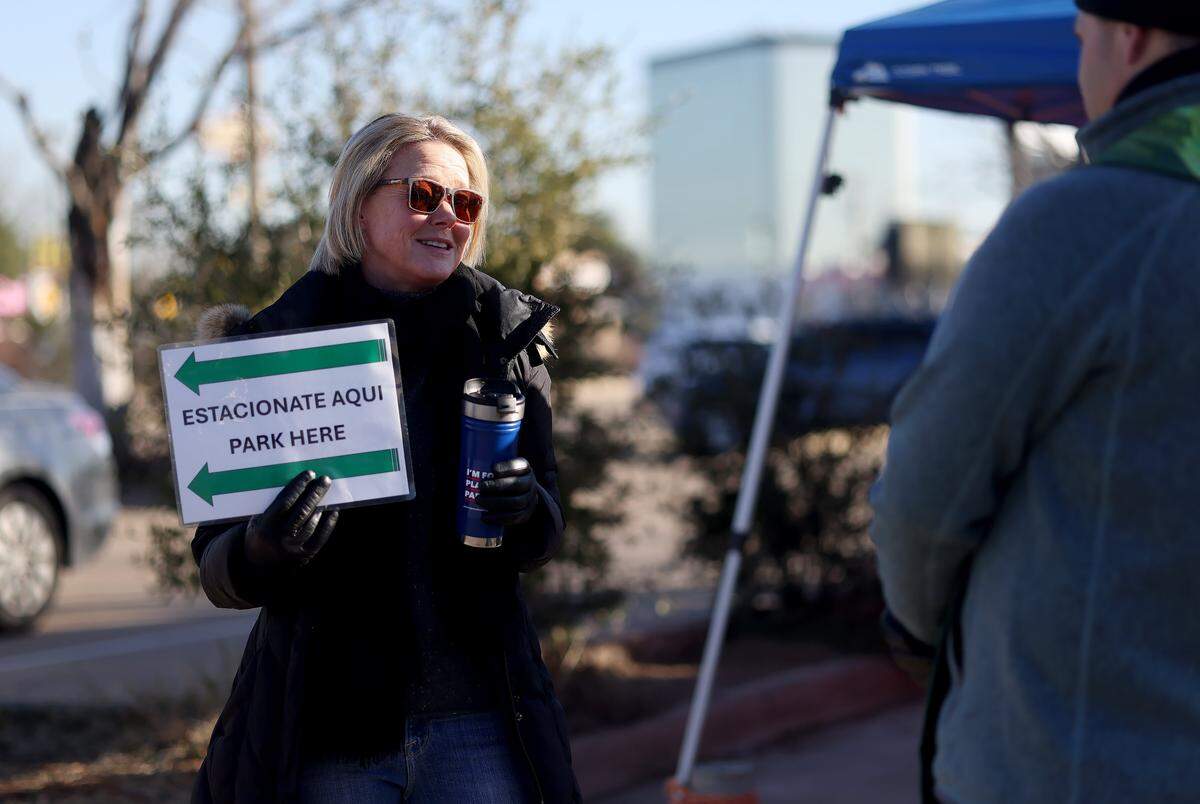
Michaels, whose first day volunteering with the tent was just a day earlier, came out several minutes later. The agents inside did not let her deliver the medications because she was not related to the detainee.
“‘Sorry, I guess she doesn’t get her medicine,’” Michaels recalled one of the immigration officials inside telling her. “I said, ‘Can I get a clergy person to come in with me to bring it?’ He said, ‘No, are you from the tent?’ And I said yes … I stood there and pleaded with him.”
Michaels told the official that she is a lawyer, but that didn’t help. She and Avalos discussed how to deliver the medications to the person waiting inside — so close to them, but so far away.
A constant, watchful presence
The tent has no official name, and it is not affiliated with one specific group. It operates autonomously, for safety reasons, Avalos said.
When volunteers go inside the field office to accompany people to their appointments, ICE agents often ask if they’re “with the tent.”
So the operation has a reputation, Avalos said. But she doesn’t mind.
“I love it,” she said with a laugh. “One of the biggest things about being a human being is … you can’t put it in a box. And when you can’t put something in a box, it makes them question a lot more things.”
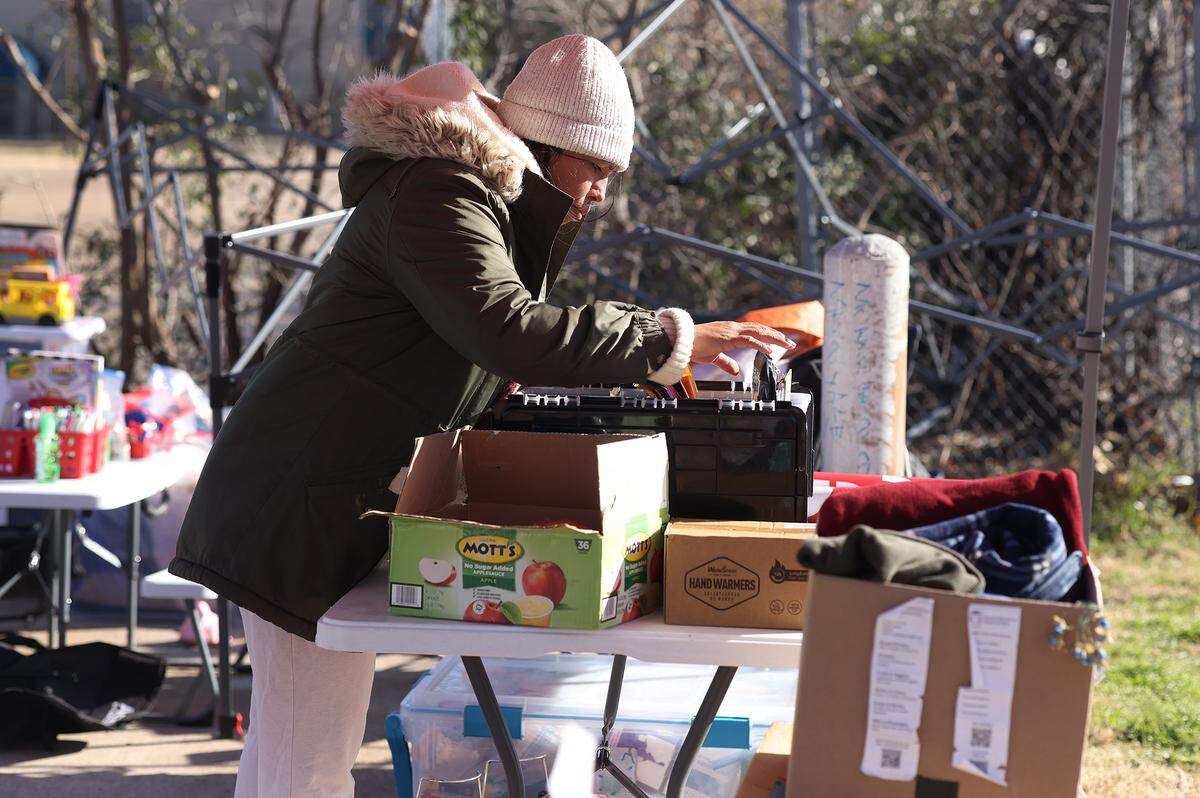
This movement, in many ways, is led by retired women who have the time to spend inside courthouses and other government buildings.
This network, which has grown since the summer, keeps a watchful eye. There is almost always at least one person monitoring hearings at the courthouse, and the tent goes up every morning, rain or shine.
Court watching, which was around long before Trump’s second term, involves volunteers who sit in waiting areas during hearings. They may just watch, but some record videos of agents detaining people.
Last summer, Noemi Rios of Dallas started the grassroots organization Vecinos Unidos to advise immigrants of their rights and to identify people who may be confused by or scared of the system.
That goalpost moved as the Trump administration’s immigration policies shifted. Organizations around the country began to see more ICE agents in courthouses. Last January, the administration rescinded a Biden-era policy restricting the arrests of immigrants in “sensitive” locations such as schools, churches and courthouses.
People who are interested in volunteering at the Dallas courthouse for Vecinos Unidos must complete an official training from the American Bar Association.
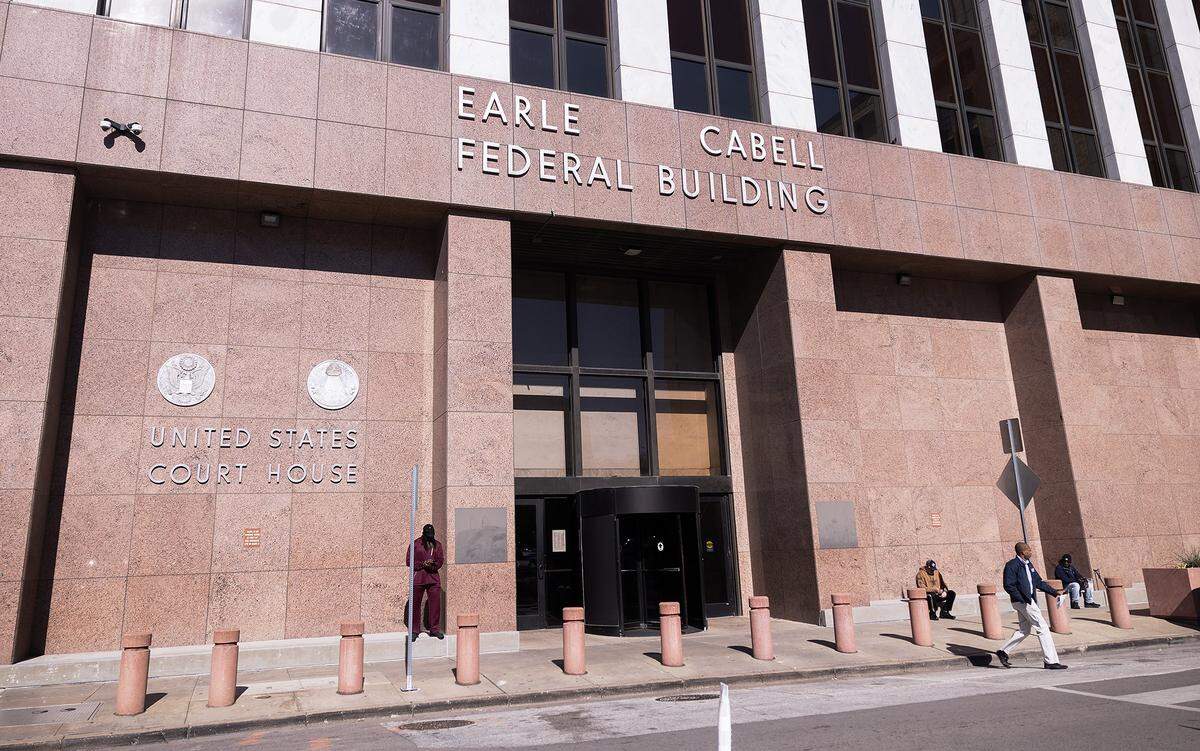
At first, the group of volunteers was small. Now, over 100 volunteers have attended an orientation.
The guidance for court watching is clear, Rios says. They are not there to engage. They’re not there to stop arrests. They are there to bear witness.
“We are not at court protesting,” Rios said. “We are not causing a disturbance. At most, we will ask people that are being taken for a phone number we can call, so that their family isn’t out of contact with them for days or even weeks ... never do we try to stop it. Never do we try to create any kind of physical barrier or complication for the ICE agents, and that has not stopped them finding a way to have physical contact.”
Targeting that demographic is purposeful, said Rios.
“Most of our volunteers are elderly white women who I thought would be the safest because of where they sit in terms of the spectrum of privilege in this country,” Rios said. “I share this with them very openly during our orientations, and it is very intentional on my part to seek out good-hearted communities of people that are retired with the privilege to show up in court. And it is no mistake that those people tend to be older white women.”
Other political movements, such as the No Kings rallies in 2025 and the Women’s March movement in 2017, also saw retired white women at the forefront. More than 7 million people participated in No Kings rallies in October.
Others, like Patricia Murphy, try to offer comfort and solace to the people waiting for potentially life-changing hearings.
Murphy pulls a squeaky cart, piled high with coloring books and stuffed animals for children, through the halls of the courthouse each day of the week.
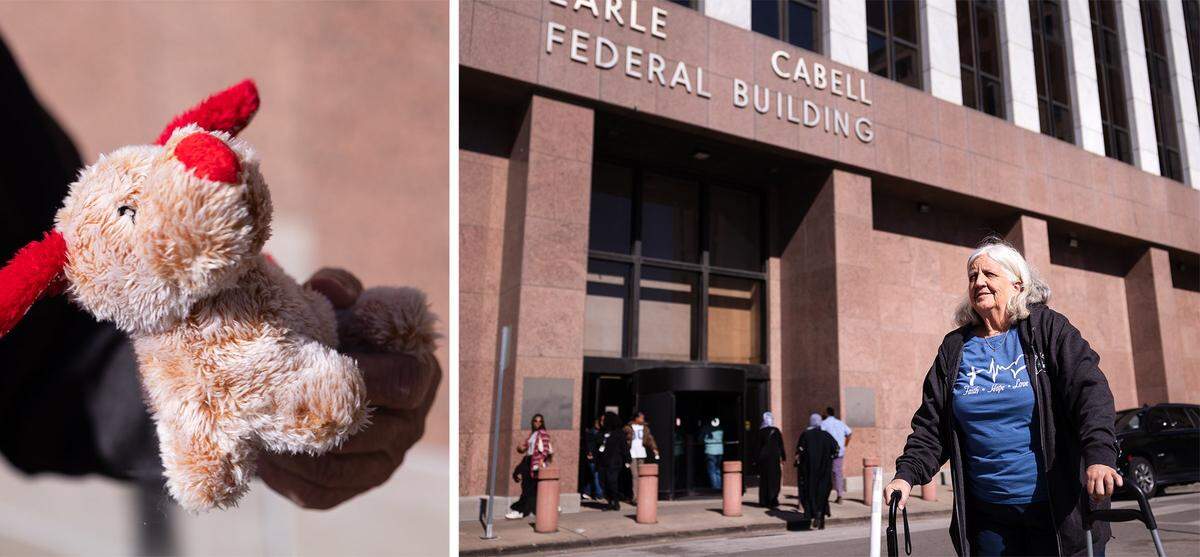
She checks the dockets outside each courtroom and looks down the hall, where two double doors mark the location where ICE agents will sometimes take people into custody.
A retired teacher who moved to Dallas to be with her daughter, Murphy sees in detail each day just how difficult it can be to work through the legal immigration system in the United States.
Even when it’s quiet — which it has been, for the last couple of months — Murphy said she is always glad she is in court to witness its inner workings.
“Even though it doesn’t always seem like there’s a need to be here, there’s still good that can come out of it,” Murphy said. “Even if it’s just a kid getting something that can preoccupy them while they’re in a courtroom, even if it’s just somebody seeing that somebody else is supporting them in whatever way.”
Back at the tent, a woman approached Sandra, who spoke softly to her before turning to the other volunteers.
“Where’s a pastor?” Sandra asked. “She needs a prayer.”
“I pray for the way forward to open”
The Rev. Diane Pennington, among the interfaith leaders who stand watch at the tent, gently took the woman’s hands in her own and bowed her head. They stood like that for a few minutes before the woman walked away.
“I’m very careful about how I pray. I don’t pray for miracles,” Pennington said. “I pray for calm. I pray for peace. I pray for the way forward to open.”
Another faith leader who volunteers with the group, the Rev. Mara Bim of Royal Lane Baptist Church in Dallas, said that the role religious leaders play in protest movements is important — but it has never been more fraught for her community.
“There was an Episcopal bishop in New Hampshire last week, who said to get your affairs in order, because now is the time that you’re probably going to put your bodies on the line.”
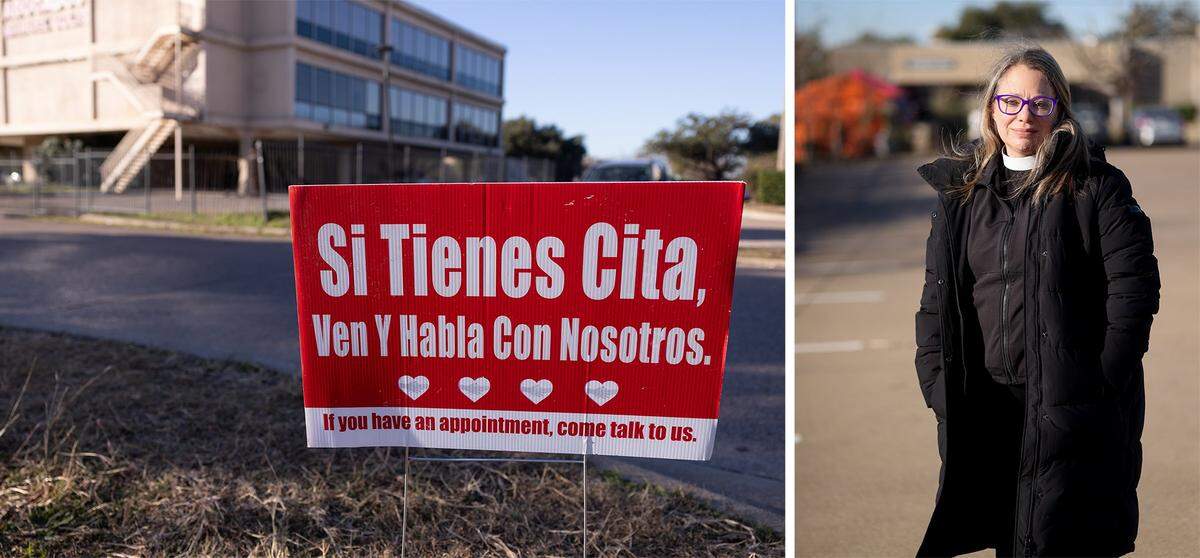
Bim was referring to Bishop Rob Hirschfield, who gave his clergy a dire warning after Renee Nicole Good, a 37-year-old mother and U.S. citizen, was shot and killed by an ICE agent in Minnesota on Jan. 7.
Bim said that she wants pastors to show up in their communities — but she also wants all Christians to think harder about their values.
“I do wish that congregants would pause and go back and read their gospel stories and recognize that if the message coming from your pulpit is not one of love, that you are probably in what I would call a heretical church,” Bim said.
When Bim volunteers, she moves between the tent and the courthouse, filming interactions with ICE agents and doing the same work other volunteers do. She waits. She watches. She learns.
“What is happening is inhumane,” Bim said. “It is un-Christian. There is nothing about it that is in the witness of the Christian faith.”
‘Wife swap’
Avalos walked back and forth, occasionally speaking to other organizers and walking to greet people turning into the parking lot.
As the minutes ticked by, Avalos was beckoned by advocates to deal with the minutiae of legal immigration. Neighbors showed up after a man was taken by ICE, leaving behind a young daughter.
A man whose wife was checking in at the office said agents wanted him to come inside, too. This happens often, Avalos said. She calls it the “wife swap.”
“That was one of the first things I saw, as soon as I started coming in October,” Avalos said. “The wives were the ones coming in for the appointments. The husbands were waiting for them to come out. One day, we were here, and we saw them take a man from the car ... they just arrested someone that was in the vehicle, waiting for their wife, and they took him.”
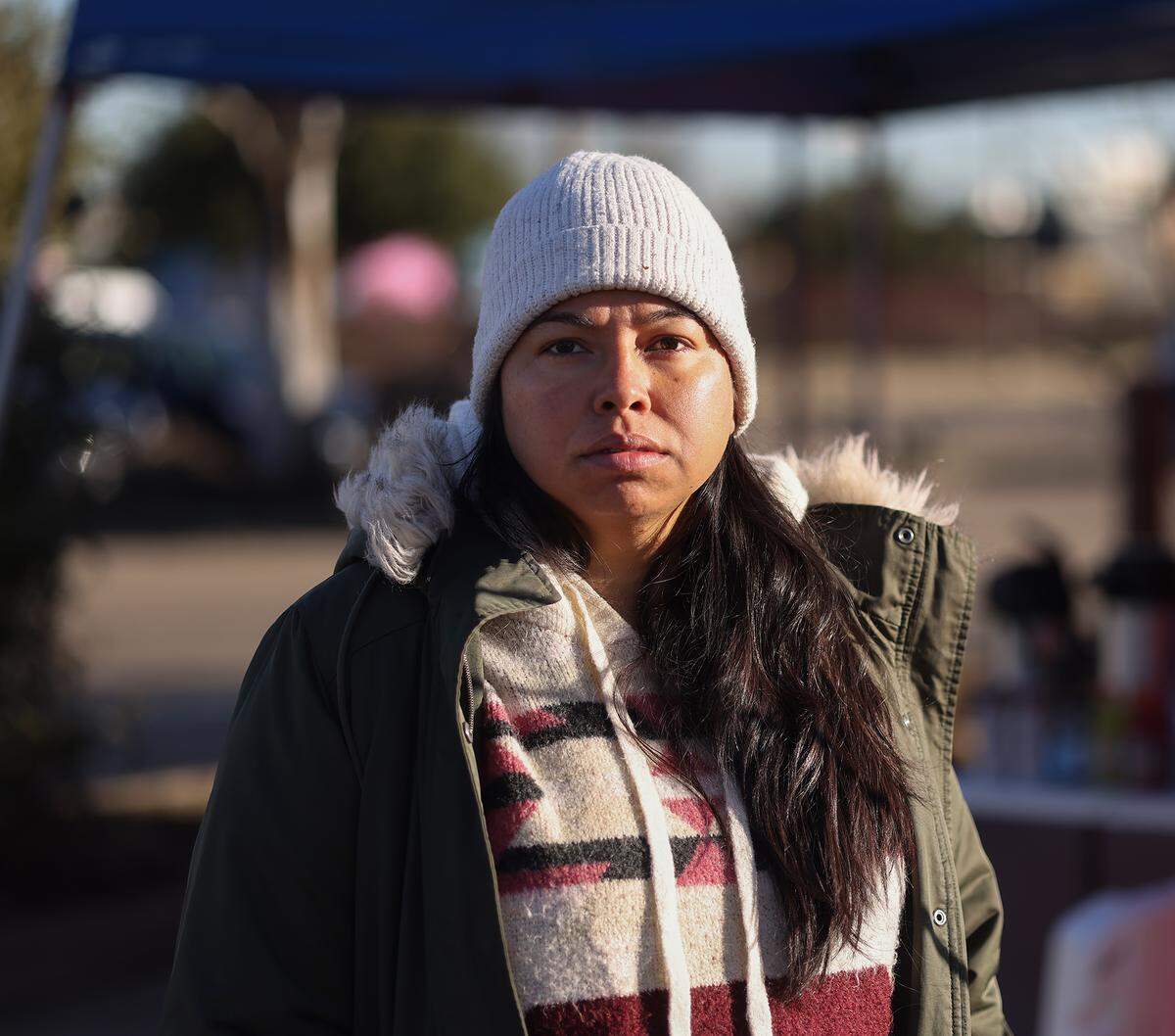
In the “wife swap” phenomenon, as Avalos described it, the husband usually never comes out.
Avalos said that in a different case, a woman was told ICE asked her husband to come inside to set up a court date for her.
The woman left to take their children to school, and the husband went inside. He didn’t return.
“She said, ‘Sandra, we’re good, we’re just waiting for him to get a court date,’” Sandra said. “And I said, ‘Let’s go online.’ I said, ‘According to this, your husband has been detained.’... Lo and behold, she gets a call, and he has been detained.”
Sandra showed the wife the record that all ICE detainees receive. It displays a number similar to what an inmate would be assigned.
“They lied to you,” Sandra recalled telling the woman. “She said, ‘that’s how we’re supposed to do it, we have three kids together.’ ... Any opportunity they get to arrest the head of the household, they’ll take it.”
On Jan. 13, the Department of Homeland Security posted a video, set to Lorde’s cover of “Everybody Wants To Rule The World” by Tears for Fears. It featured heavy military imagery, DHS officers putting faceless men in handcuffs, and Noem riding in a helicopter with several soldiers.
The video referenced the Bible passage Matthew 5:9.
“Blessed are the peacemakers,” the text in the video reads.
On Saturday, following publication of this story, a spokesperson for Immigration and Customs Enforcement responded to written questions from the Star-Telegram.
“Politicians and activists can cry wolf all they want, but it won’t deter this administration from keeping these criminals and lawbreakers off American streets,” the spokesperson wrote. “Thanks to the Big Beautiful Bill, we have plenty of bed space to do so. We have no new detention centers to announce at this time.”
This story was originally published January 24, 2026 at 5:00 AM.