Do U.S. citizens have to show papers to ICE? Here’s what federal law says
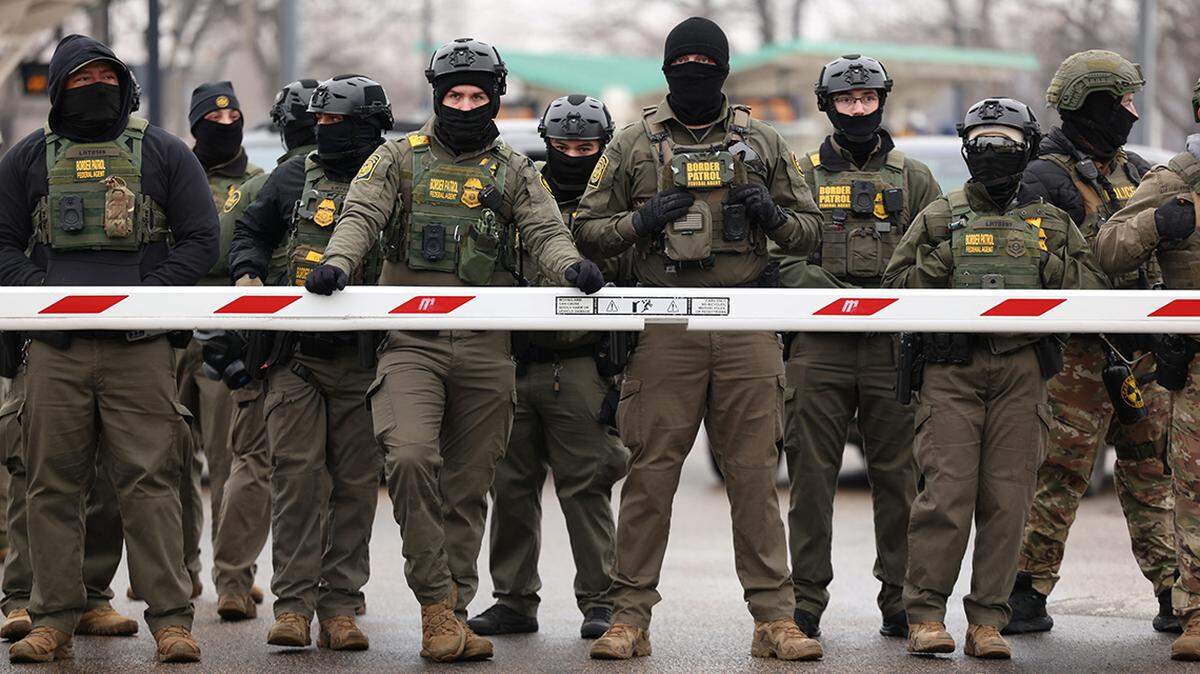
Reports of U.S. citizens being stopped or even detained during recent immigration sweeps have renewed concerns about who ICE can question and what documentation people are expected to carry.
An investigation by ProPublica found that more than 170 U.S. citizens were detained during ICE operations, with some saying they told agents they were American and were still held while officers verified their identity.
Those incidents have put a spotlight on what federal law actually requires during an encounter with ICE.
The Star-Telegram spoke with Huyen Pham, an immigration expert and professor of law at Texas A&M University, to shed some light.
Here’s what to know.
Are Americans required to carry proof of citizenship?
Despite the confusion, the answer itself is simple.
“There’s no provision within immigration law that requires U.S. citizens to carry proof of their legal immigration status,” Pham said. “Now if you’re seeking to enter the United States right at a border entry point, everyone has to show proof to enter, so that’s different.”
Even though there’s no legal requirement to carry citizenship documents, experts say having identification with you can help avoid delays if an officer decides to question your status.
Documents like a passport, passport card, birth certificate, or naturalization certificate can serve as proof of citizenship.
Who is required to carry immigration documents?
The requirement to carry proof of status only applies to certain people.
“Federal immigration law says every person who is not a U.S. citizen and who’s 18 and over has to carry any certificate of alien registration or alien registration receipt card issued to that person,” Pham said.
“That means if you’re a green card holder, or if you’re here on another type of visa as a tourist, a student or for work, you’re supposed to provide some kind of registration evidence that you have permission to be here.”
Failure to comply with the law carries a misdemeanor penalty with a fine or even imprisonment, Pham said.
Immigration attorneys say noncitizens should keep documents showing their status accessible, since not having them during an encounter with ICE could lead to delays while authorities verify their information.
What should I do if ICE asks for my ID?
If an agent is trying to verify your identity or immigration status, showing a government issued ID can help confirm who you are and speed up the interaction.
“For us in Texas, a Texas driver’s license requires proof of legal immigration status, so to me, that would be the easiest document that people could carry that shows that they have legal status in the United States,” Pham said. “It doesn’t mean that you’re a citizen, but that you have legal immigration status, and that’s presumably what ICE would be concerned with.”
When it comes to proving citizenship, Pham said the most reliable documents are a passport or a naturalization certificate.
Immigrants might use a green card, a passport with an admission stamp, or an I-94 travel record during an encounter, but “candidly, not everyone who would be asking for this identification would recognize all these different documents and what they mean,” she said.
When does ICE need a judicial warrant?
Reports of agents approaching homes have led many to question when ICE can legally enter private property.
Pham walked through what a judicial warrant actually authorizes and how it differs from other documents ICE might carry.
“A judicial warrant means it’s been signed by a judge or magistrate, and it allows ICE and any law enforcement to enter a home or private property,” she said.
Agents do not need a judge’s warrant to approach someone in a public space.
Pham said a valid judicial warrant should include a federal court name, a judge’s signature, a clear address and a specific date and time.
Administrative warrants come from the Department of Homeland Security and focus on a person, not a location, so they don’t allow agents to enter a home without permission.