
‘Not a political move’: Ten Commandments monument unveiled at Tarrant courthouse
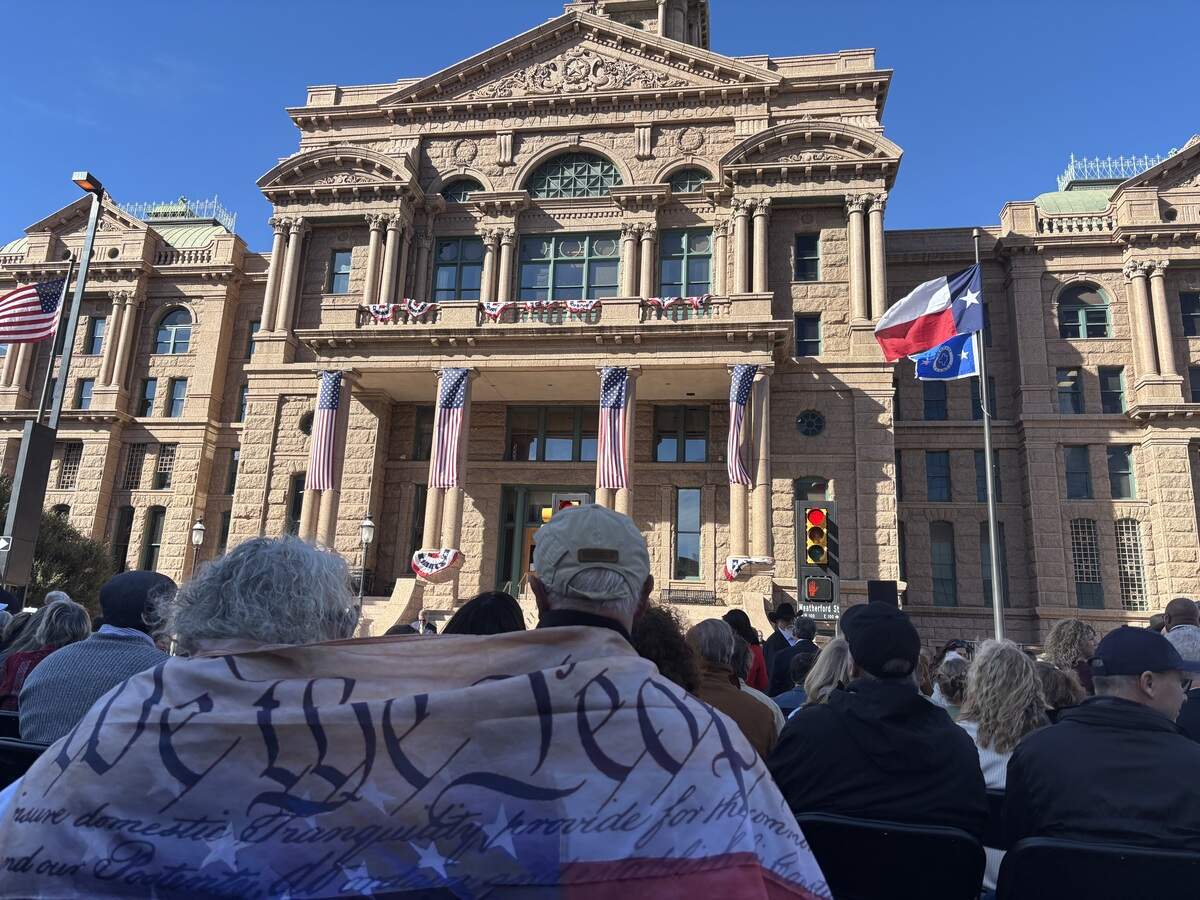
“We don’t just make room for you, God, we give you Tarrant County. Father, we rededicate this land, this county. Tarrant County is the Lord’s,” Rep. Nate Schatzline prayed in front of an array of American flags and the steps of the county courthouse.
A new solid marble monument rests in front of the Tarrant County Courthouse: the Ten Commandments. The religious and ethical laws were given to Moses in the Bible for the Jews to follow after delivering them from slavery in Egypt.
Beyond Sunday school, they are becoming prevalent in classrooms and courtrooms. Now, they are on display in downtown Fort Worth.
“I’ll have you know we are in a spiritual battle, not a political battle, for our nation,” he said before bowing his head.
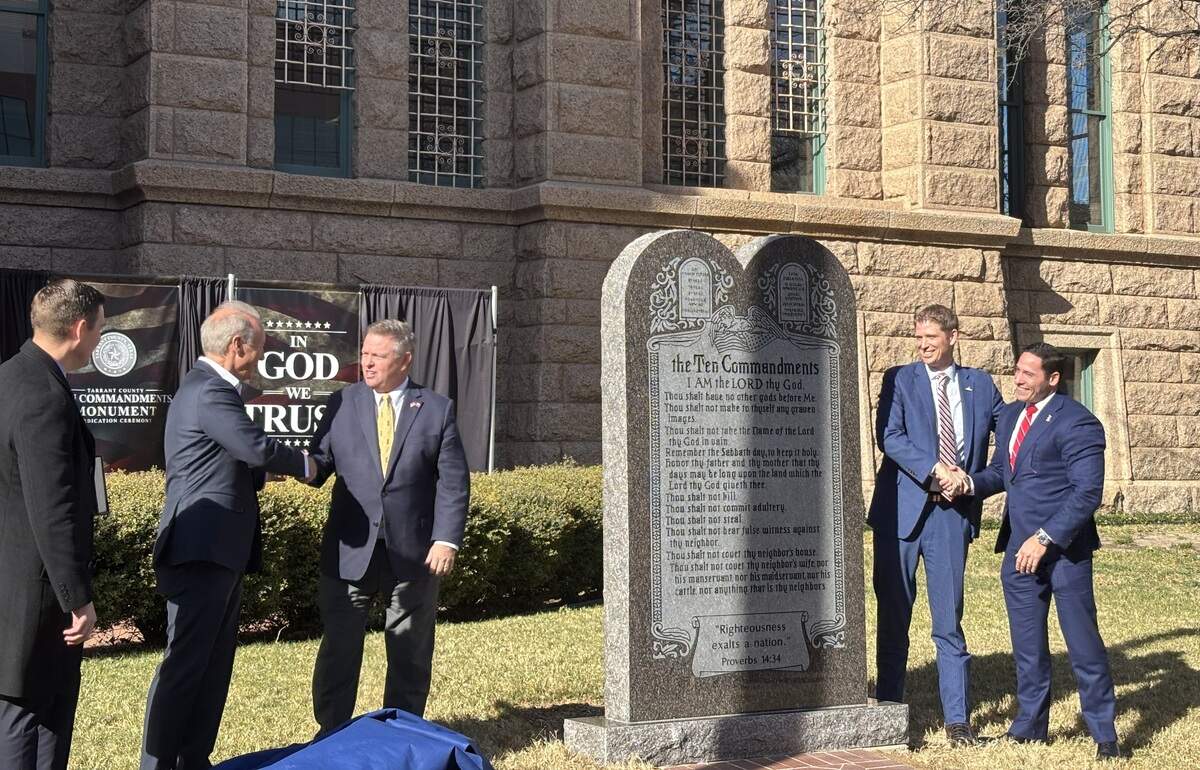
In April 2025, Commissioners Matt Krause, Manny Ramirez and County Judge Tim O’Hare voted to accept a donation of the monument and its upkeep in a 3-1 vote against Democrat Commissioner Alisa Simmons. Democrat Commissioner Roderick Miles was absent from the meeting.
The monument was privately funded by individuals including Schatzline and Senate District 9 candidate Leigh Wambsganss. O’Hare then put together a committee charged with organizing the logistics and designing the monument.
Alongside the guest speakers, the three Republican county leaders led the crowd of roughly 200 in dedicating the monument on the front lawn of the courthouse, where “it’ll stand the test of time,” Krause said.
Guest speaker Tim Barton, president of Wallbuilders, described on its website as a national pro-family organization, said the Ten Commandments are the basis of moral and legal code in the U.S., not a political controversy.
“This is not a political move in the way that somebody might argue, no, this is a restoration of some basic history and tradition of our nation,” Barton said.
In 2022, the Supreme Court largely abandoned the three-part Lemon Test, used to determine whether a law or governmental action violated the separation of church and state clause in the Constitution. It was set in place by the 1971 Supreme Court case Lemon v. Kurtzman.
“What that means is, everywhere they took a cross down, it can come back up,” said Kelly Shackelford, a constitutional scholar and president and CEO of First Liberty Institute, described on its website as working “to reclaim religious freedom in America.”
“Everywhere they put the Ten Commandments in the closet, it can come back out. All the things that our country is built on, the tradition of faith and freedom, can come back out.”
Since Lemon was overruled, the Texas legislatures have written bills to allow prayer in public schools and required the Ten Commandments be posted in every classroom.
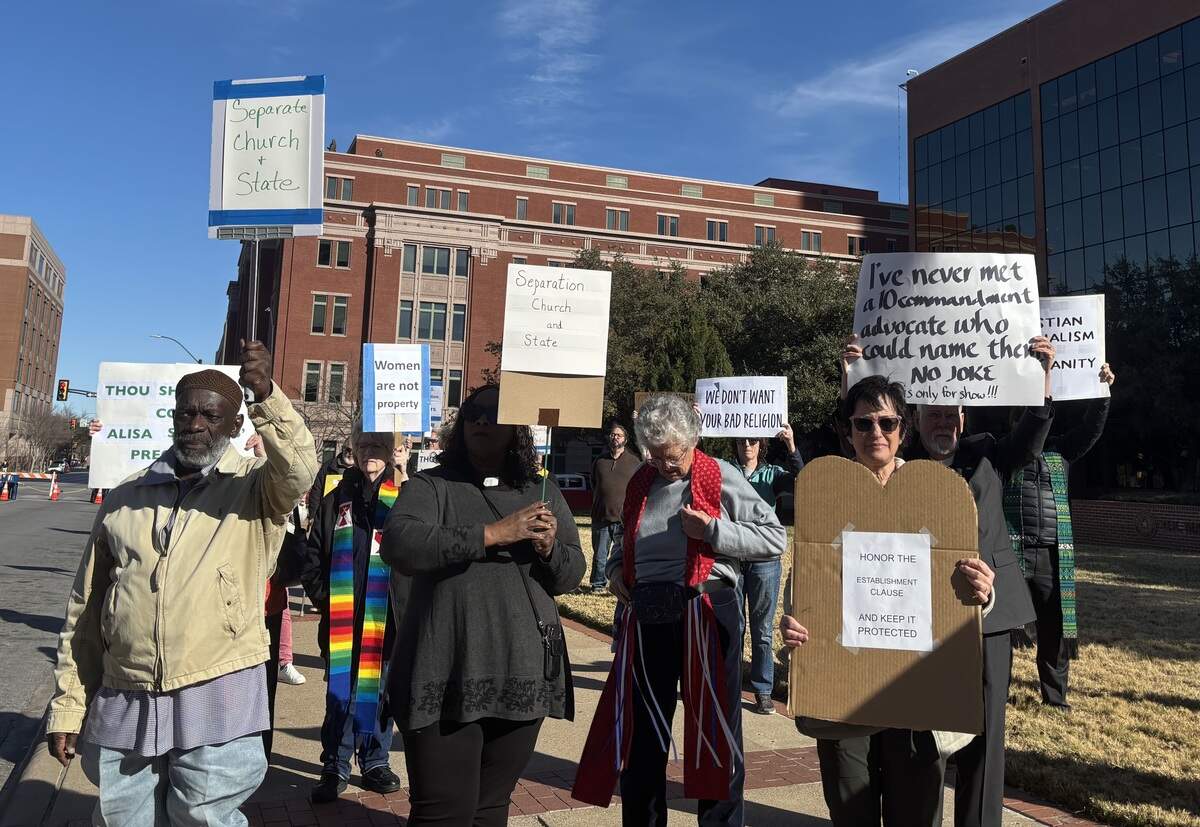
It’s not right, said Michael Bell, pastor of Greater St. Stephen First Church in Fort Worth. Bell, along with roughly 20 other interfaith leaders, peacefully protested the installation on county land.
Holding a sign that read “separation of church and state,” Bell said that displaying the Ten Commandments in front of the courthouse broadcasts Tarrant County’s intolerance and blurs the line between voluntary belief and government authority.
Bell said it’s unconstitutional and hypocritical of the county judge to allow and encourage the monument. O’Hare has recently been sued in his official capacity for allegedly quashing free speech in the commissioners’ court meetings.
“You got jail deaths, commissioner courts meetings are tumultuous, we have conflict in the city hall meetings,” Bell said. “Where is this being modeled? Where are the sentiments that are expressed in the Ten Commandments being modeled?”
It all comes down to the desire to impose the will of white Christian nationalists through governmental authority, Bell claimed.
Krause, who along with O’Hare led the effort to have the monument placed at the courthouse, said the monument has nothing to do with any label beyond being part of the history and fabric of America.
Krause said, “I would just come back with them and say, ‘Hey, you may not believe in the faith system where the Ten Commandments are from, but I think you still believe in the principles of don’t kill, don’t steal, and all those.’”
In response to the claims that the Ten Commandments not being perfectly modeled in Tarrant County, Krause said the protesters are right.
“I mean, we’re all flawed human beings. … I think we would all do well in our own individual lives to do what we can, to abide by the principles in the Ten Commandments,” Krause said. “And if we, each, each one of us, do that, then we’ll be better off as a whole society.”