Jails are the de facto mental health care in Texas. Sheriffs don’t want the job
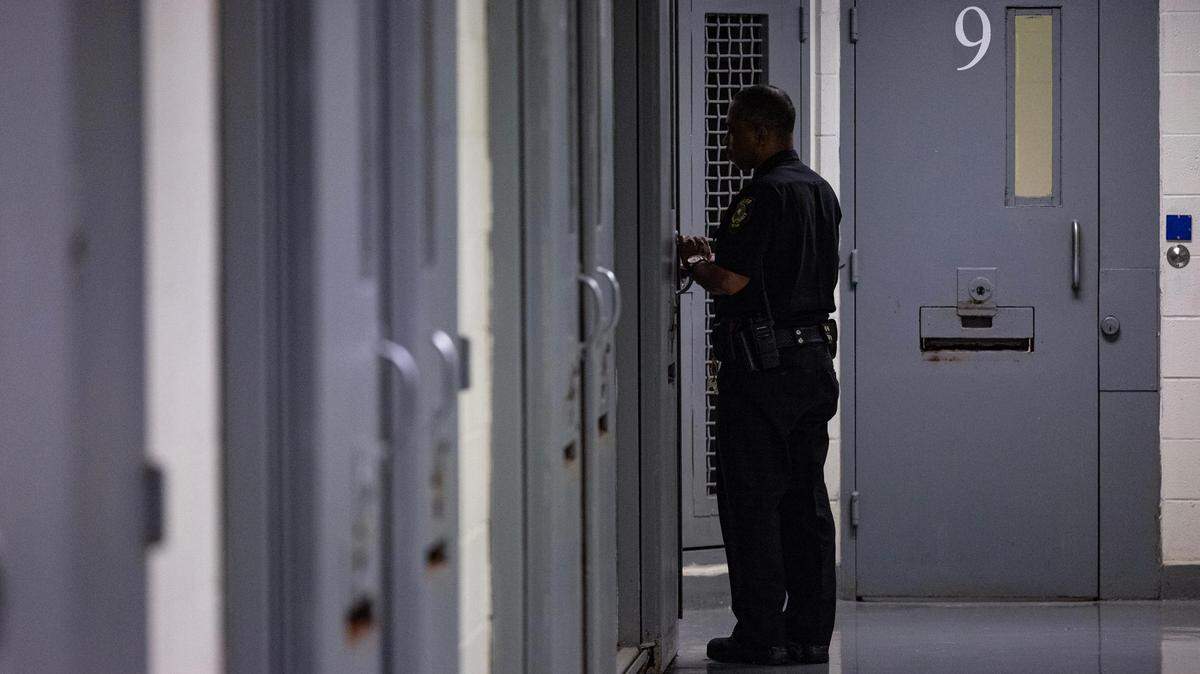
Johnny Jaquess has accepted the fact that he runs the largest mental health care provider in Collin County. He’d rather not, but without significant reform on mental health care from the state Legislature, the jail administrator for the Collin County Sheriff’s Office will have to shoulder the responsibility.
“When I got in this line of work, I wanted to be in criminal justice, and it used to be criminal justice,” said Jaquess, who is assistant chief deputy. Now he feels like he’s also “warehousing people that should be in a mental health facility.”
An estimated 1 in 3 people in Texas jails has a mental health disorder, according to the Meadows Mental Health Policy Institute, an organization that works to improve mental health care in Texas.
Population records kept by the Texas Commission on Jail Standards show that the average total of people incarcerated in Texas jails has hovered around 71,000 since 2022.
How did Texas get here? Why are jails ill-equipped to provide mental health care? And what can be done to ensure people get the services they need before incarceration?
The Star-Telegram spoke with sheriffs, jail administrators, advocates, lawyers and other stakeholders to get perspective on the issue.
How jails became the biggest mental health providers in Texas
The last bill President John F. Kennedy signed before his assassination in 1963 intended to overhaul the nation’s mental health care system. The Community Mental Health Care Act of 1963 put an end to underfunded, overcrowded and patently cruel mental institutions and usher in a new era of community-based services.
But Kennedy’s “bold new approach” to mental health care was never brought to fruition. The asylums were emptied, but funding and other resources for community-based treatment and programming failed to fill the void.
“We replaced one inhumane mental health treatment for another,” Jaquess said. “We have chosen to arrest the problem.”
That change was soon followed by another congressional action that made it even more difficult for the poor to access mental health care: amendments to Social Security in 1965 that limited Medicaid coverage of mental health care to 15 days in facilities with more than 16 beds.
States can apply for a waiver to the exemption that extends those 15 days to 60, but Texas has not done so. Even those sick enough to qualify for both Medicaid and Medicare are subject to a lifetime 190-day limit to inpatient psychiatric care.
This makes jail the only option for those who require long-term solutions but can’t afford private mental health care, according to Sonja Burns, an Austin-based mental health advocate.
“Hospitals need to be part of the solution,” she said in a written exchange. But in the current system, they are constantly forced to make unsafe discharges, “because there is no meaningful continuum of care and housing for persons with the most complex mental/behavioral health needs.”
This population needs “more intentional therapeutic communities” where they can receive appropriate care and be a part of the community, she said.
Why jails aren’t the appropriate place for mental health care
Travis County Sheriff Sally Hernandez has a line she repeats often: “We are not a hospital, though we do the job of one, and we are not a mental health facility, but we operate as one.”
In a phone interview, she noted the clear differences between jails and clinical mental health care settings, highlighting the latter as a more “healing environment” where people can receive the one-on-one care they need.
Mental health clinics are “totally different than inside a correctional facility,” she said.
Jaquess also cited staffing and resource issues as reasons jails are not suitable for mental health care.
“If it was a mental health hospital, how many psychiatrists would they have versus the patients that they have?” Jaquess said.
Further, going to jail can be a traumatic experience, and can even serve as the trigger for a first crisis in those who have not previously had mental health issues, according to Elizabeth Kelley, a New York City-based criminal defense lawyer who specializes in clients with mental and intellectual disabilities.
Having jails serve as the de facto mental health care system in Texas and across the country is a long-term public health issue, she said, because most people with mental disabilities are going to be released back into the public someday.
“And who do we want out in our neighborhoods? Do we want someone who was treated humanely and who has acquired the skills to live productively and peacefully in our community?” she said. “Or do we want someone who was damaged going in, and was even more damaged when they were released, and for whatever reason, they strike back, they lash out, they pose a danger to our community?”
What sheriffs are doing in lieu of mental health care reform
With no reform on the horizon, sheriffs and jail administrators have resigned themselves to the fact that it falls on them to run the largest mental health care facilities in their counties.
When he first began working in the Collin County Detention Facility, Jaquess viewed this as “catering to the problem” and didn’t think mental health care was the jail’s responsibility.
“We should not be doing that. We need an actual mental health hospital,” he said. “But I quickly realized that that’ll never happen in my lifetime. So if I’m going to have to do it, I need to make sure that I have the most humane facility for that.”
The Collin County Sheriff’s Office is using funds received through the American Rescue Plan Act, the Biden-era stimulus package for the COVID-19 pandemic, to build a medical and mental health addition to the jail.
He originally envisioned 414 beds, but he now expects it will be closer to 155 when the facility opens in fall 2026. The project is about half complete.
“We’re supposed to prevent crime, not just lock people up, and this is a way for us to do that,” he said.
Reducing the jail population was one of the hoped-for goals of the Tarrant County Mental Health Diversion Center when it first opened in January 2022. But administrators with My Health My Resources of Tarrant County, which runs the center, soon learned that the capacity and nature of the center were not enough to “materially reduce” the jail population, MHMR CEO Susan Garnett said in a recent interview.
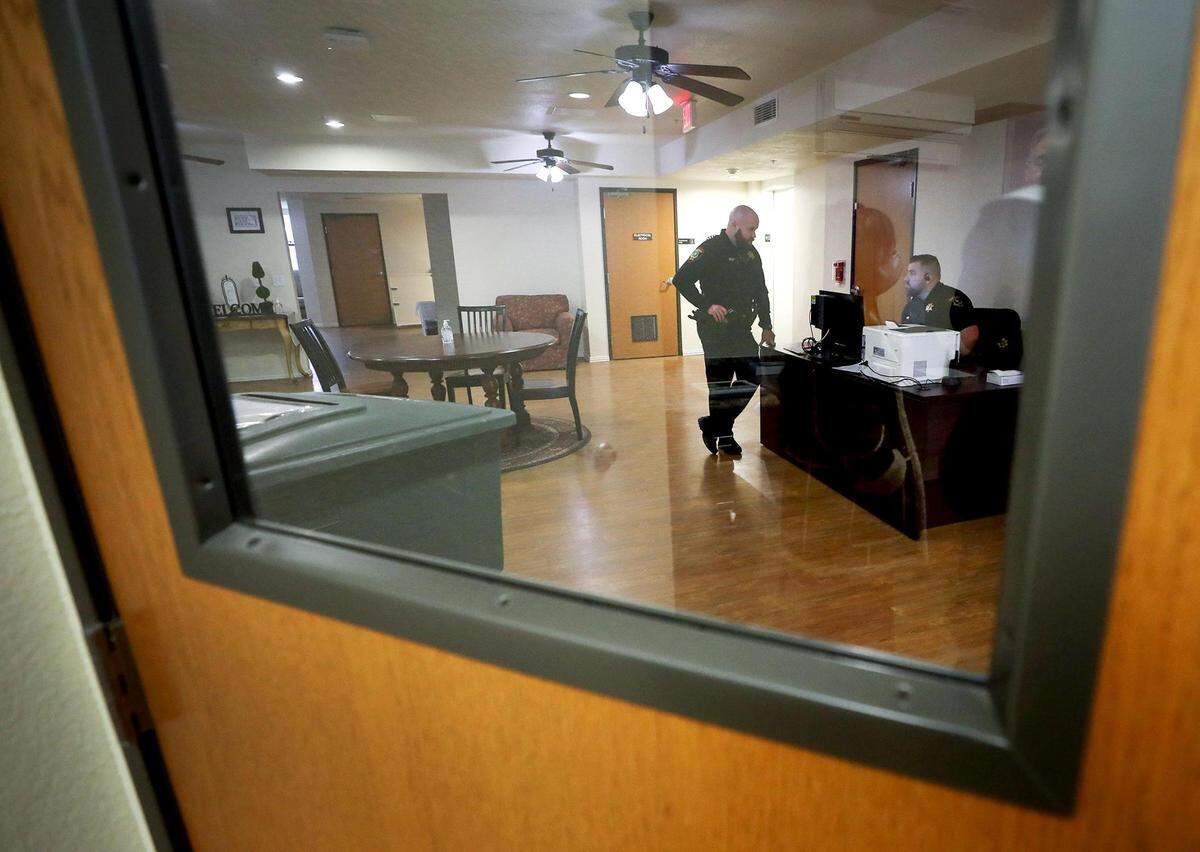
The center has a capacity of 20 beds, and the people it serves — folks brought in by police with minor offenses like criminal trespassing — have the freedom to leave whenever they choose.
There are “pockets of services” available to people before they come into contact with the criminal justice system, Garnett said. “But there’s also discontinuity between all those pieces.”
Diversion is well-intentioned and a good start, Kelly, the New York lawyer said. But it isn’t a solution on its own.
“There needs to be a way to ensure that people with various kinds of mental disabilities productively spend their day, whether they are capable of working, whether they’re capable of going to school, whether they are capable of and could benefit from some sort of socialization,” she said.
Down in Travis County, Sheriff Hernandez’s stated goal is “prevention as much as possible,” which has led to the creation of a crisis intervention team and an emergency mobile crisis unit that aim to provide mental health services to people before getting law enforcement involved. Such partnerships with the local mental health authority are key to facing the challenge, she said.
“Helping people and working on the issues that pertain to mental health is a huge duty and a huge responsibility, and I’m a firm believer it doesn’t fall on just one person,” she said.
What jail and mental health advocates say
Sheriffs say they need the state to provide better mental health services on the front end so that people get help before criminal charges are involved. But the legislature lacks a key element to accomplish that goal: public opinion.
“I don’t want to say out of sight, out of mind, but unless it impacts your life, most people, it’s easier to turn their head to it because it’s sad,” Hernandez said, adding that “the solutions to it are not easy.” (She also said in response to a question of how to keep the mentally ill from being put in jail in the first place that “a lot of it has to do with them wanting help.”)
Citing anecdotes of people being more sympathetic to dogs than to other humans, Jaquess said: “If the public really understood this issue and how broken the system is, would they care enough to do something about it? Because there’s no political appetite unless there’s public concern.”
Sheriff’s offices need to communicate what goes on in their jails more clearly to the public, he said: “If they toured their local jail and saw the things that I’ve been seeing for 30 years, they would be concerned, but it’s too out of sight and out of mind for the public.”
But while some sheriffs may speak out about issues like mental health, many are loath to discuss conditions in their corrections facilities.
“I think people would be up in arms if they knew what was happening in the jails,” said Krishnaveni Gundu, executive director of the advocacy group Texas Jail Project. “But the problem is, who’s going to tell them? Is the sheriff going to talk about it? No.”
The Star-Telegram reached out to five other sheriff’s offices for this story. Tarrant County Sheriff Bill Waybourn declined an interview request. At least 22 of the 71 people who have died in the Sheriff’s Office’s custody since Waybourn took office in 2017 had mental health issues, according to reports maintained by the Texas Attorney General’s Office.
A spokesperson for Lubbock County Sheriff Kelly Rowe, who Jaquess described as having a “very progressive mental health team,” initially responded to the Star-Telegram’s request for an interview, but did not follow through.
The sheriffs of Dallas County, Bexar County and Smith County, where Tyler is the county seat, did not respond to interview requests.
Jail administrators like Jaquess should be putting more pressure on the state to provide better mental health services outside of the jail setting, Gundu said. Instead, Collin County took federal dollars to build a mental health jail, “which was the worst idea in the world,” she said.
As for Hernandez in Travis County, Gundu pointed to a recent State Auditor’s report that the county had Texas’ second highest rate of reoffenders on its competency restoration waitlist with 676 people in a five-year period. Competency restoration is a process by which people experiencing mental health crises are returned to a state in which they comprehend their situation well enough to stand before a judge.
“What that means is that we keep putting them in inappropriate levels of care,” Gundu said, “and waiting for a crime where there’s a victim created,” instead of providing meaningful care. “We need to be talking about this.”
This story was originally published August 22, 2025 at 1:20 PM.