Texas A&M law professors criticize Tarrant DA’s stance on jail death law
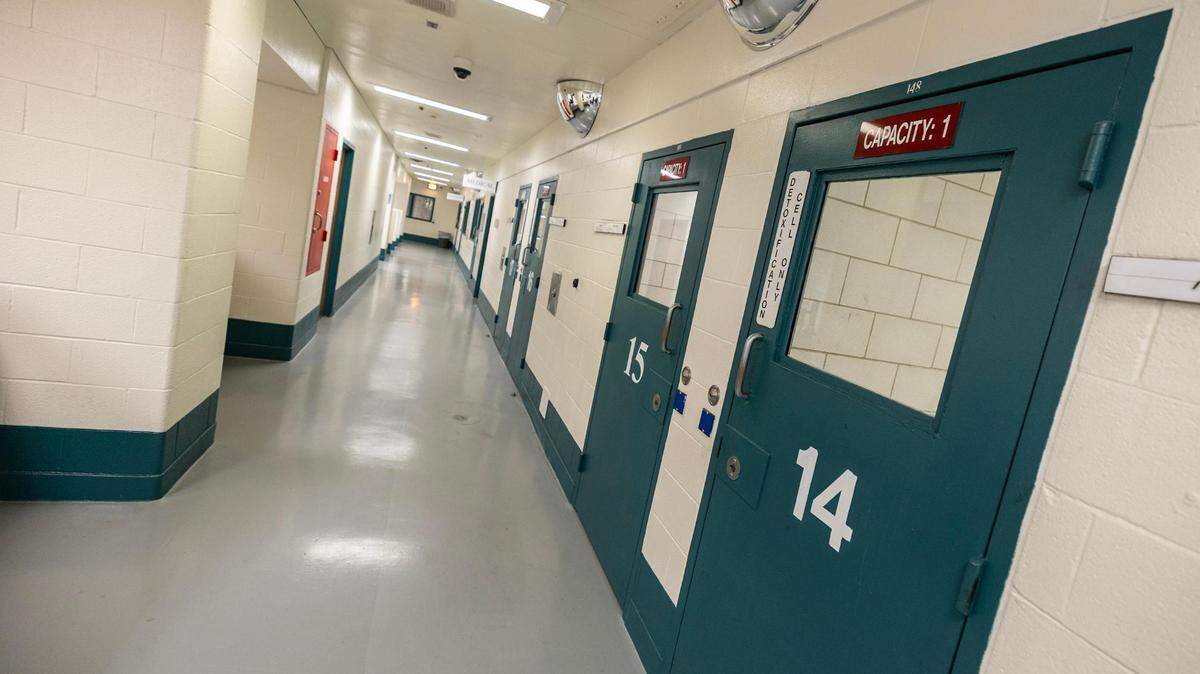
The Tarrant County District Attorney’s interpretation of a state law mandating independent investigations of deaths in county jails would “gut” the statute, according to professors at the Texas A&M University School of Law.
The District Attorney’s Office asked the Texas Attorney General’s Office in late March if the law requiring independent investigations into deaths in county jails applies only to those who die on jail premises. Such an interpretation would eliminate the need for an independent investigation if a person becomes hurt or ill in jail and dies at a hospital.
At issue is Section 511.021 of the Texas Government Code, which directs the Texas Commission on Jail Standards to appoint an outside law enforcement agency to conduct an independent investigation into “the death of a prisoner in a county jail.”
Tarrant County District Attorney Phil Sorrells declined an interview request. His office sent the following statement: “This office is asking the Attorney General for guidance regarding the interpretation and application of a specific law.”
While it previously told the Star-Telegram it is not advocating for either side of the issue, the District Attorney’s Office said in its request for opinion that the statute creates “debilitating staffing challenges” for sheriffs and investigating agencies, causing resources to be “needlessly” diverted to deaths that occur outside jail walls.
Attorney General Ken Paxton did not respond to an interview request.
In their brief, the A&M professors said the statute “requires an independent investigation of all deaths of individuals in the custody of a county jail.”
The professors’ brief was one of 11 filed on the issue, all of which similarly requested the attorney general interpret the law in this manner. The Star-Telegram received them through an open records request to the attorney general’s office.
Interpreting the law to only apply to people who die on jail property “would gut the investigation requirement of the Sandra Bland Act,” the brief states.
Named after a Black woman who died in jail near Houston after being arrested over a traffic violation, the 2017 Sandra Bland Act sought to enshrine additional layers of accountability for how inmates are treated in jail, particularly those with mental health or intellectual disabilities.
The professors countered an argument in the district attorney’s letter that narrows the scope of the law to people who are injured in a county jail and die offsite, saying this interpretation “would exempt the vast majority of deaths from any outside investigation.”
People in custody who are taken to a hospital “are still considered to be ‘confined’ in the county jail and under the control of county jail staff,” the brief states.
Further, people “who die from an illness may very well have been ‘injured within the premises of a county jail’ in a way that caused a new medical condition or caused an existing illness to worsen,” the brief states.
The professors cited four deaths in the county jail due to dehydration: Abdullahi Mohamed in 2020, Georgia Baldwin in 2021, Edgar Villatoro Alvarez in 2022 and Kimberly Phillips in February.
Phillips’ family has said they believe she starved to death in the Tarrant County jail. The medical examiner ruled she died of dehydration and malnutrition, but did not determine her manner of death.
The A&M professors also challenged the district attorney’s statements about the Legislature’s intent when crafting the statute.
“As the text is not ambiguous, Tarrant County’s resort to extrinsic sources to determine legislative intent should be disregarded,” the brief states.
The district attorney’s request for opinion states that former state Rep. John Cyrier, a Republican from Lockhart, has said that “it was never the Legislature’s intent for outside law enforcement agencies to be required to investigate prisoner deaths that occur outside of the jail, such as in a hospital.”
Cyrier verified in a text message that he has stated this in the past, but did not answer follow up questions.
Cyrier’s statements “do not change the legislative intent” to have all custody deaths investigated, the brief states.
His bill that the district attorney’s office cited did not pertain to a person’s location at the time of death, the professors noted. The bill, which in 2021 modified the statute in question, allowed for appointed law enforcement agencies to cite conflicts of interest in order to recuse themselves from an investigation.
The professors’ brief also addresses the district attorney’s citation of a failed bill that aimed to amend the statute to exclude deaths ruled as “natural” from independent investigations, saying that “Texas courts have declined to consider failed amendments in interpreting statutes.”
Texas Jail commission: all custody deaths should be independently investigated
The Texas Commission on Jail Standards was the only government agency to file a legal brief with the Attorney General’s Office.
The brief begins by stating the commission interprets the law to only mandate independent investigations into deaths that occur on jail property.
“But, the Commission still properly requires all in custody deaths to be independently investigated by rule,” the brief states.
The commission cited a statute in the Texas Administrative Code requiring it to appoint outside law enforcement agencies to investigate deaths of people “in the custody” of sheriff’s offices or jail operators.
The jail commission has the authority to promulgate rules under the power vested in it by the legislature, the brief states, and it has adopted the code “to enhance accountability and transparency regarding deaths in custody.”
“This rule is necessary because the majority of county jail deaths occur outside the physical constraints of the county jail, but within the custody of the county jail,” the brief states before providing numbers from recent years.
Since Jan. 1, 2021, 481 of the 653 custody deaths reported to the state occurred in hospitals, not jails, the brief states. Had the commission not adopted the rule, 12 homicides and 67 suicides would not have been independently investigated, since they died in hospitals.
The commission’s adoption of this rule brings it into compliance with the Sandra Bland Act, which created the statute in the Government Code at issue in the district attorney’s request, the brief states.
The commission concluded its brief by stating it “respectfully requests” the attorney general’s office determine the statute “only provides a baseline requirement for investigations into county jail deaths,” and that the commission has the authority to use the Administrative Code rule to continue “requiring that outside law enforcement agencies investigate all deaths of prisoners in custody of a county jail.”
The A&M law professors addressed the commission’s interpretation in their brief, saying it “promotes the original goals of the act in providing for transparency and unbiased answers about any deaths in custody.”
Civil society organizations agree all jail deaths should be investigated
Texas Jail Project, an advocacy organization that works to increase transparency and accountability in the state’s jails, said in its brief that the district attorney’s request for opinion construes the statute at issue.
Neither the Government Code statute nor the Administrative Code rule “should be interpreted to limit the Commission’s authority to require that all custodial deaths be reported to the Commission and independently investigated,” the brief states.
People in custody of a sheriff’s office or jail operator are considered prisoners in a county jail “no matter where they are physically,” the brief states, citing case law in which a Texas man was awarded good time credit for his behavior while in a Tennessee jail after escaping from the custody of the Texas Department of Corrections in 1973. That ruling found that the man was legally considered to be in “constructive custody” of the Texas department while he was physically out of the state.
Texas Jail Project cited statistics that concur with the jail commissions’ — that three-fourths of jail deaths statewide occur in hospitals — but the organization noted that in Tarrant County that number is around 85%.
According to a list provided by the Sheriff’s Office in June 2024 and maintained by the Star-Telegram since then, 59 of the 70 deaths of detainees in the Tarrant County jail since Sheriff Bill Waybourn took office in 2017 have occurred in John Peter Smith Hospital.
The organization provided other statistics: of the 134 custody deaths statewide in 2024, 12 of the 17 that were ruled suicides were pronounced dead in hospitals, as were three of four homicides.
“Most alarmingly, 30 of 31 deaths where the manner of death was ruled as ‘unknown’ or ‘undetermined’ were pronounced off jail premises,” the brief states. “The Sandra Bland Act was passed to bring some level of independent oversight to precisely these kinds of deaths, and yet the District Attorney’s desired interpretation of section 511.021(a) would result in most of them not receiving the independent scrutiny the legislature intended them to receive.”
Several other civil society groups filed briefs echoing these arguments.
The Justice Network of Tarrant County, which advocates for jail reform, among other issues, wrote in its brief that the “commonsense meaning of ‘prisoner in a county jail’ includes all prisoners in the custody of the sheriff and therefore extends to the local county hospital keeping the prisoner.”
The Houston-based advocacy group Disability Rights Texas also filed a brief stating that excluding off-premises deaths from outside investigations “would contradict the statute’s purpose, federal standards, and the real-world needs the Legislature sought to address.”
And a group of faith leaders from Fort Worth, Arlington, Dallas, Waco, Houston, Austin and Dripping Springs filed a brief imploring the attorney general to interpret the law to encompass all custody deaths based on their biblical interpretation of justice.
Families and advocates of people who died in Texas jails support investigating all custody deaths
Cassandra Johnson’s son Trelynn Wormley died in custody of the Tarrant County Sheriff’s Office in July 2022, but his death was one of more than two dozen that were not independently investigated in recent years.
The medical examiner ruled Wormley’s death was due to a fentanyl overdose. Johnson has claimed in court that “drugs run rampant” in the Tarrant County jail.
Johnson and community advocate Julie Griffin submitted a brief in which they outlined inconsistencies in Wormley’s case that they say exemplify the need for independent investigations.
Their brief cites Wormely’s entry in the attorney general’s Custodial Death Report database to “demonstrate the continuity between the causes and result of death, from jail cell to hospital.”
His entry lists the county jail as the location that “best describes where the event causing the death occurred,” while elsewhere in the entry “Medical facility” is listed as the place where his death occurred..
“The case obviously requires further investigation to make sense of the true manner of death,” the brief states. “Moreover, the noted location of the cause of death, the law enforcement facility itself, speaks to the whole point of the Sandra Bland Act — preventing jail deaths arising from lack of adequate prisoner safety and care.”
Briefs were also filed by an attorney representing the family of Julian Dena, who died of a drug overdose in the Bexar County jail in 2020, and by Dean Malone, a Dallas-based attorney who represents families of people who die in jails.
A brief filed by Dr. Marc Robinson, a physician who works in the Harris County jail, said excluding offsite custody deaths “does not reflect the realities of how medical care is practiced in jails,” and “would significantly reduce our ability to identify and improve the quality of care provided to incarcerated individuals. “
The family of Mason Yancy, who died in the Tarrant County jail in December, believes his death was the result of not being administered the medication he needed to manage his diabetes.
Citing a Star-Telegram investigation that found the jail commission had not complied with the statute in question for over seven years, Yancy’s family said, “an independent investigation into Mason’s death was only initiated after our family publicly pled for the truth.”
The commission has since begun to appoint outside law enforcement agencies to investigate custody deaths.
“How can we narrow a law we haven’t even tried to fully implement?” the Yancy family’s brief asks before stating the jail commission has “correctly interpreted” the law to apply to all custody deaths. “This is a common-sense, practical interpretation: custody does not end at the jailhouse door.”
This story was originally published May 12, 2025 at 4:48 PM.